
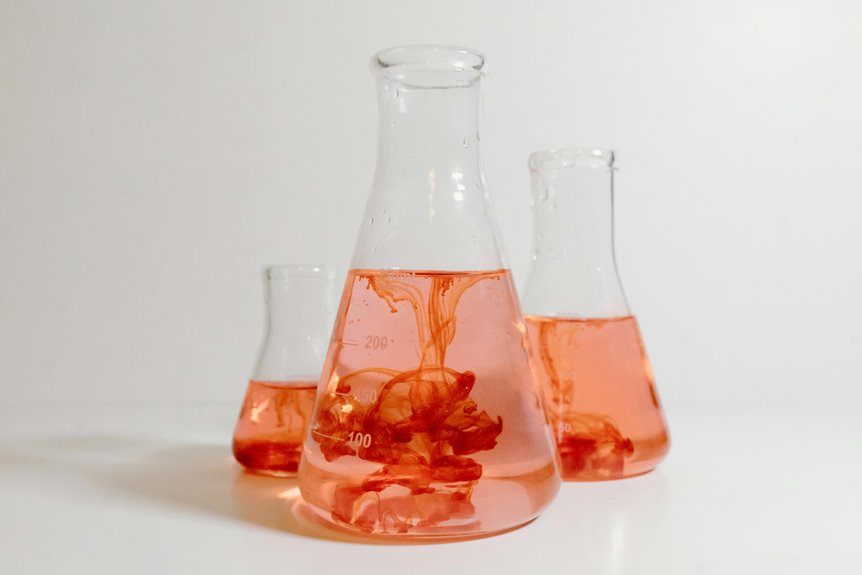
You’ll find dyes stick well to polyamides because their unique chemical structure—with repeating amide groups and protonated amine ends—creates strong hydrogen bonds and electrostatic attractions. Acid and basic dyes easily latch onto these sites, especially under controlled acidic pH and warm temperatures that help fibers swell for better dye penetration. Industrial methods further enhance this bonding for vibrant, lasting colors. Keep exploring, and you’ll uncover how these interactions and techniques bring polyamide dyeing to life.
Key Takeaways
- Polyamides’ repeating amide groups form strong hydrogen bonds with dye molecules, enhancing dye adherence and color uptake.
- Protonated amine end groups create ionic sites that attract and bind anionic acid dyes effectively under acidic conditions.
- Electrostatic interactions and hydrogen bonding between dye functional groups and polyamide chains ensure firm dye fixation and colorfastness.
- Semi-crystalline polyamide structure allows dyes to diffuse more easily through amorphous regions, aiding penetration and uniform coloration.
- Industrial dyeing uses controlled temperature and acidic pH to swell fibers and promote strong molecular attractions for optimal dye uptake.
Chemical Structure of Polyamides and Its Impact on Dyeing
Because polyamides have a unique chemical structure characterized by repeating amide groups, their interaction with dyes differs markedly from other fibers.
Polyamides’ repeating amide groups create distinctive dye interactions unlike those in other fibers.
When you dye polyamides, these amide linkages form strong hydrogen bonds with dye molecules. This bonding enhances dye uptake and helps the colors adhere more firmly.
Plus, the presence of amino end groups gives you additional sites for ionic interactions, especially under acidic conditions.
You’ll notice that the polyamide’s semi-crystalline structure also influences dye penetration; amorphous regions allow easier dye diffusion, while crystalline regions restrict it.
Understanding this balance helps you optimize dyeing conditions like temperature and pH.
Types of Dyes Compatible With Polyamide Fibers
The unique chemical makeup of polyamides directly influences which dyes work best with them.
When you choose dyes for polyamide fibers, acid dyes are your go-to because they bond well with the fiber’s amine groups. Basic dyes also work effectively, especially for bright, vibrant colors, as they interact with the fiber’s negatively charged sites.
Additionally, disperse dyes can be used, particularly for polyamide blends, since they penetrate the fibers through a physical diffusion process.
You’ll find that direct dyes generally don’t perform well due to weak affinity. Keep in mind, the choice depends on your desired colorfastness, brightness, and application method.
Molecular Interactions Between Dyes and Polyamide Chains
When you examine how dyes interact with polyamide chains at the molecular level, you’ll see that electrostatic forces and hydrogen bonding play crucial roles.
Polyamides contain amide groups with nitrogen and oxygen atoms capable of forming hydrogen bonds. Many dyes have functional groups like sulfonic acids or amines that attract these sites, creating strong hydrogen bonds.
Additionally, the positive charges on protonated amine groups in polyamides attract negatively charged dye molecules through electrostatic interactions. These molecular attractions guarantee that dyes adhere firmly to the fiber, enhancing colorfastness.
You’ll also find that van der Waals forces contribute by stabilizing the dye-polyamide complex.
Understanding these interactions helps you appreciate why specific dyes bond better with polyamide fibers, influencing dye selection and processing for the best results.
Influence of Temperature and Ph on Dye Uptake
Understanding the molecular interactions between dyes and polyamide chains sets the stage for exploring how temperature and pH impact dye uptake.
When you raise the temperature, the polyamide fibers swell, increasing dye diffusion and interaction with fiber sites. However, too much heat can damage fibers or reduce dye affinity.
pH also plays a significant role: acidic conditions protonate amine groups on polyamides, enhancing attraction to anionic dyes. If the pH shifts too far, it can hinder binding or cause fiber damage.
By controlling temperature and pH carefully, you optimize the balance between dye solubility, fiber swelling, and ionic interactions, ensuring efficient and vibrant dyeing.
These factors directly influence how well dyes adhere to polyamide fibers at a molecular level.
Industrial Techniques for Optimizing Polyamide Dyeing
Although dyeing polyamides depends heavily on the chemistry of fibers and dyes, industrial techniques play an essential role in maximizing dye uptake and colorfastness.
You can rely on these methods to achieve consistent, vibrant results. Here are four key industrial techniques you should know:
- Exhaust Dyeing: Circulates dye liquor uniformly around fibers, ensuring even color penetration.
- Carrier-Assisted Dyeing: Uses carriers to swell fibers, improving dye diffusion and fixation.
- High-Temperature Dyeing: Raises temperature above 100°C in pressurized vessels to accelerate dye uptake.
- pH Control: Maintains an acidic environment ideal for polyamide dye bonding.
Frequently Asked Questions
How Long Does Dyed Polyamide Fabric Retain Its Color?
You can expect dyed polyamide fabric to retain its color for several months to years, depending on care. Avoid harsh detergents and excessive sunlight, and you’ll keep the vibrant colors looking fresh much longer.
Are There Eco-Friendly Dyes Suitable for Polyamide Fibers?
You can choose eco-friendly dyes like natural or low-impact synthetic ones for polyamide fibers. These dyes minimize environmental harm while still providing vibrant, lasting colors that suit your sustainable dyeing projects perfectly.
Can Dyed Polyamide Fabrics Cause Skin Allergies?
Like a hidden storm beneath a calm sea, dyed polyamide fabrics can sometimes cause skin allergies. You might experience irritation if you’re sensitive, so always choose hypoallergenic dyes to keep your skin safe and comfortable.
What Is the Cost Difference Between Dyeing Polyamides and Other Fibers?
You’ll find dyeing polyamides generally costs more than natural fibers due to specialized dyes and processes. However, it’s often cheaper than dyeing synthetic fibers like polyester, which require higher temperatures and more energy.
How Does Washing Affect the Colorfastness of Dyed Polyamides?
When you wash dyed polyamides, it’s like waves gently erasing footprints on the sand; repeated washing can fade colors, but if you’re careful with temperature and detergent, your vibrant hues will hold strong and last longer.