
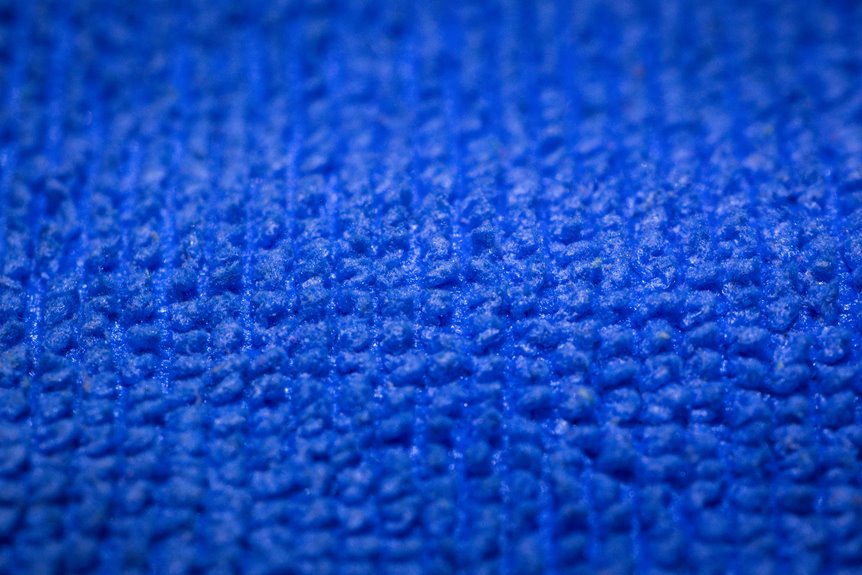
To clean your 80/20 polyester-polyamide microfiber towels properly, use a mild, liquid detergent without bleach or fabric softeners, and wash them in warm water around 104°F (40°C). Avoid hot water and skip powdered detergents to prevent residue buildup. Dry towels on low heat or air-dry, never using dryer sheets. Shake towels before drying to fluff fibers and store them in a dry, ventilated place. Following these steps keeps towels soft, absorbent, and long-lasting while preserving their microfiber quality. Learn the best tips to keep yours performing like new.
Key Takeaways
- Use a mild, fragrance-free liquid detergent without fabric softeners or bleach to protect microfiber fibers during washing.
- Wash towels separately in warm water (around 104°F/40°C) and avoid hot water above 140°F/60°C to prevent fiber damage.
- Rinse thoroughly to remove detergent residue and avoid clogging fibers, which maintains towel absorbency and softness.
- Dry towels on low heat or air-dry in a ventilated area, avoiding direct sunlight and dryer sheets to preserve fiber integrity.
- Occasionally rinse towels with vinegar during the rinse cycle to break down buildup and rejuvenate absorbency.
Understanding the Composition of 80/20 Polyester-Polyamide Microfiber
Although you mightn’t notice it at first, the 80/20 polyester-polyamide blend gives microfiber towels their unique cleaning power.
This combination means 80% polyester fibers provide durability and quick drying, while 20% polyamide (nylon) adds softness and absorbency.
The fibers are split into ultra-fine strands, much thinner than human hair, which increases surface area and creates countless tiny pockets.
Ultra-fine fibers, thinner than human hair, boost surface area and trap dirt in tiny pockets.
These pockets trap dirt, dust, and moisture efficiently without needing harsh chemicals.
You’ll find that this precise balance makes the towel strong yet gentle on surfaces, perfect for delicate cleaning tasks.
Understanding this composition helps you appreciate why these towels outperform traditional ones and why you should treat them carefully to maintain their structure and effectiveness over time.
Why Proper Cleaning Matters for Microfiber Towels
You want your microfiber towels to stay absorbent and soft, so proper cleaning is key.
If you don’t clean them correctly, residue and damage can build up, reducing their effectiveness.
Taking care of them guarantees they last longer and perform at their best.
Maintaining Absorbency and Softness
When you clean microfiber towels correctly, you maintain their ability to absorb liquids and stay soft to the touch.
Microfiber’s unique structure traps dirt and moisture, but improper washing can clog those fibers, reducing absorbency. Using the right detergent and avoiding fabric softeners keeps fibers open and effective.
Also, washing towels separately prevents lint transfer that can make them stiff and less absorbent. Drying on a low heat setting helps maintain softness without damaging fiber integrity.
If you skip these steps, you risk towels becoming scratchy and less efficient at drying.
Preventing Damage and Residue
Since microfiber towels rely on their finely woven fibers to perform effectively, improper cleaning can cause damage and leave behind residues that hinder their function.
When you use harsh detergents or fabric softeners, they coat the fibers, reducing absorbency and trapping dirt. Avoid bleach and high heat, as they can weaken the polyester and polyamide blend, causing fibers to break down faster.
Always wash your towels separately to prevent lint transfer and use a gentle cycle with warm water. Rinse thoroughly to remove cleaning agents.
Choosing the Right Detergent for Microfiber Towels
Although microfiber towels are durable, choosing the right detergent plays an essential role in maintaining their effectiveness. You want a detergent that cleans thoroughly without leaving residue or damaging fibers.
Avoid using bleach or fabric softeners, as they can break down the fabric and reduce absorbency. Instead, opt for a gentle, liquid detergent that’s free of additives. Powder detergents may not dissolve fully and leave grit on the towels.
When selecting your detergent, consider these tips:
- Use a mild, liquid detergent without fragrances or dyes
- Avoid bleach and fabric softeners completely
- Choose detergents designed for delicate or technical fabrics
- Skip powdered detergents to prevent residue buildup
- Use the recommended detergent amount—too much can cause buildup
This helps keep your microfiber towels soft, absorbent, and long-lasting.
Preparing Your Towels for Washing
Before you toss your microfiber towels into the washing machine, take a moment to prepare them properly to guarantee the best cleaning results and longevity.
Start by sorting your towels by color and use—keep heavily soiled or oily towels separate from lightly used ones to prevent contamination.
Sort towels by color and use to avoid cross-contamination and maintain cleaning effectiveness.
Shake each towel outdoors to remove loose dirt and debris.
Check for any stains or spots that might need pre-treatment with a gentle stain remover or diluted detergent.
Avoid using fabric softeners or bleach, as they can damage the fibers.
Turn your towels inside out to protect the microfiber surface during washing.
Finally, make sure your washing machine is clean and free from residue that could transfer onto your towels.
Proper preparation sets the stage for effective cleaning without harming the fabric.
Recommended Washing Techniques and Settings
You’ll want to wash your microfiber towels in warm water to keep them effective without damaging the fibers.
Choose a gentle detergent free of fabric softeners or bleach to maintain their absorbency.
These settings help your towels stay clean and perform at their best.
Optimal Water Temperature
When washing microfiber towels, choosing the right water temperature plays an essential role in preserving their effectiveness. Using water that’s too hot can damage the fibers, reducing their softness and absorbency. Conversely, cold water mightn’t clean them thoroughly, leaving dirt and oils behind.
For 80/20 polyester-polyamide towels, warm water strikes the perfect balance, loosening grime without harming the fabric. Here’s what to keep in mind:
- Use warm water (around 104°F/40°C) for routine washing
- Avoid hot water above 140°F/60°C to prevent fiber damage
- Cold water works for lightly soiled towels but may require multiple washes
- Always check your washing machine’s settings for temperature accuracy
- Skip fabric softeners, as they reduce microfiber effectiveness regardless of water temperature
Choosing the right temperature keeps your towels clean and long-lasting.
Suitable Detergent Types
Although microfiber towels are durable, choosing the right detergent is essential to maintain their cleaning power and longevity.
You’ll want to use a mild, liquid detergent without additives like bleach, fabric softeners, or fragrances. These substances can clog the fibers, reducing absorbency and effectiveness.
Avoid powder detergents as they may leave residue that’s hard to rinse out. Opt for detergents designed specifically for microfiber or gentle formulas that clean thoroughly without damaging the fibers.
When washing, use only a small amount of detergent—too much can cause buildup.
Avoiding Common Washing Mistakes
Since microfiber towels require special care, avoiding common washing mistakes is essential to maintain their effectiveness. You want to protect the fibers from damage and prevent residue buildup that reduces absorbency.
Keep these tips in mind:
- Don’t use fabric softeners or bleach; they coat fibers and reduce cleaning power.
- Avoid washing microfiber with cotton or lint-shedding fabrics to prevent contamination.
- Don’t overload the washing machine; towels need room to move freely for proper cleaning.
- Use warm water instead of hot to preserve fiber integrity and avoid shrinkage.
- Rinse thoroughly to remove detergent residues that can clog fibers and attract dirt.
Best Practices for Drying Microfiber Towels
Properly drying your microfiber towels preserves their texture and extends their lifespan.
After washing, shake out your towels to fluff the fibers before drying. It’s best to air-dry them by hanging in a well-ventilated area, avoiding direct sunlight to prevent fiber damage.
Shake out towels after washing and air-dry in shade to keep fibers fluffy and intact.
If you prefer machine drying, use a low heat or no heat setting to protect the delicate polyester and polyamide blend. Avoid using dryer sheets or fabric softeners, as they coat fibers and reduce effectiveness.
Make sure towels are completely dry before storing to prevent mildew and odors.
How to Maintain the Absorbency and Softness Over Time
Keeping your microfiber towels soft and absorbent over time requires more than just careful drying. You need to treat them right during washing and avoid habits that damage their fibers.
To maintain their performance, follow these tips:
- Wash towels separately from cotton or lint-shedding fabrics.
- Use a mild detergent without fabric softeners or bleach.
- Avoid high heat in washing and drying cycles.
- Rinse thoroughly to remove all detergent residue.
- Rejuvenate towels occasionally with a vinegar rinse to break down buildup.
Storing Your Microfiber Towels to Preserve Quality
Although microfiber towels are designed for durability, how you store them plays an essential role in preserving their quality. To keep your towels in top shape, always store them in a clean, dry place away from direct sunlight.
Avoid damp or humid areas, as moisture can promote mildew and degrade fibers. Fold your towels neatly instead of cramming them into a drawer or container; this prevents unnecessary creasing and maintains their softness.
If possible, use breathable storage bags or containers to allow air circulation. Keep your microfiber towels separate from other fabrics, especially those that shed lint, since microfiber attracts particles easily.
Frequently Asked Questions
Can Microfiber Towels Be Cleaned With Bleach?
Bleach is like a wildfire for microfiber towels—it can damage their delicate fibers. You shouldn’t use bleach on them because it breaks down the material, ruining their softness and effectiveness over time. Avoid it!
How Often Should I Wash My Microfiber Towels?
You should wash your microfiber towels after every use to prevent dirt buildup and maintain their effectiveness. If you use them for light tasks, you might stretch it, but frequent cleaning keeps them fresh and working well.
Are Fabric Softeners Harmful to Microfiber Towels?
Yes, fabric softeners harm microfiber towels by coating fibers, reducing absorbency and effectiveness. You shouldn’t use them if you want your towels to stay soft, absorbent, and perform well over time.
Can Microfiber Towels Be Used for Both Automotive and Household Cleaning?
You can definitely use microfiber towels for both automotive and household cleaning. They’re versatile, gentle, and highly absorbent, making them perfect for wiping surfaces, drying, and dusting without scratching or leaving streaks behind.
What Should I Do if My Microfiber Towels Develop a Bad Odor?
Don’t let that bad odor fool you—it means trapped grime. You should wash your towels with hot water and vinegar, then air dry. This refreshes fibers and banishes smells, keeping your towels fresh and ready.