
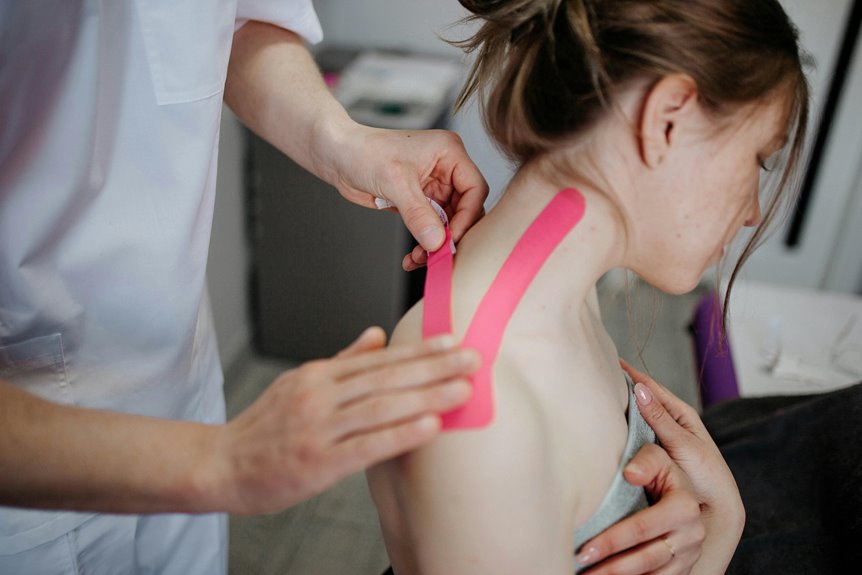
You use the Low-Dye taping technique to support your foot’s arch, reducing strain on the plantar fascia, which eases heel pain caused by plantar fasciitis. This taping stabilizes your foot, prevents over-flattening, and redistributes pressure to relieve discomfort, especially after rest or activity. It acts like an external brace, helping your foot heal while improving alignment. Keep going, and you’ll find out how to apply it correctly and maximize its benefits for lasting relief.
Key Takeaways
- Low-Dye taping stabilizes the foot arch, reducing strain on the plantar fascia and preventing excessive flattening.
- It redistributes pressure across the foot, easing heel load and minimizing pain.
- The technique maintains proper foot alignment during movement to reduce irritation and inflammation.
- Low-Dye taping acts as an external brace, supporting the foot and promoting healing by allowing the plantar fascia to rest.
- It provides immediate pain relief and improved mobility without requiring custom orthotics or extensive therapy.
Understanding Plantar Fasciitis and Its Causes
Although you mightn’t realize it, plantar fasciitis occurs when the thick band of tissue connecting your heel to your toes becomes inflamed or irritated.
You often feel sharp pain near your heel, especially after resting or first thing in the morning. This discomfort usually stems from repetitive strain, overuse, or excessive pressure on your foot’s arch.
Activities like running, standing for long periods, or wearing unsupportive shoes can contribute. Sometimes, your foot’s natural structure—like flat feet or high arches—puts extra stress on the plantar fascia, making it more prone to injury.
Being overweight or having tight calf muscles can also increase your risk. Understanding these causes helps you recognize why your heel hurts and prepares you to manage or prevent the condition effectively.
How the Low-Dye Taping Technique Supports the Foot
The Low-Dye taping technique provides targeted support to your foot by stabilizing the arch and reducing strain on the plantar fascia.
Low-Dye taping offers focused foot support by stabilizing the arch and easing plantar fascia strain.
When you apply the tape, it acts like an external brace that lifts and holds the arch in place, preventing excessive flattening. This stabilization limits the stretching and microtears that cause pain.
Additionally, the tape redistributes pressure across your foot, easing the load on the heel and the plantar fascia. By controlling foot motion, it helps you maintain proper alignment during walking or standing, which reduces irritation.
This support not only minimizes discomfort but also encourages healing by allowing the plantar fascia to rest.
Key Benefits of Using Low-Dye Taping for Heel Pain
By stabilizing your foot and redistributing pressure, Low-Dye taping directly addresses the root causes of heel pain. It reduces strain on the plantar fascia, helping you move with less discomfort. You’ll notice improved arch support and better foot alignment, which can prevent further injury. Plus, this technique is non-invasive and easy to apply, making it a practical option for daily relief.
| Benefit | How It Helps |
|---|---|
| Pain Reduction | Eases pressure on the heel |
| Arch Support | Maintains natural foot shape |
| Inflammation Control | Limits tissue stress and swelling |
| Improved Mobility | Allows more comfortable movement |
| Prevents Overuse Injury | Distributes load evenly across foot |
Step-by-Step Guide to Applying Low-Dye Taping
Applying Low-Dye taping requires attention to detail to guarantee effective support and pain relief. Start by cleaning and drying your foot thoroughly.
Cut several strips of rigid tape, about 10-12 inches long. Begin taping at the base of your toes, anchoring the tape across the ball of your foot. Wrap the strips around the arch, pulling taut but not too tight, to support the plantar fascia.
Overlap each strip slightly to assure full coverage. Next, place a stabilizing strip around your heel, securing the previous strips in place.
Finally, smooth down the tape to avoid wrinkles or gaps. Check for comfort and adjust tension if needed. This method stabilizes your foot structure, helping reduce strain on the plantar fascia.
The Role of Arch Support in Plantar Fasciitis Relief
When you provide proper arch support, you help distribute pressure evenly across your foot, easing the strain on your plantar fascia. This support reduces tension and prevents excessive stretching of the ligament, which is vital for pain relief. Low-Dye taping mimics this by stabilizing the arch and limiting pronation.
| Benefit | How It Helps | Result |
|---|---|---|
| Pressure Distribution | Spreads load evenly | Decreases localized stress |
| Arch Stability | Supports medial arch | Limits plantar fascia strain |
| Pain Reduction | Reduces ligament stress | Alleviates heel and foot pain |
You’ll find that consistent arch support, whether through taping or orthotics, plays a significant role in managing plantar fasciitis effectively.
Comparing Low-Dye Taping With Other Treatment Methods
Low-Dye taping provides targeted arch support that helps reduce plantar fascia strain, but you might wonder how it stacks up against other treatment options.
Compared to orthotic inserts, Low-Dye taping offers immediate relief without requiring a custom fit, making it a quick, cost-effective solution.
Unlike stretching exercises, which take time to improve flexibility and strength, taping delivers instant support and pain reduction.
While anti-inflammatory medications address pain and inflammation, they don’t correct biomechanical issues like Low-Dye taping does.
Physical therapy offers extensive benefits but demands more time and commitment.
Ultimately, Low-Dye taping complements these methods well, especially when you need fast symptom relief.
It’s not a standalone cure but an effective tool within a broader treatment plan.
When to Use Low-Dye Taping During Your Recovery
You should use Low-Dye taping early in your recovery to provide essential support to your arch.
It’s especially helpful during physical activities to reduce strain and prevent pain.
You can also apply it whenever you experience flare-ups to manage discomfort effectively.
Early Stage Support
Early support plays an essential role in managing plantar fasciitis pain and preventing further strain. You should use Low-Dye taping soon after symptoms start, especially if you notice sharp heel pain or stiffness in the morning. Applying the tape at this stage helps stabilize your foot’s arch, reducing stress on the plantar fascia and promoting healing.
Here’s when Low-Dye taping is most effective during early recovery:
| Symptom | When to Use Low-Dye Taping |
|---|---|
| Morning heel pain | Immediately upon waking |
| Swelling or inflammation | During periods of rest or light activity |
| Mild to moderate pain | Before standing or walking |
Using Low-Dye taping early can prevent your condition from worsening and supports a smoother recovery process.
During Physical Activity
As your symptoms improve and you become more active, taping can help support your foot during physical activity.
You’ll want to apply the Low-Dye taping before exercises or daily tasks that put stress on your plantar fascia, like walking, running, or standing for long periods. The tape stabilizes your arch, reducing strain and preventing overextension.
This support helps maintain proper foot alignment and can lessen discomfort during movement. However, don’t rely on taping as a permanent fix; use it as a tool while gradually increasing your activity levels.
Always verify the tape is applied correctly to maximize its effectiveness. By incorporating taping during physical activity, you can protect your foot, boost your confidence, and promote a smoother recovery.
Managing Pain Flare-ups
Although Low-Dye taping provides ongoing support, using it specifically during pain flare-ups can offer targeted relief when your plantar fascia feels particularly strained.
When you notice sharp or increased pain, applying Low-Dye tape helps reduce stress on the ligament, easing discomfort quickly. You don’t need to wear the tape all day; focus on times when pain spikes, such as after prolonged standing or walking.
This method helps you manage symptoms without over-relying on the tape, allowing your foot to strengthen gradually. Remember to monitor your skin for irritation and replace the tape every few days.
Common Mistakes to Avoid With Low-Dye Taping
When applying Low-Dye taping, you might unintentionally reduce its effectiveness by making common mistakes. Avoid these pitfalls to get the best results:
- Incorrect tape placement – Position the tape carefully along the arch and heel; misplacement can fail to support your plantar fascia properly.
- Using too much tension – Over-tightening can restrict circulation and cause discomfort instead of relief.
- Skipping skin prep – Not cleaning and drying your foot can cause the tape to peel off quickly.
- Leaving tape on too long – Wearing tape beyond recommended times may irritate your skin or cause blisters.
Patient Experiences and Success Stories
Many patients have found relief using the Low-Dye taping technique, sharing stories of reduced pain and improved mobility.
You might notice how the taping immediately supports your arch, easing the strain on your plantar fascia. Several people report waking up with less stiffness and being able to walk or stand longer without discomfort.
You’ll hear from users who’ve combined the taping with stretching exercises and found faster recovery. Some say it helped them avoid costly treatments or surgery.
While results can vary, these success stories highlight how Low-Dye taping offers practical, non-invasive support.
If you’re struggling with plantar fasciitis, you may find this technique a valuable part of your pain management and healing strategy.
Tips for Maintaining Foot Health Alongside Taping
To get the most benefit from Low-Dye taping, you should also adopt habits that support overall foot health. Taping provides support, but maintaining strong, flexible feet guarantees long-term relief and prevents future issues.
Here are some tips to keep your feet healthy alongside taping:
- Wear supportive shoes with good arch support and cushioning to reduce strain on your plantar fascia.
- Stretch your calves and plantar fascia daily to improve flexibility and reduce tension.
- Maintain a healthy weight to lessen pressure on your feet and aid recovery.
- Avoid prolonged standing or walking on hard surfaces to prevent aggravating your condition.
Frequently Asked Questions
Can Low-Dye Taping Be Reused or Should It Be Applied Fresh Each Time?
You shouldn’t reuse low-dye taping because it loses its adhesive strength and effectiveness. It’s best to apply a fresh tape each time to guarantee proper support and comfort during use.
Is Low-Dye Taping Suitable for Athletes or Only for Everyday Use?
Low-Dye taping suits both athletes and everyday users. You’ll find it supports your foot arch during intense activity or daily wear. Just make sure to apply it properly to get the best results every time.
How Long Does a Single Low-Dye Taping Application Typically Last?
Like a trusty shield, a single low-dye taping application usually lasts about three to five days. You’ll want to watch for loosening or discomfort and reapply as needed to keep your foot feeling supported.
Are There Any Skin Reactions or Allergies Associated With Low-Dye Tape?
You might experience mild skin irritation or allergic reactions from low-dye tape, especially if you have sensitive skin or allergies to adhesives. Always test a small area first and remove the tape if discomfort occurs.
Can Low-Dye Taping Be Combined With Orthotic Insoles Effectively?
You can combine Low-Dye taping with orthotic insoles to support your foot, reduce pain, and improve alignment. Just make certain both work well together and consult a professional to guarantee proper fit and effectiveness.