
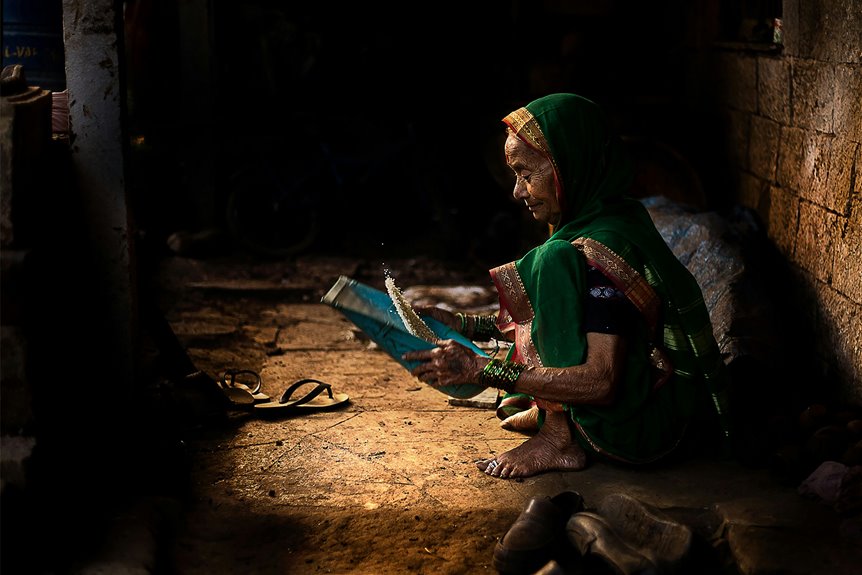
You start by choosing lustrous silk and fine cotton threads, then soak and stretch them for strength and sheen. Next, you design traditional motifs inspired by nature and culture, ensuring balanced patterns. Setting up the handloom precisely keeps tension even, essential for those delicate details. As you weave, intricate techniques bring the fabric to life, finishing with embroidery and zari work that add charm and elegance. Keep exploring to reveal the full artistry behind every Chanderi saree.
Key Takeaways
- Select long-staple silk and fine cotton threads for durability, sheen, and balanced lightweight texture.
- Soak, stretch, and apply natural sizing to yarn for softness, strength, and smooth weaving.
- Design traditional motifs inspired by nature and cultural elements, ensuring symmetry and aesthetic appeal.
- Set up the handloom by threading warp yarns tightly and adjusting reed for precise thread spacing.
- Add delicate embroidery and zari embellishments for intricate, refined finishing and heirloom quality.
Selecting the Finest Silk and Cotton Threads
Before you begin weaving a Chanderi saree, selecting the finest silk and cotton threads is essential. You’ll want to choose silk that’s lustrous, smooth, and strong, ensuring it holds vibrant dyes and weaves tightly.
Look for long-staple silk fibers; they offer durability and a soft sheen. For cotton, pick threads that are fine yet sturdy, with a natural sheen to complement the silk.
The balance between silk and cotton determines the saree’s characteristic lightweight feel and subtle texture. Don’t overlook thread consistency—uniform thickness helps maintain an even weave.
Preparing the Yarn for Weaving
Preparing the yarn for weaving involves a series of careful steps to assure smoothness and strength.
First, you’ll soak the silk and cotton threads to remove impurities and soften the fibers. After drying, you’ll stretch the yarn on a frame to even out tension and prevent breakage during weaving.
Soaking silk and cotton threads softens fibers and removes impurities before stretching to ensure even tension.
Next, you apply starch or a natural sizing agent to add firmness, which helps the yarn hold its shape and resist fraying.
Once treated, the yarn is polished gently to enhance its sheen, giving the final saree that characteristic glow.
Designing Traditional Motifs and Patterns
As you move forward in creating a Chanderi saree, designing traditional motifs and patterns becomes essential to its identity. You start by selecting symbolic designs inspired by nature, such as flowers, leaves, and geometric shapes, which reflect Chanderi’s rich heritage.
These motifs are carefully sketched onto graph paper to guarantee symmetry and balance. You choose patterns that complement the lightweight fabric, enhancing its elegance without overwhelming it.
The designs often incorporate elements like coins, peacocks, and lotus flowers, each carrying cultural significance. Your goal is to blend aesthetic appeal with tradition, making certain every motif tells a story.
Setting Up the Handloom for Chanderi Weaving
Once you’ve finalized the motifs and patterns, you’ll need to set up the handloom with great care to guarantee the intricate designs come to life.
First, you carefully prepare the warp threads, aligning them on the loom based on the saree’s width and design layout. You then pass each thread through the heddles, ensuring they’re correctly positioned to create the desired pattern.
Next, you secure the warp threads tightly on the loom’s beam to maintain consistent tension throughout weaving. You also set the reed according to the saree’s fineness, which controls thread spacing.
This meticulous setup is essential because any misalignment can distort the motifs. By patiently adjusting and verifying every detail, you create the perfect foundation for weaving the timeless elegance of a Chanderi saree.
The Intricate Weaving Technique
Mastering the intricate weaving technique requires your full attention and steady hands.
You’ll begin by carefully interlacing the fine silk and cotton threads on the handloom, ensuring each warp and weft aligns perfectly. As you work, you must maintain consistent tension to avoid uneven patterns or fabric distortion.
The distinctive Chanderi motifs, like floral and geometric designs, emerge as you skillfully manipulate the shuttle through the warp threads. Precision is key, especially when creating the sheer, lightweight texture unique to Chanderi sarees.
Every pass of the shuttle builds the saree’s delicate elegance, reflecting hours of focused craftsmanship. By following this meticulous process, you’re not just weaving fabric; you’re crafting a timeless piece that carries cultural heritage and artistry.
Adding Embellishments and Finishing Touches
Now that you’ve mastered the weaving, it’s time to enhance the saree with delicate embroidery techniques that add charm and detail.
You’ll carefully inspect every inch during the final quality checks to guarantee flawless craftsmanship.
These finishing touches truly bring your Chanderi saree to life.
Embroidery Techniques
Although the base weaving of a Chanderi saree showcases intricate patterns, adding embroidery brings the fabric to life with vibrant embellishments.
You’ll often see zari work, where gold or silver threads highlight motifs beautifully. You can also use resham embroidery to add colorful silk thread designs that contrast with the sheer fabric.
Techniques like gota patti involve applying small pieces of gold or silver ribbon for a mirror-like effect.
When you’re working on embroidery, precise hand-stitching guarantees the saree maintains its delicate texture without overwhelming its lightness.
By carefully layering these embellishments, you enhance the saree’s elegance and make each piece truly unique.
Embroidery is where tradition meets artistic expression, transforming a woven textile into a treasured heirloom.
Final Quality Checks
Before the Chanderi saree leaves the workshop, you’ll carefully inspect every detail to confirm its quality shines through. You add delicate embellishments like zari borders or subtle sequins, enhancing its timeless elegance. Then, you verify the finishing touches—perfect hemming, smooth texture, and vibrant colors—are flawless. This final quality check confirms the saree’s readiness as a treasured heirloom.
| Step | Detail Checked | Purpose |
|---|---|---|
| Embellishments | Zari, sequins, beads | Highlight design elements |
| Stitching | Hems and seams | Confirm durability and neatness |
| Fabric Quality | Texture and color | Maintain authenticity and sheen |
Frequently Asked Questions
How Do I Care for and Wash a Chanderi Saree?
You should hand wash your Chanderi saree gently in cold water with mild detergent. Avoid wringing it out, and let it air dry in shade to preserve its delicate fabric and vibrant colors.
What Is the History Behind Chanderi Sarees?
Imagine draping yourself in centuries of royal elegance—Chanderi sarees originated in Madhya Pradesh around the 13th century, blending silk and cotton, reflecting Mughal artistry. You’ll wear history woven with intricate, shimmering motifs.
Are Chanderi Sarees Eco-Friendly or Sustainable?
You’ll find Chanderi sarees eco-friendly since they use natural fibers like silk and cotton. Plus, traditional hand-weaving reduces energy consumption, making them a sustainable choice that supports artisans and preserves cultural heritage.
How to Authenticate a Genuine Chanderi Saree?
You can authenticate a genuine Chanderi saree by checking its fine silk-cotton blend, traditional motifs, and handwoven texture. Look for a certificate of authenticity and buy from reputable sellers to avoid replicas or machine-made versions.
What Occasions Are Best Suited for Wearing a Chanderi Saree?
Imagine draping yourself in a shimmering river of silk—perfect for weddings, festivals, or elegant parties. You’ll shine effortlessly at these occasions, as a Chanderi saree blends tradition with grace, making you the event’s radiant star.