
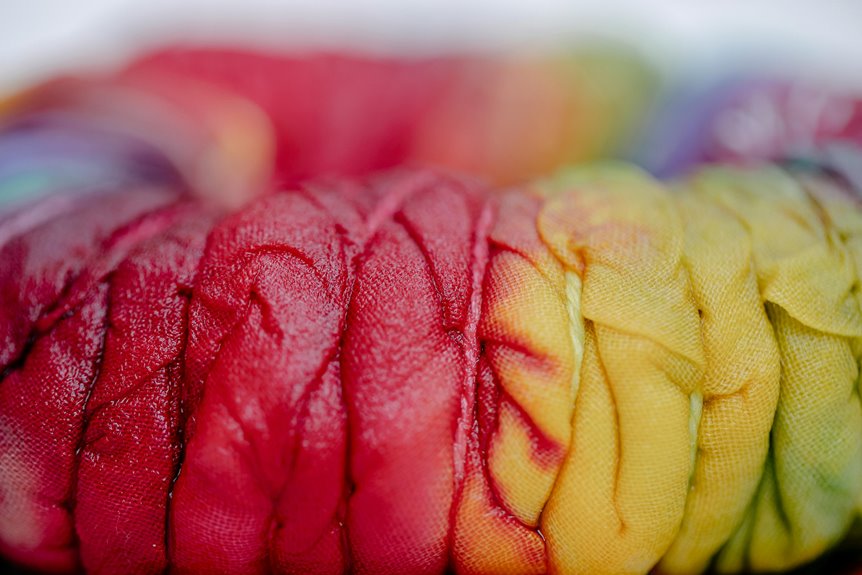
You can create stunning, seamless color gradients using the incline dyeing technique by tilting your fabric and letting gravity naturally pull the dye downward. Start by prepping natural fibers like cotton or silk, soaking them evenly for consistent absorption. Apply dye gradually from the top, blending edges while wet to avoid harsh lines. Adjust the slope and layering for richer textures and depth. Keep going, and you’ll discover more ways to refine this vibrant, eye-catching effect.
Key Takeaways
- Incline dyeing uses gravity on angled fabric to create natural, smooth color gradients by controlling dye flow and absorption.
- Pre-washing and hydrating fabric evenly ensures consistent dye penetration and enhances gradient quality.
- Natural fibers like cotton and silk paired with appropriate dyes (fiber-reactive or acid) yield vibrant, lasting gradients.
- Gradually apply dye from the top, blend edges while wet, and adjust slope angle for seamless gradient transitions.
- Layer multiple dye sessions with varied colors and drying times to achieve complex, textured gradient effects.
Understanding the Science Behind Incline Dyeing
The science behind incline dyeing hinges on how fabric interacts with dye under controlled angles and gravity.
Incline dyeing relies on fabric’s interaction with dye, influenced by gravity and precise angles.
When you position fabric on an incline, gravity pulls the dye downward, creating a natural gradient effect. This lets the dye concentrate more at the lower sections while lighter shades form at the top.
You’ll notice how the angle affects the flow rate; steeper inclines cause quicker dye movement, resulting in sharper shifts, while gentler slopes produce softer blends.
The fabric’s absorbency also plays a key role—materials that soak up dye quickly will show more intense color variations.
By understanding these factors, you can manipulate the angle and fabric choice to achieve precise gradient effects.
This scientific approach transforms a simple dye bath into a controlled artistic process.
Essential Materials and Tools for Incline Dyeing
To get started with incline dyeing, you’ll need to choose the right fabric types that absorb dye well and suit your project.
Picking dyes that match your fabric and the desired effect is just as important.
Finally, setting up the necessary equipment correctly guarantees a smooth and even dye application.
Required Fabric Types
Choosing the right fabric plays a crucial role in achieving vibrant and lasting results with incline dyeing. You want to select natural fibers like cotton, linen, silk, or wool, as these absorb dye more evenly and deeply.
Synthetic fabrics like polyester or nylon can be tricky since they may repel water-based dyes or require special dye types. Make sure your fabric is pre-washed to remove sizing or finishes that could block dye absorption.
Lightweight to medium-weight fabrics work best, allowing the inclined gradient to form smoothly without pooling or blotching. Avoid heavily textured or tightly woven materials since they can disrupt the dye flow.
Dye Selection Criteria
You’ll need three key types of dyes to master incline dyeing: fiber-reactive, acid, and natural dyes. Each type suits different fabric fibers and produces unique gradient effects.
When choosing dyes, focus on these criteria:
- Compatibility: Match the dye to your fabric’s fiber content. Fiber-reactive dyes work best on cotton, acid dyes on silk or wool, and natural dyes on various natural fibers.
- Colorfastness: Select dyes with strong resistance to washing and light to maintain your gradient’s vibrancy.
- Blendability: Opt for dyes that mix smoothly to create seamless shifts in your incline gradients without harsh lines.
Necessary Equipment Setup
Understanding the right dyes sets a solid foundation, but having the proper equipment guarantees your incline dyeing process runs smoothly.
You’ll need a sturdy incline setup—this can be a slanted board or a custom frame—to position your fabric at the ideal angle for gradient effects. Use adjustable clamps or weights to keep the fabric taut and prevent slipping.
Have multiple containers or squeeze bottles for your dye solutions to control application precisely. Don’t forget protective gloves and aprons to keep yourself clean.
A measuring cup and stirring sticks help mix dye concentrates accurately. Finally, make certain good ventilation in your workspace to avoid inhaling fumes.
Preparing Fabric for Optimal Dye Absorption
Preparing fabric for ideal dye absorption starts with thorough cleaning to remove any residues that could block the dye. You want the fibers to be as receptive as possible, so pre-washing the fabric is essential.
Next, you should condition the fabric to help the dye penetrate evenly. Finally, controlling moisture levels before dyeing will improve the gradient effect.
Follow these steps:
- Pre-wash the fabric with a mild detergent to eliminate oils, dirt, and sizing agents.
- Soak the fabric in water to hydrate the fibers uniformly, ensuring consistent dye uptake.
- Blot excess water gently so the fabric is damp but not dripping, optimizing dye absorption without over-saturation.
Step-by-Step Guide to Performing Incline Dyeing
Now that your fabric is ready, you’ll start by properly preparing its surface to guarantee even dye absorption.
Next, you’ll apply the dye gradually, letting it flow down the incline for a smooth gradient effect.
Follow these steps carefully to achieve the best results with incline dyeing.
Preparing Fabric Surface
Before you start the incline dyeing process, make certain your fabric surface is clean, smooth, and free of any impurities that could affect dye absorption. This step is essential for achieving a flawless gradient.
Begin by:
- Washing the Fabric – Use a mild detergent to remove oils, dirt, or sizing agents that might block dye penetration. Rinse thoroughly and let it dry completely.
- Ironing the Fabric – Press the fabric to eliminate wrinkles and guarantee a flat surface. Wrinkles can cause uneven dye distribution.
- Stretching and Securing – Place the fabric on a flat inclined plane and secure it taut using clamps or weights. This prevents shifting during dyeing and maintains a consistent angle.
Following these steps guarantees your fabric is perfectly prepared for the next phase in incline dyeing.
Applying Dye Gradually
Once your fabric is secured on the incline, you’ll want to start applying the dye gradually from the top, allowing it to flow downward naturally. Use a brush or spray bottle to control the amount and direction. Keep the dye concentrated at the top and let gravity create smooth gradients. Work slowly and add layers if needed for richer color.
| Step | Action |
|---|---|
| 1 | Apply dye at the top edge |
| 2 | Let dye flow down naturally |
| 3 | Add more dye for intensity |
| 4 | Allow fabric to absorb evenly |
Tips for Achieving Smooth Gradient Transitions
Although achieving smooth gradient shifts can be challenging, mastering a few key techniques will help you create seamless blends in your incline dyeing projects.
First, control the dye application by gradually increasing the concentration as you move along the fabric.
Second, use consistent, slow movements when applying dye to avoid abrupt color changes.
Third, blend the dye edges immediately by lightly brushing or sponging the shift areas while the dye is still wet.
These steps guarantee the dye penetrates evenly and shifts appear natural.
Remember, patience is essential—rushing the process often results in harsh lines.
Common Challenges and How to Overcome Them
When you start incline dyeing, you’ll likely face challenges like uneven color distribution, unexpected blotches, or harsh lines.
To avoid uneven color, make sure your fabric is evenly tensioned and the dye is applied consistently. Blotches often happen when excess dye pools; control this by adjusting the incline angle and using a spray bottle for finer application.
Harsh lines appear when dye shifts are too abrupt—blend edges by gently misting water or using a soft brush while the dye is still wet.
Another common issue is fabric stiffness after dyeing; wash the fabric promptly in cold water with mild detergent to restore softness.
Creative Applications of Incline Dyeing in Textile Design
If you want to add unique depth and movement to your textile designs, incline dyeing offers exciting creative possibilities. This technique lets you create smooth, dynamic gradients that bring fabrics to life.
You can use incline dyeing to:
- Enhance texture and dimension by varying the angle and immersion time, giving your textiles a natural flow.
- Design bold statement pieces with striking color shifts that catch the eye and elevate your collection.
- Experiment with layered effects by combining multiple incline dyeing sessions, producing complex, rich patterns.
Frequently Asked Questions
How Does Incline Dyeing Compare to Other Gradient Dyeing Techniques?
Imagine colors flowing like a gentle river—incline dyeing lets you control gradients with smooth, natural shifts. You’ll find it more precise and customizable than other methods, giving your fabrics a richer, more dynamic depth.
What Are the Environmental Impacts of Incline Dyeing?
You’ll find incline dyeing uses less water and energy than traditional methods, reducing waste and pollution. It’s a more eco-friendly choice, helping you minimize your environmental footprint while achieving beautiful gradient effects on fabrics.
Can Incline Dyeing Be Used on Synthetic Fabrics?
Oh, sure, because synthetic fabrics totally love soaking up dyes like thirsty sponges! Actually, you can use incline dyeing on them, but keep in mind synthetics behave differently, so you’ll need special dyes and precise temperature controls.
How Long Does the Incline Dyeing Process Typically Take?
The dyeing process usually takes a few hours, depending on fabric type and desired gradient depth. You’ll need patience to achieve smooth shifts, but the results make the time worthwhile for vibrant, unique color effects.
Are There Any Safety Precautions Specific to Incline Dyeing?
Think of dyeing as a dance with chemicals—always wear gloves and protective gear to keep your skin safe. Work in a ventilated space, avoid splashes, and handle dyes carefully to prevent stains and irritation.