
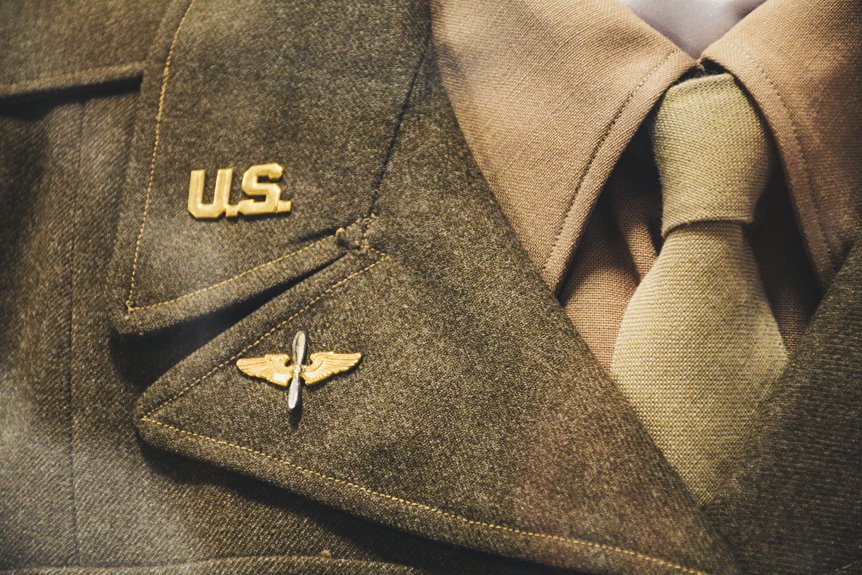
You’ll find herringbone’s origins in Ancient Rome, where its zigzag pattern was first used for road paving, later inspiring durable woven fabrics. Through Medieval Europe, it marked status in wool garments and evolved into rugged military uniforms prized for camouflage and wear resistance. The Industrial Revolution made it a workwear staple, and by the 20th century, it became a fashion classic. Exploring further reveals how this timeless pattern shapes today’s menswear and womenswear styles.
Key Takeaways
- Herringbone pattern originated in Ancient Rome for road paving and later adapted into durable woven fabrics from wool and linen.
- In Medieval and Renaissance Europe, herringbone symbolized craftsmanship and status in noble woolen garments like cloaks and doublets.
- Military uniforms, including WWII British Army and Vietnam War fatigues, utilized herringbone for durability and camouflage properties.
- The Industrial Revolution popularized herringbone for durable workwear such as jackets and trousers, valued for abrasion resistance and comfort.
- Modern fashion embraces herringbone in tailored suits, blazers, and accessories, blending classic texture with contemporary style for versatile wear.
Origins of the Herringbone Pattern in Ancient Rome
Although you might associate herringbone fabric with modern fashion, its origins trace back to Ancient Rome, where artisans first used the distinctive zigzag pattern in road paving and textiles.
Herringbone’s iconic zigzag pattern began in Ancient Rome, adorning roads and textiles alike with timeless style.
When you look closely at Roman roads, you’ll notice the herringbone pattern helped distribute weight evenly, preventing damage from heavy traffic.
Romans didn’t stop there—they applied the same design to woven fabrics, creating durable and visually appealing textiles.
If you imagine yourself in that era, you’d see skilled craftsmen weaving wool and linen into herringbone patterns, merging practicality with style.
This technique not only strengthened the fabric but also showcased the intricate skill involved.
Herringbone Fabric in Medieval and Renaissance Europe
As herringbone patterns traveled through time, they found new life in Medieval and Renaissance Europe, where artisans refined the weaving techniques to suit evolving tastes and needs.
You’d notice how the fabric became a symbol of both craftsmanship and status, used in garments for nobility and wealthy merchants alike. The intricate zigzag design not only added visual appeal but also increased fabric durability, perfect for the era’s demanding wear.
When exploring herringbone fabric in this period, consider how it:
- Became popular in woolen textiles across Europe
- Was favored for cloaks, doublets, and hose
- Showcased regional weaving variations
- Demonstrated advanced loom technology
- Served both functional and decorative purposes
You’d appreciate how herringbone’s legacy deepened through these centuries.
The Role of Herringbone in Military Uniforms
You’ll find herringbone fabric played a key role in military uniforms thanks to its durability and natural camouflage.
Its distinctive pattern helped soldiers blend into their surroundings while withstanding harsh conditions.
Let’s look at some iconic uniforms that made herringbone a staple in military gear.
Durability and Camouflage Benefits
Herringbone fabric has played an essential role in military uniforms due to its exceptional durability and natural camouflage qualities. When you wear herringbone, you benefit from a tightly woven pattern that resists tears and wear, making it ideal for harsh conditions.
Its zigzag weave subtly breaks up your outline, helping you blend into varied environments without standing out.
Here’s why herringbone fabric works so well for military gear:
- Withstands rough use and frequent washing
- Provides breathability while maintaining strength
- Disguises dirt and stains better than plain fabrics
- Breaks up visual patterns, aiding concealment
- Offers flexibility without sacrificing toughness
You’ll find these qualities made herringbone a trusted choice for uniforms demanding both resilience and stealth.
Iconic Military Uniform Examples
When soldiers needed uniforms that could endure tough battle conditions, militaries turned to fabrics featuring the distinctive herringbone pattern.
You’ll find herringbone prominently used in World War II British Army uniforms, where its durability and subtle texture helped soldiers blend into various terrains. The U.S. Army also adopted herringbone twill for their fatigues during the Vietnam War, valuing its strength and comfort in harsh climates.
Today, you can still see herringbone patterns in ceremonial military dress uniforms, symbolizing tradition and resilience.
By choosing herringbone, militaries guaranteed their gear was both functional and long-lasting, making it an iconic fabric in military history.
When you wear or spot herringbone, you’re witnessing a legacy of practicality woven into every thread.
Industrial Revolution and the Rise of Herringbone Workwear
As factories and industries expanded during the Industrial Revolution, workers needed durable clothing that could withstand long hours and tough conditions. Herringbone fabric became a go-to choice because of its strength and distinctive zigzag pattern, which added both style and resilience.
You’d find herringbone in workwear like jackets, trousers, and overalls, protecting laborers from wear and tear. Its tightly woven design resisted dirt and abrasions, making it ideal for demanding environments.
Here’s why herringbone workwear stood out to workers like you:
Durable, comfortable, and stain-resistant—herringbone workwear was built to meet the demands of hardworking industrial workers.
- Durable texture that handled heavy use
- Breathable yet tough fabric for comfort
- Distinctive pattern that masked stains
- Ease of movement with woven flexibility
- Long-lasting, reducing replacement costs
This fabric truly matched the grit and grind of the Industrial Revolution workforce.
Herringbone in 20th Century Fashion Trends
You’ll notice how herringbone made a strong statement in the 1920s, adding texture to classic styles.
Then, the mid-century brought a tailored revival that embraced its sharp, structured look.
Today, you’ll see herringbone reimagined in streetwear, blending tradition with modern edge.
Herringbone in 1920s
Although the 1920s brought radical changes to fashion, herringbone fabric maintained its appeal by offering both style and durability. You’d find it popular among men’s suits and outerwear, especially as people sought practical yet fashionable choices.
Herringbone’s distinctive V-shaped pattern added subtle texture, making garments stand out without overwhelming the look. It fit perfectly with the era’s mix of sophistication and modernity.
When you wear herringbone from the 1920s, you embrace:
- Timeless elegance in tailored suits
- Durable fabric ideal for daily wear
- A versatile pattern suitable for casual and formal looks
- Influence on sportswear, especially golf and tennis attire
- A fabric choice favored by both city professionals and countryside enthusiasts
This fabric truly bridged tradition and innovation during that dynamic decade.
Mid-century Tailoring Revival
When mid-century fashion revived classic tailoring, herringbone fabric took center stage once again. You’ll find it in sharp suits and coats, prized for its durability and subtle pattern that adds texture without overwhelming. Designers embraced herringbone to convey sophistication and timeless style, making it a wardrobe staple.
| Feature | Impact |
|---|---|
| Texture | Adds depth to tailored garments |
| Durability | Guarantees longevity in daily wear |
| Versatility | Fits both formal and casual looks |
Contemporary Streetwear Adaptations
As classic tailoring influenced streetwear, herringbone fabric found new life beyond formal settings.
You’ll notice how designers blended tradition with urban edge, making herringbone a staple in casual wardrobes. It’s no longer just for suits; it’s everywhere in modern streetwear, adding texture and sophistication.
You can spot herringbone in:
- Bomber jackets with subtle pattern details
- Oversized blazers paired with sneakers
- Hoodies featuring herringbone-lined hoods
- Tailored trousers styled with graphic tees
- Caps and beanies with woven herringbone fabric
Contemporary Uses of Herringbone in Menswear
Herringbone patterns have made a strong comeback in contemporary menswear, blending timeless style with modern sensibilities. You’ll find herringbone in everything from tailored suits to casual jackets, adding texture and depth without overwhelming your look. It’s perfect for layering and pairs well with solids and subtle prints.
| Item | Style Tips |
|---|---|
| Blazers | Pair with chinos for smart casual |
| Overcoats | Go for neutral tones |
| Trousers | Match with solid shirts |
| Accessories | Choose scarves or hats for flair |
Herringbone’s Influence on Modern Womenswear Designs
The timeless zigzag pattern has carved a distinct place in modern womenswear, offering a stylish way to add texture and sophistication to your wardrobe. You’ll find herringbone woven into everything from sharp blazers to cozy coats, giving your outfits a subtle yet striking edge.
Designers love how this pattern balances classic appeal with contemporary flair, making your look both timeless and trendy.
Here’s how herringbone influences your modern womenswear choices:
- Adds depth to tailored jackets and suits
- Enhances skirts and dresses with a refined texture
- Creates versatile outerwear perfect for any season
- Elevates accessories like scarves and handbags
- Blends easily with bold colors or minimalist styles
Embracing herringbone means you’re choosing elegance with a modern twist.
Frequently Asked Questions
How Is Herringbone Fabric Woven on a Loom?
You weave herringbone fabric by alternating the twill direction on the loom, creating a zigzag pattern. This rhythmic reversal gives the fabric its distinctive chevron effect, making the weave both strong and visually striking.
What Fibers Are Commonly Used in Herringbone Fabric?
You’ll find herringbone fabric commonly made from wool, cotton, linen, or synthetic fibers. These materials give the fabric durability and texture, making it perfect for suits, jackets, and upholstery with its distinctive zigzag pattern.
Can Herringbone Patterns Be Found in Other Materials Besides Fabric?
Sure, you’ll spot sharp, stylish herringbone patterns not just in fabrics, but also in floors, tiles, woodwork, and wallpapers. These distinct designs decorate diverse surfaces, adding charm and character wherever they appear.
How Do You Care for and Clean Herringbone Garments?
You should always check the care label, but generally, you’ll want to hand wash or dry clean herringbone garments to keep the pattern sharp. Avoid harsh detergents and tumble drying to prevent damage or shrinking.
What Distinguishes Herringbone From Similar Patterns Like Chevron?
You’ll notice herringbone’s V-shaped pattern has a broken zigzag, while chevron features continuous, sharp zigzags. Herringbone’s staggered weave creates texture, making it subtler and more complex compared to chevron’s bold, uniform lines.