
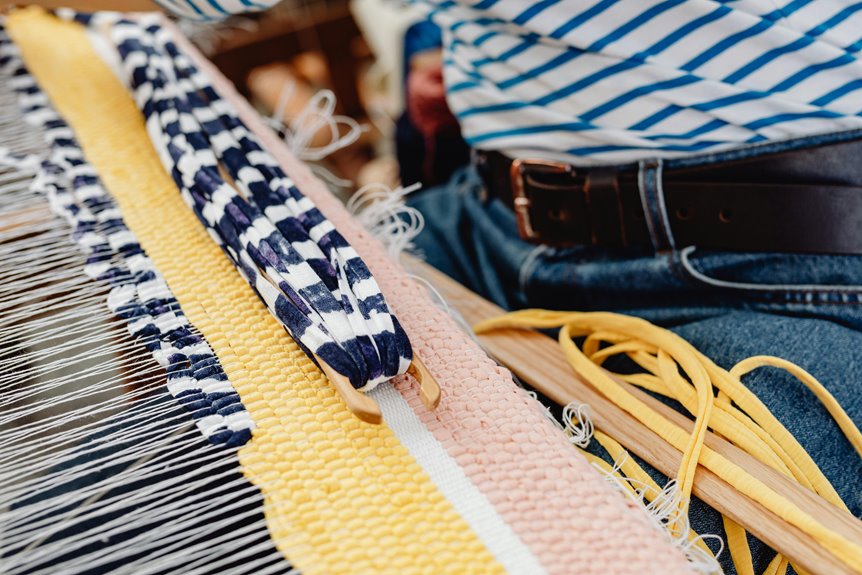
You’ll create sharp, consistent striped patterns using the fan-fold (accordion) technique by making precise, alternating folds that form neat pleats. Start by measuring equal sections and use a ruler for crisp creases. Choose flexible, sturdy paper like cardstock to avoid uneven stripes. Apply firm pressure on each valley and mountain fold to keep lines clean and uniform. Once you’ve mastered these basics, you can explore color choices, texture, and creative twists to make your striped designs truly stand out.
Key Takeaways
- The fan-fold technique creates striped patterns by alternating mountain and valley folds in equal widths like an accordion.
- Use sturdy, flexible paper such as cardstock and measure folds precisely for sharp, consistent stripes.
- Press each fold firmly, using tools like a bone folder, to achieve crisp, uniform pleats and neat alignment.
- Choose contrasting or complementary colors and balanced saturation to enhance the vibrancy and mood of stripes.
- Experiment with textures and varying fold widths to add depth and unique visual effects to striped patterns.
Understanding the Basics of Fan-Fold Techniques
Before you plunge into creating striped patterns with the fan-fold technique, it’s important to grasp the basic folding method.
You start by folding your material back and forth in equal, narrow sections, like an accordion. Each fold should be crisp and consistent to guarantee the pattern looks sharp. Keep your folds aligned so they stack neatly, which forms the foundation for any striped design.
As you fold, pressing down firmly helps maintain the shape. Remember, the width of each fold determines the stripe’s width, so stay precise.
Once folded, the fan-folded piece expands and contracts smoothly, allowing you to manipulate it into various shapes. Mastering these basics will set you up for success in crafting clean, eye-catching striped patterns.
Choosing the Right Materials for Fan-Folding
Now that you’ve got a handle on the basic folding technique, choosing the right materials will help bring your striped patterns to life.
Start with paper that’s sturdy yet flexible, like cardstock or high-quality origami paper. Avoid materials that are too thick or stiff, as they can resist folding and create uneven stripes.
Choose sturdy yet flexible paper like cardstock or origami for smooth, even striped folds without resistance.
Consider the texture and finish—smooth surfaces show clean lines better, while textured paper adds character. If you want vibrant stripes, pick papers with bold, contrasting colors or pre-printed patterns.
You can also experiment with fabrics or thin plastic sheets, but make certain they hold creases well.
Finally, use a sharp, precise cutting tool to guarantee clean edges; rough cuts can ruin the crisp look essential to fan-fold stripes.
Step-by-Step Guide to Creating Fan-Fold Stripes
Once you’ve selected your materials, you’ll want to start by measuring and marking equal sections on your paper to guarantee consistent folds. Use a ruler and pencil to lightly mark intervals along the edges.
Next, fold the paper at each mark, alternating between valley and mountain folds to create the fan-fold shape. Press each fold firmly to maintain sharp creases. Continue folding until you reach the end of the paper.
Once folded, align the edges so that the stripes formed by the folds are straight and even. You can then secure the ends with clips or light adhesive if needed.
Finally, open and adjust the fan-fold to display your striped pattern clearly, ensuring the accordion effect stands out.
Tips for Achieving Even and Consistent Stripes
After mastering the folding process, focus on refining your technique to keep stripes even and consistent. Start by measuring and marking your folds lightly with a pencil to maintain uniform width throughout.
Use a ruler or straight edge to guide each crease sharply, ensuring clean, precise lines. Apply consistent pressure while folding to avoid uneven thickness or bulges.
When working with longer strips, fold slowly and double-check alignment at each step to prevent shifting. Keep your work surface flat and stable to help maintain straight folds.
Finally, practice patience—regularly stepping back to assess your progress will help you spot and correct any inconsistencies early. With these tips, your striped patterns will look crisp, balanced, and professional every time.
Color Selection Strategies for Striped Patterns
When choosing colors for your striped patterns, think about complementary pairings to make your design pop.
You can also play with contrast for bold stripes or harmony for a softer look.
Complementary Color Pairings
Although selecting colors for striped patterns can be challenging, using complementary color pairings simplifies the process by creating a dynamic and balanced visual effect.
When you choose colors opposite each other on the color wheel—like blue and orange or red and green—you naturally generate vibrant contrast that grabs attention. This technique enhances the fan-fold pattern‘s rhythm, making each stripe stand out distinctly without overwhelming the eye.
You can adjust saturation and brightness to soften or intensify the pairing, giving you control over the pattern’s energy. By focusing on complementary colors, you guarantee your stripes maintain visual interest and cohesion.
Contrast and Harmony Choices
Since choosing the right colors can make or break your striped pattern, understanding contrast and harmony is key to effective design. You want your stripes to pop without clashing, so balancing bold contrasts with harmonious blends is essential. Use high contrast for dynamic, eye-catching patterns, or opt for harmonious tones to create soothing, cohesive looks. Here’s a quick guide to help you select colors wisely:
| Contrast Level | Effect | Best Use Case |
|---|---|---|
| High | Vibrant, bold | Modern, energetic |
| Medium | Balanced | Everyday appeal |
| Low | Subtle, calm | Elegant, soft designs |
| Warm-Harmony | Inviting, cozy | Home decor |
| Cool-Harmony | Calm, invigorating | Office, minimalism |
Keep your target mood in mind to make stripes work for you.
Incorporating Fan-Fold Stripes Into Fabric Projects
When incorporating fan-fold stripes into your fabric projects, choose fabric types that hold folds well and complement your design.
You’ll need to align stripes precisely to keep patterns consistent throughout your work.
Make sure to secure the folds firmly during sewing to maintain the striped effect without shifting.
Selecting Fabric Types
Choosing the right fabric plays an essential role in showcasing fan-fold stripes effectively in your projects. You want materials that hold crisp folds and display stripes vividly. Here’s what to take into account:
- Cotton – It’s breathable and holds pleats well, perfect for casual wear or home décor.
- Silk – Offers a luxurious sheen, making your stripes pop with elegance.
- Polyester blends – These resist wrinkles, guaranteeing your fan-fold stays sharp longer.
- Canvas or denim – Ideal for structured items where durability and bold stripes matter.
Selecting the right fabric guarantees your fan-fold stripes aren’t just seen but felt.
It boosts your project’s visual appeal and durability, making your work stand out with confidence and style.
Aligning Stripes Accurately
Fabric selection sets the stage, but aligning fan-fold stripes accurately brings your design to life. Start by carefully matching stripe edges before folding to guarantee continuity throughout the fabric.
Lay your fabric on a flat surface and use pins to hold each stripe in place, checking alignment from both sides. Use a ruler or measuring tape to confirm consistent spacing, especially where stripes meet at seams.
Keep your folds crisp and even, as uneven folds can distort stripe placement. Take your time to adjust and re-pin as necessary—precision here prevents frustrating mismatches later.
Securing Folds During Sewing
Securing every fold with care guarantees your fan-fold stripes hold their precise alignment throughout sewing.
To keep those crisp accordion pleats intact, follow these essential steps:
- Pin each fold firmly at the edges to prevent shifting.
- Use a fine, sharp needle and matching thread for neat stitches.
- Sew slowly along the fold lines, maintaining even tension.
- Press seams gently with a warm iron to set the folds without flattening them.
Using Fan-Fold Techniques in Paper Crafts
When you apply fan-fold techniques in paper crafts, you’ll create striking striped patterns with ease and precision. Start by folding your paper back and forth evenly, creating uniform pleats that form sharp, consistent stripes when viewed from the edge.
You can use different colored papers or paint alternating sections before folding to enhance the striped effect. This method works well for making cards, decorations, or even paper sculptures where texture and pattern matter.
Make sure to crease each fold firmly to keep the structure crisp. Once folded, you can glue or tape the ends to maintain the shape or combine multiple fan-fold strips for complexity.
Using this technique, you’ll add dynamic visual interest to your paper projects simply and effectively.
Creative Variations on Traditional Fan-Fold Stripes
You can experiment with bold color combinations to make your fan-fold stripes stand out.
Try adjusting the size of your patterns to create unique visual effects and add depth.
Don’t forget to incorporate different textures, which can bring a whole new dimension to your designs.
Color Combinations Exploration
Exploring various color combinations can transform traditional fan-fold stripes into vibrant, eye-catching designs. You don’t have to stick to predictable palettes; mixing unexpected hues can make your stripes pop.
Here’s how you can experiment effectively:
- Contrast Boldly: Pair dark shades with bright colors to create striking visual tension that demands attention.
- Blend Harmoniously: Use analogous colors (neighbors on the color wheel) for a soothing, seamless flow.
- Incorporate Neutrals: Add whites, grays, or blacks to balance vivid colors and give your design breathing room.
- Play with Saturation: Mix muted tones with saturated ones to add depth and intrigue to your fan-fold pattern.
Pattern Size Adjustments
Although traditional fan-fold stripes have a classic charm, adjusting the pattern size can reveal fresh and dynamic looks. You can vary the width of each fold to create bold, oversized stripes or delicate, narrow ones.
Experimenting with larger folds adds a dramatic, modern feel, while smaller folds produce intricate, detailed patterns. Don’t hesitate to mix fold sizes within a single design; this contrast energizes your piece and adds depth.
Keep in mind that changing the pattern size affects how light and shadow play across the folds, enhancing your stripe’s visual impact. By fine-tuning your fan-fold dimensions, you gain control over rhythm and movement, making your striped patterns uniquely yours without straying from the fan-fold’s fundamental technique.
Texture Integration Techniques
When you incorporate different textures into fan-fold stripes, the traditional technique takes on new life and complexity.
You transform simple patterns into tactile experiences that engage both sight and touch. Here’s how you can creatively integrate textures:
- Mix fabrics like velvet and linen to contrast softness and roughness, adding depth.
- Use embossed papers to introduce subtle relief, catching light differently across folds.
- Incorporate metallic threads along stripe edges for a shimmering effect that enhances movement.
- Layer transparent materials such as organza over solid stripes, creating visual intrigue and dimension.
Troubleshooting Common Fan-Fold Challenges
If you run into issues while creating fan-fold striped patterns, don’t worry—most problems have straightforward fixes.
If your folds aren’t crisp, try running a bone folder or the edge of a ruler along each crease to sharpen them. Uneven stripes often result from inconsistent fold widths; measure carefully and mark fold lines lightly before folding.
Sharpen folds with a bone folder and ensure even stripes by measuring and marking fold lines precisely.
If the paper tears or wrinkles, use a heavier, more durable paper and fold gently. When stripes don’t align after unfolding, double-check your fold sequence and keep folds tight and uniform.
Finally, if paint or ink bleeds across stripes, allow each layer to dry fully before folding again. By addressing these common challenges, you’ll guarantee clean, sharp fan-fold striped patterns every time.
Inspiring Project Ideas Featuring Fan-Fold Stripes
Since fan-fold stripes add dynamic texture and visual interest, you can use them to create stunning cards, decorative wall art, or unique gift wrap.
These stripes bring a fresh, tactile element that instantly elevates your projects. To spark your creativity, try these ideas:
- Design a birthday card with fan-fold stripes layered for a 3D effect that surprises and delights.
- Craft a bold, striped wall hanging that plays with light and shadow, adding depth to any room.
- Wrap presents using fan-fold striped paper to make your gifts stand out with artistic flair.
- Create bookmarks featuring fan-fold stripes, combining functionality with eye-catching design.
Frequently Asked Questions
Can Fan-Fold Techniques Be Used With Metallic or Specialty Fabrics?
You can use fan-fold techniques with metallic or specialty fabrics, but you’ll need to handle them carefully to avoid damage. These fabrics are delicate, so take your time folding to keep their texture and shine intact.
How Do Environmental Factors Affect Fan-Fold Crease Durability?
Wonder how humidity and temperature impact your fan-fold creases? They can weaken fibers and cause wrinkles to relax faster. You’ll want to store folded fabrics in a cool, dry place to keep creases sharp and durable.
Are There Historical Origins of the Fan-Fold Technique in Different Cultures?
You’ll find fan-fold techniques have roots in various cultures, like Japanese origami and Chinese paper folding. Each developed unique crease styles for folding, reflecting their artistic traditions and practical uses throughout history.
What Tools Are Recommended for Precision Fan-Fold Measurements?
You’ll find that using a metal ruler and a scoring board boosts precision by up to 90%. Don’t forget a bone folder to create crisp folds; these tools guarantee every crease is perfectly measured and sharp.
Can Fan-Fold Stripes Be Combined With Other Folding Techniques?
Yes, you can combine fan-fold stripes with other folding techniques like pleats or crimps. Mixing methods adds texture and visual interest, letting you create unique, dynamic patterns that stand out in your projects.