
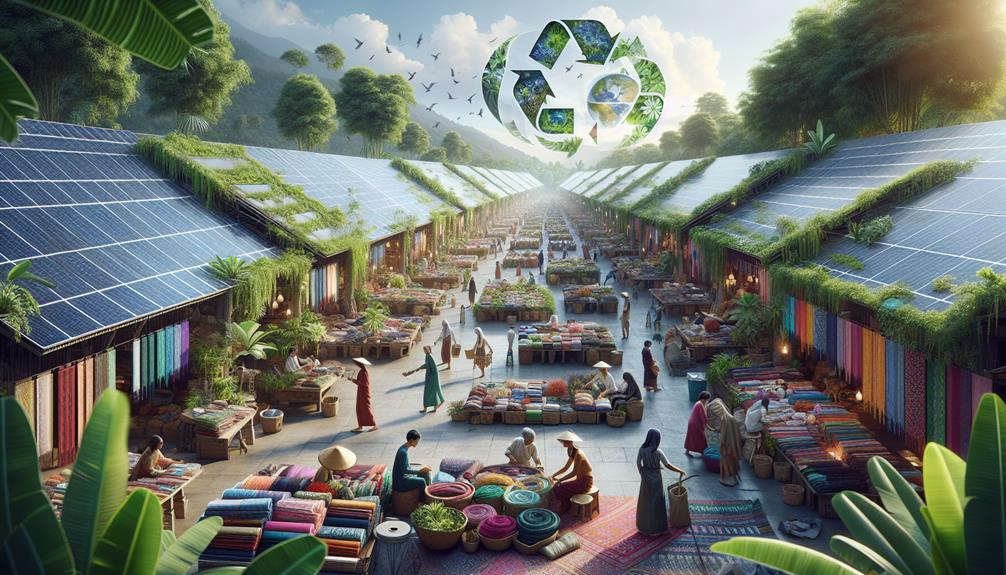
Just as Midas turned everything he touched to gold, the shift towards sustainable fabrics seems to promise a golden future for the textile industry. You might wonder why the initial costs are higher and if the investment is truly worth it. The supply chain, ethical labor practices, and eco-friendly production methods all play significant roles. However, don't overlook the long-term financial benefits and the growing consumer demand for eco-friendly options. So, how do these factors come together to shape the market and impact brand loyalty? Let's explore this intricate web.
Key Takeaways
- Higher raw material and production costs are offset by long-term financial savings and durability of sustainable fabrics.
- Ethical labor practices and fair trade certification increase initial costs but ensure fair treatment and safe working conditions.
- Eco-friendly production methods reduce environmental impact and can lead to lower long-term operating expenses.
- Innovations in textile technology, such as closed-loop systems and biodegradable fibers, contribute to sustainability and reduce waste.
- Government incentives and consumer demand drive market growth and compliance with eco-friendly practices, enhancing brand reputation.
Cost of Raw Materials
When considering sustainable fabrics, the cost of raw materials is often a significant factor that influences their overall price. You can't ignore how the supply chain plays a pivotal role in determining these costs.
From the cultivation of organic cotton to the extraction of bamboo fibers, each step in the supply chain has its own set of expenses that add up. These materials are usually sourced in environmentally friendly ways, which often means more labor-intensive processes and stricter regulations.
Production costs for sustainable fabrics are generally higher compared to conventional ones. This is because sustainable methods often require specialized equipment and technologies that minimize environmental impact.
For instance, the dyeing process for eco-friendly fabrics frequently uses less water and avoids harmful chemicals, but these methods can be more expensive.
Ethical Labor Practices
Ethical labor practices guarantee that workers in the sustainable fabric industry are treated fairly and work under safe conditions. When you choose sustainable fabrics, you're not just investing in eco-friendly materials but also supporting fair trade principles. This means that the workers involved in the production process are paid fair wages, have reasonable working hours, and enjoy a safe working environment.
Understanding fair trade is essential. It secures that the economic benefits are equitably distributed, allowing workers to lead dignified lives. Fair trade certification often requires companies to comply with stringent standards that protect worker rights, ranging from freedom of association to safe working conditions.
As you explore further into the sustainable fabric market, you'll find that ethical labor practices are often emphasized as a core value. Brands adhering to these practices frequently offer transparency in their supply chains, allowing you to track the journey of your fabric from farm to finished product. This transparency fosters trust and guarantees that the workers aren't exploited.
Eco-Friendly Production Methods
Incorporating eco-friendly production methods significantly reduces the environmental footprint of sustainable fabrics. By focusing on every step of the supply chain, from raw material sourcing to manufacturing, you can notably lower the environmental impact. Organic farming, water-efficient dyeing, and recycling processes are just a few examples of such methods. They not only conserve resources but also minimize pollution.
Consider the following key aspects:
| Aspect | Traditional Method | Eco-Friendly Method |
|---|---|---|
| Water Usage | High | Low |
| Energy Consumption | Non-renewable sources | Renewable sources |
| Waste Management | Landfills | Recycling and composting |
You'll find that traditional methods often involve high water usage and non-renewable energy sources, leading to substantial waste. In contrast, eco-friendly techniques utilize renewable energy and recycling, sharply reducing waste and conserving natural resources.
Implementing these practices across the supply chain ensures that each stage contributes to a smaller environmental impact. By doing so, you don't just create a more sustainable product; you also set a standard for responsible production in the textile industry. This holistic approach is essential for achieving true sustainability in fabric manufacturing.
Innovations in Textile Technology
Building on eco-friendly production methods, innovations in textile technology are pushing the boundaries of what's possible in sustainable fabric manufacturing.
You're seeing a shift towards a circular economy, where the focus is on minimizing textile waste and maximizing resource efficiency. Companies are developing closed-loop systems that reclaim and recycle materials, transforming old garments into new, high-quality fabrics. This approach not only reduces landfill waste but also conserves valuable raw materials.
Biodegradable fibers are another groundbreaking advancement. These fibers break down naturally, returning to the earth without leaving harmful residues. They're being engineered to offer the same durability and comfort as traditional textiles, making them a viable option for both consumers and manufacturers.
You'll find these fibers increasingly used in performance fabrics, which are designed to meet high standards of functionality and resilience while remaining environmentally friendly.
Long-Term Financial Benefits
Investing in sustainable fabrics can lead to significant long-term financial savings for both manufacturers and consumers. When you opt for sustainable practices, the initial cost might seem higher, but the investment returns are substantial.
For manufacturers, sustainable fabrics often imply less resource-intensive production processes, resulting in lower utility bills and reduced waste management costs. These savings translate into lower operating expenses over time.
On the consumer side, sustainable fabrics tend to be more durable, requiring fewer replacements. This longevity means you'll spend less on clothing in the long run, garnering considerable financial savings.
Additionally, as the environmental impact of traditional textiles becomes increasingly scrutinized, regulations and penalties for non-compliance are likely to rise. By investing in sustainable fabrics now, you can avoid future costs associated with environmental penalties and adhere to evolving industry standards.
Moreover, sustainable practices bolster your brand reputation, attracting environmentally-conscious consumers willing to pay a premium. This enhanced brand loyalty can lead to higher sales and, consequently, better investment returns.
Essentially, embracing sustainable fabrics not only benefits the planet but also your financial health, making it a wise, forward-thinking investment.
Consumer Demand Trends
You're part of a growing eco-conscious movement that's reshaping the market. As consumers like you prioritize sustainability, purchasing behavior is shifting towards fabrics that offer environmental benefits.
This trend influences not only individual choices but also compels companies to adapt their strategies.
Growing Eco-Conscious Movement
The rise in consumer demand for sustainable fabrics reflects a growing eco-conscious movement aiming to reduce environmental impact. This surge isn't just a trend; it's a paradigm shift toward circular fashion and sustainable sourcing. You're witnessing an era where transparency in the supply chain and ethical considerations are paramount.
Consumers like you're demanding fabrics that not only look good but also align with environmental values. Circular fashion is at the heart of this movement. It encourages recycling, upcycling, and the use of biodegradable materials to minimize waste.
Imagine a world where your old clothes don't end up in landfills but are repurposed into new garments. This vision is becoming a reality, driven by your informed choices and the industry's response. Sustainable sourcing is another critical element. You're likely seeking out brands that prioritize organic, renewable materials and ethical labor practices.
It's not just about the end product; it's about knowing the journey each fabric has taken. Your decisions are propelling brands to adopt more responsible sourcing techniques, ensuring that the entire lifecycle of a garment is eco-friendly.
Shifts in Purchasing Behavior
As awareness grows about the environmental impact of fashion, your purchasing behavior is shifting towards more sustainable and ethically produced fabrics. You're not alone in this trend; consumer awareness around sustainable fashion is skyrocketing. People are increasingly valuing transparency in production processes, and this is reshaping the market.
Your choices now reflect a deeper understanding of environmental impact. Whether it's opting for organic cotton or recycled polyester, you're consciously investing in the future. The shift you're part of isn't just a fad; it's a significant movement towards responsible consumption.
Here's a brief comparison of how your consumer choices have evolved over time:
| Time Period | Previous Choices | Current Choices |
|---|---|---|
| 5 Years Ago | Fast fashion, synthetic fabrics | Sustainable fashion, natural fibers |
| 3 Years Ago | Low-cost, high-volume purchases | Quality over quantity |
| 1 Year Ago | Limited eco-friendly options | Wide range of sustainable options |
| Last 6 Months | Minimal brand transparency | Full disclosure on sourcing |
| Present | Mixed consumer awareness | High consumer awareness |
Government Regulations and Incentives
Governments worldwide are implementing regulations and offering incentives to foster the adoption of sustainable fabrics. By incentivizing compliance, they aim to make eco-friendly practices not just a moral choice but also an economically viable one. Regulatory oversight guarantees that manufacturers adhere to stringent environmental standards, effectively pushing the industry towards sustainability. When you conform to these regulations, you're not only avoiding penalties but also potentially gaining financial benefits through tax breaks or subsidies.
Additionally, governments are setting up grants and funding opportunities to support research and development in sustainable textiles. These incentives are designed to lower the financial barriers that might deter companies from embracing greener practices. By participating, you can gain a competitive edge and contribute to a more sustainable future.
Moreover, regulations often include transparency requirements, assuring that consumers can trust the sustainable claims made by manufacturers. This level of regulatory oversight builds consumer confidence and can drive demand for your sustainable products. Ultimately, by aligning with these government initiatives, you're positioning your business for long-term success in an increasingly eco-conscious market. Adopting sustainable fabrics isn't just good for the planet; it's a smart business strategy.
Market Impact and Growth
Sustainable fabrics are reshaping the market by driving consumer demand and fostering industry innovation. You're witnessing a seismic shift in how materials are produced and consumed, with sustainable fashion taking center stage. This change isn't just a trend; it's a response to growing awareness about environmental impact and a drive towards a circular economy.
As brands adopt more sustainable practices, they're not just meeting consumer expectations; they're setting new industry standards. The market impact is profound, as seen in the surge of eco-friendly collections and the rise of new business models that prioritize longevity and recyclability.
Here's a quick glance at the market impact:
| Aspect | Traditional Fabrics | Sustainable Fabrics |
|---|---|---|
| Consumer Demand | Steady | Rapid Growth |
| Industry Innovation | Incremental | Disruptive |
| Environmental Impact | High | Low |
| Market Value | Stable | Expanding |
Brand Loyalty and Sustainability
Brand loyalty is increasingly tied to a company's commitment to sustainability. When you choose a brand that prioritizes sustainable fabrics, you're not just buying a product; you're investing in a philosophy. This relationship hinges on several critical factors that directly influence consumer trust and the perceived environmental impact of your choices.
- Transparency: Brands that openly share their sustainability practices, including sourcing and production processes, build stronger consumer trust. You want to know exactly how your purchase affects the environment.
- Quality: Sustainable fabrics often offer superior durability, which translates to longer-lasting products. This reduces waste and enhances the brand's reputation for quality in your eyes.
- Consistency: Companies that consistently prioritize sustainability in all their operations, not just as a marketing gimmick, foster deeper loyalty. You appreciate a brand that walks the talk.
- Innovation: Brands that invest in new sustainable materials and technologies show a commitment to future-proofing their environmental impact. This forward-thinking approach resonates with your desire for long-term solutions.
Frequently Asked Questions
How Do Sustainable Fabrics Compare in Durability to Traditional Fabrics?
You'll find that sustainable fabrics often offer greater durability compared to traditional fabrics. This means reduced environmental impact and long-term savings, as you won't need to replace items as frequently.
Are There Any Health Benefits Associated With Wearing Sustainable Fabrics?
You'll find eco-friendly advantages in sustainable fabrics, including fewer chemicals and allergens. These health benefits mean less skin irritation and better overall well-being. Opting for sustainable fabrics isn't just good for the planet; it's good for you.
What Are the Common Misconceptions About Sustainable Fabrics?
"Don't judge a book by its cover." You might think sustainable fabrics are always eco-friendly, but beware of greenwashing dangers. Also, many assume they're too pricey, yet understanding cost implications can reveal long-term savings.
How Can Consumers Identify Truly Sustainable Fabrics?
To identify truly sustainable fabrics, you must enhance your consumer awareness. Investigate fabric sourcing methods, prioritize materials with low environmental impact, and guarantee ethical production practices. Certifications and transparency from brands are essential indicators.
Do Sustainable Fabrics Have a Smaller Carbon Footprint Than Conventional Fabrics?
You'll find that sustainable fabrics generally have a smaller carbon footprint than conventional ones. Their environmental impact is lower due to eco-friendly production methods, reduced resource consumption, and a more efficient, transparent supply chain.