
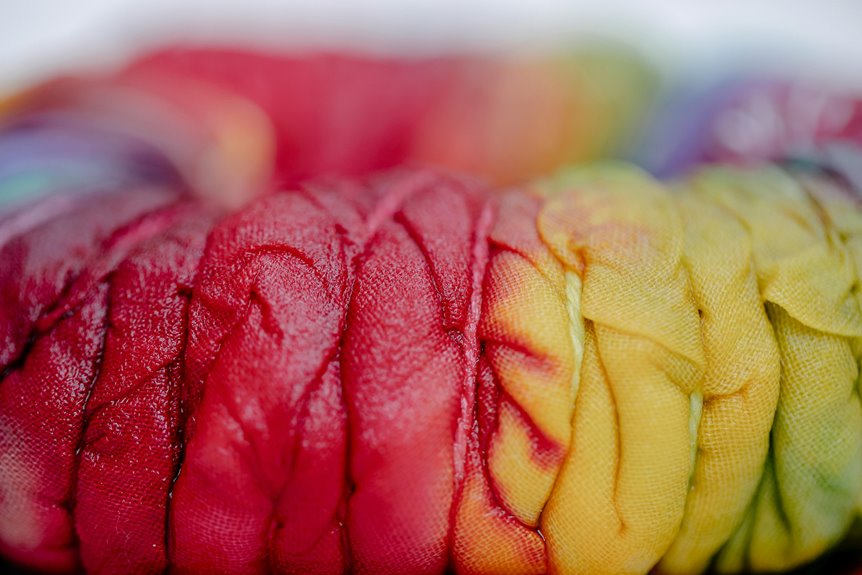
The easiest tie-dye technique is the no-fold crumple method, which lets you create vibrant designs without complex folds. Start with a damp cotton shirt, crumple it loosely into a random mound, then apply fiber-reactive dyes using squeeze bottles for controlled color placement. Keep your workspace covered and wear gloves to avoid stains. After dyeing, rinse in cold water until clear, then wash separately. If you want to explore creative color combos and care tips, stick around for more details.
Key Takeaways
- Start with a damp plain white cotton shirt for best dye absorption and even color spread.
- Crumple fabric loosely into a mound without creating tight folds or creases.
- Apply fiber-reactive dyes using squeeze bottles, layering lighter colors first and avoiding oversaturation.
- Rotate the fabric while dyeing to ensure even coverage and varied color patterns.
- Rinse the dyed fabric in cold water until clear, then wash separately on a gentle cycle to preserve colors.
What You Need for the No-Fold Crumple Method
Before you begin, gather all the essential materials for the no-fold crumple method.
You’ll need a plain white cotton shirt or fabric, as natural fibers absorb dye best. Grab your favorite fiber-reactive dyes in squeeze bottles for easy application.
Don’t forget rubber gloves to protect your hands from stains and a plastic table cover or garbage bags to keep your workspace clean.
Have several rubber bands or plastic wrap on hand to secure your fabric if you want more defined patterns, but they’re optional.
You’ll also want spray bottles filled with water to keep the fabric damp during dyeing.
Finally, prepare plastic bags or airtight containers to let your dyed fabric set and develop vibrant colors without drying out too quickly.
With these ready, you’re all set to start the fun!
Preparing Your Fabric for Dyeing
Start by thoroughly dampening your fabric with water; a consistently moist surface helps the dye spread evenly during the no-fold crumple process.
Make sure your fabric is damp but not dripping wet to avoid colors running together too much. Lay it flat on a clean surface, ready for the next step.
Keep your fabric damp but not soaking to prevent colors from blending excessively; lay it flat to prepare for dyeing.
Before dyeing, consider these prep tips:
- Use natural fibers like cotton for best absorption.
- Wash fabric beforehand to remove sizing or chemicals.
- Wear gloves to protect your hands from stains.
- Cover your workspace with plastic or newspapers.
- Have squeeze bottles or spray bottles ready for dye application.
Proper preparation sets the stage for vibrant, well-distributed colors in your tie-dye project.
How to Crumple Your Fabric Correctly
Mastering three key steps will help you crumple your fabric correctly for the no-fold crumple method.
First, lay your fabric flat on a clean surface.
Next, use your hands to gently scrunch the fabric into a loose mound, avoiding tight folds or creases. The goal is to create random, uneven layers that allow dye to penetrate in varied patterns.
Finally, secure the crumpled fabric by lightly squeezing it to maintain its shape without compressing it too tightly. This balance guarantees the dye spreads naturally, producing vibrant, organic designs.
Applying the Dye: Tips and Techniques
Once you’ve crumpled your fabric properly, applying the dye becomes an intuitive process that brings your design to life.
After crumpling your fabric, dyeing flows naturally, turning your design into a vibrant work of art.
You’ll want to approach it with both creativity and care to guarantee vibrant, fun results. Here are some tips to keep in mind:
- Use squeeze bottles for precise color placement.
- Apply dye in layers, starting with lighter colors.
- Don’t oversaturate; let some white space peek through.
- Rotate your fabric as you dye to cover all angles.
- Wear gloves to keep your hands clean and prevent color mixing.
Setting and Rinsing Your Tie-Dye
After applying your dye layers, you’ll want to set the colors properly to guarantee they stay vibrant through washing.
Start by wrapping your dyed fabric in plastic wrap or placing it in a sealed plastic bag. Let it sit for 6 to 8 hours, or overnight, at room temperature. This waiting period allows the dye to bond fully with the fibers.
Once time’s up, remove the fabric from the plastic and rinse it under cold water. Begin rinsing gently to remove excess dye, then gradually switch to warmer water until the water runs clear.
Finally, wash your tie-dye item separately with a mild detergent in cold water. Air dry or tumble dry on low, and your vibrant, no-fold crumple tie-dye is ready to wear!
Creative Color Combinations to Try
You can make your no-fold crumple tie-dye really pop by pairing bold colors like red and black or blue and orange.
If you prefer a softer look, try mixing pastel shades such as lavender, mint, and peach for a gentle blend.
Experiment with these combinations to find the perfect vibe for your project.
Bold Color Pairings
Several bold color pairings can transform your no-fold crumple tie-dye into eye-catching masterpieces. By choosing vibrant, contrasting colors, you’ll make your designs pop with energy and excitement.
Try these daring combos to give your project a striking look:
- Electric blue and neon orange for a high-voltage vibe
- Hot pink paired with lime green to create a playful punch
- Deep purple mixed with bright yellow for royal contrast
- Fiery red combined with cobalt blue for intense drama
- Black and white with a splash of gold for a modern edge
These bold choices amplify the randomness of the crumple method, turning your fabric into a lively canvas full of personality.
Don’t be afraid to experiment—bold colors make your tie-dye truly unforgettable.
Pastel Palette Ideas
While bold colors energize your no-fold crumple tie-dye, softer hues can create a soothing, dreamy effect.
Try mixing pastel pink with mint green for a fresh, springtime vibe. Lavender paired with pale yellow adds a gentle warmth that feels light and airy. You can also experiment with baby blue and peach for a calming, beach-inspired look.
To keep your pastels vibrant, dilute your dyes slightly less than usual and apply them evenly over the crumpled fabric. Remember, layering different pastel shades enhances depth without overwhelming the design.
This approach is perfect if you want a subtle, elegant twist on the traditional tie-dye style. So, grab your dyes and let these delicate palettes inspire your next no-fold crumple project!
Caring for Your Finished Tie-Dye Piece
Because vibrant colors can fade quickly, caring for your finished tie-dye piece properly guarantees it stays bright and beautiful.
Proper care ensures your vibrant tie-dye creation remains bright and beautiful for years to come.
Right after dyeing, rinse your piece in cold water until the water runs clear to remove excess dye. Then, wash it separately to prevent color transfer.
When it’s time to clean, follow these tips:
- Use cold water and a gentle cycle.
- Avoid bleach or harsh detergents.
- Turn your garment inside out before washing.
- Air dry or use a low heat setting in the dryer.
- Store it away from direct sunlight to minimize fading.
Frequently Asked Questions
Can This Method Be Used on Materials Other Than Cotton?
You can definitely try this on silk, like how a designer experimented with crumple dye for scarves. Just remember, synthetic fabrics might not absorb dye well, so natural fibers like silk or rayon work best for vibrant results.
How Long Does the Dye Take to Fully Set?
The dye usually takes about 6 to 8 hours to fully set, but you can speed things up by letting it sit overnight. Just keep it wrapped and damp to guarantee vibrant, lasting colors.
Is the No-Fold Crumple Method Suitable for Kids?
You’ll find this method like painting with a rainbow tornado—perfectly wild and fun! It’s safe and simple enough for kids to enjoy, letting their creativity soar without needing perfect folds or precision.
Can You Reuse Leftover Dye for Another Project?
You can reuse leftover dye, but it may be less vibrant. Store it in an airtight container and keep it cool. Just remember, reusing dye might not give you the same bright colors on your next project.
What Are Common Mistakes to Avoid With This Technique?
Oh sure, just ignore fabric prep and oversaturate dye—what could possibly go wrong? You’ll want to avoid uneven crumpling, using old dye, and skipping the gloves. Trust me, these slip-ups ruin your vibrant masterpiece.