
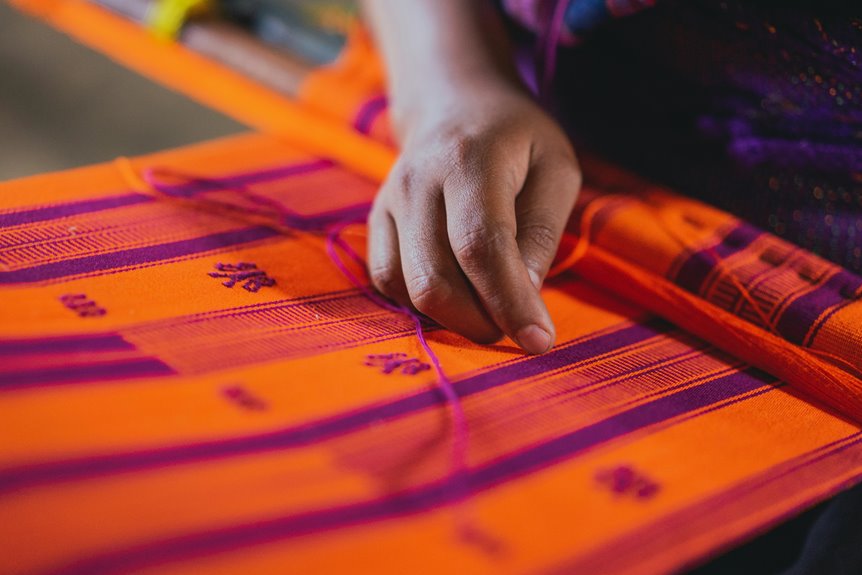
You’ll find handloom Ikat features soft, textured fabric with blurred, organic patterns created through meticulous, time-intensive resist-dyeing of threads. Powerloom Ikat, on the other hand, offers sharper designs and smoother texture due to faster, automated weaving methods that boost efficiency and consistency. Handloom pieces carry rich cultural heritage and artisan value, while powerloom versions are more affordable and widely available. If you want to understand their craftsmanship and cultural importance more deeply, keep exploring these fascinating techniques.
Key Takeaways
- Handloom Ikat is resist-dyed and woven manually, producing soft textures and blurred patterns with subtle color variations.
- Powerloom Ikat uses mechanized weaving, resulting in sharp pattern edges, smooth texture, and consistent color application.
- Handloom Ikat requires skilled artisans, extensive time, and hand finishing, reflecting cultural heritage and craftsmanship.
- Powerloom Ikat enables faster, mass production with uniform quality, making it more affordable and widely available.
- Handloom Ikat is exclusive and expensive, favored by connoisseurs, while Powerloom Ikat targets budget-conscious buyers with similar designs.
Understanding the Ikat Dyeing Technique
Although Ikat dyeing might seem complex, once you understand its core technique, you’ll appreciate the skill behind each piece.
Ikat involves resist-dyeing the threads before weaving, meaning you dye the yarns in specific patterns rather than the finished fabric. You tightly bind sections of the yarn to prevent dye penetration, creating precise designs once woven.
This process demands careful planning since the patterns emerge only after weaving the dyed threads. You’ll notice the characteristic blurry edges in Ikat, a result of dye seeping slightly under the bindings.
This unique look sets Ikat apart from other textiles. Whether you’re examining handloom or powerloom Ikat, this foundational dyeing method is essential to the fabric’s distinctive appeal and artistry, highlighting the intricate preparation behind every design.
The Craftsmanship Behind Handloom Ikat
When you admire a handloom Ikat, you’re witnessing the result of meticulous skill and patience. Every piece involves intricate steps that only skilled artisans can execute by hand. The process demands precision and a deep understanding of the craft.
Handloom Ikat showcases meticulous skill, patience, and the artisan’s deep mastery of every intricate step.
Here’s what you can appreciate about the craftsmanship behind handloom Ikat:
- Carefully tying bundles of yarn to resist dye in specific areas
- Repeated dyeing and drying to build complex color patterns
- Aligning dyed yarns perfectly on the loom before weaving
- Weaving each thread by hand to maintain pattern accuracy
- Spending days or even weeks to complete a single fabric
This hands-on approach guarantees each handloom Ikat is unique, reflecting the artisan’s expertise and dedication.
Mechanization and Efficiency in Powerloom Ikat
When you use powerlooms, the weaving process becomes mechanized, letting you produce fabric much faster than by hand.
You’ll notice significant gains in speed and productivity, which can lower overall costs.
However, you’ll also need to contemplate the energy consumption that comes with running these machines.
Mechanized Weaving Process
Because powerloom Ikat uses mechanized weaving, it greatly boosts production speed and consistency compared to handloom methods.
When you operate a powerloom, you engage with advanced machinery that automates weaving steps, reducing manual intervention.
Here’s what you can expect from the mechanized weaving process:
- Automated shuttle movements guarantee uniform fabric tension
- Computerized controls maintain precise pattern alignment
- Consistent thread feeding minimizes errors and breaks
- Mechanized beat-up delivers even fabric density
- Reduced human fatigue allows longer operational hours
This system streamlines production while preserving Ikat’s intricate designs.
You’ll find that mechanization not only standardizes quality but also simplifies the weaving process, making powerloom Ikat a reliable choice when you want consistency without compromising traditional aesthetics.
Speed and Productivity Gains
The mechanized weaving process directly impacts the speed and productivity of powerloom Ikat, enabling you to produce fabric at a much faster rate than traditional handloom methods. Powerlooms operate continuously and with greater consistency, letting you meet larger orders without sacrificing quality. While handlooms are limited by manual labor speed, powerlooms boost output considerably, reducing production time.
| Aspect | Impact on Production |
|---|---|
| Weaving Speed | Powerlooms weave 5-10x faster |
| Output Volume | Larger batch production possible |
| Consistency | Uniform fabric quality |
| Labor Intensity | Reduced manual effort |
| Production Time | Shortened considerably |
This efficiency means you can scale your business and respond quickly to market demands.
Energy Consumption and Costs
Although powerlooms offer impressive speed and output, they also demand considerably more energy than handlooms, which impacts your overall production costs.
When you switch to powerloom Ikat, you’ll notice a spike in electricity bills due to continuous machine operation. This mechanization makes production faster but less energy-efficient.
Consider these factors when evaluating energy consumption and costs:
- Powerlooms need constant electrical power, unlike manual handlooms.
- Increased energy use raises monthly utility expenses.
- Maintenance costs for electrical parts add to overall spending.
- Handlooms rely on physical effort, minimizing energy bills.
- Powerloom efficiency can reduce labor costs but not energy costs.
Understanding these trade-offs helps you balance efficiency with operational expenses effectively.
Visual and Textural Differences Between Handloom and Powerloom Ikat
When you compare handloom and powerloom Ikat, you’ll notice distinct differences in both appearance and texture. Handloom Ikat often displays slight irregularities and softer edges, giving it a unique, artisanal charm. Powerloom Ikat tends to be more uniform and precise but can feel less textured and flat. These differences influence how the fabric looks and feels to you.
| Feature | Handloom Ikat | Powerloom Ikat |
|---|---|---|
| Pattern Edges | Slightly blurred, organic | Sharp, precise |
| Texture | Soft, textured | Smooth, flat |
| Color Variation | Subtle, natural blending | Consistent, uniform |
| Overall Finish | Handmade, unique character | Machine-made, consistent |
Cultural Significance and Heritage of Handloom Ikat
You’ll find that handloom Ikat carries deep historical roots and traditions passed down through generations.
When you appreciate its artisanal techniques, you’re witnessing skills carefully preserved by skilled weavers.
This craft isn’t just fabric—it’s a symbol of cultural identity and pride that connects communities to their heritage.
Historical Roots and Traditions
Because handloom Ikat has been crafted for centuries, it carries a deep cultural significance that connects you to the heritage of skilled artisans.
This ancient textile tradition has roots in diverse regions, each with its unique style and history. When you explore handloom Ikat, you tap into a world where patterns often symbolize local myths, social status, and community identity.
You’ll find that handloom Ikat:
- Originated in Asia, particularly India, Indonesia, and Central Asia
- Was historically used in royal and ceremonial garments
- Reflects the cultural narratives of distinct ethnic groups
- Showcases time-honored dyeing and weaving practices
- Acts as a living link between past and present generations
Artisanal Techniques Preserved
Countless hours of meticulous work go into preserving the artisanal techniques behind handloom Ikat, guaranteeing this craft remains a vibrant part of cultural heritage. When you explore handloom Ikat, you witness the skillful tying, dyeing, and weaving done by artisans who uphold centuries-old methods. Unlike powerloom Ikat, handloom maintains the unique irregularities and depth that reflect human touch. This preservation keeps traditions alive and connects you to the origins of the fabric’s story.
| Technique | Description | Purpose |
|---|---|---|
| Tie-Dyeing | Tying yarn before dyeing | Creates intricate patterns |
| Hand Weaving | Manual weaving on a loom | Retains fabric texture |
| Multiple Dyeing | Repeated dyeing cycles | Builds complex color layers |
| Pattern Planning | Designing motifs by hand | Guarantees cultural authenticity |
| Finishing | Hand finishing and inspection | Assures quality and detail |
Cultural Identity and Pride
Beyond preserving techniques, handloom Ikat carries the weight of cultural identity and pride for many communities.
When you wear or appreciate handloom Ikat, you connect with generations of artisans who’ve passed down their heritage through each thread. This fabric tells stories of tradition, belonging, and craftsmanship unique to its origin.
You’ll notice how handloom Ikat:
- Embodies regional symbols and motifs
- Reflects community rituals and ceremonies
- Supports local artisans and their livelihoods
- Preserves ancient dyeing and weaving methods
- Celebrates cultural diversity and history
Pricing, Availability, and Market Demand for Both Types
While both handloom and powerloom Ikat fabrics have their unique appeal, you’ll find significant differences in their pricing, availability, and market demand.
Handloom Ikat, crafted with meticulous skill, tends to be more expensive due to the labor-intensive process and limited production. You’ll notice it’s less readily available, often found in specialty boutiques or artisan markets.
On the other hand, powerloom Ikat is mass-produced, making it more affordable and widely accessible in mainstream retail outlets.
Market demand also varies; connoisseurs and collectors prefer handloom for its authenticity and craftsmanship, while powerloom appeals to budget-conscious buyers seeking similar designs.
Understanding these distinctions helps you make informed choices based on your budget, purpose, and appreciation for traditional artistry.
Frequently Asked Questions
How Do Washing Instructions Differ for Handloom and Powerloom Ikat?
You should hand wash handloom ikat gently in cold water to preserve its delicate fibers, while powerloom ikat can handle mild machine washing. Always avoid harsh detergents and direct sunlight to keep colors vibrant.
Which Ikat Type Is More Eco-Friendly?
Imagine gentle hands weaving threads under soft sunlight—that’s handloom ikat, which uses less energy and fewer chemicals, making it more eco-friendly than powerloom ikat. You’ll feel good supporting sustainable, artisanal craftsmanship.
Can Powerloom Ikat Replicate Traditional Patterns Exactly?
You can’t expect powerloom ikat to replicate traditional patterns exactly because machines lack the subtle irregularities handweaving creates. While powerlooms offer precision, they miss the unique charm and authenticity that handwoven ikat provides.
Are There Regional Preferences for Handloom or Powerloom Ikat?
Did you know over 60% of weavers in Andhra Pradesh prefer handloom Ikat? If you’re in regions valuing tradition, you’ll find handloom favored, while urban areas often lean toward powerloom for affordability and speed.
How Long Does It Take to Create a Handloom Ikat Garment?
Creating a handloom ikat garment can take you several weeks to months, depending on complexity. You’ll invest time in dyeing, tying, and weaving, making each piece unique and rich with traditional craftsmanship.