
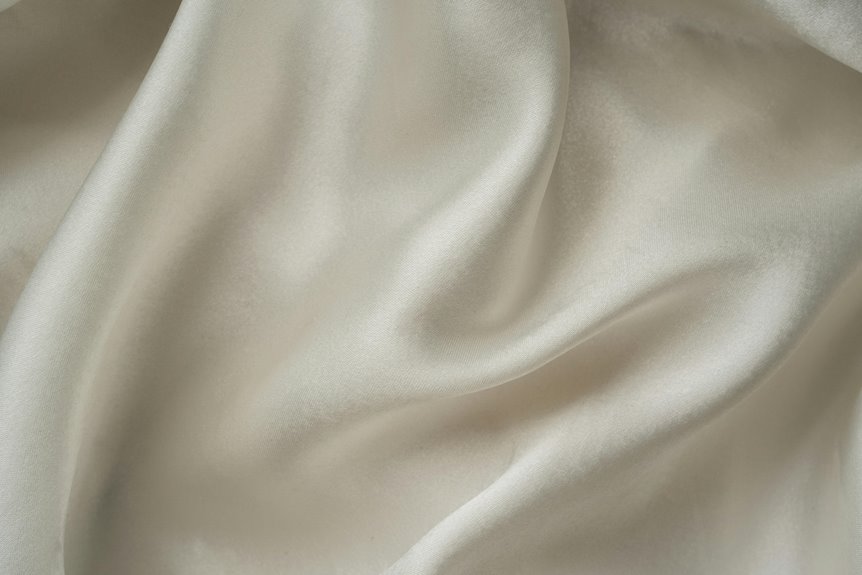
You’ll find habotai silk is lightweight, smooth, and has a soft matte finish, perfect for linings and casual wear. Crepe de chine offers a medium weight with a slight crinkle and subtle sheen, making it great for dresses and blouses. Charmeuse is heavier, glossy, and silky-smooth, ideal for elegant gowns and lingerie. Each fabric’s weight, texture, and shine affect how your garment looks and feels. Keep exploring to see which silk fits your project best.
Key Takeaways
- Habotai silk is lightweight with a soft matte finish, ideal for linings, scarves, and breathable casual wear.
- Crepe De Chine silk has a medium weight, slightly crinkled texture, and moderate sheen, suitable for structured dresses and blouses.
- Charmeuse silk is heavier with a high glossy sheen, perfect for elegant evening gowns, lingerie, and flowing garments.
- Habotai offers a gentle drape and smooth feel, while Crepe De Chine balances flexibility with subtle texture and Charmeuse emphasizes fluidity and shine.
- Sheen levels differ: Habotai is matte, Crepe De Chine has muted luster, and Charmeuse showcases a luxurious glossy front with a dull back.
What Is Habotai Silk?
Habotai silk is a lightweight, smooth fabric often used for linings and delicate garments. When you choose habotai, you’re picking a fabric that feels soft and breathable against your skin.
It’s made from fine silk threads woven tightly, giving it a slight sheen without being overly shiny. You’ll find habotai silk popular in items like scarves, blouses, and linings because it drapes nicely and won’t add bulk.
Since it’s relatively light, habotai dries quickly and feels cool, making it ideal for warm weather. If you want a fabric that balances elegance with comfort, habotai silk fits the bill.
Lightweight and breathable, habotai silk keeps you cool and comfortable in warm weather.
Just know it’s typically thinner and less textured than some other silk types, so it suits projects that call for a subtle, smooth finish.
Characteristics of Habotai Silk
This silk type stands out for its lightweight texture and smooth surface, making it comfortable to wear and easy to handle. You’ll find Habotai silk has a subtle sheen, but it’s less glossy than charmeuse, giving it a delicate, matte finish. It’s breathable and soft, which makes it ideal for layering or lining. You’ll appreciate its fine weave, which offers durability without bulk.
| Characteristic | Description |
|---|---|
| Texture | Lightweight, smooth |
| Sheen | Subtle, matte |
| Durability | Moderate, fine weave |
| Feel | Soft, breathable, comfortable |
These features make Habotai a versatile fabric you’ll enjoy working with in various projects.
Common Uses for Habotai Silk
You’ll find that the lightweight and breathable qualities of Habotai silk make it perfect for a range of practical and decorative applications.
When you want a smooth, soft fabric for lining garments, Habotai is an excellent choice. It’s also popular for making scarves, handkerchiefs, and delicate blouses where comfort and drape matter.
If you’re into crafts, Habotai works well for painting and dyeing projects because it absorbs colors beautifully. You can use it for lightweight curtains or decorative pillow covers to add a subtle sheen without overwhelming your space.
Plus, Habotai’s affordability compared to other silks means you can experiment without breaking the bank.
Whether you’re sewing or creating art, Habotai silk offers versatility and elegance in every thread.
What Is Crepe De Chine Silk?
Although it mightn’t be as widely known as other silk types, Crepe de Chine silk stands out for its unique texture and durability.
When you choose Crepe de Chine, you’re selecting a fabric woven with tightly twisted yarns, which gives it a slightly crinkled or pebbled surface. This weaving technique makes the silk less shiny compared to other types, offering a subtle matte finish you might appreciate for understated elegance.
You’ll find it’s often used in high-quality garments like blouses, dresses, and scarves because it drapes well while maintaining structure.
If you want a silk that balances softness with resilience, Crepe de Chine is a great option. It’s versatile and comfortable, making it a favorite among designers and wearers alike.
Characteristics of Crepe De Chine Silk
Crepe de Chine silk features a distinctive texture created by tightly twisted yarns that give it a slightly crinkled surface. When you touch it, you’ll notice it feels lightweight yet substantial, with a matte finish that sets it apart from shinier silks.
This fabric drapes beautifully, offering a fluid movement without clinging to your body. You’ll also appreciate its softness, which feels gentle against your skin.
Crepe de Chine resists wrinkles better than many other silks, making it easier to maintain. Its weave combines strength and flexibility, so it holds up well over time.
Common Uses for Crepe De Chine Silk
Silk that combines softness and durability fits perfectly in a variety of garments and accessories. Crepe de Chine silk, with its subtle texture and lightweight feel, is a favorite for elegant yet practical fashion. You’ll find it in blouses, dresses, scarves, and lingerie, where comfort and a refined look matter most. Its matte finish also makes it ideal for pieces that require less shine but more structure.
| Garments | Accessories | Special Uses |
|---|---|---|
| Blouses | Scarves | Lingerie |
| Dresses | Neck Ties | Sleepwear |
| Skirts | Handkerchiefs | Lightweight Jackets |
You can confidently choose crepe de Chine when you want silk that looks polished without being flashy.
What Is Charmeuse Silk?
When you want a fabric that feels incredibly smooth and drapes beautifully, charmeuse silk is an excellent choice. This luxurious silk is woven with a satin weave, giving it a glossy front and a dull back.
You’ll notice its lustrous sheen and soft texture, making it popular for elegant clothing and lingerie.
Here’s what you should know about charmeuse silk:
- It’s lightweight yet strong, offering both delicacy and durability.
- The satin weave allows it to catch light, creating a shimmering effect.
- It’s versatile, often used in eveningwear, blouses, and bedding.
Choosing charmeuse means you’re opting for silk that combines beauty with a silky-smooth touch and graceful flow.
Characteristics of Charmeuse Silk
Although charmeuse feels delicate, it boasts a surprisingly strong and smooth texture that you’ll appreciate in both wear and care.
Its satin weave creates a glossy front and a dull back, giving you that luxurious shine without sacrificing durability. You’ll notice how lightweight charmeuse drapes effortlessly, making it ideal for garments that require fluid movement.
The fabric’s softness feels gentle against your skin, ensuring comfort throughout the day. Charmeuse silk also resists wrinkles better than some other silks, so you won’t have to fuss with constant ironing.
However, it can be slippery to handle, so you’ll want to sew carefully. Overall, charmeuse combines elegance and practicality, making it a versatile choice when you want something both beautiful and functional.
Common Uses for Charmeuse Silk
Because of its smooth texture and elegant drape, charmeuse silk works perfectly for garments that emphasize fluidity and comfort. You’ll find charmeuse ideal when you want clothes that feel luxurious against the skin while moving gracefully.
Here are three common uses:
- Evening gowns and dresses – Charmeuse highlights the silhouette with a subtle sheen, making it popular for formal wear.
- Lingerie and sleepwear – Its softness and breathability provide comfort and a touch of indulgence.
- Blouses and scarves – Charmeuse adds sophistication to everyday and professional wardrobes with its elegant flow.
When you choose charmeuse silk, you’re opting for fabric that combines beauty with functionality in versatile ways.
Comparing Texture and Weight of Habotai, Crepe De Chine, and Charmeuse
Understanding the differences in texture and weight between habotai, crepe de chine, and charmeuse can help you choose the right silk for your project. Habotai feels lightweight and smooth, perfect for delicate linings. Crepe de chine offers a slightly heavier, grainy texture that adds structure without stiffness. Charmeuse is the heaviest and silkier, giving your work a luxurious drape.
| Silk Type | Texture & Weight Feeling |
|---|---|
| Habotai | Light, smooth, soft |
| Crepe de Chine | Medium weight, textured, slightly crisp |
| Charmeuse | Heavy, sleek, fluid |
When you run your fingers over each, you’ll notice how their distinct feels influence the garment’s comfort and movement. Choose wisely to match your design’s needs.
Differences in Sheen and Appearance
When you look closely at habotai, crepe de chine, and charmeuse, you’ll notice their sheen and appearance vary considerably.
Each type of silk reflects light differently, giving you distinct visual effects that suit different styles.
1. Habotai has a soft, matte finish with low sheen, making it look subtle and understated.
You’ll find it smooth but not shiny.
2. Crepe de chine offers a slightly textured surface with a gentle, muted luster.
It balances softness and a subdued glow, giving fabrics a refined look.
3. Charmeuse stands out with its high, glossy sheen on the front and a dull back.
It’s perfect when you want a luxurious, shiny appearance that catches the eye.
Understanding these differences helps you appreciate how each silk’s look influences your project’s overall vibe.
Choosing the Right Silk for Your Project
When picking silk for your project, consider the fabric’s weight and texture carefully.
Different silks work better for specific uses, like lightweight charmeuse for flowing dresses or heavier dupioni for structured garments.
Knowing these details helps you choose the silk that fits your design perfectly.
Fabric Weight and Texture
Although selecting silk might seem straightforward, fabric weight and texture play essential roles in determining how the material behaves and suits your project.
When you understand these aspects, you can better predict drape, feel, and durability.
1. Habotai: Lightweight and smooth, it feels soft but has a matte finish.
It’s breathable and easy to handle, making it ideal when you want a gentle drape without shine.
2. Crepe de Chine: Medium weight with a slightly crinkled texture, it offers a subtle grainy feel and moderate sheen.
This balance creates a fabric that’s flexible yet structured.
3. Charmeuse: Heavier and lustrous, Charmeuse is silky-smooth with a pronounced sheen.
Its weight gives it a graceful flow, perfect when you want elegance and fluidity combined.
Ideal Uses and Applications
Choosing the right silk can make all the difference in your project’s outcome.
If you want a lightweight, breathable fabric for blouses or linings, habotai is your best bet. Its smooth texture and moderate sheen work well for casual wear and scarves.
For dresses or suits requiring a bit more structure and subtle texture, crepe de chine offers durability and a matte finish that resists wrinkles.
When you need something luxurious and flowing for evening gowns or lingerie, charmeuse is ideal with its glossy front and soft drape.
Each silk type suits different garment styles and uses, so consider the fabric’s weight, texture, and sheen carefully to match your design goals.
This way, your final piece will look and feel just right.
Frequently Asked Questions
How Should I Care for and Wash Each Type of Silk?
You should hand wash your silk gently in cold water with mild detergent, avoid wringing or twisting, air dry flat, and iron on low heat inside out to keep it soft and vibrant longer.
Are These Silks Hypoallergenic or Suitable for Sensitive Skin?
You might be surprised, but these silks are generally hypoallergenic and gentle on sensitive skin. Their natural fibers resist allergens, so you can wear them comfortably, trusting they won’t irritate or cause reactions.
What Is the Environmental Impact of Producing These Silks?
You’ll find silk production uses significant water and energy, plus mulberry farming impacts land. Habotai, Crepe de Chine, and Charmeuse vary little environmentally, but you can choose eco-certifications to guarantee more sustainable sourcing.
Can These Silks Be Dyed at Home, and How Well Do They Hold Color?
You can dye these silks at home using acid or fiber-reactive dyes. They generally hold color well, but charmeuse’s smooth surface reflects light, making colors appear more vibrant and rich compared to others.
How Do the Prices of Habotai, Crepe De Chine, and Charmeuse Compare?
You’ll find habotai is usually the most affordable, crepe de chine sits in the mid-range, and charmeuse tends to be pricier because of its luxurious sheen and weight. Your budget will guide your choice.