
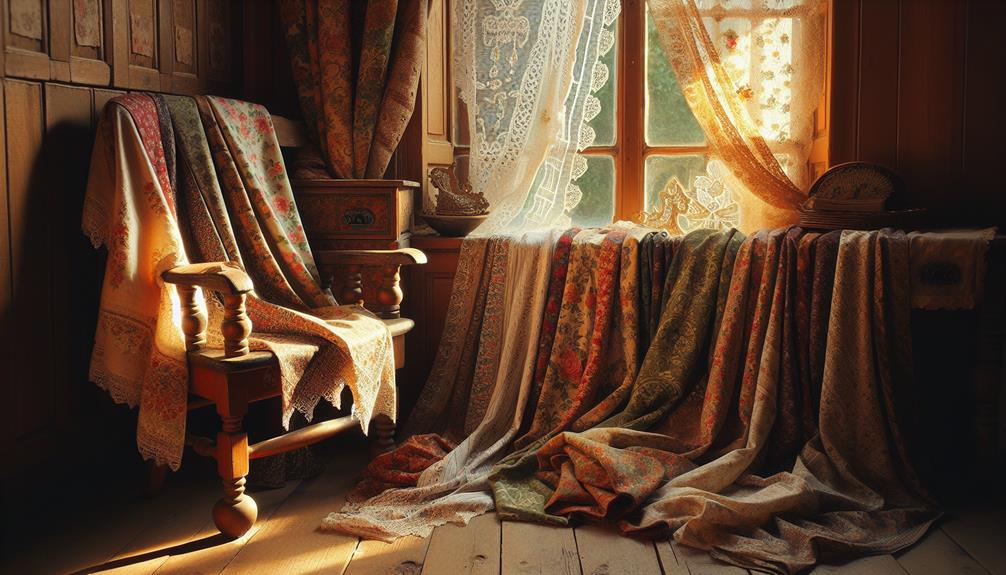
Like a phoenix rising from the ashes, vintage fabrics are making a notable return in both fashion and interior design. You've likely noticed the resurgence of materials like velvet, brocade, and tweed in contemporary collections, adding a touch of luxury and sophistication to modern aesthetics. This trend isn't just about style; it speaks volumes about sustainability and the appreciation for craftsmanship. Curious about how these timeless textiles are transforming today's design landscape? There's much more beneath the surface that could redefine how you view both fashion and sustainability.
Key Takeaways
- Vintage fabrics like velvet, brocade, and tweed are being reimagined in modern fashion and interior design.
- Designers like Gucci and Valentino are incorporating vintage fabrics into their collections to blend timeless styles with modern trends.
- Using vintage fabrics promotes sustainability by reducing waste and lowering the carbon footprint through the reuse of textiles.
- Vintage fabrics offer unique style and quality craftsmanship that reflect historical significance and meticulous attention to detail.
- Thrift stores, estate sales, and online marketplaces are popular sources for finding high-quality vintage fabrics.
Rediscovering Velvet
When you think of luxury and elegance in vintage fabrics, velvet likely tops the list. Its rich texture and opulent sheen make it a timeless choice. But today, velvet is reimagined in ways that breathe new life into both your wardrobe and living spaces.
Picture velvet in interior design: lush, jewel-toned drapes framing your windows, or a sumptuous velvet sofa that becomes the centerpiece of your living room. This fabric's ability to add depth and sophistication is unparalleled.
In the world of fashion, velvet's allure is equally compelling. Vintage velvet accessories, like a chic clutch or a pair of elegant gloves, can elevate any outfit to haute couture levels. Designers are also embracing velvet in couture fashion, creating stunning evening gowns and tailored blazers that exude a sense of old-world glamour while remaining modern and relevant.
Mastering the art of incorporating velvet into your life means understanding its versatility. From the tactile pleasure of running your fingers over a velvet cushion to the visual impact of a velvet dress under evening lights, this fabric offers endless possibilities.
Rediscovering velvet is about appreciating its classic charm while exploring contemporary applications.
The Charm of Brocade
While velvet mesmerizes with its lush texture, brocade captivates through its intricate patterns and regal history. When you drape yourself in floral brocade, you're not just wearing a fabric; you're embracing centuries of regal elegance. The raised designs often depict intricate blossoms and vines, evoking a sense of opulence that has been cherished by royalty for generations.
Brocade's true allure lies in its versatility. It's perfect for both traditional and contemporary settings. Imagine a classic evening gown transformed with metallic brocade. The infusion of metallic threads adds a modern twist, making the garment shimmer under the light, turning heads with every movement. This blend of old-world charm and contemporary flair guarantees brocade remains timeless yet relevant.
You can also incorporate brocade into your home decor. Think of luxurious curtains or statement upholstery pieces that bring a touch of sophistication to any room. The rich patterns and textures can turn even the simplest space into a palace.
Ultimately, brocade offers endless possibilities for those who appreciate the finer things in life. It's not just fabric; it's a statement of style and heritage, waiting for you to personalize it.
Tweed's Timeless Appeal
Tweed effortlessly combines rugged durability with refined elegance, making it a staple in both fashion and home decor. You'll find that tweed's versatility knows no bounds. Whether you're crafting a sophisticated blazer or upholstering a chic armchair, this vintage fabric adapts seamlessly to modern styling. Its rich texture and intricate patterns add depth and character to any piece, ensuring that no two tweed items are exactly alike.
When you incorporate tweed into your wardrobe, you're embracing a fabric with a timeless appeal. Picture yourself in a classic tweed jacket, its structured design offering both warmth and style. This isn't just any fabric; it's a statement of sophistication and durability. The same goes for interiors—tweed cushions or throws instantly elevate a room, blending contemporary aesthetics with vintage charm.
Moreover, tweed's versatility makes it ideal for any season. Its breathable yet insulating properties keep you comfortable whether you're braving a brisk autumn morning or lounging by the fire in winter. By choosing tweed, you're not just opting for a fabric; you're investing in a piece of history that seamlessly merges with today's fashion and decor trends.
Sustainability and Vintage Fabrics
Incorporating vintage fabrics into your lifestyle isn't just a nod to timeless style; it's a commitment to sustainable living. By choosing vintage, you're actively participating in the sustainable fashion movement. This choice reduces waste, minimizes resource consumption, and combats the fast fashion industry's unsustainable practices.
Furthermore, vintage fabrics often come from a time when ethical production standards were more prevalent, giving you the peace of mind that your garments are made with integrity.
Here are four compelling reasons to embrace vintage fabrics:
- Reduced Waste: By reusing textiles, you help keep them out of landfills, significantly decreasing environmental impact.
- Lower Carbon Footprint: Vintage fabrics don't require new resources for production, which cuts down on energy consumption and greenhouse gas emissions.
- Unique Style: Vintage pieces offer distinct patterns and textures that set you apart, ensuring you don't blend into the fast fashion crowd.
- Quality Craftsmanship: Many vintage fabrics were created with superior craftsmanship, making them more durable and long-lasting.
Craftsmanship in Old Textiles
The meticulous craftsmanship in old textiles guarantees that each piece tells a unique story, reflecting the time and care devoted to its creation. When you examine antique lace or historical tapestries, you're not just looking at fabric; you're witnessing centuries of tradition and skill. Each thread is carefully placed, each pattern meticulously planned, and each stitch embodies the artisan's devotion.
Traditional weaving techniques offer a depth of texture and durability that modern machinery often can't replicate. You can feel the difference in the weight and quality, knowing that a human hand, guided by expertise, created it. Handmade embroidery adds another layer of intricacy. Every embroidered element has a purpose, whether it's a symbol of luck or a mark of status.
The richness of these textiles doesn't just lie in their appearance but also in their history. When you own a piece of antique lace or a historical tapestry, you're holding a fragment of the past. The craftsmanship involved in these old textiles is unparalleled, making them not just beautiful but also invaluable.
Embracing these textiles means valuing the artistry and dedication that have stood the test of time.
Modern Fashion With Vintage Touch
You'll notice that modern fashion often incorporates retro styles, bringing a unique blend of old and new to the forefront. Designers frequently use timeless fabric trends that have stood the test of time, giving contemporary outfits a nostalgic touch.
This fusion creates a distinctive aesthetic that appeals to fashion enthusiasts looking for both elegance and history in their wardrobe.
Retro Styles in Vogue
Retro styles have surged back into vogue, blending vintage charm with contemporary fashion for a timeless look. You can elevate your wardrobe by incorporating retro inspired accessories and experimenting with vintage fabric DIYs.
To truly master this blend, consider these key elements:
- Accessories: Add retro inspired accessories like cat-eye sunglasses, wide-brimmed hats, and chunky belts to your outfits. These pieces add a touch of nostalgia while keeping your look fresh and modern.
- Vintage Fabric DIYs: Engage in DIY projects using vintage fabrics. Create unique pieces like patchwork jackets or custom scarves, which not only showcase your creativity but also give a nod to fashion history.
- Patterns and Prints: Embrace retro patterns such as polka dots, paisley, and florals. Integrate these prints into your wardrobe through dresses, blouses, and skirts to infuse your style with a vintage essence.
- Silhouettes: Experiment with vintage silhouettes like high-waisted trousers, A-line skirts, and tailored blazers. These shapes can flatter your figure and create a sophisticated, timeless appeal.
Timeless Fabric Trends
Incorporating timeless fabric trends, such as tweed, velvet, and silk, into your wardrobe can seamlessly blend modern fashion with a vintage touch. By embracing these classic materials, you enhance your style with an elegant, sophisticated edge.
Reimagining lace is a particularly effective way to modernize your outfits. Lace's intricate patterns and delicate texture can elevate a simple dress or blouse, giving it a contemporary yet timeless appeal.
Velvet, with its luxurious feel and rich colors, instantly adds depth and opulence to any ensemble. Whether it's a tailored velvet blazer or a chic pair of trousers, this fabric never fails to make a statement.
Similarly, tweed offers a nod to vintage charm while providing a versatile and durable option for outerwear and skirts.
Don't overlook antique linens, either. These fabrics carry a sense of history and craftsmanship that's hard to replicate. Incorporate antique linen pieces like blouses or handkerchiefs into your daily wear for a unique, personalized touch.
Popular Designers Embracing Vintage
You'll notice that many popular designers are embracing vintage fabrics in their latest collections.
They're not only showcasing iconic vintage fabric patterns but also promoting sustainable fashion.
This revival makes a strong case for the timeless appeal and environmental benefits of vintage textiles.
Iconic Vintage Fabric Collections
Many renowned designers have revived iconic vintage fabric collections, seamlessly blending timeless styles with modern trends.
You'll find that vintage lace, with its forgotten elegance, is making a notable comeback. This intricate fabric is being embraced by designers like Gucci and Valentino, who are integrating it into modern silhouettes to create pieces that exude both sophistication and nostalgia.
Classic denim, another timeless coolness, is also seeing a resurgence. Designers such as Levi's and Ralph Lauren are reintroducing their heritage collections, featuring styles that harken back to the golden age of denim. These pieces aren't just about fashion; they're about history and craftsmanship.
Here's a quick look at how designers are embracing vintage fabrics:
- Gucci: Reviving vintage lace in modern dresses and blouses.
- Valentino: Incorporating vintage lace into couture collections for an elegant twist.
- Levi's: Re-releasing classic denim styles from their archives.
- Ralph Lauren: Bringing back timeless denim pieces with a modern fit.
Sustainable Fashion Revival
Top designers are championing sustainable fashion by embracing vintage fabrics, blending eco-conscious choices with timeless style. When you explore the collections of leading designers like Stella McCartney, Vivienne Westwood, and Marine Serre, you'll notice a distinct nod to the past. These fashion pioneers aren't just creating clothes; they're making statements about sustainable style and eco-friendly trends.
By integrating vintage fabrics, designers reduce the demand for new materials, thereby minimizing the environmental footprint of their collections. You can see how reworking classic textiles into modern designs not only honors fashion's rich history but also promotes a cycle of reuse and reinvention. This approach isn't just a passing fad; it's a deliberate move towards a more sustainable fashion industry.
When you adopt these eco-friendly trends, you're not just following the latest styles; you're participating in a movement that values quality over quantity. You're making choices that reflect a deeper understanding of fashion's impact on the planet.
Where to Find Vintage Fabrics
Scouring local thrift stores and estate sales can yield some of the best finds for vintage fabrics. These treasure troves often harbor hidden gems, waiting for someone with a keen eye to discover them. Don't overlook these local options—they're perfect for finding unique textiles that add a distinctive touch to your projects.
However, if you're looking to expand your search beyond your immediate area, online marketplaces are invaluable. Websites like Etsy and eBay host a plethora of sellers specializing in vintage fabrics. You can browse extensive collections, compare prices, and even read reviews to make sure you're making a well-informed purchase.
To streamline your search, consider these four strategies:
- Visit Local Thrift Stores Regularly: Frequent visits increase your chances of finding high-quality vintage fabrics as new items are constantly being added.
- Explore Estate Sales: Estate sales often feature a variety of vintage items, including fabrics, at reasonable prices.
- Utilize Online Marketplaces: Platforms like Etsy and eBay offer vast selections and the convenience of shopping from home.
- Join Fabric-Specific Forums and Groups: Becoming part of online communities can give you insider tips and direct access to rare finds.
Caring for Vintage Textiles
Proper care is vital to maintain the beauty and integrity of your vintage textiles. First and foremost, adopt the right storage solutions. Store your textiles in a cool, dry place, away from direct sunlight to prevent fading and deterioration. Use acid-free tissue paper to wrap delicate items, and avoid plastic containers that can trap moisture and promote mold growth.
For preservation techniques, make sure your storage area is free of pests. Cedar blocks or lavender sachets are excellent natural deterrents. Regularly inspect your textiles for any signs of damage or infestation, addressing issues promptly to prevent further harm.
When it comes to cleaning methods, always test a small, inconspicuous area first. Hand wash with a mild detergent, and avoid wringing or twisting the fabric. Instead, gently press out excess water with a clean towel. For more delicate pieces, consider professional cleaning services that specialize in vintage textiles.
Frequently Asked Questions
How Do Vintage Fabrics Influence Modern Interior Design Trends?
Imagine a living room with a 70s floral velvet sofa. Vintage fabrics in fashion inspire modern interiors, promoting sustainability in design. You can blend nostalgia with eco-friendly choices, creating timeless, stylish, and sustainable spaces.
What Are the Health Benefits of Using Natural Vintage Fabrics?
When you use natural vintage fabrics, you reduce allergens and promote an eco-friendly lifestyle. These materials are skin-friendly and breathable, ensuring comfort and health. Embrace them to enhance your well-being and environmental impact.
Are There Any Vintage Fabric Patterns That Are Making a Resurgence?
You're seeing a resurgence of vintage fabric patterns like paisley and houndstooth. Retro fashion is driving this textile revival, blending nostalgic charm with modern style. Mastering these patterns elevates your wardrobe with timeless sophistication.
How Do Vintage Fabrics Compare in Durability to Contemporary Fabrics?
You'll find that fabric longevity often favors vintage fabrics due to their meticulous craftsmanship. Vintage vs modern durability shows that vintage fabrics can outlast contemporary ones, provided they're cared for properly and not overly exposed to wear and tear.
What Are Some Historical Events That Popularized Certain Vintage Fabrics?
Picture a tapestry of change: vintage fabric trends often emerged from cultural influences during historical events. Fashion movements like the Roaring Twenties or the Swinging Sixties propelled certain materials into the spotlight, redefining style and elegance.