
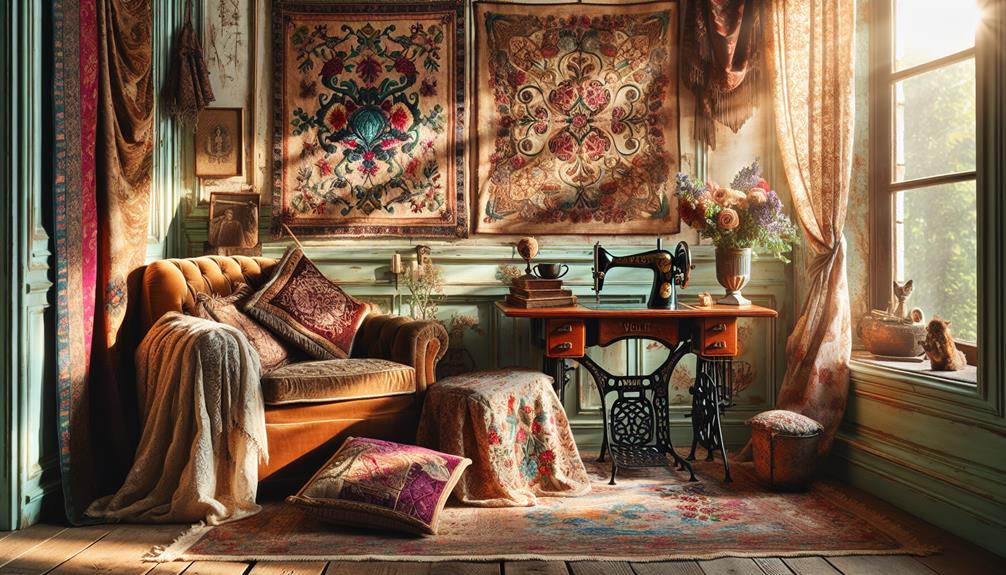
You might not know that vintage fabrics, from lush velvets to intricate brocades, are being woven back into the fabric of modern design. The fashion and home decor industries are rediscovering the charm and durability these materials offer, pairing them with contemporary styles to create unique, sophisticated looks. This revival isn't just about aesthetics; it's also a nod to sustainability and a celebration of skilled craftsmanship. So how can you incorporate these timeless textiles into your own style while honoring their rich history? Let's explore the fascinating world of vintage fabrics and their modern applications.
Key Takeaways
- Designers are blending vintage fabrics with contemporary styles, creating unique fashion statements.
- Vintage fabrics add nostalgic charm and character to modern home decor.
- The fashion industry values the sustainability and craftsmanship of vintage textiles.
- Iconic vintage patterns, like bold florals, are being revived in current trends.
- Authentic vintage fabrics can be sourced from reputable dealers and online markets.
Popular Vintage Fabrics
When exploring popular vintage fabrics, you'll find that each material carries its own unique history and charm. Immerse yourself in the world of fabric types like velvet, silk, and tweed, and you'll uncover a revival in fashion that's both nostalgic and innovative.
Velvet, with its rich texture and luxurious feel, has seen a resurgence, transforming modern wardrobes with its timeless elegance. Silk, revered for its smoothness and natural sheen, continues to be a symbol of sophistication, often revived in contemporary styles that echo past glamour. Tweed, known for its durability and classic appeal, remains a staple in vintage-inspired collections, bridging the gap between past and present effortlessly.
Understanding the textile history behind these fabrics enriches your appreciation even further. Iconic prints, like the bold florals of the 1960s or the geometric patterns of the Art Deco era, tell stories of cultural shifts and artistic movements. When you wear these fabrics, you're not just donning a piece of cloth; you're embracing a piece of history.
Historical Significance
Vintage fabrics carry profound historical importance, reflecting the cultural and artistic movements of their time. When you immerse yourself in the world of vintage textiles, you're not merely examining fabric; you're immersing yourself in history. Each weave, pattern, and dye utilized conveys a narrative of the era's societal and technological progress.
Understanding the cultural impact of these fabrics can offer you a deeper admiration for their value. For example, 1920s Art Deco fabrics encapsulated the era's interest in geometry and luxury, while 1960s psychedelic prints echoed the ethos of the counterculture movement. Here's a brief overview of different periods and their distinctive fabrics:
| Era | Defining Fabric Style |
|---|---|
| 1920s | Art Deco |
| 1940s | Wartime Utility Fabrics |
| 1960s | Psychedelic Prints |
| 1970s | Bohemian and Ethnic Prints |
| 1980s | Bold, Bright Synthetic Fabrics |
Preservation efforts are essential for upholding the integrity of these textiles. Techniques like controlled storage environments and careful handling guarantee that these fabrics can be examined and appreciated by future generations. By recognizing the historical significance of vintage fabrics, you contribute to their enduring legacy and aid in safeguarding a fundamental aspect of our cultural heritage.
Modern-Day Uses
You'll find vintage fabrics making a comeback in modern-day home decor trends, adding a nostalgic touch to any room.
The fashion industry is also reviving these fabrics, blending old-world charm with contemporary styles.
Plus, DIY craft projects are a great way to repurpose these timeless materials into unique creations.
Home Decor Trends
Incorporating vintage fabrics into your home decor can effortlessly blend nostalgia with contemporary style. Start by choosing color palettes and design motifs that harmonize with your existing decor. Think about how the rich hues and intricate patterns of vintage fabrics can add depth and character to your space.
Whether it's a 1970s-inspired floral print or a bold Art Deco geometric design, these fabrics can serve as focal points or subtle accents.
Next, focus on texture and layering techniques to enhance the tactile experience in your home. Use vintage fabrics to create throw pillows, curtains, or even upholstered furniture. Layering different textures, such as pairing a smooth, silk vintage scarf with a chunky wool throw, adds dimension and visual interest.
Don't be afraid to mix and match; the key to mastering this trend is balance.
Moreover, consider using vintage fabrics to reupholster tired furniture, giving it a new lease on life while maintaining its original charm. By thoughtfully integrating these elements, you can create a space that's both stylish and timeless.
Embrace the craftsmanship and history embedded in vintage fabrics to elevate your home's aesthetic to a new level of sophistication.
Fashion Industry Revival
The resurgence of vintage fabrics in modern fashion brings a unique blend of nostalgia and innovation to contemporary wardrobes. Today, designers and fashion enthusiasts alike are harnessing the timeless charm of vintage fashion to create pieces that feel both classic and fresh. You'll notice this in the elegant drape of a 1940s silk dress or the sturdy, yet chic, weave of a 1970s denim jacket. These fabric trends allow you to infuse your style with a sense of history while maintaining a distinctly modern edge.
In the fashion industry, vintage fabrics are celebrated for their superior craftsmanship and unique textures. By integrating these materials, you're not just embracing a trend; you're part of a movement that values sustainability and artistic expression. Whether it's the intricate embroidery on a Victorian lace blouse or the bold patterns of mid-century prints, these fabrics provide endless opportunities for creativity and sophistication.
With each vintage-inspired piece, you're making a statement that transcends time. The revival of these fabrics isn't just about looking back; it's about reimagining the past to enrich your present wardrobe. Embrace these fabric trends and redefine your style with a nod to the elegance of eras gone by.
DIY Craft Projects
When you engage in DIY craft projects, vintage fabrics offer a treasure trove of possibilities for creating one-of-a-kind items. These materials, rich in history and character, provide upcycling inspiration that's unparalleled.
By repurposing vintage clothing, you can breathe new life into old textiles, transforming them into modern, functional art. Imagine turning a 1950s floral dress into a chic tote bag or crafting retro cushions from bold 1970s prints.
Engaging in such creative reimagining requires a keen eye for detail and a passion for sustainability. Retro fabrics, with their unique patterns and textures, invite you to experiment and innovate. You're not just making items; you're preserving a piece of history while contributing to eco-friendly practices.
Consider quilt-making as another avenue. Combining various vintage fabrics into a cohesive, beautiful quilt can be a fulfilling project that showcases your craftsmanship and creativity. Or, create bespoke wall art by framing fabric swatches, making your space reflect your unique style.
Mastering these DIY projects with vintage fabrics doesn't just yield beautiful results; it connects you to a timeless tradition of creativity and sustainability. Engage wholeheartedly, and let your imagination soar.
Sustainability Benefits
Choosing vintage fabrics greatly reduces the environmental footprint compared to buying new, mass-produced textiles. By opting for vintage, you're engaging in eco-friendly practices that minimize waste and lessen the demand for new resources. These fabrics have already stood the test of time, meaning they've bypassed the energy-intensive processes associated with modern textile production. This makes your choice inherently more sustainable and far less burdensome on the planet.
Moreover, vintage fabrics often come from eras where quality was paramount, so you're also investing in durability. Ethical sourcing is another pivotal advantage. When you purchase vintage, you're typically buying from second-hand shops, estate sales, or specialized vendors who prioritize the history and integrity of these materials. This means you're not supporting industries that exploit labor or engage in unethical practices. Instead, you're contributing to a circular economy, where the life cycle of products is extended, reducing the need for new manufacturing.
In essence, choosing vintage fabrics is a masterstroke for anyone committed to sustainability. You're not just making a fashion statement; you're backing a movement that prioritizes the health of our planet and the well-being of its people.
Finding Authentic Fabrics
When you're on the hunt for authentic vintage fabrics, start by identifying genuine sources like reputable vintage shops or estate sales.
Evaluate the fabric quality by feeling the material and checking for any signs of wear.
Recognize vintage patterns and prints to guarantee what you're getting is truly from the era you desire.
Identifying Genuine Sources
To guarantee you're getting authentic vintage fabrics, start by researching reputable dealers and established sources. Utilize online resources and local markets to find reputable sellers who specialize in vintage textiles. Online platforms like Etsy and eBay often feature shops with detailed seller ratings and customer reviews, which can help you determine their credibility. Additionally, specialized websites and forums dedicated to vintage enthusiasts can offer valuable insights and recommendations.
When exploring local markets, look for vendors who've a well-established presence and a good reputation within the community. Experienced sellers often have an in-depth understanding of the provenance and history of their offerings. Don't hesitate to ask questions about the fabric's origin and history; genuine dealers will provide thorough and knowledgeable answers.
A critical part of identifying genuine sources is understanding their authentication process. Reputable sellers will have clear methods for verifying the age and authenticity of fabrics. This might include certification, documentation, or expert appraisal. Be wary of vague descriptions or a lack of provenance details, as these can be red flags.
Evaluating Fabric Quality
After identifying authentic sources, it's crucial to evaluate the fabric quality to make certain you're acquiring genuine vintage textiles. First, examine the fabric durability. Authentic vintage fabrics often show signs of age yet remain resilient. Check for wear and tear, but also verify the fabric isn't too fragile.
Next, analyze the textile composition. Understand the materials used in different eras. For instance, 1940s fabrics frequently contain natural fibers like cotton, wool, and silk. Use a burn test to identify fiber types if necessary, but always seek professional guidance to avoid damage.
Consider the following characteristics:
| Characteristic | Description | Why It Matters |
|---|---|---|
| Fabric Durability | Signs of wear but resilient | Indicates longevity and authenticity |
| Textile Composition | Natural fibers like cotton, wool, silk | Identifies era-specific materials |
| Weave Quality | Tight, consistent weave | Guarantees structural integrity |
Lastly, pay attention to the weave quality. Authentic vintage fabrics often have a tight, consistent weave, reflecting the superior craftsmanship of past eras. These characteristics collectively guarantee you're acquiring high-quality, genuine vintage textiles. By mastering these evaluation techniques, you'll make informed decisions and enrich your collection with authentic, durable vintage fabrics.
Recognizing Vintage Patterns
Recognizing vintage patterns is key to finding authentic fabrics that reflect the unique styles of their respective eras. Mastering fabric identification begins with understanding the trendy patterns that defined different decades.
For instance, the 1920s often featured geometric Art Deco designs, while the 1950s embraced playful polka dots and bold florals. Each era has its signature motifs, and knowing these can help you pinpoint genuine vintage fashion.
Start by examining the fabric's weave and print. Many retro designs were produced using techniques specific to their time, such as screen printing in the 1960s or the intricate brocades of the early 1900s. Authentic vintage fabrics often exhibit slight imperfections that modern reproductions lack.
Feel the material; older fabrics tend to have a different texture and weight compared to contemporary copies. Additionally, pay attention to color schemes. Vintage patterns typically used color palettes that were fashionable at the time, like the earth tones of the 1970s or the pastel hues of the 1980s.
Familiarize yourself with these trends to enhance your fabric identification skills.
Caring for Vintage Textiles
Properly caring for vintage textiles guarantees they stay beautiful and intact for years to come. To start, always use gentle cleaning techniques. Hand washing in cold water with a mild detergent is often the safest method. Avoid wringing or twisting the fabric, as this can damage delicate fibers. Instead, gently press out excess water with a clean towel and lay the textile flat to air dry. For particularly fragile pieces, consider professional dry cleaning specializing in vintage garments.
Preservation methods are equally essential for maintaining the longevity of vintage textiles. Store your items in a cool, dry place, away from direct sunlight, which can cause fading and deterioration. Use acid-free tissue paper to wrap or stuff garments, helping them retain their shape and preventing creases. Avoid plastic storage containers, as they can trap moisture and promote mildew. Instead, opt for breathable fabric bags or boxes.
Regularly inspect your vintage textiles for any signs of damage or pests. Address any issues promptly to prevent further degradation.
Styling Tips and Trends
Incorporating vintage fabrics into your wardrobe can effortlessly elevate your style and add a unique charm that's hard to replicate. To master this look, start by mixing and matching different vintage pieces. Don't be afraid to combine a 70s floral blouse with an 80s denim jacket. The key is color coordination; make sure the colors complement each other without clashing.
Layering textures is another essential technique. Pair a velvet skirt with a silk blouse to create depth and visual interest. When accessorizing prints, choose one statement piece and keep the rest of your outfit neutral. A bold, printed scarf can transform a simple dress into a head-turning ensemble.
Here's a quick guide to help you get started:
| Tip | Description |
|---|---|
| Mix and Match | Combine different eras and styles |
| Color Coordination | Ensure colors complement each other |
| Layering Textures | Pair various fabrics for added depth |
| Accessorizing Prints | Use statement pieces to enhance outfits |
Frequently Asked Questions
What Are the Most Common Challenges in Sourcing Vintage Fabrics?
When sourcing vintage fabrics, you'll encounter challenges like managing the supply chain, ensuring quality control, and verifying authenticity. Additionally, sustainability concerns arise, making it essential to balance eco-friendly practices with maintaining the fabric's original charm.
How Do Vintage Fabrics Differ From Modern Reproductions?
Vintage fabrics differ from modern reproductions in color variations and quality differences. You'll find greater sustainability and historical significance in vintage options, making them unique and valuable for those who appreciate authentic, environmentally friendly materials.
Are Vintage Fabrics Hypoallergenic?
Vintage fabrics aren't always hypoallergenic. However, their hypoallergenic benefits can be maximized with proper fabric care considerations. Regularly washing and storing them correctly guarantees they remain gentle on sensitive skin, providing a comfortable and stylish option.
What Are Some Lesser-Known Types of Vintage Fabrics?
You'll find lesser-known types of vintage fabrics such as barkcloth and feedsack. These eco-friendly textiles feature unique patterns and use sustainable materials. Both hold historical significance, reflecting past eras' resourcefulness and creativity in fabric production.
Can Vintage Fabrics Be Used in High-Traffic Home Areas?
You can definitely use vintage fabrics in high-traffic home areas. Their durability and style make them a great choice. Just guarantee proper maintenance, which can affect cost, but it's worth it for the unique charm.