
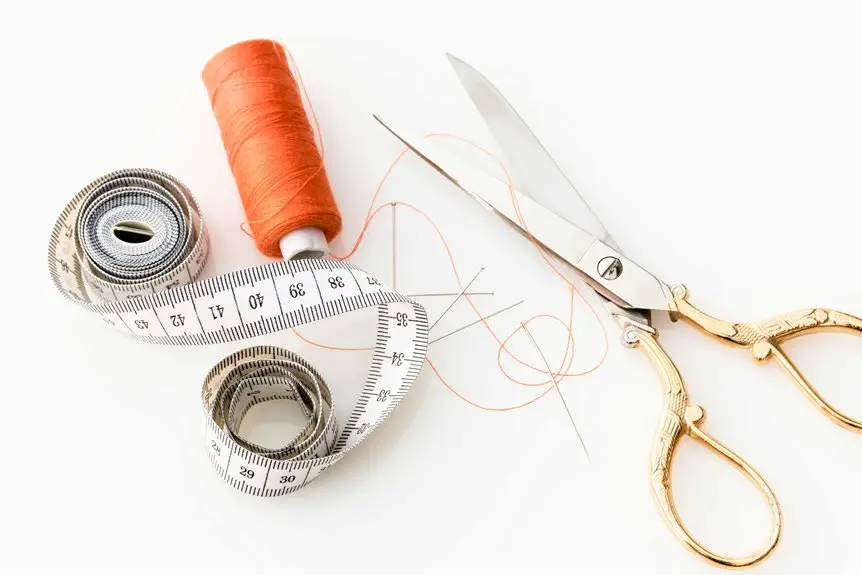
When sewing striped or plaid gauze fabric, use sharp scissors or a rotary cutter and lay the fabric flat, secured with weights. Align pattern pieces carefully to match stripes or plaids, pinning with fine pins to avoid stretching. Sew slowly with a walking foot, trimming frayed edges and finishing seams with narrow zigzag or French seams for durability. Press gently with a warm iron using a cloth to protect the fabric. With these key techniques, you’ll achieve polished, professional results and more refined tips await you.
Key Takeaways
- Align stripes or plaids carefully before cutting to ensure seamless pattern continuity across fabric pieces.
- Use sharp scissors or a rotary cutter with a ruler to achieve precise, clean cuts without fraying.
- Pin at stripe or plaid intersections with fine pins to maintain accurate alignment without stretching gauze fabric.
- Employ French seams or narrow zigzag stitches to neatly finish edges and prevent unraveling in delicate gauze.
- Press seams open gently with a warm iron and use a pressing cloth to protect the fabric’s texture and pattern.
Understanding the Characteristics of Gauze Fabric
Gauze fabric stands out for its lightweight, airy texture and loosely woven structure. When you work with gauze, you’ll notice it feels soft and breathable, making it perfect for warm-weather garments.
Its openness gives it a slightly sheer quality, so you might want to contemplate lining or layering depending on your project. Because it’s loosely woven, gauze can shift and stretch easily, so handling it gently during sewing is essential to avoid distortion.
You’ll also find that its texture adds a natural crinkle, which enhances its casual, relaxed look. Understanding these traits helps you anticipate how the fabric behaves, so you can plan your sewing techniques accordingly and achieve the best results with striped or plaid gauze.
Selecting the Right Tools for Cutting Gauze
When cutting gauze fabric, you’ll want to use sharp scissors to guarantee clean edges without snagging the delicate fibers.
A rotary cutter can also be a great option, offering smooth, precise cuts especially on striped or plaid patterns.
Choosing the right tool helps maintain the fabric’s integrity and makes your sewing process easier.
Sharp Scissors Importance
Cutting delicate fabrics demands precision, and sharp scissors play a crucial role in handling striped or plaid gauze. When your scissors are sharp, you avoid snagging or distorting the fabric, which helps maintain clean, accurate edges.
Dull scissors can crush the gauze fibers, causing frayed edges that ruin your pattern alignment. To get the best results, you should:
- Use fabric scissors dedicated solely to cutting gauze and similar materials
- Regularly sharpen your scissors to keep them in peak condition
- Cut slowly and steadily to preserve the fabric’s structure
- Avoid using your scissors on paper or other materials that dull the blades
Rotary Cutter Benefits
Sharp scissors help maintain the delicate structure of striped or plaid gauze, but using a rotary cutter can take your cutting accuracy even further.
With its sharp, rotating blade, a rotary cutter slices through multiple layers smoothly, reducing fabric shifting and fraying. This precision is vital when working with gauze patterns, where alignment matters. You’ll also save time, especially when cutting long, straight lines or repetitive shapes.
Pair your rotary cutter with a self-healing mat and a clear quilting ruler to guide your cuts perfectly along stripes or plaids. Just remember to keep the blade sharp and replace it when it dulls to avoid snagging.
Using a rotary cutter enhances your control and guarantees cleaner edges, making it an essential tool for sewing with gauze fabric.
Preparing Your Fabric Before Cutting
Before you start cutting, take a few essential steps to prepare your striped or plaid gauze fabric properly. Proper preparation guarantees your fabric lies flat and your pattern pieces will match up beautifully.
First, wash and dry the fabric according to its care instructions to prevent shrinkage later. Next, press the fabric gently with a low heat setting to remove wrinkles without damaging the delicate fibers.
Lay the fabric out on a large, clean surface, smoothing it carefully to avoid any puckers or folds. Finally, secure the fabric with fabric weights rather than pins to keep it stable without distorting the stripes or plaids.
- Wash and dry to pre-shrink
- Press with low heat
- Lay flat on a clean surface
- Use fabric weights, not pins
Techniques for Accurate Pattern Alignment
Once your fabric is prepped and laid out smoothly, aligning your pattern pieces with the stripes or plaids becomes much easier. Start by identifying clear reference lines on your pattern that correspond with fabric stripes or plaid blocks. Use a ruler or straight edge to match these lines precisely. Lay pieces so stripes or plaids run continuously across seams for a polished look.
| Step | Action | Tip |
|---|---|---|
| 1 | Identify pattern lines | Use edges matching fabric lines |
| 2 | Position pattern on fabric | Align stripes/plaid blocks |
| 3 | Use a ruler for precision | Check alignment visually |
| 4 | Adjust before cutting | Shift pieces for pattern flow |
| 5 | Double-check alignment | Confirm matching on seams |
Best Practices for Pinning Stripes and Plaids
Pinning striped or plaid fabric requires extra care to keep patterns aligned through seams and edges. When you pin, position the fabric on a flat surface and match the stripes or plaids precisely before inserting pins.
Use plenty of pins to prevent shifting, especially on gauze, which is lightweight and prone to movement. Pin perpendicular to the seam line to hold fabric firmly and make sewing easier.
Keep these tips in mind:
- Pin at stripe or plaid intersections for accurate alignment
- Use fine, sharp pins to avoid damaging delicate gauze
- Avoid stretching the fabric while pinning to maintain pattern consistency
- Remove pins as you sew to prevent puckering
Following these practices helps keep your stripes and plaids perfectly aligned throughout your project.
Choosing Appropriate Thread and Needle Types
Aligning your stripes and plaids carefully sets a solid foundation, but choosing the right thread and needle will confirm your stitches hold securely without damaging the delicate gauze.
Use a fine, lightweight polyester or cotton thread to match the fabric’s softness and avoid bulk. Avoid heavy threads that can cause puckering or visible seams.
For needles, opt for a sharp or microtex needle in size 70/10 or 80/12; these penetrate the gauze cleanly without snagging or creating large holes. If your gauze has multiple layers, a universal needle can also work well.
Always test on a fabric scrap first to confirm smooth stitching. This careful selection preserves your fabric’s integrity and enhances the final garment’s quality.
Stitching Tips to Prevent Fabric Distortion
To keep your striped or plaid gauze fabric looking crisp, start by using short stitches that reduce fabric pulling and distortion. This approach helps maintain the fabric’s delicate structure and keeps your pattern aligned perfectly.
Use short stitches on striped or plaid gauze to prevent pulling and keep patterns perfectly aligned.
Additionally, stabilize the fabric before stitching to avoid shifting. Here are some quick tips to help you sew smoothly:
- Use a walking foot or a straight stitch foot to feed fabric evenly.
- Avoid stretching the fabric as you sew; let the machine pull it naturally.
- Pin or clip generously to secure layers without causing puckering.
- Test stitch on a fabric scrap to adjust tension and stitch length.
Following these tips will help preserve the fabric’s integrity and keep your stripes or plaids sharp and aligned.
Handling Seams and Hems on Gauze Fabric
When you work with seams and hems on gauze fabric, you’ll want to handle them gently to prevent stretching or fraying. Use a narrow seam allowance, around ⅜ inch, to keep the fabric stable without adding bulk.
Press seams carefully with a low-heat iron and a pressing cloth to avoid crushing the delicate fibers. For hems, consider a rolled hem or narrow double fold hem to minimize bulk and maintain the fabric’s airy quality.
You can also finish raw edges with a serger or a zigzag stitch to reduce fraying. Pin seams frequently to keep the fabric aligned, but avoid stretching while sewing.
Taking these steps guarantees your seams and hems stay neat and durable without compromising gauze’s soft texture.
Finishing Touches for a Professional Look
To achieve a polished finish, you’ll want to master seam alignment techniques that keep your stripes or plaids perfectly matched.
Paying close attention to edge finishing methods will also help prevent fraying and give your project a clean look.
Let’s explore how these finishing touches can elevate your gauze fabric sewing.
Seam Alignment Techniques
Mastering seam alignment techniques can instantly elevate your project’s finish, especially with striped or plaid gauze fabric where patterns must match perfectly. To achieve flawless seams, start by carefully pinning the fabric pieces, ensuring stripes or plaids line up at the edges. Use plenty of pins to prevent shifting during sewing.
When stitching, sew slowly and keep the fabric taut but not stretched. Press seams open to maintain smooth lines and precise pattern matching.
Key tips include:
- Align stripes or plaids before cutting to minimize errors
- Use a walking foot to handle the fabric evenly
- Mark matching points with tailor’s chalk or fabric markers
- Check alignment frequently as you sew to catch any shifts early
Following these steps helps you create professional-looking seams every time.
Edge Finishing Methods
Although striped or plaid gauze fabric adds charm to your project, finishing the edges properly guarantees a polished, durable result.
Start by trimming any frayed threads to prevent further unraveling. You can use a narrow zigzag stitch or a serger to secure raw edges neatly.
If you want a cleaner look, consider French seams; they encase raw edges completely, perfect for lightweight gauze.
Another option is bias tape, which adds stability and a decorative touch while protecting edges.
When working with delicate gauze, avoid bulky finishes that interfere with the fabric’s softness.
Finally, press your finished edges lightly with a warm iron to set the stitches and give your garment a professional appearance.
Proper edge finishing makes all the difference in your finished piece.
Frequently Asked Questions
Can Gauze Fabric Be Machine Washed Without Damaging the Stripes or Plaids?
You can machine wash gauze fabric, but to protect the stripes or plaids, use a gentle cycle with cold water. Avoid harsh detergents and always air dry to prevent colors from fading or bleeding.
How Do I Remove Wrinkles From Gauze Fabric Without Stretching It?
Oh, sure—just steam your gauze like it’s a heavy-duty fabric and watch it stretch! Instead, gently steam or iron with a cloth barrier on low heat, avoiding direct pressure, so you keep its delicate texture intact.
What Are the Best Storage Methods for Striped or Plaid Gauze Fabric?
You should store striped or plaid gauze fabric flat or rolled to prevent creases and distortion. Keep it in a cool, dry place away from direct sunlight, and avoid folding tightly to maintain its texture and pattern.
Can I Use Interfacing With Gauze Fabric for Added Stability?
About 70% of sewists find interfacing essential for stability. Yes, you can use lightweight, fusible interfacing with gauze fabric to add structure without compromising its softness. Just test on a scrap to avoid stiffness.
How Do I Repair Small Tears in Striped or Plaid Gauze Fabric?
You can repair small tears by carefully hand-stitching with matching thread, using tiny stitches to blend with the fabric. Alternatively, apply a lightweight fusible interfacing behind the tear for extra support without altering the texture.