
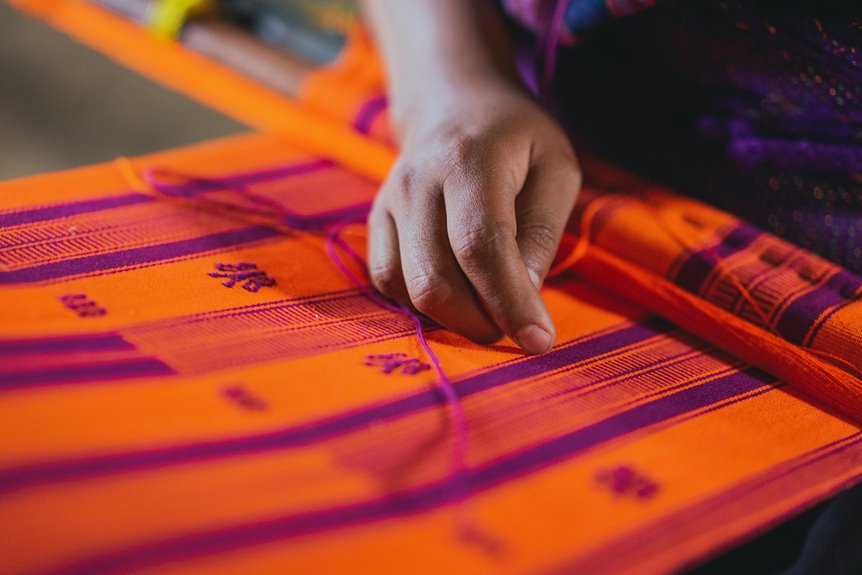
You’ll find Balinese Ikat is more than just fabric—it’s a vibrant cultural tapestry woven with centuries of tradition and spiritual meaning. Using precise tying and dyeing techniques on cotton or silk, artisans craft intricate patterns that symbolize protection, identity, and divine connection. Colors carry deep significance, telling stories of bravery and sacredness. Today, this art adapts with modern twists while preserving its heritage. Explore how these timeless threads continue to inspire and connect generations.
Key Takeaways
- Balinese Ikat weaving uses intricate resist-dyeing techniques to create culturally significant patterns on cotton or silk threads.
- Ikat patterns symbolize spiritual beliefs, social status, and local identity within Balinese Hindu culture.
- Traditional motifs and colors in Balinese Ikat convey protection, fertility, bravery, and ancestral connections.
- Contemporary artists blend Balinese Ikat heritage with modern designs, expanding its presence in fashion and décor.
- Preserving Balinese Ikat involves educating new generations and supporting artisans to maintain its cultural and artistic legacy.
History and Origins of Balinese Ikat
Although you may not realize it at first, the history of Balinese ikat is deeply intertwined with the island’s cultural and spiritual life.
When you explore its origins, you’ll find that ikat weaving has existed in Bali for centuries, passed down through generations. You’ll notice that the patterns often reflect local beliefs, myths, and social status.
As you learn more, you’ll see how ikat served not just as fabric but as a symbol of identity and connection to the divine. The tradition likely evolved alongside Bali’s unique Hindu culture, blending artistry with ritual significance.
When you wear or see Balinese ikat, you’re witnessing a living story that continues to honor the island’s heritage and spiritual values.
Traditional Techniques and Materials
When you examine Balinese ikat closely, you’ll notice that its traditional techniques demand remarkable skill and patience.
You start by carefully tying bundles of cotton or silk threads with resist bindings before dyeing. This selective tying controls where the dye penetrates, creating intricate patterns once woven.
The materials themselves—soft cotton or lustrous silk—are chosen for their ability to absorb natural dyes, like indigo or morinda.
You’ll see artisans using wooden looms, where they meticulously align the dyed threads to guarantee the patterns emerge seamlessly during weaving.
Every step, from dyeing to weaving, requires precision, as even a slight misalignment can disrupt the design.
This hands-on approach connects you directly to centuries-old craftsmanship that defines Balinese ikat’s unique beauty.
Symbolism and Cultural Significance
Because Balinese ikat carries deep symbolism, you’ll find its patterns and colors tell stories about social status, spiritual beliefs, and local identity.
When you look closely, certain motifs represent protection, fertility, or ancestral connections, guiding your understanding of the wearer’s role within the community.
Colors aren’t chosen randomly; each shade has meaning—red might symbolize bravery, while black often signifies the sacred.
As you wear or admire ikat, you connect with centuries of tradition, feeling the spiritual energy woven into every thread.
The textiles serve not just as clothing but as cultural markers, preserving heritage and reinforcing social bonds.
Contemporary Adaptations and Innovations
While Balinese ikat remains deeply rooted in tradition, contemporary artists and designers are breathing new life into this ancient craft by blending classic techniques with modern aesthetics.
Balinese ikat thrives as artists blend timeless techniques with fresh, contemporary design.
You’ll find ikat patterns reinterpreted on sleek fashion pieces, home décor, and accessories, making the fabric more accessible and versatile. Designers experiment with bold color palettes and abstract motifs, pushing boundaries while respecting the weaving process.
You can also see innovative uses of sustainable materials and digital tools that streamline production without sacrificing authenticity. By embracing these adaptations, you help maintain ikat’s relevance in today’s global market.
This fusion of old and new invites you to appreciate ikat not just as heritage but as a dynamic art form that evolves with time.
Preserving the Craft for Future Generations
As contemporary artists reimagine Balinese ikat, the responsibility to safeguard this heritage falls on both creators and admirers. You can help preserve the craft by supporting local artisans and encouraging educational programs that teach traditional techniques. Passing these skills to younger generations guarantees the vibrant patterns and meanings endure.
| What You Can Do | Why It Matters |
|---|---|
| Buy authentic ikat | Supports artisans’ livelihoods |
| Learn weaving basics | Keeps traditions alive |
| Share stories & art | Sparks cultural appreciation |
Frequently Asked Questions
How Long Does It Take to Complete One Balinese Ikat Piece?
You’ll spend several weeks to months completing one Balinese ikat piece. The intricate process demands patience and skill, as you carefully dye and weave the threads to create the detailed, traditional patterns unique to this textile art.
What Are the Common Motifs Found in Balinese Ikat Designs?
You’ll often spot motifs like mythical creatures, floral patterns, and geometric shapes in Balinese ikat designs. These symbols carry deep meanings, reflecting local beliefs, nature, and spiritual traditions woven into every thread.
Can Balinese Ikat Fabrics Be Used for Modern Fashion?
You know what they say, “Old is gold.” You can definitely incorporate Balinese Ikat fabrics into modern fashion, mixing traditional patterns with contemporary styles to create unique, eye-catching outfits that honor heritage while staying trendy.
Where Can Tourists Buy Authentic Balinese Ikat Textiles?
You can buy authentic Balinese Ikat textiles at local markets, artisan shops, and weaving villages in Bali. Don’t forget to visit Ubud’s markets or traditional villages like Tenganan for genuine, handcrafted pieces directly from weavers.
Are There Any Specific Ceremonies Featuring Balinese Ikat Clothing?
You’ll see Balinese ikat clothing worn during important ceremonies like temple festivals and weddings. These vibrant textiles symbolize tradition and status, making them essential for honoring cultural rituals and celebrating Bali’s rich heritage.