
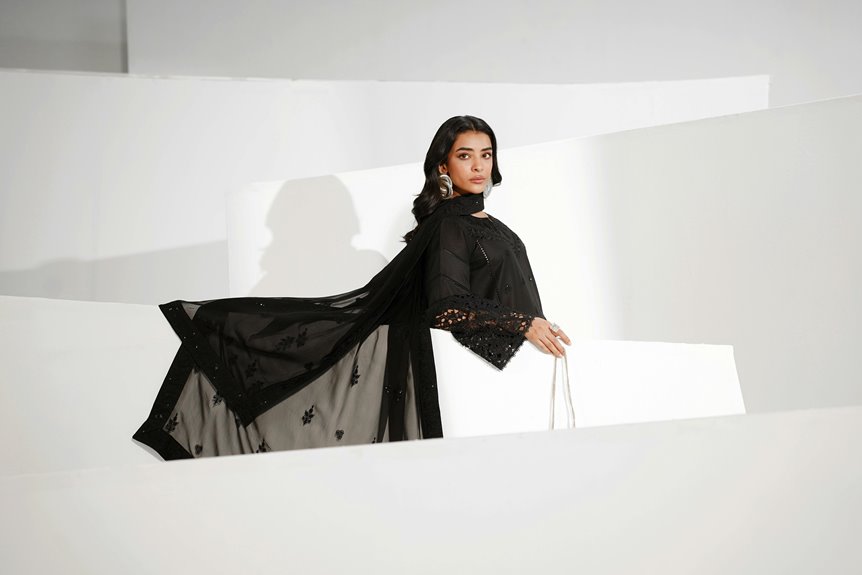
You’ll find Ikat’s rich heritage and intricate artistry woven seamlessly from prestigious runways to your everyday wardrobe. This ancient textile uses a unique dyeing process to create vibrant, symbolic patterns that reflect diverse cultures. Today’s designers blend traditional Ikat with modern styles, making it a must-have for sustainable fashion lovers. Whether worn as bold statements or subtle accents, Ikat’s revival shows no signs of fading—explore how it continues to inspire and evolve across the fashion world.
Key Takeaways
- Ikat patterns are increasingly featured in runway collections, blending traditional craftsmanship with modern fashion silhouettes.
- Ready-to-wear Ikat garments offer accessible, culturally rich textiles for everyday style and sustainable fashion consumers.
- Designers like Missoni and Diane von Furstenberg use Ikat to add depth and heritage storytelling to contemporary apparel.
- Innovations in Ikat production enable faster, eco-friendly processes, making Ikat textiles more available in mainstream fashion.
- The revival of Ikat incorporates customization and smart textiles, expanding its appeal from high fashion to personalized ready-to-wear pieces.
Origins and History of Ikat Textile
Although Ikat textiles have a global presence today, their origins trace back thousands of years to ancient civilizations in Southeast Asia and Central America.
When you explore Ikat’s history, you’ll find it rooted in cultures that prized craftsmanship and symbolism. You’ll notice that these communities developed unique weaving techniques, creating patterns that carried cultural meanings and stories.
As you trace Ikat’s journey, you’ll see how it spread through trade routes, influencing various regions and evolving with each culture’s touch. You’ll appreciate how Ikat wasn’t just fabric but a form of identity and artistic expression.
Understanding its rich past helps you value Ikat’s significance in fashion beyond aesthetics, recognizing the heritage woven into every piece you wear.
The Traditional Ikat Dyeing Process
When you look closely at traditional Ikat dyeing, you’ll see a meticulous process that demands skill and patience.
First, you tie sections of the yarn tightly with a resist material, usually a waxed thread, to prevent dye from penetrating certain areas. Then, you dye the yarn, carefully controlling which parts absorb color.
Tightly tying yarn sections with waxed thread controls dye absorption for Ikat’s distinctive patterns.
After drying, you may repeat tying and dyeing to add multiple colors. Once the yarn is fully dyed, you weave it into fabric, aligning patterns precisely for the signature blurred motifs.
This resist-dye technique means you’re dyeing the yarn before weaving, not the finished fabric, which requires exact planning. Each step calls for expertise, ensuring the final textile showcases Ikat’s unique, intricate designs that stand out in fashion.
Cultural Significance Across Different Regions
Understanding the traditional Ikat dyeing process helps you appreciate how deeply this craft is woven into the cultures that create it.
In Indonesia, for instance, Ikat symbolizes social status and community identity, with distinct patterns specific to each island.
When you explore Indian Ikat, you’ll find its vibrant motifs reflect regional stories and spiritual beliefs, especially in states like Odisha and Gujarat.
Central Asian Ikat, particularly from Uzbekistan, carries rich symbolic meanings tied to heritage and protection.
As you encounter Ikat in Latin America, you’ll notice how indigenous communities use it to express cultural pride and preserve ancestral traditions.
Recognizing these regional differences lets you see Ikat not just as fabric but as a living cultural expression that connects generations and tells unique stories.
Ikat’s Revival in Contemporary Fashion
As you explore today’s fashion scene, you’ll notice Ikat making a vibrant comeback. This ancient technique, once limited to traditional garments, now infuses contemporary collections with striking patterns and bold colors.
Designers and brands alike are embracing Ikat’s unique aesthetic, blending its handcrafted charm with modern silhouettes. You’ll find Ikat featured in everything from casual wear to statement pieces, reflecting a renewed appreciation for artisanal craftsmanship.
Its revival also aligns with a growing demand for sustainable and culturally rich textiles, making Ikat both stylish and meaningful. When you wear Ikat, you connect with a rich heritage while staying on trend.
This resurgence proves that Ikat isn’t just a relic—it’s a dynamic force shaping fashion’s future.
Prominent Designers Embracing Ikat Patterns
Many top designers have caught onto Ikat’s vibrant appeal, weaving its intricate patterns into their latest collections.
When you explore brands like Missoni or Diane von Furstenberg, you’ll notice how they skillfully incorporate Ikat’s blurred motifs to add depth and movement to their pieces.
You’ll find designers blending traditional craftsmanship with modern silhouettes, making Ikat feel fresh and wearable.
By choosing Ikat, you’re embracing a pattern that tells a story, rooted in heritage yet versatile enough for contemporary style.
Ikat weaves heritage into every thread, offering timeless patterns that seamlessly blend tradition with modern fashion.
You might also spot emerging designers experimenting boldly with Ikat, using it to create statement looks that stand out.
Whether you’re drawn to subtle accents or bold prints, these designers show you how Ikat can elevate any wardrobe effortlessly.
Ikat on the Global Runways
You’ve probably noticed how iconic designers have brought Ikat patterns to the global runways, making them a standout trend.
These vibrant designs aren’t just local—they’re influencing fashion scenes worldwide.
Let’s explore how Ikat is shaping collections from New York to Tokyo.
Iconic Ikat Designers
When you spot Ikat patterns on global runways, it’s hard not to admire the designers who bring this traditional technique into contemporary fashion.
Designers like Dries Van Noten and Isabel Marant have masterfully incorporated Ikat’s vibrant, blurred motifs into their collections, blending heritage with modernity.
You’ll notice how Valentino’s use of Ikat adds a luxe, artisanal touch to haute couture, while brands like Etro infuse their bohemian styles with Ikat’s rich textures.
These designers don’t just use Ikat as a print; they celebrate its cultural roots and craftsmanship.
When you wear Ikat-inspired pieces by these icons, you connect to a global tradition reimagined for today’s fashion landscape—showcasing timeless artistry with a fresh, wearable edge.
Ikat Trends Worldwide
Although Ikat has deep traditional roots, it’s now a dynamic force on global runways, enchanting designers and fashion lovers alike.
When you spot Ikat patterns on models in Paris, Milan, or New York, you’re witnessing a vibrant fusion of heritage and modernity. Designers are experimenting with bold color palettes and abstract patterns, pushing Ikat beyond its customary boundaries.
You’ll find Ikat in everything from flowing gowns to structured jackets, proving its versatility. As sustainable fashion grows, many brands turn to Ikat’s handcrafted techniques, appreciating its eco-friendly appeal.
Incorporating Ikat Into Everyday Wear
Because Ikat features bold patterns and vibrant colors, incorporating it into your daily wardrobe can instantly elevate simple outfits.
Ikat’s bold patterns and vibrant hues effortlessly transform everyday looks into stylish statements.
You can start small by adding Ikat scarves or bags that complement neutral tones. If you’re feeling adventurous, choose Ikat tops or skirts to pair with solid-colored pieces, creating a balanced look.
For work, an Ikat blazer can add personality without overwhelming professionalism. When casual, Ikat shorts or dresses offer comfort and style.
Mix and match patterns carefully to avoid clashing, focusing on one Ikat piece per outfit. Don’t forget accessories like shoes or belts with subtle Ikat details.
Sustainable and Ethical Aspects of Ikat Production
Adding Ikat to your wardrobe can do more than boost your style—it can support sustainable and ethical practices in fashion.
Ikat production often relies on traditional, handcrafted techniques that minimize waste and energy use. When you choose Ikat, you back artisans and communities preserving cultural heritage and fair labor practices.
Here’s how Ikat supports sustainability and ethics:
- Uses natural dyes, reducing chemical pollution
- Employs hand-weaving, cutting down on electricity
- Encourages slow fashion with durable, timeless pieces
- Supports fair wages and community livelihoods
- Promotes cultural preservation and artisan empowerment
Future Trends and Innovations in Ikat Fashion
As Ikat continues to captivate fashion enthusiasts, new trends and innovations are reshaping its role in contemporary style.
You’ll notice designers experimenting with digital techniques to replicate traditional Ikat patterns, making production faster and more accessible. Sustainable materials and eco-friendly dyes are gaining traction, allowing you to enjoy Ikat fashion with a smaller environmental footprint.
Plus, blending Ikat with other textile arts is creating fresh, unexpected designs that appeal to diverse tastes. You can expect smart textiles infused with Ikat aesthetics, combining technology and tradition for functional fashion.
As customization grows, you’ll find more opportunities to personalize Ikat garments, reflecting your unique style. Embracing these innovations guarantees Ikat remains relevant and exciting in the evolving fashion landscape.
Frequently Asked Questions
How Do I Care for and Wash Ikat Garments Properly?
You’ll want to treat your ikat garments with gentle affection—hand wash in cold water, avoid harsh detergents, and air dry away from sunlight to keep colors vibrant and fabric feeling soft and cherished for years to come.
Can Ikat Fabrics Be Used for Home Décor Projects?
You can definitely use ikat fabrics for home décor projects. Their vibrant patterns brighten up cushions, curtains, and upholstery. Just remember to treat them gently and avoid harsh cleaning to keep colors vivid and fabric strong.
What Distinguishes Ikat From Other Resist-Dye Techniques?
Over 60% of ikat’s charm lies in its unique pre-dyeing resist technique, where you tie threads before weaving, creating blurred patterns that set it apart from other methods dyeing finished fabric or yarn after weaving.
Are There Specific Seasons Best Suited for Wearing Ikat?
You can wear ikat any season, but its vibrant patterns shine in spring and summer. Lightweight fabrics keep you cool, while layered ikat pieces add warmth and texture during fall and winter, making it versatile year-round.
How Does Ikat Fabric Vary in Texture and Weight?
You’ll find ikat fabric varies widely; it can be lightweight and soft or heavier with a textured feel. The weaving technique and fibers used influence its texture and weight, so pick what suits your style and comfort.