
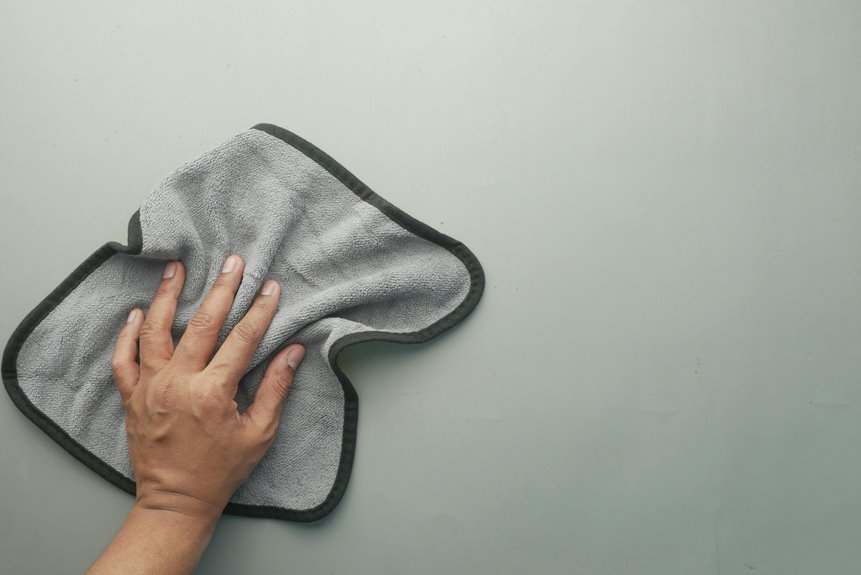
When you use a polyester-polyamide microfiber towel with an 80/20 blend, you get a perfect mix of durability and absorbency. The 80% polyester gives strength and quick-drying power, while the 20% polyamide adds softness and water retention. This combination makes your towel strong, long-lasting, and highly effective at soaking up moisture without feeling heavy. It’s great for workouts, travel, or daily cleaning tasks. Keep exploring, and you’ll discover how to care for and maximize these towels’ performance.
Key Takeaways
- An 80/20 microfiber towel is made of 80% polyester and 20% polyamide for durability and absorbency.
- Polyester adds strength and quick-drying properties, while polyamide enhances softness and moisture absorption.
- The microfiber structure increases surface area, boosting cleaning efficiency and water retention.
- This blend resists wear, maintains shape, and lasts through repeated washing and use.
- Proper care includes washing without fabric softeners and air drying to preserve towel performance.
Understanding Polyester and Polyamide Fibers
While you mightn’t always notice the difference, understanding polyester and polyamide fibers can help you choose the right microfiber towel for your needs.
Polyester fibers are strong, durable, and resistant to shrinking and stretching, making your towel last longer. They also dry quickly, so your towel stays fresh between uses.
Polyamide, often known as nylon, adds softness and improves absorbency. It helps the towel pick up water and dirt more effectively, giving you a better clean.
When you know these differences, you can better evaluate towels based on their fiber content. Polyester provides toughness and quick drying, while polyamide boosts softness and moisture absorption.
This knowledge helps you pick a towel that fits your cleaning or drying tasks perfectly without guesswork.
The Benefits of an 80/20 Microfiber Blend
When you choose an 80/20 microfiber blend, you get a towel that’s both tough and long-lasting.
The polyester adds strength, while the polyamide boosts absorbency, so it handles spills and moisture with ease.
You’ll notice how this balance makes your towel perform better every time you use it.
Durability and Strength
You’ll notice that an 80/20 polyester-polyamide microfiber blend offers exceptional durability and strength, making it ideal for long-lasting towels.
When you use towels made from this blend, they resist wear and tear far better than those made from traditional materials. The polyester provides toughness, while the polyamide adds flexibility and resilience, so your towel maintains its shape even after repeated use and washing.
You won’t have to worry about fraying edges or thinning spots anytime soon. This blend also stands up well to stretching and pulling, which means your towel stays reliable during intense cleaning or drying tasks.
Choosing an 80/20 microfiber towel guarantees you get a product that’s built to last, saving you money and hassle in the long run.
Enhanced Absorbency Features
Three key factors make an 80/20 polyester-polyamide microfiber blend highly absorbent, ensuring your towel soaks up moisture quickly and efficiently.
First, the polyester fibers provide strength and structure, allowing the towel to maintain its shape while holding moisture.
Second, the polyamide (nylon) fibers have a natural affinity for water, pulling moisture away from your skin and locking it into the fabric.
Finally, the microfiber’s ultra-fine strands create an enormous surface area that traps water molecules effectively.
Together, these elements let your towel dry you faster without feeling heavy or soggy.
When you choose an 80/20 blend, you get a quick-drying, lightweight towel that excels at moisture absorption—perfect for workouts, travel, or everyday use.
How the Blend Enhances Absorbency and Drying Time
Because polyester and polyamide fibers each offer unique properties, their combination in microfiber towels greatly boosts absorbency and speeds up drying times.
When you use an 80/20 polyester-polyamide towel, you benefit from polyester’s quick moisture-wicking ability, which pulls water away from surfaces rapidly.
Meanwhile, polyamide’s natural affinity for water increases the towel’s overall capacity to hold moisture.
This synergy means your towel soaks up spills or sweat more efficiently than towels made from just one fiber.
Plus, polyester’s fast drying nature guarantees the towel dries quickly after use, reducing the chance of mildew buildup.
Durability and Wear Resistance of the 80/20 Towel
You’ll appreciate how the 80/20 blend boosts fiber strength, making the towel tougher against wear and tear.
This means your towel maintains its fabric integrity even after repeated use and washes.
With this durability, you can count on it to last much longer than standard towels.
Enhanced Fiber Strength
Durability defines the value of any microfiber towel, and the 80/20 polyester-polyamide blend excels in this area.
You’ll notice that the enhanced fiber strength allows the towel to maintain its structure even after repeated use and washing. This strength comes from the unique combination of polyester’s toughness and polyamide’s flexibility, giving you a towel that resists tearing and fraying.
When you use this blend, you benefit from:
- Increased resistance to abrasion and daily wear
- Superior tensile strength that prevents fiber breakage
- Better shape retention under stress
- Enhanced ability to withstand stretching and pulling
With these features, your microfiber towel stays reliable and effective, handling tough cleaning tasks while lasting longer than many alternatives.
Long-Term Fabric Integrity
While many towels lose their effectiveness over time, the 80/20 polyester-polyamide blend keeps its performance intact through prolonged use.
You’ll notice this towel maintains its softness and absorbency, even after countless washes. The polyester offers excellent resistance to abrasion, so the fabric won’t fray or thin easily.
Meanwhile, the polyamide fibers add strength and flexibility, preventing tears and stretching. This combination guarantees your towel stays durable and reliable for everyday tasks.
You don’t have to worry about it breaking down quickly or losing texture. Whether you use it for drying, cleaning, or polishing, the towel’s long-term fabric integrity means it stands up to regular wear and maintains peak performance, saving you money and hassle over time.
Ideal Uses for Polyester-Polyamide Microfiber Towels
Because polyester-polyamide microfiber towels dry quickly and resist stains, they’re perfect for active lifestyles and busy households.
You’ll find these towels incredibly versatile, handling everything from sports gear to daily chores with ease. Their durability and efficient moisture-wicking make them a must-have for anyone on the go.
Consider using them for:
- Gym workouts and yoga sessions, where sweat absorption matters
- Quick cleanups around the kitchen and bathroom without leaving streaks
- Outdoor activities like camping or hiking because they pack light and dry fast
- Car detailing, as they gently lift dirt without scratching surfaces
With these towels, you’re equipped to tackle messes and moisture efficiently, making your routines smoother and more efficient.
Care Tips to Maintain Your Microfiber Towel
To keep your polyester-polyamide microfiber towel performing at its best, you’ll want to follow a few simple care tips.
Always wash your towel separately or with other microfiber items to avoid lint transfer. Use cold or warm water with a mild detergent, and avoid fabric softeners or bleach, as they can clog the fibers and reduce absorbency.
Skip the dryer sheets for the same reason. After washing, tumble dry on low heat or air dry to preserve the towel’s texture and longevity. Avoid ironing, as high heat damages the fibers.
Regularly cleaning your microfiber towel this way keeps it soft, absorbent, and durable, ensuring it serves you well whether drying, cleaning, or polishing.
Comparing 80/20 Towels With Other Fabric Blends
Proper care keeps your polyester-polyamide microfiber towel soft and absorbent, but understanding how its 80/20 fabric blend compares to other combinations can help you choose the best towel for your needs.
The 80/20 blend offers a balanced mix of durability and softness, making it versatile. Other blends might excel in specific areas but often sacrifice overall performance.
- 100% polyester towels dry quickly but lack the softness polyamide adds.
- 100% polyamide towels feel softer but aren’t as durable or fast-drying.
- Blends with lower polyamide content can feel rougher and less absorbent.
- Higher polyamide blends increase softness but may require gentler care.
Frequently Asked Questions
Are 80/20 Microfiber Towels Environmentally Friendly?
You might find 80/20 microfiber towels less eco-friendly since they’re made from synthetic fibers that shed microplastics during washing, which harms oceans. However, their durability means you’ll replace them less often, reducing waste overall.
Can 80/20 Microfiber Towels Cause Skin Allergies?
You might experience skin allergies if you’re sensitive to synthetic materials in 80/20 microfiber towels, but most people don’t. Always wash new towels before use to reduce potential irritants and keep your skin happy.
How Does the 80/20 Blend Affect Towel Color Retention?
You’ll find that the 80/20 blend helps your towel keep its color longer because polyester resists fading, while polyamide adds softness. Together, they maintain vibrant hues even after multiple washes, so your towel looks fresh.
Are 80/20 Microfiber Towels Safe for Use on Electronics?
You can safely use 80/20 microfiber towels on electronics since they’re soft and non-abrasive. They effectively clean screens without scratching or leaving lint, making them perfect for delicate devices when used gently and without harsh chemicals.
Do 80/20 Towels Require Special Detergents for Washing?
Want your 80/20 towels to last? You don’t need special detergents, but avoid fabric softeners and bleach—they’ll ruin the fibers. Just use mild soap and cold water to keep your towels soft and effective.