
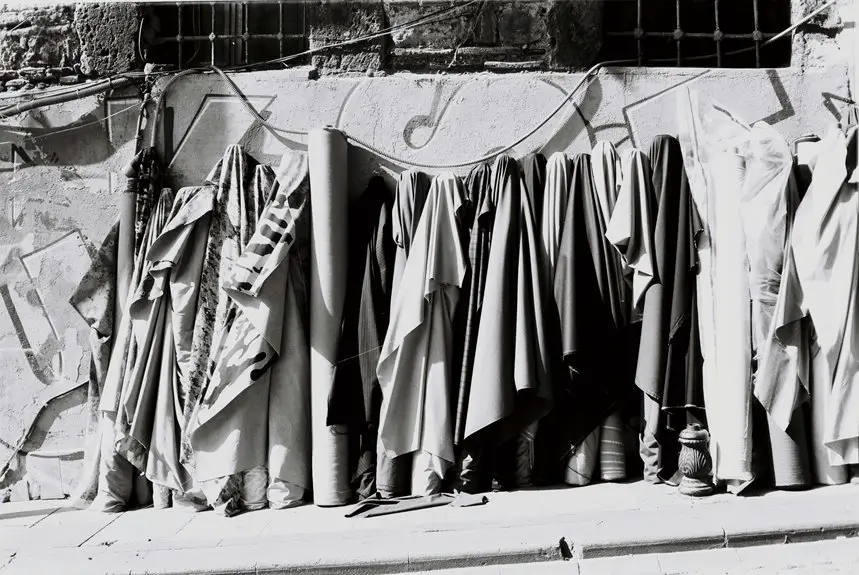
Tetron silk fabric blends polyester and natural silk, giving you a durable, wrinkle-resistant material with a smooth, luxurious feel. It’s affordable, easy to care for, and keeps vibrant colors wash after wash. Ideal for stylish clothing and home textiles, Tetron silk offers the elegance of silk with added strength and low maintenance. If you want to explore its unique properties, versatile uses, and best care tips, there’s plenty more to discover ahead.
Key Takeaways
- Tetron silk is a durable blend of 60-70% polyester and 30-40% natural silk, combining strength with a luxurious feel.
- It offers wrinkle resistance, color retention, and quick drying, making it ideal for easy-care fashion and home textiles.
- Popular uses include stylish apparel like evening gowns and office wear, as well as home items such as curtains and bed linens.
- Sewing Tetron silk requires fine needles, delicate stitching, and gentle washing to maintain fabric integrity and appearance.
- While more affordable and eco-efficient than pure silk, Tetron silk has moderate environmental impact due to synthetic fibers.
History and Origin of Tetron Silk
Although Tetron silk might sound like a traditional fabric, it actually emerged in the mid-20th century as a blend of polyester and cotton fibers designed to combine durability with a smooth, silk-like texture.
When you look back, you’ll see that Tetron silk was developed to meet the growing demand for affordable, easy-care textiles that still offered elegance. You’ll find that it quickly gained popularity in fashion and home textiles because it resisted wrinkles and held color well.
As you explore its history, you’ll notice how advances in synthetic fiber technology during that era played a vital role in bringing Tetron silk to life. Understanding this background helps you appreciate why Tetron silk remains a practical and stylish choice today.
What Is Tetron Silk Made Of?
You’ll find that Tetron silk is a unique blend of synthetic and natural fibers, combining durability with comfort.
It’s made by carefully mixing polyester with silk to create a smooth, lightweight fabric.
Understanding this fiber composition and its production process will help you appreciate what makes Tetron silk special.
Fiber Composition Breakdown
Tetron silk consists primarily of a blend of polyester fibers and natural silk, combining the durability of synthetic material with the softness of real silk.
When you examine its fiber composition, you’ll notice polyester forms the fabric’s backbone, providing strength, wrinkle resistance, and easy maintenance.
Meanwhile, natural silk fibers contribute to Tetron’s luxurious feel and subtle sheen. This blend guarantees you get a fabric that’s both practical and elegant.
The exact ratio of polyester to silk can vary depending on the manufacturer, but typically, polyester makes up around 60-70%, with silk comprising 30-40%.
This balance allows the fabric to maintain silk’s aesthetic qualities while benefiting from polyester’s resilience.
Understanding this breakdown helps you appreciate why Tetron silk performs so well in everyday wear.
Synthetic and Natural Blend
Understanding the fiber composition breakdown gives you a clearer picture of what goes into Tetron silk. This fabric blends synthetic fibers, primarily polyester, with natural silk fibers.
You get the best of both worlds: the durability and wrinkle resistance of synthetic materials combined with the softness and luster of natural silk. The polyester component adds strength and makes the fabric more affordable, while the silk fibers maintain that luxurious feel and sheen you expect from silk products.
When you wear Tetron silk, you enjoy a fabric that’s lightweight, breathable, and easy to care for. This synthetic and natural blend creates a versatile material perfect for everyday wear without sacrificing elegance or comfort.
Production Process Details
Because it combines both synthetic and natural fibers, the production process of Tetron silk involves carefully blending polyester with real silk threads.
First, manufacturers melt polyester pellets to create fine synthetic fibers. These fibers are then spun together with silk filaments in precise ratios, depending on the desired texture and strength.
You’ll find the blend woven on specialized looms that maintain the integrity of both fibers, guaranteeing durability and a smooth finish.
After weaving, the fabric undergoes treatments like dyeing and finishing to enhance its luster and softness.
Characteristics and Properties of Tetron Silk
Although it resembles natural silk in texture and sheen, Tetron silk offers unique advantages that make it a popular choice for both fashion and upholstery.
Tetron silk combines the luxurious look of natural silk with practical benefits for fashion and home décor.
When you handle Tetron silk, you’ll notice its smooth surface and slight luster, which mimic real silk beautifully. It’s lightweight yet strong, providing durability that stands up to daily wear.
This fabric resists wrinkles and maintains its shape, so you won’t have to worry about constant ironing or sagging. Tetron silk also dries quickly, making it easy to care for.
Its color retention is impressive, keeping your garments vibrant even after multiple washes. Plus, this fabric is less prone to static cling and feels comfortable against your skin, blending elegance with practicality seamlessly.
Advantages of Using Tetron Silk Fabric
When you choose Tetron silk fabric, you get a blend of elegance and practicality that suits a variety of uses. This fabric offers benefits that make your investment worthwhile and your experience enjoyable.
- Durability: Tetron silk resists wear and tear better than natural silk, so your items last longer without losing their charm.
- Easy Care: You don’t have to worry about delicate washing routines; Tetron silk handles machine washes and dries quickly.
- Affordability: You enjoy the luxurious look of silk without the high price tag, making it accessible for everyday use.
These advantages mean you can embrace style and convenience without compromise, making Tetron silk a smart choice for your wardrobe and décor.
Common Applications of Tetron Silk
You’ll find Tetron silk popping up in everything from stylish apparel to cozy home textiles.
It’s also a popular choice for industrial and technical fabrics thanks to its durability.
Let’s explore where this versatile material fits into your everyday life.
Apparel and Fashion Uses
Because Tetron silk combines durability with a smooth, elegant texture, designers often choose it for creating stylish, long-lasting garments.
When you wear Tetron silk, you get the perfect blend of comfort and sophistication that stands out in any setting. You’ll appreciate how this fabric holds its shape and resists wrinkles, making your outfit look fresh all day.
Here are three popular ways you’ll find Tetron silk in fashion:
- Evening gowns that sparkle with a luxurious feel but don’t demand high maintenance.
- Office wear that looks sharp, professional, and stays neat through long hours.
- Casual blouses and dresses that offer breathable comfort while keeping a polished appearance.
Tetron silk truly elevates your wardrobe without compromising practicality.
Home Textile Applications
Tetron silk’s blend of durability and elegance doesn’t just suit fashion—it also enhances your home textiles.
When you choose Tetron silk for curtains, you get fabric that resists wrinkles and fading, maintaining a fresh look even under sunlight.
It’s perfect for cushion covers, offering a smooth, lustrous finish that elevates your living space while standing up to regular use.
You’ll find Tetron silk ideal for bed linens, combining softness with strength for comfortable, long-lasting sheets and pillowcases.
Its easy-care nature means you can enjoy luxury without the hassle of delicate maintenance.
Industrial and Technical Fabrics
When you need fabrics that combine strength and versatility for demanding environments, industrial and technical applications often turn to Tetron silk.
You’ll find it invaluable where durability and resistance to wear are critical. Tetron silk’s ability to withstand harsh conditions makes it ideal for specialized uses.
Here are three common applications you might consider:
- Conveyor belts and industrial filters, where toughness guarantees long-lasting performance.
- Safety gear and protective clothing, offering reliable resistance to tears and abrasions.
- Automotive upholstery and interior linings, providing durability without sacrificing comfort or appearance.
How Tetron Silk Compares to Other Fabrics
Although you might be familiar with traditional fabrics like cotton or polyester, Tetron silk offers a unique blend of durability and softness that sets it apart.
Unlike cotton, which can wrinkle easily, Tetron silk resists creasing and maintains its shape longer. Compared to polyester, it feels more breathable and gentle against your skin, reducing irritation.
You’ll also find Tetron silk holds color vibrantly, so your garments look fresh even after multiple washes.
While natural silk is luxurious, Tetron silk provides a similar sheen at a fraction of the cost and with better wrinkle resistance.
If you want a fabric that balances comfort, durability, and affordability, Tetron silk stands out as an excellent choice among your fabric options.
Tips for Sewing and Working With Tetron Silk
When working with Tetron silk, you’ll want to choose the right needle to avoid damaging the fabric.
Using proper stitching techniques will help you achieve clean, durable seams.
Plus, handling and care tips are key to keeping your project looking its best.
Choosing the Right Needle
Since Tetron silk is a delicate fabric, you’ll need to choose your needle carefully to avoid snags and runs.
Picking the right needle guarantees your project turns out smooth and professional without damaging the fabric. Here’s what to keep in mind:
- Use a fine, sharp needle (size 60/8 or 70/10) – These needles glide through Tetron silk without causing pulls or holes.
- Choose a universal or microtex needle – Their thin, sharp points create precise stitches perfect for delicate fibers.
- Avoid ballpoint needles – They can cause runs by pushing fibers apart instead of piercing cleanly.
Stitching Techniques for Tetron
Selecting the right needle sets you up for success, but mastering your stitching technique will truly bring out the best in Tetron silk.
Start with a fine stitch length—around 2 to 2.5 mm—to prevent puckering and maintain the fabric’s smooth appearance. Use a straight stitch for most seams, ensuring even tension to avoid puckering or thread breakage.
When sewing curves or corners, slow down to keep control and accuracy. Reinforce high-stress areas with backstitching, but avoid excessive bulk.
Avoid using heavy or thick threads; instead, opt for lightweight polyester thread that complements Tetron’s strength and sheen.
Finally, always test your stitches on a fabric scrap to adjust tension and stitch length before working on your final piece. This way, you’ll achieve clean, durable seams every time.
Handling and Care Tips
Although Tetron silk feels delicate, you can handle it confidently by following a few key care tips. This fabric blends strength with elegance, so treating it right guarantees your creations stay flawless.
When sewing, avoid using pins that leave holes—opt for clips or fine needles instead. Wash gently by hand or on a delicate machine cycle with mild detergent to preserve its sheen. Store your Tetron silk away from direct sunlight to prevent fading and fabric breakdown.
- Use a fine needle and avoid heavy pins to prevent snags.
- Choose gentle washing methods to maintain texture and color.
- Keep your fabric stored in a cool, dark place to extend its life.
With these tips, you’ll enjoy working with Tetron silk every time.
Care and Maintenance Guidelines for Tetron Silk
Proper care and maintenance are essential to keep Tetron silk looking its best and lasting longer.
Always wash Tetron silk gently, preferably by hand using cold water and mild detergent. Avoid wringing or twisting the fabric; instead, press out excess water softly.
When machine washing, use a delicate cycle and place the fabric in a mesh laundry bag to prevent damage.
Dry Tetron silk flat or hang it away from direct sunlight to prevent fading.
Iron on a low heat setting while the fabric is slightly damp, or use a pressing cloth to avoid shine marks.
Store your Tetron silk items in a cool, dry place, away from harsh chemicals or rough surfaces that could cause snags or discoloration.
Following these steps will preserve the fabric’s smooth texture and vibrant appearance.
Popular Fashion Trends Featuring Tetron Silk
When you want a fabric that combines elegance with durability, Tetron silk is a top choice in today’s fashion scene.
Its smooth texture and vibrant sheen make it perfect for creating standout pieces that last. You’ll find Tetron silk featured in a variety of trendy designs that elevate your wardrobe effortlessly.
Popular fashion trends featuring Tetron silk include:
- Flowing Dresses: Lightweight and breathable, these dresses move gracefully, perfect for both casual and formal occasions.
- Chic Blouses: Tetron silk blouses offer a polished look that pairs well with jeans or skirts, adding a touch of sophistication.
- Statement Scarves: Soft and colorful, these scarves brighten any outfit and provide a luxurious feel against your skin.
Environmental Impact and Sustainability of Tetron Silk
Since sustainability matters more than ever, understanding the environmental impact of Tetron silk helps you make informed choices. Tetron silk blends polyester and natural fibers, which affects its eco-footprint. While it offers durability and less water use compared to pure silk, its synthetic component raises concerns about microplastic pollution. You can weigh these factors before deciding on Tetron silk for your wardrobe or projects.
| Factor | Impact |
|---|---|
| Water Usage | Lower than traditional silk |
| Energy Consumption | Moderate due to synthetic processing |
| Biodegradability | Limited; synthetic fibers degrade slowly |
| Microplastic Release | Possible during washing |
| Durability | High, reduces frequent replacements |
Where to Buy Quality Tetron Silk Fabric
Looking for quality Tetron silk fabric can feel overwhelming, but knowing where to shop makes all the difference. You want fabric that’s durable, smooth, and true to its sustainable promise.
To find the best, focus on trusted sources that prioritize authenticity and customer satisfaction.
Here are three places to start your search:
- Specialty Textile Stores: These shops often offer expertly curated Tetron silk, ensuring you get genuine material.
- Reputable Online Retailers: Look for sites with detailed product descriptions, customer reviews, and clear return policies.
- Local Artisan Markets: Supporting local vendors can connect you with unique, high-quality Tetron silk while promoting sustainability.
Frequently Asked Questions
Can Tetron Silk Fabric Be Dyed at Home?
You can dye Tetron silk fabric at home, but you’ll need the right synthetic fabric dye and follow instructions carefully. Pre-washing and testing a small piece helps guarantee even color and prevents damage to the material.
Is Tetron Silk Hypoallergenic for Sensitive Skin?
Like a gentle breeze on a calm day, Tetron silk is hypoallergenic, so you won’t have to worry about irritation. It’s designed to be kind to sensitive skin, letting you wear it comfortably all day.
Does Tetron Silk Fabric Shrink After Washing?
You won’t see much shrinkage with Tetron silk fabric after washing since it’s a polyester blend. Just use cold water and gentle cycles to keep it looking great without worrying about shrinking or damage.
Can Tetron Silk Be Blended With Natural Fibers?
You’d think blending Tetron silk with natural fibers is as rare as finding a unicorn, but you can totally mix it! Combining Tetron with cotton or wool boosts durability and comfort, giving you the best of both worlds.
How Does Tetron Silk React to High Heat Ironing?
You should avoid high heat when ironing Tetron silk because it can melt or get damaged. Use a low to medium heat setting and press gently to keep the fabric smooth without ruining its texture or shine.