
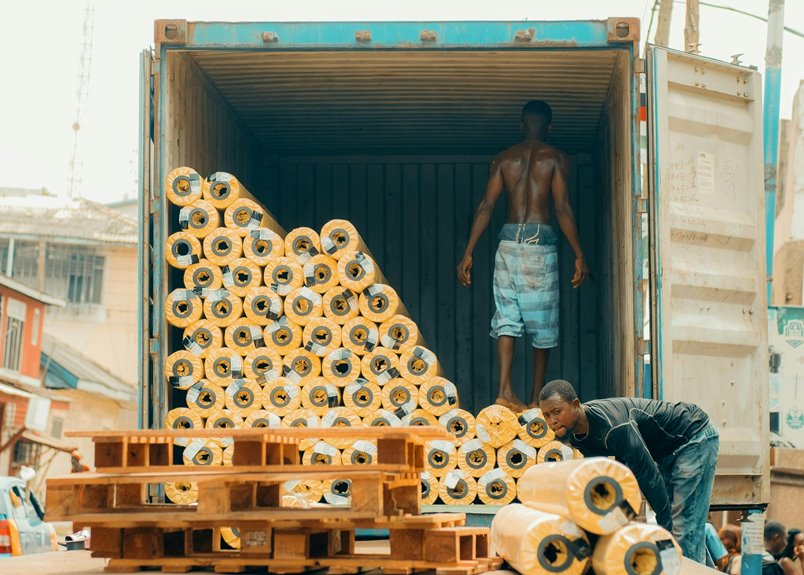
If you’re dealing with Tetron fabric, you’ll classify it under HS Code 5512, which covers woven synthetic filament yarn fabrics. Correctly using this code helps you avoid customs delays and guarantees proper duty assessment. Remember to check specific import and export rules, including licenses and accurate documentation, to streamline your shipments. Being aware of customs duties, potential taxes, and compliance requirements minimizes hiccups. Exploring these key details will give you a clearer edge in international textile trade.
Key Takeaways
- Tetron fabric generally falls under HS Code 5512.11 for woven synthetic filament yarn fabrics.
- Accurate HS Code classification ensures smooth customs clearance and correct duty application.
- Importers must verify HS Code, obtain permits, and comply with labeling and quality standards.
- Exporters should check export license requirements and prepare precise documentation including the HS Code.
- Customs duties vary by country, and preferential trade agreements may reduce import taxes on Tetron fabric.
What Is Tetron Fabric?
Although you mightn’t have heard of Tetron fabric before, it’s a popular polyester blend known for its durability and versatility.
You’ll find Tetron made by blending polyester with cotton or other fibers, giving it strength and easy maintenance. When you use Tetron, you get fabric that resists wrinkles, shrinks less, and dries faster than pure cotton.
It’s a favorite for making uniforms, casual wear, and home textiles because it balances comfort with toughness. You’ll also appreciate how it holds color well, so your garments stay vibrant through multiple washes.
Whether you’re sourcing fabric for clothing or upholstery, knowing what Tetron is helps you understand why it’s widely chosen in the textile industry for practical, long-lasting products.
Understanding the HS Code System
Knowing what Tetron fabric is gives you a solid foundation, but when it comes to importing or exporting textiles, understanding the HS Code system becomes just as important.
The Harmonized System (HS) is an internationally standardized numerical method to classify traded products. It helps customs authorities identify goods quickly and apply the correct tariffs, duties, and regulations.
The Harmonized System streamlines global trade by classifying products for accurate tariffs and regulations.
You’ll find that every product, including textiles like Tetron fabric, has a unique HS Code that simplifies global trade. By using the right code, you avoid delays, fines, or misclassification issues.
Grasping this system empowers you to handle shipments more efficiently and guarantees smooth customs clearance. So, get familiar with the HS Code structure to navigate international textile trade confidently.
Specific HS Code for Tetron Fabric
When you classify Tetron fabric for trade, you’ll need to use the specific HS Code assigned to polyester blends, as Tetron is a type of polyester fabric.
Typically, Tetron fabric falls under HS Code 5512, which covers woven fabrics of synthetic filament yarn, including polyester. More precisely, 5512.11 refers to woven fabrics of synthetic filament yarns that are unbleached or bleached, which often fits Tetron fabric’s description.
However, exact classification can depend on the fabric’s weight, weave, and finishing. Using the correct HS Code guarantees smooth customs clearance and accurate duty assessment.
Always verify your product details against the official tariff schedules or consult with customs experts to confirm you’re applying the right code for your Tetron fabric shipments.
Classification Criteria for Tetron Fabric
To assign the correct HS Code to Tetron fabric, you need to evaluate specific classification criteria.
First, identify the fabric’s composition—Tetron is a polyester-cotton blend, so you’ll focus on synthetic fibers combined with natural ones.
Next, determine the fabric’s construction method, such as woven or knitted, since this affects the classification.
You should also consider the fabric’s weight and finish, as some HS Codes differentiate based on these factors.
Additionally, check if the fabric has special treatments or coatings, which might place it under a different subheading.
Finally, reference the Harmonized System’s chapter and heading notes carefully; they provide essential guidance to distinguish Tetron fabric from similar textiles.
Following these steps guarantees you apply the accurate HS Code for your Tetron fabric.
Importance of HS Codes in Textile Trade
You rely on HS codes to guarantee trade compliance and avoid costly penalties.
They determine the correct tariff classification, which directly affects your import and export duties.
Plus, HS codes speed up customs clearance, helping your Tetron fabric shipments move smoothly across borders.
Role in Trade Compliance
Although traversing international textile trade can be complex, understanding the role of HS codes is essential for guaranteeing compliance. When you use the correct HS code for Tetron fabric, you help customs authorities accurately identify your shipment. This reduces delays, prevents fines, and avoids legal issues.
HS codes also guarantee you meet import and export regulations specific to textiles, so your goods clear customs smoothly. By properly classifying your Tetron fabric, you demonstrate transparency and adherence to international trade laws. This not only protects your business from penalties but also builds trust with clients and partners.
In short, mastering HS codes lets you navigate trade rules confidently, keeping your textile operations efficient and compliant at every step.
Impact on Tariff Classification
Proper HS code classification not only guarantees compliance but also directly affects how tariffs are applied to your Tetron fabric shipments.
When you assign the correct HS code, you ascertain accurate tariff rates, which can lower your import and export costs. Misclassification may lead to higher duties or penalties.
Here’s why it matters:
- Determines the exact tariff rate for Tetron fabric based on material and weave.
- Helps you benefit from preferential trade agreements or exemptions.
- Prevents delays caused by customs disputes over incorrect tariff codes.
- Impacts your product’s competitiveness by influencing landed costs.
Facilitation of Customs Clearance
When customs officials have clear and accurate HS codes for your Tetron fabric shipments, they can process your goods much faster. This means fewer delays, lower storage costs, and smoother logistics.
You’ll avoid unnecessary inspections or hold-ups caused by incorrect or missing codes. Using the right HS code guarantees your shipment complies with import and export regulations, making clearance more predictable.
It also helps customs determine duties and taxes correctly, preventing unexpected fees. By providing precise HS codes, you simplify paperwork and reduce the risk of errors that could trigger audits or penalties.
In short, accurate HS codes speed up customs clearance, save you money, and keep your textile trade running efficiently. You’ll find managing your Tetron fabric imports and exports much easier this way.
How to Find the Correct HS Code for Tetron Fabric
To find the correct HS code for Tetron fabric, you need to understand the HS code structure and how it categorizes textiles.
You can also use online HS code tools to quickly identify the right classification based on fabric type and composition.
These steps help guarantee your shipments meet customs requirements without delays.
Understanding HS Code Structure
Although HS codes might seem complex at first, you can easily find the correct code for Tetron fabric by understanding the standardized structure they follow.
HS codes have six digits divided into three levels that classify products worldwide. Here’s how you can break it down:
- The first two digits indicate the chapter, representing the broad category such as textiles.
- The next two digits specify the heading, narrowing down to fabric types like synthetic fibers.
- The last two digits define the subheading, pinpointing the exact material composition or weave.
- Additional digits may be added by countries for further classification or customs purposes.
Using Online HS Code Tools
Understanding the structure of HS codes gives you a solid foundation for identifying the right code for Tetron fabric.
To simplify your search, you can use online HS code tools designed to help importers and exporters. Start by entering keywords like “Tetron fabric” or “polyester blended fabric” into the tool’s search bar. These platforms often suggest related codes and descriptions, making it easier to pinpoint the exact HS code.
You can also browse categories manually if the keyword search doesn’t yield clear results. Additionally, some tools offer country-specific updates, ensuring the code you choose complies with local regulations.
Using these online resources saves time and reduces errors in your import-export documentation for Tetron fabric.
Import Regulations for Tetron Fabric
When you import Tetron fabric, you must comply with specific regulations set by customs authorities to guarantee smooth clearance.
These rules help prevent delays and ascertain your shipment meets all legal requirements.
To navigate the import process efficiently, focus on these key points:
Streamline your Tetron fabric import by focusing on crucial compliance and documentation steps.
- Verify the correct HS Code for Tetron fabric to determine applicable duties and taxes.
- Obtain necessary import licenses or permits as required by your country’s regulations.
- Ascertain all product labeling and documentation accurately reflect the fabric’s composition and origin.
- Comply with any quality standards or safety certifications mandated for textile imports.
Export Regulations for Tetron Fabric
When exporting Tetron fabric, you’ll need to check if you require an export license based on your destination country.
Keep in mind that some countries have specific restrictions that could affect your shipment.
Make sure you prepare all necessary documents and comply with regulations to avoid delays or penalties.
Export Licensing Requirements
Although Tetron fabric is widely traded, you’ll need to comply with specific export licensing requirements before shipping it internationally.
These rules guarantee your shipment meets legal standards and avoids delays or penalties. Here’s what you should focus on:
- Obtain an export license from your country’s trade authority if required for synthetic textiles.
- Provide accurate documentation, including the commercial invoice, packing list, and HS code for Tetron fabric.
- Verify that your shipment adheres to international trade agreements and restrictions applicable to synthetic fibers.
- Submit any necessary declarations through your country’s export control system to secure clearance.
Country-Specific Restrictions
Export licensing is just one piece of the puzzle when shipping Tetron fabric internationally. You also need to navigate country-specific restrictions that can affect your export plans. Some countries impose quotas, bans, or special permits based on trade policies or environmental concerns. Knowing these rules helps you avoid delays or penalties.
Here’s a snapshot of common country-specific restrictions for Tetron fabric exports:
| Country | Restriction Type |
|---|---|
| India | Import permit required |
| USA | No restrictions |
| China | Tariff quotas apply |
| EU Member States | REACH compliance needed |
| Brazil | Anti-dumping duties apply |
Stay updated on regulations for your destination to keep your shipments smooth and compliant.
Documentation and Compliance
Since shipping Tetron fabric involves various regulations, you’ll need to prepare accurate documentation to guarantee compliance with export laws.
Proper paperwork helps avoid delays and penalties, ensuring smooth customs clearance. When exporting Tetron fabric, you should focus on these essential documents:
- Commercial Invoice – Details the sale, including product description, quantity, and price.
- Packing List – Specifies the contents, packaging type, and weight for shipment verification.
- Export License – Required in some countries to authorize the export of specific goods.
- Certificate of Origin – Confirms where the Tetron fabric was manufactured, impacting duties and restrictions.
Make sure you check your destination country’s rules and consult with customs brokers to stay compliant and efficient.
Customs Duties and Taxes on Tetron Fabric
When you import Tetron fabric, customs duties and taxes can considerably affect your total costs. Different countries apply varying tariff rates based on the HS code classification, influencing your final price. Besides the basic duty, you might face additional taxes like VAT or GST. It’s vital to check the specific rates in the destination country to budget accurately. Keep in mind that preferential trade agreements can reduce or eliminate these charges.
| Country | Duty Rate (%) |
|---|---|
| USA | 5 |
| India | 10 |
| European Union | 8 |
| China | 6 |
| Brazil | 12 |
Documentation Required for Tetron Fabric Shipments
Understanding the customs duties and taxes on Tetron fabric helps you anticipate costs, but shipping the fabric smoothly requires proper documentation.
Without the right paperwork, your shipment could face delays or fines. Make certain you prepare these essential documents:
- Commercial Invoice – Details the transaction, including product description, quantity, and price.
- Packing List – Provides specifics on the shipment contents, aiding customs inspection.
- Bill of Lading or Airway Bill – Acts as a contract between you and the carrier.
- Certificate of Origin – Verifies where the Tetron fabric was manufactured, affecting tariffs.
Having these documents ready guarantees compliance with international trade regulations, making your import or export process more efficient and hassle-free.
Common Challenges in Importing and Exporting Tetron Fabric
Although importing and exporting Tetron fabric can be profitable, you’ll face several challenges that require careful attention.
One major hurdle is maneuvering varying HS codes across countries, which can lead to classification errors and customs delays. You’ll also encounter fluctuating tariffs and trade policies that impact your costs unpredictably.
Quality control poses another challenge since fabric specifications may differ between suppliers and buyers, risking disputes or returns.
Additionally, logistical issues like shipping delays and handling damages can disrupt your supply chain.
Finally, regulatory compliance, including environmental and safety standards, demands constant vigilance to avoid penalties.
Being aware of these common obstacles helps you prepare better and minimize risks in your Tetron fabric trade.
Tips for Smooth Tetron Fabric Cross-Border Transactions
To guarantee smooth Tetron fabric cross-border transactions, you’ll need to stay proactive and organized throughout the process.
Managing documentation, customs clearance, and compliance can be complex, but these tips will help you navigate efficiently:
- Verify HS Codes: Always confirm the correct HS code for Tetron fabric to avoid delays or fines.
- Prepare Accurate Documentation: Ascertain invoices, packing lists, and certificates of origin are complete and error-free.
- Understand Import/Export Regulations: Stay updated on the specific rules of both exporting and importing countries.
- Choose Reliable Logistics Partners: Work with experienced freight forwarders and customs brokers who specialize in textile shipments.
Frequently Asked Questions
What Are the Common Uses of Tetron Fabric in Fashion?
You’ll find Tetron fabric commonly used in fashion for making durable, wrinkle-resistant clothing like shirts, trousers, uniforms, and dresses. It’s popular because it combines polyester’s strength with a smooth, comfortable feel you’ll appreciate.
How Does Tetron Fabric Compare to Polyester?
When push comes to shove, Tetron fabric offers better wrinkle resistance and durability compared to polyester. You’ll find it blends comfort with strength, making it a smart choice if you want both style and long-lasting wear.
Can Tetron Fabric Be Recycled or Is It Eco-Friendly?
You can recycle Tetron fabric since it’s a type of polyester, but it’s not very eco-friendly because it’s synthetic and non-biodegradable. You should consider eco-friendly alternatives if sustainability matters to you.
What Are the Care Instructions for Tetron Fabric Garments?
You should wash Tetron fabric garments in cold water on a gentle cycle. Avoid bleach, tumble dry low or air dry, and iron on a low setting if needed. These steps keep your clothes looking great longer.
Where Is Tetron Fabric Primarily Manufactured Globally?
You’d think Tetron fabric is everywhere, but it’s mainly made in Asia! Countries like China, India, and South Korea dominate production, so when you buy Tetron, chances are it traveled from one of these fabric powerhouses.