
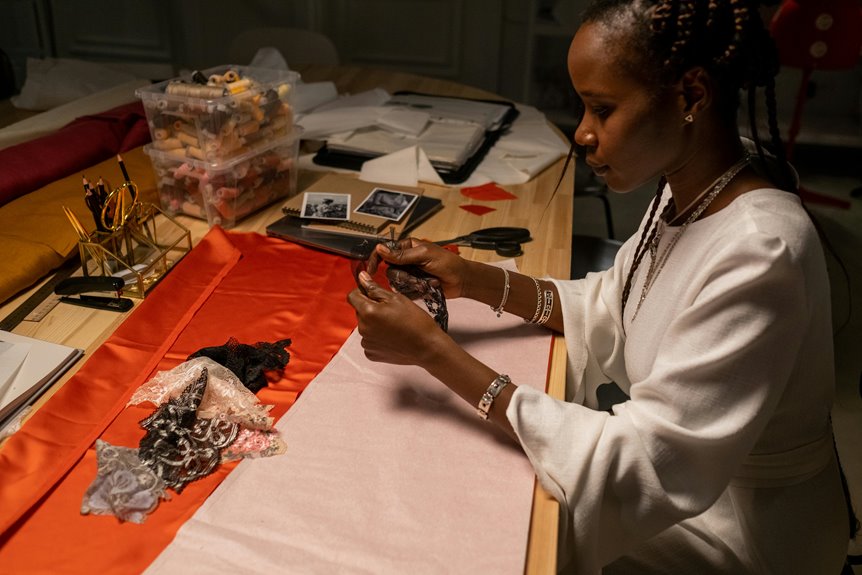
When tackling your first project with Andover Fabrics double gauze, you’ll enjoy its soft, breathable texture perfect for clothing or home decor. Start by pre-washing to prevent shrinkage and use sharp scissors and a fine needle for smooth sewing. Opt for French seams to keep edges tidy, and press gently to maintain fabric softness. Handling it with care guarantees a cozy, breathable finished piece. Keep going to uncover tips on sewing techniques, project ideas, and proper care for your creations.
Key Takeaways
- Pre-wash Andover Fabrics double gauze in cold water to prevent shrinkage and soften fabric before cutting.
- Use sharp scissors and pins designed for lightweight fabrics to ensure clean cuts and secure layering.
- Sew with a 70/10 or 80/12 needle and a shorter stitch length (2.0–2.5 mm) for strong, smooth seams.
- Employ French or flat-felled seams to neatly encase raw edges and maintain the fabric’s breathable quality.
- Press gently using low heat and a pressing cloth to avoid damaging the delicate double gauze fibers.
Understanding the Unique Qualities of Double Gauze Fabric
Double gauze fabric offers a soft, breathable texture that makes it perfect for a variety of projects.
Experience the soft, breathable texture of double gauze—ideal for countless creative projects.
When you work with this fabric, you’ll notice it’s made of two thin layers of loosely woven cotton, creating a gentle, airy feel. This structure not only provides comfort but also adds subtle thickness without heaviness.
You’ll appreciate its natural drape and slight crinkle, which give your finished piece a relaxed, cozy look. Because it’s lightweight and breathable, double gauze is ideal for garments like baby clothes, summer dresses, or scarves.
Keep in mind, the fabric’s layers can shift, so handling it with care during cutting and sewing helps maintain precision in your work.
You’re set for a soft, stylish outcome with this versatile fabric.
Essential Tools and Supplies for Sewing Double Gauze
To sew double gauze successfully, you’ll need the right tools like sharp scissors, pins, and a quality sewing machine needle designed for lightweight fabrics.
Choosing the proper needle helps prevent snags and guarantees smooth stitching on this delicate material.
Don’t forget to prepare your fabric by washing and pressing it before you start cutting and sewing.
Must-Have Sewing Tools
Getting started with sewing double gauze requires having the right tools at your fingertips.
You’ll want sharp fabric scissors to make clean cuts without fraying. A rotary cutter paired with a cutting mat can also speed up the process and improve accuracy.
Pins or fabric clips are essential for holding layers together without damaging the delicate fabric. A seam ripper is a must-have for fixing any mistakes quickly.
Don’t forget a measuring tape or ruler to guarantee precise dimensions. For marking, use tailor’s chalk or washable fabric markers that won’t bleed through the gauze.
Finally, keep a quality iron and pressing cloth nearby to set seams gently without crushing the fabric’s texture.
With these tools, you’ll handle double gauze confidently and efficiently.
Choosing the Right Needle
Although choosing the right needle might seem like a small detail, it can make a big difference when sewing with double gauze. This lightweight, delicate fabric needs a needle that won’t cause snags or skipped stitches.
To get the best results, follow these tips:
- Use a fine needle size, like 70/10 or 80/12, to prevent fabric damage.
- Opt for a sharp or universal needle to pierce the fabric cleanly.
- Avoid heavy or ballpoint needles, as they can leave holes or distort the weave.
- Replace your needle frequently to maintain stitch quality.
Picking the right needle guarantees smooth sewing and professional results on your double gauze projects.
Fabric Preparation Essentials
Preparing your fabric properly sets the foundation for a smooth sewing experience with double gauze.
First, gather essential tools: sharp fabric scissors, a rotary cutter, and a self-healing mat to guarantee clean, precise cuts. You’ll also need pins or fabric clips to hold layers together without damaging the delicate material. A good quality iron and pressing surface are crucial for pre-shrinking and flattening seams.
Before cutting, always wash and dry your double gauze to prevent future shrinkage and maintain softness. Use a spray bottle for light misting to ease pressing without soaking the fabric.
With these supplies and steps, you’ll handle double gauze confidently, ensuring your project turns out just as you envision.
Pre-Washing and Preparing Your Fabric
Before you start sewing, pre-washing your fabric is essential to prevent shrinkage and color bleeding later on.
You’ll want to use gentle washing techniques, like cold water and mild detergent, to keep the fabric’s texture intact.
Taking this step guarantees your finished project looks just as perfect after every wash.
Why Pre-Wash Matters
When you start working with fabric from Andover Fabrics, pre-washing plays an essential role in ensuring your finished project looks its best.
Skipping this step can cause surprises like shrinking, color bleeding, or texture changes after your piece is complete.
Pre-washing helps you avoid these issues by:
- Removing sizing and chemicals that can affect fabric feel and dye.
- Preventing future shrinkage that could distort your project’s shape.
- Revealing true colors and patterns, so you know exactly what you’re working with.
- Softening the fabric, making it easier to cut and sew with precision.
Best Washing Techniques
Although washing fabric might seem straightforward, using the right techniques guarantees your project turns out flawless.
Start by gently hand-washing your Andover Fabrics Double Gauze in cold water with a mild detergent to prevent shrinkage and preserve softness. Avoid harsh chemicals or bleach that can damage the delicate fibers.
After washing, rinse thoroughly to remove all soap residues. Instead of wringing, press out excess water by folding the fabric between clean towels, maintaining its shape and texture.
Lay it flat or hang it to air dry, steering clear of direct sunlight to prevent fading. If you prefer machine washing, use a gentle cycle inside a mesh bag for added protection.
Following these steps ensures your fabric stays vibrant and ready for your next creative project.
Sewing Techniques Best Suited for Double Gauze
Double gauze demands gentle handling and specific sewing techniques to bring out its soft texture and breathable qualities.
When working with this fabric, you’ll want to:
- Use a sharp needle (size 70/10 or 80/12) to avoid snagging the delicate fibers.
- Select a shorter stitch length (around 2.0–2.5 mm) for secure seams without puckering.
- Employ French seams or flat-felled seams to encase raw edges and reduce fraying.
- Press gently with a low heat setting and use a pressing cloth to keep the fabric smooth without crushing its texture.
Common Challenges and How to Overcome Them
Even with careful preparation, working with Andover Fabrics can present unique challenges that test your sewing skills.
Double gauze’s lightweight, airy texture tends to shift and stretch, making precise cutting tricky. To overcome this, use sharp scissors or a rotary cutter and stabilize the fabric with tissue paper beneath before cutting.
Another common issue is puckering during stitching due to the fabric’s softness. You can prevent this by adjusting your machine’s tension, using a smaller needle, and sewing at a slower speed. Also, avoid pulling the fabric while sewing to keep seams smooth.
Finally, handling the fabric’s natural fraying requires finishing seams with a serger or French seams.
With these tips, you’ll confidently manage double gauze’s quirks and create beautiful projects.
Simple Project Ideas to Get Started
Starting with just a few simple projects can help you get comfortable working with Andover Fabrics Double Gauze. This lightweight fabric is perfect for easy, quick creations that showcase its softness and breathability.
Begin with simple projects to enjoy the soft, breathable charm of Andover Fabrics Double Gauze.
Here are four simple project ideas to kickstart your journey:
- Baby Blanket: Soft and cozy, perfect for gifting or personal use.
- Summer Scarf: Lightweight and breathable, ideal for warmer weather.
- Drawstring Bag: Practical and stylish, great for beginners.
- Simple Pillow Cover: Adds a delicate touch to any room with minimal sewing.
These projects let you practice handling double gauze, mastering its unique texture and stretch.
Once you finish these, you’ll feel more confident tackling more complex designs with this lovely fabric.
Tips for Caring and Maintaining Double Gauze Creations
Now that you’ve completed your first projects with Andover Fabrics Double Gauze, keeping them looking their best will help you enjoy them longer. Double gauze is delicate, so caring for it properly preserves its soft texture and vibrant colors. Always wash in cold water on a gentle cycle and avoid harsh detergents. Air drying is best to prevent shrinkage and maintain softness. If ironing is needed, use a low heat setting and press gently.
| Care Tip | Why It Matters |
|---|---|
| Cold Water Wash | Prevents shrinking and fading |
| Gentle Cycle | Protects fabric integrity |
| Mild Detergent | Avoids damage to fibers |
| Air Dry | Keeps softness and shape |
| Low Heat Ironing | Prevents fabric scorching |
Frequently Asked Questions
Where Can I Purchase Andover Fabrics Double Gauze?
You can buy Andover Fabrics Double Gauze at local fabric stores or online retailers like Fabric.com, Etsy, and Amazon. Don’t forget to check Andover Fabrics’ official website for authorized dealers and special offers.
What Are the Environmental Benefits of Double Gauze Fabric?
You’ll appreciate double gauze fabric’s environmental benefits—it’s lightweight, uses less dye, and often made from organic cotton. Plus, its breathable nature reduces energy needed for washing and drying, helping you lower your eco-footprint.
Can Double Gauze Be Used for Upholstery Projects?
You probably shouldn’t use double gauze for upholstery projects since it’s lightweight and delicate. It’s best for clothing or baby items, not heavy wear. For upholstery, choose sturdier, more durable fabrics instead.
How Does Double Gauze Compare to Other Lightweight Fabrics?
Imagine a gentle breeze compared to a stiff gust—double gauze feels soft, breathable, and lightweight, unlike crisp cotton or linen. You’ll find it perfect for delicate projects needing comfort and subtle texture without bulk.
Are There Specific Patterns Designed for Double Gauze Fabric?
Yes, you’ll find patterns made specifically for double gauze fabric. They usually focus on simple, loose-fitting designs to highlight its softness and breathability, ensuring your project turns out comfortable and stylish without bulky seams.