
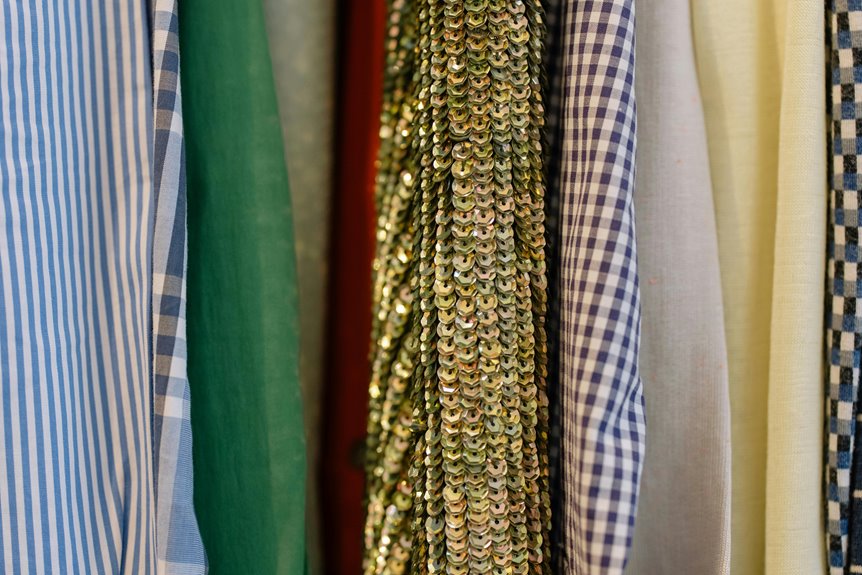
When we talk about slow fashion fabrics, we’re really discussing a more thoughtful approach to what we wear. It’s not just about style; it’s about making choices that have a lasting impact. You might wonder which materials truly embody this sustainable ethos. From organic cotton to recycled polyester, the options are varied and meaningful. As you explore these fabrics, you’ll discover how they contribute to a more ethical wardrobe.
Key Takeaways
- Organic cotton and linen are biodegradable, require less water, and are grown without harmful pesticides, promoting sustainable farming practices.
- Recycled polyester reduces waste by converting plastic bottles into fibers, lowering energy consumption and greenhouse gas emissions during production.
- Lyocell, sourced from sustainably managed wood pulp, is biodegradable and produced in a closed-loop system that minimizes waste and emissions.
- Bamboo is a fast-growing, renewable resource that uses minimal water and is naturally pest-resistant, making it an eco-friendly fabric choice.
- Prioritizing high-quality, timeless designs encourages a slower fashion approach, reducing waste and supporting sustainable manufacturing practices.
Understanding Sustainable Fabrics
When you explore the world of sustainable fabrics, you’ll find that they play an essential role in reducing the environmental impact of fashion.
These materials often come from renewable resources, ensuring less strain on our planet. Natural fibers like hemp, linen, and Tencel are popular choices, as they’re biodegradable and require fewer chemicals during production.
Recycled fabrics, made from post-consumer waste, also contribute greatly to sustainability by giving new life to discarded materials.
By choosing sustainable fabrics, you not only support ethical manufacturing practices but also promote a circular economy.
Understanding these options empowers you to make conscious fashion choices, ultimately leading to a more sustainable wardrobe.
Your decisions today can help create a healthier environment for future generations.
The Benefits of Organic Cotton
While many fabrics claim to be eco-friendly, organic cotton stands out for its numerous benefits. Choosing organic cotton for your wardrobe means you’re making a conscious decision that supports sustainability.
Here are some key advantages:
- Reduced Chemicals: Organic cotton is grown without harmful pesticides or synthetic fertilizers, making it safer for farmers and the environment.
- Water Conservation: It typically requires less water, promoting sustainable farming practices.
- Soil Health: Organic farming enhances soil fertility, which is essential for long-term agricultural sustainability.
- Biodegradable: Unlike synthetic fabrics, organic cotton decomposes naturally, reducing landfill waste.
Exploring Recycled Polyester
When you choose recycled polyester, you’re not just getting a stylish fabric; you’re also making an eco-friendly choice that helps reduce waste.
The production process transforms plastic bottles and other materials into high-quality fibers, cutting down on the need for virgin resources.
This sustainable approach benefits the environment by minimizing pollution and conserving energy.
Environmental Benefits of Recycling
Recycling polyester not only helps reduce waste but also markedly lowers the environmental impact of clothing production.
When you choose recycled polyester, you’re contributing to a more sustainable future. Here are some key benefits:
- Waste Reduction: Recycling prevents polyester from ending up in landfills, reducing overall waste.
- Lower Energy Consumption: Producing recycled polyester typically requires less energy than creating new polyester from raw materials.
- Reduced Water Usage: The recycling process uses considerably less water, conserving this precious resource.
- Fewer Emissions: Recycling polyester generates lower greenhouse gas emissions compared to traditional production methods.
Production Process Overview
Exploring the production process of recycled polyester reveals a fascinating transformation of waste into valuable fabric.
It all starts with collecting plastic bottles and other PET waste, which you’ll find in landfills and oceans. These materials are cleaned, sorted, and crushed into small flakes.
Next, the flakes are melted down and extruded into fibers, creating new polyester yarn. This process not only diverts plastic from waste streams but also reduces energy consumption compared to virgin polyester production.
Once you have the yarn, it can be woven or knitted into fabric, ready for your sustainable wardrobe.
Linen: A Timeless Sustainable Choice
When you choose linen, you’re opting for a fabric that’s not only stylish but also eco-friendly.
Its growth process requires minimal water and results in a durable product that lasts for years.
This makes linen a smart choice for sustainable fashion enthusiasts like you.
Eco-Friendly Growth Process
As you explore the world of sustainable fashion, you’ll find that linen stands out not just for its aesthetic appeal but also for its eco-friendly growth process.
Linen is derived from the flax plant, which requires minimal resources to thrive. Here are some key benefits of its growth:
- Low Water Usage: Flax needs considerably less water than cotton, making it a more sustainable choice.
- Natural Pest Resistance: Flax plants naturally repel pests, reducing the need for harmful pesticides.
- Soil Health: Flax improves soil quality by promoting biodiversity and crop rotation.
- Biodegradable: Linen is fully biodegradable, leaving no harmful residues behind.
Choosing linen means embracing a fabric that respects the planet while offering timeless style.
Durability and Longevity
While many fabrics fade in quality over time, linen stands out for its remarkable durability and longevity. When you choose linen, you’re investing in a fabric that can withstand the test of time.
It’s known for becoming softer with each wash, enhancing its comfort while maintaining strength. Linen’s natural fibers resist wear and tear, making it ideal for everyday wear. You won’t have to worry about frequent replacements, saving both money and resources in the long run.
Plus, its breathability and moisture-wicking properties keep you comfortable in various climates, ensuring it remains a staple in your wardrobe. Embracing linen means embracing a sustainable choice that combines style with lasting performance.
You’ll appreciate its timeless appeal for years to come.
Minimal Water Usage
Although many fabrics require significant water during their production, linen stands out for its minimal water usage, making it an eco-friendly choice.
When you choose linen, you’re not just opting for style; you’re supporting sustainability. Here’s why linen is a smart pick:
- Low Irrigation Needs: Linen is derived from flax plants that thrive in rain-fed conditions, reducing reliance on irrigation.
- Fast Growth: Flax grows quickly and can be harvested in just a few months, minimizing water consumption.
- Soil Health: The cultivation of flax enhances soil quality, promoting a healthier ecosystem.
- Biodegradable: Linen breaks down naturally, leaving no harmful residue behind.
The Advantages of Lyocell
Lyocell offers a range of advantages that make it a compelling choice for sustainable fashion. First, it’s derived from sustainably sourced wood pulp, making it a renewable resource.
You’ll appreciate its biodegradable nature, ensuring it won’t linger in landfills for years. Lyocell fibers are also known for their breathability and moisture-wicking properties, which keep you comfortable in various climates.
Additionally, the manufacturing process uses a closed-loop system, minimizing waste and reducing harmful emissions. This fabric’s softness and durability mean your garments will last longer, reducing the need for frequent replacements.
Plus, it’s easy to care for and resists wrinkles, making it perfect for your everyday wardrobe. Choosing Lyocell helps you embrace a stylish yet eco-conscious lifestyle.
Bamboo: The Eco-Friendly Fabric
Bamboo stands out as a remarkable eco-friendly fabric due to its rapid growth and minimal environmental impact.
If you’re considering incorporating bamboo into your wardrobe, here are some compelling reasons to do so:
- Sustainable Growth: Bamboo can grow up to 3 feet in a single day, making it one of the fastest-growing plants on Earth.
- Low Water Use: It requires considerably less water than cotton, allowing for more efficient water resource management.
- Natural Pest Resistance: Bamboo contains a natural pesticide, minimizing the need for harmful chemicals during cultivation.
- Biodegradable: Unlike synthetic fabrics, bamboo decomposes naturally, reducing landfill waste.
Production Methods for Sustainable Fabrics
When you’re exploring sustainable fashion, understanding the production methods behind eco-friendly fabrics is essential.
You’ll want to look for materials crafted using low-impact processes. For instance, organic cotton is grown without harmful pesticides and requires notably less water than conventional cotton.
Similarly, Tencel, made from sustainably sourced wood pulp, is produced in a closed-loop system that recycles water and solvents, minimizing waste.
Another important method is the use of natural dyes, which reduce chemical runoff.
Additionally, consider fabrics made from recycled materials, like rPET, which gives new life to plastic waste.
Principles of Slow Fashion
When you think about slow fashion, consider the importance of quality over quantity.
It’s about choosing pieces that last and tell a story, rather than filling your closet with fast fashion items.
Transparency in manufacturing also plays a crucial role, allowing you to understand where your clothes come from and how they’re made.
Quality Over Quantity
Embracing the principles of slow fashion means prioritizing quality over quantity in your wardrobe choices.
By focusing on well-made garments, you not only reduce waste but also elevate your style.
Here are four reasons to choose quality pieces:
- Durability: High-quality fabrics withstand wear and tear, lasting longer than fast fashion finds.
- Timelessness: Classic designs never go out of style, ensuring you’ll wear them for years.
- Comfort: Quality materials feel better against your skin, making outfits more enjoyable to wear.
- Ethical Impact: Supporting brands that prioritize quality often means they’re committed to sustainable practices.
Transparency in Manufacturing
Choosing quality pieces naturally leads to a deeper understanding of the manufacturing process behind them. When you prioritize transparency, you’re not just buying clothes; you’re investing in the stories they carry.
Look for brands that openly share details about their sourcing, production methods, and labor practices. This insight not only helps you make informed choices but also connects you to the artisans and communities involved in creating your garments.
Ask questions about the materials used and the environmental impact of the production processes. By supporting brands that value transparency, you encourage ethical practices in the fashion industry.
Ultimately, your wardrobe can reflect your values, promoting a more sustainable and responsible approach to fashion.
The Role of Social Responsibility in Fashion
As the fashion industry evolves, social responsibility has emerged as an essential element that shapes consumer expectations and brand practices.
You mightn’t realize it, but your choices can drive brands toward more ethical practices. Here are some key aspects of social responsibility in fashion:
- Fair Labor Practices: Brands should guarantee fair wages and safe working conditions for all employees.
- Environmental Stewardship: Sustainable sourcing and waste reduction are fundamental for minimizing ecological impact.
- Community Engagement: Supporting local artisans and communities helps foster cultural preservation and economic growth.
- Transparency: Open communication about sourcing and production practices builds trust with consumers.
Embracing these principles not only enhances your wardrobe but also contributes to a more ethical fashion landscape.
Engaging Consumers in Sustainable Choices
How can you make a difference in the fashion industry? Start by choosing brands that prioritize sustainability. Look for companies using eco-friendly materials and ethical production methods.
Engage with your favorite brands on social media and ask about their practices—this holds them accountable. When shopping, consider secondhand options or clothing swaps to reduce waste.
Educate yourself about fabric origins and the environmental impact of your choices. Share your knowledge with friends and family, sparking conversations about the importance of sustainable fashion.
Frequently Asked Questions
How Can I Identify Sustainable Fabrics When Shopping?
How can you spot sustainable fabrics while shopping? Look for organic materials, certifications like GOTS, and eco-friendly dyes. Trust your instincts; if it feels right, it probably aligns with your values for sustainability.
Are Sustainable Fabrics More Expensive Than Conventional Ones?
Yes, sustainable fabrics often cost more than conventional ones. This higher price reflects ethical production, eco-friendly materials, and fair labor practices. Investing in these fabrics supports a healthier planet and promotes responsible consumerism.
How Do I Care for Sustainable Fabrics Properly?
Caring for sustainable fabrics is like nurturing a delicate garden. You should wash them in cold water, avoid harsh detergents, air dry when possible, and store them away from direct sunlight to keep them vibrant and lasting.
Can Sustainable Fabrics Be Fashionable and Stylish?
Absolutely, sustainable fabrics can be fashionable and stylish! You can find vibrant colors, unique textures, and innovative designs that cater to your taste. Embracing these materials lets you express your style while supporting eco-friendly choices.
What Brands Are Known for Using Sustainable Materials?
You’ll find brands like Patagonia, Reformation, and Eileen Fisher leading the way with sustainable materials. They prioritize eco-friendly practices while ensuring their styles remain trendy, so you can look good and feel good about your choices.