
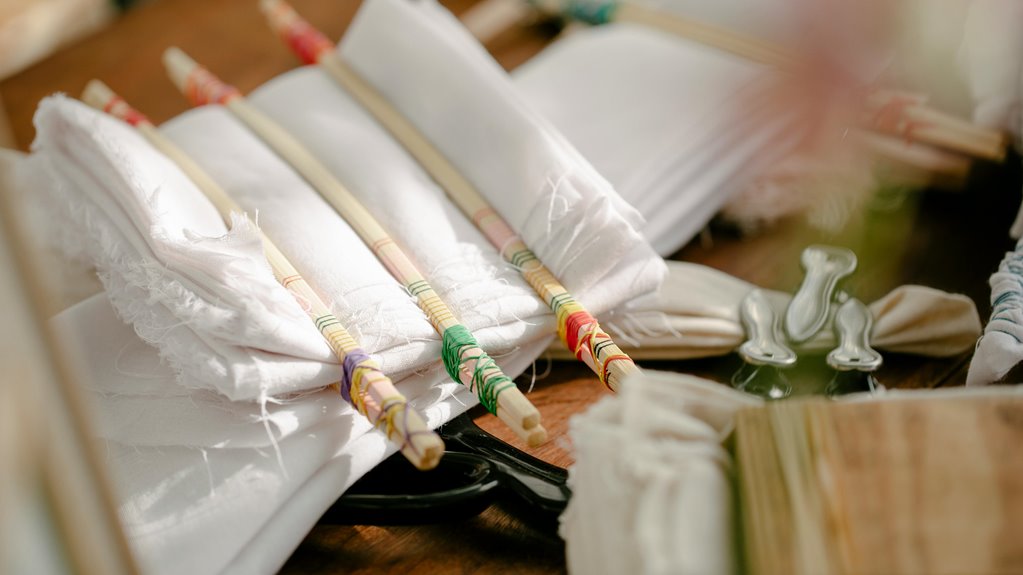
You’ll love mastering Shibori tie-dye, an ancient Japanese resist dyeing art that uses folding, binding, and dyeing techniques to create stunning patterns on fabric. Starting with natural fibers like cotton or silk, you’ll fold and bind tightly to control dye absorption, then immerse your fabric in vibrant colors for intricate designs. Shibori’s rich history and symbolic patterns make every piece unique. Keep exploring to uncover styles, materials, and tips that bring this timeless craft to life.
Key Takeaways
- Shibori is an ancient Japanese resist dyeing technique involving folding, binding, and clamping fabric to create intricate patterns.
- Common Shibori styles include Kanoko (circular patterns), Arashi (pole wrapping for stripes), Itajime (geometric shapes), and Kumo (pleated spiderweb effects).
- Natural fibers like cotton or silk absorb fiber-reactive dyes best, ensuring vibrant, lasting Shibori designs.
- Proper fabric preparation, tight bindings, and controlled dyeing time are essential for consistent, vivid Shibori patterns.
- Modern Shibori expands beyond textiles to art and décor, integrating eco-friendly dyes and innovative techniques while honoring tradition.
The History and Cultural Significance of Shibori
Although you might recognize Shibori as a beautiful tie-dye technique, its roots run deep in Japanese history and culture. When you explore Shibori, you connect with a craft dating back to the 8th century.
This art form wasn’t just about aesthetics; it carried spiritual and social significance. You’ll find that Shibori was used to decorate kimono fabrics, symbolizing status and regional identity. The intricate patterns often represented nature, seasons, or protective motifs, reflecting deep cultural values.
As you appreciate Shibori today, remember it’s more than fabric dyeing—it’s a link to Japan’s past, embodying tradition, craftsmanship, and symbolic storytelling. This rich heritage shapes how Shibori continues to inspire artists worldwide.
Understanding the Basic Techniques of Shibori
You’ll start by mastering folding and binding methods that create unique patterns through careful manipulation of fabric.
Next, you’ll explore how dyeing works alongside resist principles to control where the color takes hold.
Understanding these basics sets the foundation for creating authentic Shibori designs.
Folding and Binding Methods
Mastering just a few folding and binding methods can transform your Shibori projects, giving you striking patterns with simple techniques.
Begin by folding your fabric accordion-style or in triangles to create repetitive geometric designs. Then, secure the folds tightly using string, rubber bands, or wooden blocks. Binding prevents dye from reaching certain areas, forming distinctive patterns.
You can experiment with different bindings—wrapping tightly for crisp lines or loosely for softer effects. Clamping fabric between objects, like small sticks, also creates unique resist shapes.
As you practice, you’ll learn how varying tension and fold types influence the final design. By controlling these folding and binding methods, you gain the power to craft intricate and personalized Shibori patterns that reflect your creativity and style.
Dyeing and Resist Principles
When you immerse fabric into dye, the areas bound or folded resist color, creating Shibori’s signature patterns. The key lies in controlling how much dye reaches different parts of the fabric.
By folding, twisting, or clamping, you limit dye penetration, forming distinct shapes and contrasts. Resist techniques vary: tight bindings produce sharp lines, while looser folds create soft gradients.
The dye’s concentration and immersion time also affect the final look. You can repeat dyeing several times for richer tones or layer multiple colors for complexity.
Materials Needed for Shibori Tie-Dye
To get started with Shibori, you’ll need the right fabric, typically natural fibers like cotton or silk that absorb dye well.
You’ll also want to gather your dye, often indigo, along with basic tools like thread, rubber bands, and wooden blocks for creating patterns.
Having these materials ready sets the foundation for your Shibori projects.
Essential Fabric Choices
Choosing the right fabric sets the foundation for successful Shibori tie-dye projects. Natural fibers absorb dye better and reveal intricate patterns more vividly.
You’ll want to pick materials that hold up well during folding, binding, and dyeing. Cotton is a classic choice due to its durability and absorbency, while silk offers a smooth texture and rich color saturation.
Linen provides a slightly textured surface that creates unique effects, and rayon blends combine softness with excellent dye uptake. Avoid synthetic fabrics, as they resist dye and may yield unpredictable results.
Consider these popular fabric choices:
- 100% cotton for versatility and ease
- Silk for luxurious sheen and detail
- Linen for organic texture and depth
- Rayon blends for softness and vibrant color
Selecting wisely guarantees your Shibori patterns come alive with clarity and brilliance.
Dye and Tools Required
A successful Shibori tie-dye project depends on having the right dyes and tools at hand. You’ll want fiber-reactive dyes for vibrant, lasting colors and protective gloves to keep your hands clean. A sturdy work surface, rubber bands, and wooden blocks help create those iconic patterns. Don’t forget a large bucket for soaking and rinsing your fabric. Precision and preparation make all the difference.
| Tool/Dye | Purpose |
|---|---|
| Fiber-reactive dye | Bright, permanent colors |
| Rubber bands | Resist areas for patterns |
| Wooden blocks | Shape and press fabric |
| Protective gloves | Keep hands clean |
| Large bucket | Soaking and rinsing fabric |
Gather these, and you’re ready to create stunning Shibori art!
Preparing Fabric for Shibori Dyeing
Preparing fabric for Shibori dyeing sets the foundation for vibrant, lasting patterns. Before you start, choose natural fibers like cotton, silk, or linen—they absorb dye best.
Choosing natural fibers like cotton, silk, or linen is key for vibrant and lasting Shibori dye patterns.
Wash your fabric thoroughly to remove any sizing or oils that could block the dye. Damp fabric works better, so keep it slightly wet during folding and binding.
Finally, plan your workspace to handle wet, messy materials safely.
Here’s how you prepare your fabric:
- Select 100% natural fibers for ideal dye absorption
- Pre-wash to eliminate finishes and dirt
- Keep the fabric damp for easier manipulation and dye penetration
- Set up a clean, protected area for folding, binding, and dyeing
Different Styles and Patterns in Shibori
Once your fabric is ready, you can explore the various styles and patterns that make Shibori so unique.
You’ll find techniques like Kanoko, which creates delicate, circular patterns by tightly binding small sections.
Arashi involves wrapping the fabric around a pole and binding it before dyeing, resulting in striking diagonal stripes.
Itajime uses folding and clamping between shapes to produce geometric patterns.
Kumo, or spider, features intricate pleats bound with thread, creating spiderweb-like designs.
Each style relies on how you fold, bind, or compress your fabric before dyeing, controlling how the dye penetrates.
Experimenting with these techniques lets you create endless variations, combining methods or adjusting tightness to personalize your patterns.
Mastering these styles helps you appreciate Shibori’s rich tradition while crafting your own vibrant designs.
Step-by-Step Guide to Creating Your First Shibori Piece
Creating your first Shibori piece involves a few simple steps that you can easily follow at home.
Start by selecting a natural fabric, like cotton or silk, for the best dye absorption. Next, fold, twist, or bind your fabric to create the resist patterns unique to Shibori.
Prepare your dye bath according to the instructions, usually with indigo for traditional results. Finally, submerge your fabric, let it soak, then carefully remove and rinse to reveal your design.
Here’s a quick checklist to guide you:
- Choose and prepare your fabric
- Fold and bind to form patterns
- Mix and prepare your dye bath
- Dye, rinse, and dry your piece
With patience, you’ll create stunning Shibori art!
Common Challenges and How to Overcome Them
Although Shibori tie-dye is a rewarding craft, you’ll likely face a few common challenges along the way.
One frequent issue is uneven dye absorption, which can happen if your fabric isn’t folded tightly or if the dye bath concentration varies. To fix this, make sure your folds are firm and consistent, and test your dye mix before committing.
Uneven dye absorption often occurs from loose folds or inconsistent dye concentration—ensure firm folds and test your dye mix first.
Another challenge is achieving the desired color intensity; you might need to adjust the dye time or repeat the dyeing process.
Handling wet, dyed fabric can also be tricky, so wear gloves and work in a well-ventilated area.
Finally, avoid fabric stiffening by rinsing thoroughly and washing with mild detergent.
With patience and practice, you’ll overcome these hurdles and create stunning Shibori pieces.
Contemporary Uses and Innovations in Shibori Dyeing
As Shibori dyeing evolves, artists and designers are blending traditional techniques with modern materials and technology to expand its possibilities.
You’ll find Shibori patterns not just on clothing but in home décor, accessories, and even digital prints. Innovations include using synthetic fabrics alongside natural fibers, experimenting with eco-friendly dyes, and employing laser cutting for precise resist patterns.
You can also see Shibori-inspired designs in contemporary art and fashion, merging heritage with innovation.
Explore these contemporary uses and innovations:
- Incorporation of synthetic and stretch fabrics
- Eco-conscious, plant-based dye alternatives
- Laser and digital technology for pattern precision
- Shibori motifs in modern art installations and fashion collections
These advancements let you keep the tradition alive while pushing creative boundaries.
Frequently Asked Questions
Can Shibori Techniques Be Used on Synthetic Fabrics?
You can use shibori techniques on synthetic fabrics, but you’ll need special dyes made for synthetics. Keep in mind, the colors might not absorb as vibrantly as they do on natural fibers like cotton or silk.
How Do You Fix Dye if the Color Fades Quickly?
When colors fade fast, you’ll want to fix dye by soaking fabric in a vinegar-water solution or using commercial fixatives. This locks in hues, keeping your work vibrant like a sunset refusing to dim.
Is Shibori Eco-Friendly Compared to Other Dyeing Methods?
You’ll find shibori more eco-friendly since it uses less water and natural dyes often. Plus, its manual techniques reduce chemical use, making it kinder to the environment than many industrial dyeing processes you might know.
Can Shibori Patterns Be Replicated Digitally for Printing?
Like waves crashing unpredictably, you can’t perfectly replicate shibori patterns digitally, but you can create close imitations. Digital tools let you mimic its organic feel, though the true texture and randomness remain uniquely handcrafted.
What Safety Precautions Are Needed When Using Natural Dyes?
You should wear gloves and work in a well-ventilated area to avoid skin irritation and inhaling fumes. Always test dyes on a small fabric piece, and keep dyes away from food and children for safety.