
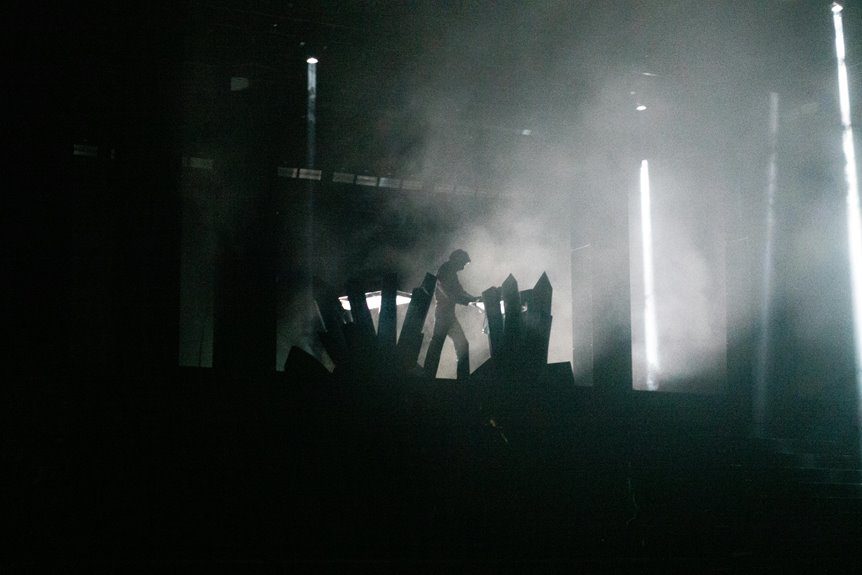
If you want a fabric that controls light and visibility for dramatic effects, sharkstooth scrim is your best bet. It offers variable transparency, creating striking silhouettes and seamless scene shifts with front and backlighting. Bobbinette is lighter, more budget-friendly, and provides even light diffusion but less dynamic opacity control. Your choice depends on the effects you want to achieve and budget constraints. Keep exploring to find which fabric fits your theatrical vision perfectly.
Key Takeaways
- Sharkstooth scrim offers dynamic light control with variable transparency, ideal for dramatic scene transitions and silhouette effects.
- Bobbinette provides consistent light diffusion and a smooth, delicate texture, suitable for soft lighting and subtle shadows.
- Sharkstooth’s unique open weave creates ghostly visual effects, enhancing atmospheric depth in theatrical productions.
- Bobbinette is more budget-friendly and flexible, making it practical for lightweight curtains and temporary setups.
- For nuanced lighting designs needing opacity shifts, sharkstooth scrim excels; for uniform glow and softer diffusion, bobbinette is preferable.
Understanding the Basics of Sharkstooth Scrim
Sharkstooth scrim offers a unique blend of transparency and texture that makes it ideal for theatrical effects. When you work with this fabric, you’ll notice its distinctive open weave, which creates a subtle, shark-tooth pattern.
This pattern allows light to pass through unevenly, giving you control over visibility and opacity on stage. You can use it to create dramatic reveals or soft shifts between scenes.
Unlike solid fabrics, sharkstooth scrim reacts differently depending on how you light it—front lighting makes it appear opaque, while backlighting reveals what’s behind it.
You’ll find it easy to manipulate and hang, making it a versatile choice for set designers who want to balance concealment and exposure effectively in their productions.
What Is Bobbinette Fabric?
You’ll find that bobbinette fabric is a lightweight, mesh-like material known for its durability and flexibility.
It’s commonly used in theater for creating special effects like scrims or veils that play with light and shadow.
Understanding its characteristics helps you decide when bobbinette is the right choice for your production needs.
Bobbinette Fabric Characteristics
Bobbinette fabric features an open, hexagonal mesh that makes it lightweight and breathable. You’ll notice it’s made from fine threads, usually nylon or polyester, giving it durability while maintaining flexibility.
Its open weave allows light and air to pass through easily, which can be useful in various applications. The texture feels smooth but slightly stiff, helping it hold shape without sagging.
Because of its hexagonal pattern, the fabric distributes tension evenly, reducing the risk of tearing. You’ll also find that bobbinette resists wrinkles and dries quickly, making it practical for repeated use.
Common Uses in Theater
Given its lightweight, breathable, and durable nature, bobbinette fabric serves a variety of functions in theater production. You’ll often find it used where transparency and subtle diffusion are needed without compromising strength. It’s perfect for creating delicate backdrops, masking offstage areas, or forming projection surfaces. Its ability to withstand repeated handling makes it a reliable choice during quick scene changes.
| Use Case | Purpose |
|---|---|
| Backdrops | Provides translucent backgrounds |
| Masking | Conceals offstage equipment |
| Projection Screens | Diffuses light evenly |
| Costume Veils | Adds texture and lightness |
With bobbinette, you get versatility and durability, making your stagecraft both functional and visually appealing.
Comparing the Weave Patterns and Textures
You’ll notice that sharkstooth scrim and bobbinette differ considerably in weave density, which affects both texture and feel.
These differences also influence how transparent each fabric appears on stage.
Let’s explore how these factors impact your theatrical effects.
Weave Density Differences
Although both Sharkstooth Scrim and Bobbinette serve as popular choices for theatrical effects, their weave densities create distinct visual and tactile experiences.
Sharkstooth Scrim features a looser, more open weave, allowing light and shadows to pass through with ease. This makes it ideal when you want subtle transparency or a ghostly effect on stage.
In contrast, Bobbinette has a tighter, denser weave that provides more opacity while still maintaining some breathability. When you use Bobbinette, you get a more solid backdrop that can diffuse light differently, offering a cleaner, less see-through appearance.
Understanding these differences helps you choose the right material based on how much light transmission and shadow play your scene demands, ensuring your theatrical design hits the perfect visual note.
Texture and Feel
Texture plays an essential role in how Sharkstooth Scrim and Bobbinette feel to the touch and behave on stage.
When you run your fingers over Sharkstooth Scrim, you’ll notice its distinctive diamond-shaped weave creates a slightly rough, yet flexible surface. This texture allows it to drape nicely, giving you control over how it moves with light and air.
Bobbinette, on the other hand, has a finer, more uniform hexagonal weave that feels smoother and lighter. You’ll find it less coarse, making it easier to handle for delicate effects or layering.
Choosing between them depends on whether you want a tactile, textured fabric that holds shape or a softer, subtler material that blends seamlessly into your staging.
Visual Transparency Impact
When examining visual transparency, the distinct weave patterns of Sharkstooth Scrim and Bobbinette play an essential role in how light passes through and how scenes appear on stage.
Sharkstooth’s tighter, diamond-shaped weave creates a more controlled transparency, letting you manipulate visuals with subtlety and depth. It offers a balance between opacity and clarity, perfect for ghostly or fading effects.
Bobbinette, on the other hand, features a looser, open weave, allowing more light to filter through. This results in a softer, more diffused transparency that works well when you want a lighter, airier look.
Depending on your scene’s needs, choosing between Sharkstooth’s defined texture or Bobbinette’s gentle openness directly impacts how your audience perceives depth and atmosphere on stage.
Light Transmission and Visibility Differences
Because you need precise control over lighting and visibility on stage, understanding how Sharkstooth scrim and Bobbinette differ in these aspects is essential. Sharkstooth scrim offers a more complex weave that diffuses light subtly, allowing for gradual visibility changes. Bobbinette, with its uniform mesh, transmits light more evenly but less diffusely, making it ideal for sharper visibility contrasts.
| Feature | Sharkstooth Scrim | Bobbinette |
|---|---|---|
| Light Diffusion | High – softens light | Moderate – more direct light |
| Visibility Shift | Gradual, controlled | Abrupt, clear |
| Transparency | Variable with angle | Consistent across surface |
Choose based on whether you want smooth shifts or distinct visibility effects on stage.
Durability and Maintenance Considerations
Although both Sharkstooth scrim and Bobbinette serve theatrical purposes, their durability and maintenance needs differ markedly, impacting how you handle and store them.
Sharkstooth scrim, made from tightly woven fabric, tends to be more durable and resistant to tearing, so you can reuse it multiple times with proper care. However, it requires gentle cleaning methods to avoid damaging the weave.
Bobbinette, being a lightweight mesh, is more delicate and prone to snags or rips, so you’ll need to handle it carefully during setup and storage. Cleaning Bobbinette is simpler but should be done cautiously to maintain its shape.
Understanding these differences helps you extend the life of your materials while ensuring consistent theatrical effects.
Ideal Theatrical Applications for Sharkstooth Scrim
You’ll find sharkstooth scrim excels when you need both transparency and effective light diffusion on stage.
It’s perfect for creating smooth scene shifts that captivate your audience without revealing too much too soon.
Let’s explore how to use these qualities to enhance your theatrical effects.
Transparency and Light Diffusion
When you need a material that balances transparency with subtle light diffusion, sharkstooth scrim excels in theatrical settings. Its unique weave lets you control visibility and light, making scenes more dynamic without harsh shadows or glare.
You’ll find it perfect for:
- Softening harsh stage lights while maintaining audience sightlines
- Creating atmospheric effects with backlighting that gently reveals hidden details
- Enhancing depth on stage by layering scrims for varied opacity
This blend of transparency and diffusion means you can guide your audience’s focus without sacrificing the scene’s clarity.
Unlike denser fabrics, sharkstooth scrim offers that delicate veil effect, ideal for nuanced lighting designs and special effects. When precision in light manipulation is vital, this scrim gives you that perfect balance.
Scene Transition Effects
Because sharkstooth scrim can shift between transparency and opacity with changing light, it works brilliantly for seamless scene changes.
When you dim the front light and brighten the backlight, the scrim becomes transparent, revealing the next scene without a physical set change. This lets you shift smoothly without interrupting the flow of your production.
You can also project shadows or silhouettes onto the scrim to hint at upcoming scenes or create suspense.
Unlike bobbinette, which is more opaque, sharkstooth scrim offers you versatile control over visibility, making it ideal for dynamic storytelling.
If you want to keep your audience engaged during scene shifts, using sharkstooth scrim can elevate your theatrical effects effortlessly.
Best Use Cases for Bobbinette in Stage Design
A versatile fabric, bobbinette excels in stage design where light diffusion and subtle texture are key.
You’ll find it particularly useful when you want to soften lighting effects or create delicate shadows without overpowering the scene. Its fine mesh allows for smooth changes and a refined look, making it ideal for various theatrical applications.
Consider using bobbinette for:
- Diffusing harsh lights to create a gentle glow on performers
- Adding layered textures to backgrounds without distracting from the main action
- Crafting lightweight curtains or scrims that flutter naturally with stage breezes
Cost Analysis: Sharkstooth vs. Bobbinette
Comparing the costs of sharkstooth scrim and bobbinette can help you make smarter budget decisions for your theatrical projects. Sharkstooth scrim is generally more expensive due to its specialized weave and durability, while bobbinette offers a more budget-friendly option without sacrificing versatility. Here’s a quick cost comparison:
| Fabric Type | Price per Yard | Durability |
|---|---|---|
| Sharkstooth Scrim | $15 – $25 | High |
| Bobbinette | $5 – $10 | Moderate |
Keep in mind, the higher cost of sharkstooth scrim might be justified if you need its unique effects and strength. Bobbinette, however, suits productions with tighter budgets or temporary setups. By weighing these costs, you can choose the fabric that best fits your financial and creative needs.
How Each Fabric Interacts With Lighting Techniques
When choosing between sharkstooth scrim and bobbinette, your decision impacts how lighting interacts with each fabric on stage.
Sharkstooth scrim is highly versatile, allowing you to create sharp silhouettes and smooth fades due to its unique weave that partially reveals what’s behind it when lit from different angles.
Bobbinette, on the other hand, offers a more consistent diffusion, softening lights and colors evenly without revealing much background detail.
Consider these lighting interactions:
- Sharkstooth scrim works best with front and backlighting for dramatic transparency effects.
- Bobbinette excels under wash lights, providing a uniform, softened glow.
- Sharkstooth can produce distinct shadow play, while bobbinette maintains a subtle, muted appearance.
Understanding these differences helps you tailor your lighting design to achieve your desired theatrical impact.
Making the Final Choice for Your Production Needs
Since your production’s visual goals and lighting setup play essential roles, you’ll want to choose the fabric that best supports your creative vision.
If you need sharp image projection or detailed silhouettes, sharkstooth scrim offers that crisp clarity with its unique weave. On the other hand, if you’re aiming for a softer diffusion or subtle texture effects, bobbinette might be your go-to.
Consider durability and ease of handling too—sharkstooth tends to be sturdier, while bobbinette is lighter and more flexible.
Also, think about budget constraints and stage requirements. Test both fabrics under your specific lighting conditions if possible.
Frequently Asked Questions
Can Sharkstooth Scrim Be Used Outdoors in Rainy Conditions?
While sharkstooth scrim can withstand some weather, you shouldn’t use it in rainy conditions since moisture might make it sag and stain. So, select sturdier, water-resistant materials when staging scenes outdoors amid showers.
Is Bobbinette Fabric Recyclable or Eco-Friendly?
You might find that bobbinette fabric is usually made from synthetic fibers, which aren’t easily recyclable. However, some eco-friendly options exist, so you should check the specific material and manufacturer’s sustainability claims before deciding.
How Do These Fabrics Perform in Extreme Temperature Environments?
You’ll find both fabrics handle moderate temperatures well, but extreme heat or cold can weaken their fibers. Make sure to test them under your specific conditions to avoid unexpected damage or reduced performance during your production.
Are There Specific Cleaning Products Recommended for Each Fabric?
Cleaning these fabrics is a walk in the park if you use mild detergents. You’ll want gentle, non-bleach cleaners for both, ensuring you don’t damage their delicate threads or lose their theatrical charm.
Can Sharkstooth or Bobbinette Be Safely Used With Pyrotechnics?
You shouldn’t use either fabric directly with pyrotechnics because they’re flammable. Always treat them with fire-retardant sprays and follow safety guidelines to reduce risks. Never assume untreated fabrics are safe near open flames.