
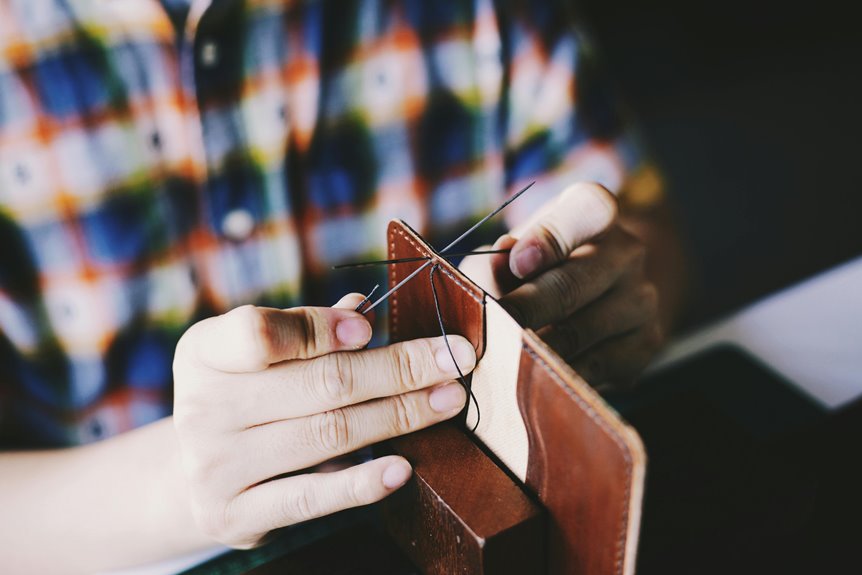
When sewing tapestry fabric, use heavy-duty needles (size 90/14 or 100/16) and strong polyester thread to handle its thick, textured weave. Prepare by gently pressing fabric and stabilizing edges to prevent fraying. Cut carefully with sharp scissors or a rotary cutter, marking lines clearly. Use a walking foot to feed the fabric evenly, stitch with longer lengths, and finish edges with zigzag or bias binding. With the right tools and techniques, you’ll create durable, stylish pieces. Learn how to master each step for polished results.
Key Takeaways
- Use heavy-duty needles (size 90/14 or 100/16) and strong polyester thread to handle tapestry fabric’s thickness and durability.
- Stabilize fabric edges with lightweight fusible interfacing and apply fray check to prevent unraveling during cutting and sewing.
- Opt for longer stitch lengths (3.0–3.5 mm) and utilize a walking foot for smooth feeding and even seams.
- Mark cutting lines clearly with chalk, cut with sharp heavy-duty scissors or rotary cutter, and baste pieces for precise alignment.
- Finish raw edges with zigzag, overlock stitches, or bias tape binding to secure seams and maintain a polished look.
Understanding the Characteristics of Tapestry Fabric
Tapestry fabric stands out for its thick, textured weave and intricate patterns. When you work with it, you’ll notice its durability and weight, which make it ideal for upholstery, bags, and heavy-duty projects.
The fabric usually combines different colored threads, creating detailed images or geometric designs that add visual interest. Because of its dense weave, it doesn’t stretch much, so you’ll want to avoid patterns requiring flexibility.
Also, its thickness means you’ll need a strong needle and consider seam allowances carefully. The fabric’s texture can be slightly rough, so you might want to handle it with care to prevent fraying.
Understanding these qualities helps you plan your project better and achieve professional results.
Essential Tools for Sewing Tapestry Fabric
You’ll need the right tools to handle tapestry fabric effectively, including heavy-duty needles and strong thread.
Specialty equipment like a walking foot or a roller foot can make sewing easier and prevent the fabric from shifting.
Let’s look at the must-have tools that will help you achieve clean, professional results.
Must-Have Sewing Tools
Every sewing project demands the right set of tools, and working with tapestry fabric is no exception. You’ll need sharp scissors designed for heavy fabrics to cut cleanly without fraying.
A sturdy measuring tape helps guarantee precise cuts and seam allowances. Heavy-duty pins or clips are essential to hold thick layers together without slipping.
Invest in strong, durable needles—size 90/14 or 100/16—made for upholstery or denim to penetrate the dense weave. A tailor’s chalk or fabric marker lets you mark patterns clearly without damaging the fabric.
Finally, a seam ripper is vital for correcting mistakes without tearing the tapestry. With these must-have tools, you’ll tackle tapestry sewing confidently and achieve professional results.
Specialty Equipment Recommendations
To work effectively with heavy, textured fabrics like tapestry, you need specialized equipment that handles their unique demands.
Regular tools can struggle with the thickness and intricate patterns, so upgrading your kit is essential.
Here are three must-have items to make sewing tapestry fabric easier and more precise:
- Heavy-Duty Sewing Machine Needle – Choose a size 16/100 or 18/110 needle designed for heavy fabrics; this prevents breakage and skipped stitches.
- Walking Foot Attachment – This helps feed both fabric layers evenly, avoiding puckering and shifting.
- Strong Thread – Opt for polyester or upholstery thread for durability and strength, ensuring your seams hold under stress.
Using these tools will improve your sewing experience and give your tapestry projects a professional finish.
Preparing Tapestry Fabric for Sewing
Before sewing tapestry fabric, you should properly prepare it to guarantee clean seams and prevent fraying. Start by gently pressing your fabric with a steam iron on a low setting to remove any wrinkles without crushing the fibers.
Next, consider stabilizing the edges by applying a lightweight fusible interfacing or using a fabric glue stick along seam allowances to minimize fraying.
If your tapestry fabric is particularly thick, you might want to baste the pieces together by hand to keep layers aligned while sewing.
Always test your sewing machine’s tension and stitch length on a scrap piece first to find settings that work well with the heavy weave.
Taking these steps helps assure your project stays neat and manageable from start to finish.
Cutting Techniques for Heavy Woven Fabric
When cutting heavy woven fabric like tapestry, you’ll want to choose the right tools to get clean edges without fraying.
Stabilizing the fabric edges before cutting helps keep everything in place.
Also, using precise marking methods guarantees your cuts are accurate and your project turns out perfectly.
Choosing the Right Tools
Selecting the right tools makes cutting heavy woven tapestry fabric much easier and more accurate.
Since this fabric is dense and thick, you’ll want equipment that handles the toughness without fraying or damaging the weave.
Here are three essential tools to have on hand:
- Sharp Fabric Scissors or Shears – Invest in heavy-duty scissors designed for thick fabrics to guarantee clean, precise cuts.
- Rotary Cutter with a Self-Healing Mat – This combo allows for smooth, straight lines, especially on larger pieces.
- Chalk or Fabric Markers – Use these to mark your cutting lines clearly without staining or damaging the material.
With these tools, you’ll maintain the integrity of your tapestry fabric and make your cutting process much smoother.
Stabilizing Fabric Edges
Having the right tools in hand makes it easier to handle heavy woven tapestry fabric, but controlling the edges as you cut is just as important.
To prevent fraying, start by using sharp shears or a rotary cutter with a fresh blade. Cut slowly and steadily to maintain clean lines.
After cutting, apply a light layer of fray check or fabric glue along the edges to stabilize loose threads. You can also use pinking shears for a zigzag finish that reduces fraying.
If you plan to sew seams, consider reinforcing edges with a narrow zigzag stitch or stay-stitching just inside the cut line.
These steps keep your fabric edges intact and manageable, ensuring your project holds together beautifully without unraveling during handling or sewing.
Precise Marking Methods
Accurate markings lay the foundation for clean cuts and well-fitted seams in heavy woven tapestry fabric.
To mark your fabric precisely, use tools and techniques that won’t damage or obscure the dense weave. Here’s how you can do it effectively:
- Use tailor’s chalk or a water-soluble fabric pen for clear, temporary lines that won’t bleed or smudge on textured surfaces.
- Employ a fine, sharp tracing wheel with dressmaker’s carbon paper underneath to transfer patterns without puncturing or distorting the fabric.
- Pin your pattern pieces carefully, avoiding too many pins that can shift or damage the weave, and mark around edges with gentle, consistent pressure.
Selecting the Right Thread and Needle
How do you choose the best thread and needle for sewing tapestry fabric?
First, pick a heavy-duty needle, like a size 90/14 or 100/16, designed for thick, dense fabrics. These needles penetrate tapestry without causing snags or skipped stitches.
For thread, use strong, all-purpose polyester or heavy cotton thread; avoid lightweight or delicate threads that may break under stress. Polyester offers durability and slight stretch, making it ideal for sturdy seams.
Match thread color closely to your fabric for a neat finish. Also, consider using a topstitch needle if your tapestry has a textured surface—it helps reduce skipped stitches.
Choosing the right needle and thread guarantees your project holds together well and looks professional without damaging the fabric.
Tips for Pinning and Basting Tapestry
Once you’ve selected the right needle and thread, securing your tapestry pieces properly becomes the next step. Pinning and basting help keep your fabric stable and aligned during sewing.
Here are three essential tips:
- Use flat-headed or silk pins to avoid damaging the thick fabric and to keep pins from shifting.
- Pin perpendicular to the seam line, spacing pins about 1 to 2 inches apart to hold layers firmly without puckering.
- Baste with a contrasting, loose running stitch by hand or machine; this temporary stitching lets you adjust before final sewing and prevents fabric movement.
Following these steps guarantees your tapestry pieces stay in place, making your sewing process smoother and your finished project more precise.
Stitching Methods Suitable for Thick Fabric
Because tapestry fabric is thick and textured, choosing the right stitching methods is crucial to guarantee strong seams and a professional finish.
You’ll want to use a heavy-duty needle, like a denim or leather needle, to pierce through the dense fibers without breaking. Opt for a longer stitch length—around 3.0 to 3.5 mm—to prevent bunching and allow the fabric to move smoothly under the machine. A strong polyester thread works best, providing durability and some flexibility.
When sewing, use a walking foot or a roller foot to feed the fabric evenly and avoid shifting layers.
Hand stitching thick tapestry? Try a backstitch for strength or a whipstitch if you need more control. These methods guarantee your project holds together beautifully.
Finishing Edges and Seams Neatly
Finish edges and seams carefully to keep your tapestry project looking polished and prevent fraying.
Tapestry fabric is thick and prone to unraveling, so neat finishing is essential. Here are three effective methods:
- Zigzag Stitch or Overlock: Use a zigzag stitch or a serger to secure raw edges quickly, preventing threads from coming loose.
- Bias Tape Binding: Apply bias tape around edges for a clean, decorative finish that also strengthens the seams.
- Turned and Topstitched Edges: Fold edges under twice, press, then topstitch close to the fold for a smooth, durable seam.
Creative Project Ideas for Tapestry Fabric
Exploring creative project ideas for tapestry fabric opens up a world of unique and durable handmade items you can craft.
You can transform tapestry into eye-catching tote bags that stand up to daily use, or sew sturdy cushion covers that add texture and warmth to any room.
Consider making wall hangings or fabric baskets to showcase tapestry’s intricate patterns. For personal accessories, try crafting wallets, clutches, or even laptop sleeves that combine style with protection.
When you work with tapestry fabric, its thickness and durability allow you to create functional items that last. Don’t hesitate to mix tapestry with leather or denim for a modern twist.
With tapestry, your creativity can turn simple sewing projects into standout pieces that reflect your personal style and skill.
Frequently Asked Questions
Can Tapestry Fabric Be Machine Washed After Sewing?
You shouldn’t machine wash tapestry fabric after sewing because it can shrink or distort. Instead, spot clean or dry clean to keep it looking great and maintain its texture and durability over time.
How Do I Remove Wrinkles From Tapestry Fabric?
You can remove wrinkles from tapestry fabric by using a steam iron on a low setting. Hold the iron slightly above the fabric, letting the steam relax fibers. Avoid direct contact to prevent crushing the texture.
What Types of Dyes Work Best on Tapestry Fabric?
You’ll find fiber-reactive dyes work best on tapestry fabric since they bond well with natural fibers like cotton or wool. Avoid acid dyes unless your fabric is primarily silk or protein-based for vibrant, lasting color.
Is Tapestry Fabric Suitable for Outdoor Use?
Did you know 70% of tapestry fabrics fade quickly outdoors? You shouldn’t use tapestry fabric outside regularly since it’s not designed for UV or moisture resistance, which can cause colors to fade and fibers to weaken over time.
Can Tapestry Fabric Be Combined With Other Fabrics in One Project?
Yes, you can combine tapestry fabric with other fabrics in one project. Just make sure the materials have compatible weights and textures, and use appropriate needles and stitches to handle the different fabric types effectively.