
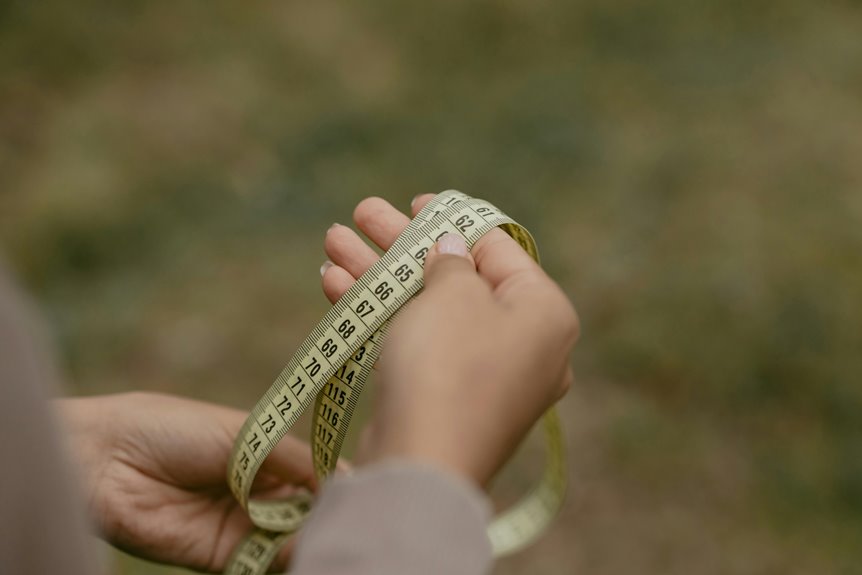
When sewing with calico, start by pre-washing to prevent shrinkage and soften the fabric. Use sharp scissors and cut with the grain for clean edges, managing fray with pinking shears or seam finishes. Choose a universal needle (size 80/12) and cotton or polyester thread. Sew with moderate stitch length and press seams gently on medium heat. Add lightweight interfacing for structure if needed. Keep these steps in mind, and you’ll be ready to explore more ways to perfect your calico projects.
Key Takeaways
- Pre-wash calico in cold water to prevent shrinkage and soften the fabric before cutting and sewing.
- Use sharp fabric scissors and cut with the grain on a flat surface for precise, clean edges.
- Select universal needles (size 80/12) and adjust sewing machine tension for balanced stitches on lightweight calico.
- Press seams gently with a medium heat iron, starting dry before using steam to maintain fabric integrity.
- Finish raw edges with pinking shears, zigzag stitches, or fusible interfacing to reduce fraying and add structure.
Understanding Calico Fabric Composition
Calico fabric is a plain-woven textile made from unbleached and often unprocessed cotton fibers. When you work with calico, you’re handling a material that’s both durable and breathable, ideal for various sewing projects.
Its natural cotton composition means it’s soft but sturdy, so it holds shapes well without stretching out of form. Because it’s unbleached, calico usually has a natural beige or off-white color, which makes it great for testing patterns or practicing stitches before using expensive fabrics.
You’ll notice the texture is slightly rough compared to finished cotton fabrics, but that’s part of its charm and utility. Understanding these traits helps you choose the right needles, threads, and techniques, ensuring a smooth sewing experience with calico fabric.
Pre-Washing and Preparing Calico
Before you start sewing, you’ll want to pre-wash your calico to prevent shrinking and color bleeding later on.
Washing also helps soften the fabric, making it easier to work with.
Let’s explore the best techniques to prepare your calico for a smooth sewing experience.
Importance of Pre-Washing
Although it might be tempting to skip this step, pre-washing your fabric is essential to guarantee your project turns out just right.
When you pre-wash calico, you prevent unwanted surprises like shrinkage or color bleeding after your garment or item is complete. It also removes any chemicals or sizing leftover from manufacturing, ensuring the fabric feels soft and natural.
Here’s why you should always pre-wash calico:
- Prevents unexpected shrinking after sewing
- Removes chemical residues for safer use
- Eliminates excess dye that might stain other fabrics
- Softens the fabric, making it easier to work with
- Helps reveal true color and texture before cutting
Skipping this can lead to frustrating results, so always take this important step first.
Techniques for Fabric Preparation
Preparing your fabric properly sets the foundation for a successful sewing project. Start by pre-washing your calico to prevent future shrinkage and remove any chemicals. Use cold water and a gentle cycle to protect the fabric’s texture.
After washing, avoid wringing; instead, gently squeeze out excess water. Lay the fabric flat or hang it to dry, guaranteeing it doesn’t distort.
Once dry, iron the calico on a medium heat to smooth out wrinkles and stabilize the fabric for cutting. When cutting, use sharp scissors or a rotary cutter for clean edges.
Finally, consider starching the fabric lightly if you want extra stiffness, which helps in precise sewing. These steps guarantee your calico is ready, making your sewing easier and your results polished.
Choosing the Right Needle and Thread
When sewing with calico, picking the right needle and thread makes all the difference in your project’s finish.
You’ll want to choose a needle that suits calico’s weave and a thread that matches its weight and color.
Let’s explore which needle types and threads work best for this fabric.
Needle Types for Calico
Choosing the right needle and thread plays an essential role in achieving clean, durable stitches on calico fabric. Since calico is a medium-weight woven cotton, using the correct needle type prevents puckering and fabric damage.
When selecting needles, consider these options:
- Universal needles (size 80/12): Great all-purpose choice for woven fabrics like calico.
- Sharp needles: Perfect for piercing through tightly woven fibers without skipping stitches.
- Ballpoint needles: Avoid these; they’re designed for knits and can damage calico.
- Microtex needles: Offer precision for detailed sewing and fine calico prints.
- Embroidery needles: Use only if adding decorative stitching, as they’ve larger eyes to handle specialty threads.
Best Thread Choices
Thread selection plays an essential role in how your calico fabric holds up over time and how smooth your stitching looks.
For calico, opt for a high-quality cotton thread because it matches the fabric’s natural fibers and provides durability without bulk. Polyester thread is also a solid choice if you want extra strength and slight elasticity, especially for garments that need a bit of stretch.
Avoid heavy or thick threads, as they can create puckering or uneven seams. Use a fine, universal needle that complements your thread choice to guarantee clean punctures without damaging the fabric.
Matching Thread to Fabric
How do you guarantee your stitches blend seamlessly with calico fabric? Matching thread to fabric is key. Choose thread colors that complement the natural, slightly textured look of calico. Opt for a needle that suits the fabric’s medium weight to avoid puckering or skipped stitches. Here’s how to get it right:
- Use cotton or polyester thread for strength and flexibility
- Pick a needle size 80/12 or 90/14 for smooth stitching
- Match thread color closely to the fabric’s base tone or pattern
- Test your thread and needle on a scrap before sewing the main piece
- Avoid shiny threads; matte finishes blend better with calico’s rustic texture
With these tips, your sewing will look professional and durable every time.
Cutting Techniques for Calico Fabric
Mastering just a few cutting techniques can make working with calico fabric much easier and more precise. You’ll want to use sharp fabric scissors or a rotary cutter to guarantee clean edges. Always lay your fabric flat on a smooth surface to avoid shifting. Pin your pattern securely, cutting slowly to maintain accuracy. Because calico can shift, cutting with the grain helps keep shapes consistent.
| Technique | Tip |
|---|---|
| Use Sharp Tools | Prevents jagged edges and fraying |
| Cut on Grain | Maintains fabric structure |
| Secure with Pins | Stops fabric movement |
| Cut Slowly | Guarantees precision and clean lines |
Following these tips, you’ll cut calico fabric confidently and prepare it perfectly for sewing.
Managing Fraying Edges Effectively
Although calico fabric is durable, its edges tend to fray easily once cut, which can affect your project’s finish and longevity.
Calico is sturdy but its cut edges fray easily, impacting your project’s durability and appearance.
To keep your calico sewing neat and lasting, managing those edges is key. Here’s how you can do it effectively:
- Use pinking shears to create a zigzag edge that reduces fraying.
- Apply fray check or fabric glue on raw edges for extra hold.
- Finish seams with a serger or overlock stitch if you have the machine.
- Fold and press edges before stitching to encase raw fabric.
- Use bias tape or binding to cover and protect cut edges.
Selecting Suitable Stitch Types
When working with calico fabric, choosing the right stitch type makes a big difference in both the strength and appearance of your project. For seams, a straight stitch with a medium length works well, providing durability without puckering the fabric.
If you’re sewing curves or corners, use a shorter stitch length to maintain control and prevent fabric shifting. For finishing edges, consider a zigzag stitch to help reduce fraying, especially if you’re not using a serger.
When adding details or topstitching, a slightly longer straight stitch can give a clean, polished look. Remember, calico is lightweight but can be prone to fraying, so pick stitches that secure seams firmly while keeping the fabric smooth and flat.
This balance guarantees your project looks professional and lasts.
Adjusting Sewing Machine Tension
Because calico fabric is lightweight and can shift easily, adjusting your sewing machine tension is essential for balanced stitches. If the tension is too tight, your stitches might pucker the fabric; too loose, and your seams will look messy.
Here’s how to get it right:
- Start with the machine’s default tension setting.
- Test on a scrap piece of calico before sewing your project.
- Adjust the tension dial slowly in small increments.
- Look for even stitches on both sides of the fabric.
- Rethread the machine if tension problems persist.
Pressing and Ironing Calico
When pressing calico, you’ll want to use the right temperature to avoid scorching the fabric.
Setting your iron to a medium heat with steam usually works best.
Always press gently to keep the fabric from stretching or distorting.
Temperature Settings Guide
Setting the right temperature is essential for pressing and ironing calico fabric effectively. You want to avoid scorching or damaging the fibers while achieving crisp seams and smooth surfaces. Here’s how to get it right:
- Use a medium heat setting on your iron, typically labeled “cotton” or around 300°F (150°C).
- Always test on a scrap piece first to prevent unwanted marks.
- Turn off steam initially; dry pressing helps prevent fabric distortion.
- If wrinkles persist, use a damp pressing cloth between the iron and fabric.
- Press gently without sliding the iron back and forth to maintain fabric integrity.
Preventing Fabric Distortion
Although calico is a sturdy fabric, it’s prone to stretching and warping if you’re not careful during pressing and ironing. To prevent distortion, always use a pressing cloth and avoid applying too much pressure. Press your seams gently and avoid dragging the iron across the fabric. Let the fabric cool flat before moving it to maintain its shape.
| Step | Action | Tip |
|---|---|---|
| 1 | Set iron to medium heat | Use steam sparingly |
| 2 | Place pressing cloth over calico | Protect fabric from direct heat |
| 3 | Press seams gently | Avoid sliding the iron |
| 4 | Let fabric cool flat | Prevents stretching |
| 5 | Check fabric shape | Re-press if distortion appears |
Adding Interfacing for Structure
To give your calico projects added strength and shape, you’ll want to incorporate interfacing. This extra layer supports your fabric, especially in areas like collars, cuffs, and waistbands.
When choosing interfacing, consider weight and type to complement your calico without overpowering it.
Keep these tips in mind when adding interfacing:
- Select lightweight or medium-weight interfacing for delicate calico.
- Use fusible interfacing for easy application and a smooth finish.
- Test the interfacing on a fabric scrap to check compatibility.
- Apply interfacing to the wrong side of the fabric for a clean look.
- Press carefully with a hot iron to avoid scorching your calico.
Adding interfacing properly guarantees your finished piece looks polished and holds its shape well.
Tips for Sewing Seams on Calico
When sewing seams on calico, you’ll want to handle the fabric gently to prevent puckering and stretching. Use a sharp needle, preferably size 70/10 or 80/12, to guarantee clean stitches without damaging the fabric.
Opt for a shorter stitch length, around 2.0 to 2.5 mm, to create secure seams that hold well. Press your seams carefully with a warm iron, using steam sparingly to avoid distorting the fabric.
Pin your fabric pieces together evenly before sewing to keep layers aligned. If your calico is lightweight, consider using a walking foot to help feed the fabric evenly.
Finally, trim seam allowances neatly and finish edges with a zigzag stitch or serger to prevent fraying and maintain a polished look.
Handling Shrinkage and Fabric Stretch
Since calico is prone to shrinking and stretching, you’ll need to take extra care before and during sewing to maintain the fabric’s shape. Pre-washing your calico is essential to prevent unexpected shrinkage later.
Handle the fabric gently to avoid distortion, especially when cutting and pinning. Use a stabilizer or interfacing if your project requires added structure. When sewing, opt for a slightly longer stitch length to accommodate any fabric movement.
Finally, press your seams carefully with a moderate heat setting to avoid stretching or warping the fibers.
- Pre-wash calico in cold water and air dry
- Cut on a flat surface without pulling
- Use fine pins and avoid over-pinning
- Sew with a longer stitch length (3-3.5 mm)
- Press seams gently with a steam iron on medium heat
Creative Project Ideas Using Calico
Although calico is often seen as a basic fabric, you’ll find it surprisingly versatile for a variety of creative projects.
You can craft charming tote bags that are lightweight and durable, perfect for everyday use. Calico also works wonderfully for quilting; its smooth texture and plain weave make it easy to cut and sew precise blocks.
Create lightweight, durable tote bags and precise quilt blocks with calico’s smooth texture and plain weave.
If you enjoy home décor, try making simple curtains or cushion covers to add a cozy, handmade touch to any room. For beginners, calico is ideal for practice pieces like fabric dolls or soft toys because it’s easy to handle and affordable.
With its natural look, you can even experiment with fabric painting or stamping to personalize your creations and bring your ideas to life.
Frequently Asked Questions
Can Calico Fabric Be Used for Upholstery Projects?
You can use calico fabric for upholstery, but keep in mind it’s lightweight and not as durable as heavier fabrics. You’ll want to add a backing or lining to help it withstand wear and tear over time.
How Do You Remove Stains From Calico Fabric?
Did you know 85% of stains on cotton fabrics come out with simple treatments? You should gently blot stains, apply mild detergent, then wash in cold water. Avoid harsh chemicals to keep your calico looking fresh.
What Is the Environmental Impact of Producing Calico Fabric?
You should know producing calico fabric uses a lot of water and energy, contributing to pollution and deforestation. Choosing organic or recycled calico can reduce your environmental impact considerably, helping the planet stay healthier.
Can Calico Fabric Be Dyed or Printed at Home?
Yes, you can dye or print calico fabric at home easily. It absorbs colors well, so you’ll get vibrant results using fabric dyes or printing techniques like block printing or screen printing with simple tools.
How Durable Is Calico Fabric Compared to Other Cotton Fabrics?
You’ll find calico fabric pretty durable, but it’s generally coarser and less tightly woven than other cotton fabrics. It’s great for everyday use, but won’t last as long as higher-quality cotton like poplin or broadcloth.