
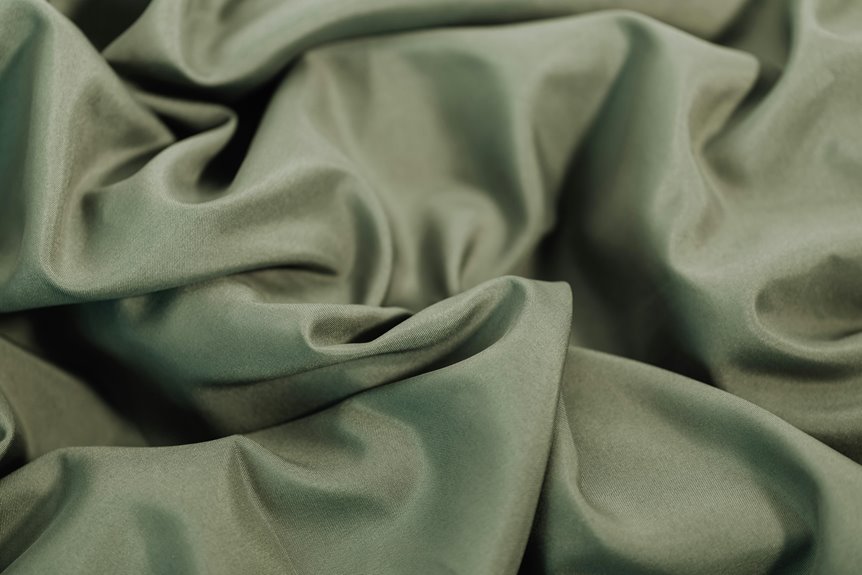
If you’re choosing between scuba crepe and regular crepe, know that scuba crepe is thicker, stretchier, and has a smooth, structured feel, perfect for bold, modern silhouettes. Regular crepe is lighter with a textured, grainy surface that drapes softly and flows naturally. Scuba offers more durability and shape retention, while regular crepe feels delicate and breathable. Both require gentle care but differ in flexibility and weight. Keep exploring to find which fabric best suits your project’s style and needs.
Key Takeaways
- Scuba crepe is thicker, heavier, and stretchier than regular crepe, providing structured shapes and modern silhouettes.
- Regular crepe features a lightweight, textured surface with a soft, flowing drape that contours naturally to the body.
- Scuba crepe’s smooth finish contrasts with regular crepe’s crinkled, grainy texture, offering different tactile experiences.
- Scuba crepe allows more flexibility and movement due to its synthetic knit blend, while regular crepe has limited stretch.
- Regular crepe is generally more affordable and widely available, whereas scuba crepe is pricier and found in specialty stores.
What Is Scuba Crepe Fabric?
Scuba crepe fabric combines the smooth texture of scuba material with the slightly textured surface of crepe.
Scuba crepe fabric blends scuba’s smoothness with crepe’s subtle texture for a unique feel.
When you work with scuba crepe, you’ll notice its thickness and stretch, which make it great for garments that need structure without stiffness. This fabric is a double-knit, meaning it has a dense weave that holds shape well and resists wrinkles.
You’ll find it soft to the touch but with enough firmness to create clean lines and bold silhouettes. Unlike traditional crepe, scuba crepe has a smooth finish on one side and a subtle crepe texture on the other, giving you versatility in design.
If you want a fabric that balances comfort, durability, and style, scuba crepe is a smart choice.
Characteristics of Regular Crepe Fabric
You’ll notice regular crepe fabric has a distinct textured feel that sets it apart.
It’s typically lightweight with a nice drape, making it versatile for various garments.
Plus, it’s commonly made from fibers like silk, wool, or polyester, each adding unique qualities.
Texture and Feel
Texture plays a key role in how regular crepe fabric feels against your skin. When you touch it, you’ll notice a slightly rough, pebbled surface that gives crepe its signature grainy feel.
Unlike smooth fabrics, crepe’s texture provides a subtle tactile interest without being abrasive or uncomfortable. You’ll find it soft yet firm, offering a pleasant resistance to the touch.
This unique texture comes from the twisted yarns used in weaving, which create tiny crinkles and a matte finish. As you wear regular crepe, you’ll appreciate how its texture adds dimension without bulk, making it versatile for various garments.
Weight and Drape
While the feel of regular crepe sets it apart, its weight and drape shape how it moves and fits your body.
Regular crepe is generally lightweight to medium weight, giving it a graceful flow without feeling heavy or bulky. When you wear it, the fabric drapes softly, contouring to your silhouette and enhancing your natural shape.
This fluid drape allows regular crepe to create elegant, flattering lines in garments like dresses, skirts, and blouses. Unlike stiffer fabrics, it doesn’t cling tightly nor does it hang rigidly; instead, it moves with you, offering comfort and ease.
If you want a fabric that balances structure with softness, regular crepe’s weight and drape make it a versatile choice for many styles.
Common Fiber Types
Regular crepe fabric comes in various fiber types, each bringing unique qualities to the material. You’ll often find crepe made from silk, wool, cotton, polyester, or rayon.
Silk crepe feels luxurious and drapes beautifully, perfect for elegant garments. Wool crepe offers warmth and a slightly heavier texture, making it great for cooler weather.
Cotton crepe is breathable and comfortable, ideal for casual wear. Polyester and rayon versions provide durability and wrinkle resistance, which is handy for everyday use.
Knowing the fiber content helps you choose the right crepe for your project, whether you want something lightweight and flowing or more structured.
Understanding these fibers lets you appreciate how regular crepe balances texture, comfort, and appearance in various applications.
Differences in Texture Between Scuba and Regular Crepe
Because scuba crepe contains a thicker, stretchier fabric blend, you’ll notice it feels more substantial and smooth compared to the lightweight, slightly rougher surface of regular crepe.
When you touch scuba crepe, its sleek finish and elasticity stand out, giving it a modern, almost neoprene-like texture.
In contrast, regular crepe has a crinkled, grainy feel that adds subtle texture and visual interest.
This difference means scuba crepe often feels more polished and uniform against your skin, while regular crepe offers a tactile, natural sensation.
If you prefer a fabric that moves with you and feels soft yet firm, scuba crepe suits you well.
But if you want a delicate, textured fabric that breathes easily, regular crepe will meet your expectations better.
Weight and Thickness Comparison
Even though both scuba crepe and regular crepe serve distinct purposes, you’ll quickly notice differences in their weight and thickness.
Scuba crepe is generally heavier and thicker because it’s made with a denser knit and often includes spandex blends. This added weight gives it more substance and durability, making it ideal for structured garments.
Scuba crepe’s dense knit and spandex blend create a heavier, thicker fabric perfect for durable, structured garments.
On the other hand, regular crepe tends to be lighter and thinner, offering a more delicate feel. Its lighter weight contributes to a flowy drape, perfect for elegant, airy designs.
When you handle these fabrics, scuba crepe feels more substantial in your hands, while regular crepe feels softer and less dense.
Understanding these differences helps you pick the right fabric for your project’s needs.
Stretch and Flexibility Variations
While both scuba crepe and regular crepe offer unique textures, their stretch and flexibility differ markedly.
Scuba crepe is known for its excellent stretch due to its knit construction and synthetic fibers. When you handle scuba crepe, you’ll notice it bends and flexes easily, making it ideal if you need fabric that moves with you.
On the other hand, regular crepe, often woven and made from natural fibers, has limited stretch and feels more rigid. You won’t get much give from regular crepe, which maintains its shape but can feel less forgiving when worn.
Common Uses for Scuba Crepe
You’ll find scuba crepe popping up in fashion and apparel, thanks to its smooth texture and stretch.
It’s also great for home decor, adding a modern touch to cushions and drapes.
Plus, its flexibility makes it a top choice for activewear and sportswear.
Fashion and Apparel
Because scuba crepe offers a smooth texture and excellent stretch, designers often choose it for fashion and apparel.
When you wear garments made from scuba crepe, you’ll notice how it holds shapes beautifully, making it ideal for structured dresses, skirts, and jackets.
It’s also great for activewear since it moves with you without losing form. You can find scuba crepe in trendy jumpsuits and bodycon dresses, where its firm yet flexible feel enhances your silhouette.
Plus, it resists wrinkles and maintains vibrant colors, so your outfits stay fresh longer.
If you want clothes that combine comfort, style, and durability, scuba crepe is a smart choice, offering you both elegance and practicality in your wardrobe.
Home Decor Applications
Scuba crepe’s durability and vibrant colors make it a fantastic choice beyond fashion, extending into home decor. You’ll find it particularly useful when you want fabric that holds shape and resists wrinkles.
Its smooth texture and stretch also add a modern touch to your living spaces. Here are common ways you can use scuba crepe at home:
- Upholstery for chairs and sofas, providing a sleek, durable finish
- Cushion covers that maintain their form and resist wear
- Decorative wall hangings adding texture and color without sagging
- Table runners or placemats that combine style with easy maintenance
- Window treatments like curtains that drape beautifully and block light effectively
Using scuba crepe in these ways helps you combine functionality with contemporary style effortlessly.
Activewear and Sportswear
When choosing fabric for activewear, durability and flexibility matter most. Scuba crepe fits the bill perfectly because it offers a smooth, stretchy texture that moves with you.
Its thickness provides excellent support and shape retention, so your workout gear won’t lose form after repeated use. Plus, scuba crepe resists wrinkles and moisture, keeping you comfortable during intense workouts.
Unlike regular crepe, which is lighter and less structured, scuba crepe maintains its sleek appearance, making it ideal for leggings, sports bras, and fitted tops.
If you want activewear that combines style, performance, and durability, scuba crepe’s unique blend of stretch and resilience makes it a smart choice for both casual and high-impact sportswear.
Typical Applications of Regular Crepe
Regular crepe fabric offers versatility that suits various everyday and formal uses.
When you choose regular crepe, you’re picking a material that balances texture with elegance, making it ideal for multiple applications.
You’ll find it works well in:
- Dresses and skirts that require a soft yet structured feel
- Blouses and tops that need a lightweight, breathable fabric
- Tailored suits and jackets that benefit from its subtle texture
- Evening wear where a refined drape is essential
- Scarves and accessories that add a touch of sophistication
How Each Fabric Handles Draping
Fabric choice greatly influences how garments hang and move on the body. When you work with scuba crepe, you’ll notice it has a structured, thicker feel that holds its shape well. This fabric offers a smooth, sculpted drape, creating clean lines and a modern silhouette.
It doesn’t flow freely but instead provides body and bounce, making it ideal if you want your garment to maintain form.
On the other hand, regular crepe drapes softly and fluidly. You’ll find it moves with your body, gently contouring curves without stiffness.
Its lightweight, textured nature allows it to cascade naturally, perfect for designs emphasizing flow and elegance.
Depending on your project, choosing between the firm hold of scuba crepe and the graceful drape of regular crepe will affect your garment’s final look and feel.
Care and Maintenance Tips for Both Fabrics
You’ll want to follow specific washing instructions to keep both scuba crepe and regular crepe looking their best.
Proper storage is just as important to prevent wrinkles and damage.
Let’s go over the key care tips for each fabric so you can maintain their quality.
Washing Instructions
Although both scuba crepe and regular crepe require gentle care, their washing instructions differ slightly to maintain their texture and durability.
When washing scuba crepe, you want to preserve its stretch and smooth finish, while regular crepe needs extra caution to protect its delicate, crinkled surface.
Here’s what you should do:
- Use cold water for both fabrics to prevent shrinking and color fading.
- Hand wash regular crepe gently; scuba crepe can handle a delicate cycle.
- Avoid bleach and harsh detergents on both fabrics.
- Lay flat to dry to keep scuba crepe’s shape and regular crepe’s texture intact.
- Iron regular crepe on low heat with a cloth; scuba crepe usually doesn’t need ironing.
Following these steps keeps your garments looking fresh and lasting longer.
Storage Recommendations
After washing, how you store scuba crepe and regular crepe plays a big role in maintaining their look and feel. You’ll want to keep scuba crepe folded flat to avoid stretching, while regular crepe benefits from hanging to prevent wrinkles. Both fabrics should be stored in a cool, dry place away from direct sunlight to avoid fading or damage.
| Fabric Type | Storage Method | Key Tip |
|---|---|---|
| Scuba Crepe | Fold flat | Avoid hanging to prevent stretch |
| Regular Crepe | Hang on padded hanger | Prevent wrinkles |
| Both | Cool, dry, dark area | Protect from sunlight |
Following these tips will keep your garments looking fresh and durable longer.
Choosing the Right Fabric for Your Project
When selecting fabric for your project, understanding the differences between scuba crepe and regular crepe can save you time and frustration.
Scuba crepe offers a smooth, thick texture with excellent stretch, making it ideal for structured garments or activewear. Regular crepe, with its lighter, textured feel, suits flowing dresses or blouses.
Consider these factors when choosing:
- Desired drape and flow of the fabric
- Stretch and flexibility needed
- Thickness and warmth requirements
- Intended garment style and structure
- Your sewing experience with different fabric weights
Price and Availability Differences
How much you’re willing to spend and where you shop can greatly affect your access to scuba crepe versus regular crepe.
Scuba crepe tends to be pricier because of its unique blend of polyester and spandex, which offers stretch and durability. You’ll often find scuba crepe in specialty fabric stores or online boutiques, sometimes limiting immediate availability.
Scuba crepe is pricier due to its polyester-spandex blend, offering stretch and durability, often found in specialty stores.
Regular crepe, on the other hand, is more widely available and usually less expensive since it comes in various fibers like silk, wool, or polyester. You can easily find regular crepe in most fabric stores or general retailers.
If budget and convenience matter, regular crepe might be your go-to. But if you want that smooth, structured feel with stretch, investing in scuba crepe could be worth it.
Frequently Asked Questions
Can Scuba Crepe Fabric Be Used for Swimwear?
You can definitely use scuba crepe fabric for swimwear because it’s stretchy, durable, and holds its shape well. It provides a smooth, supportive fit, making it a popular choice for stylish, comfortable swimsuits.
Is Regular Crepe Fabric Suitable for Outdoor Use?
Think of regular crepe fabric as a delicate flower—it’s beautiful but not made for harsh weather. You won’t want to use it outdoors often, since it’s less durable and can wear out quickly under sun and rain.
How Do These Fabrics React to Dyeing or Printing?
You’ll find scuba crepe resists dye and printing due to its synthetic, dense texture, while regular crepe absorbs colors better, allowing more vibrant prints. Choose based on how bold and lasting you want your designs.
Are There Any Allergy Concerns With Scuba or Regular Crepe?
Like a gentle breeze, most crepe fabrics are hypoallergenic, but if you’ve sensitive skin, you might react to synthetic fibers in scuba crepe. Always test a small patch first to avoid any irritation or allergies.
Which Fabric Is More Eco-Friendly or Sustainable?
You’ll find regular crepe is often more eco-friendly since it’s usually made from natural fibers like silk or cotton, which are biodegradable. Scuba crepe, made from synthetic materials, typically has a bigger environmental footprint.