
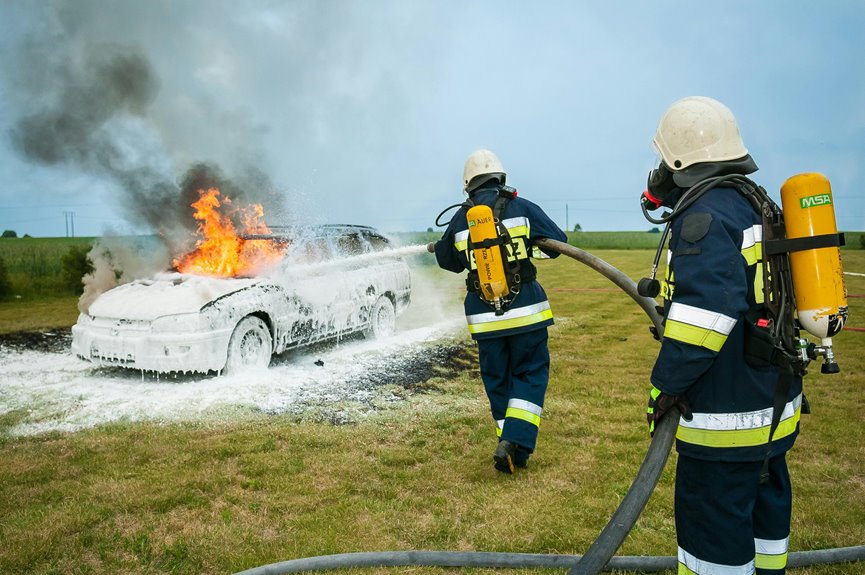
When it comes to protecting firefighters from extreme heat, the choice of fabric is essential. You might think all materials are created equal, but certain fabrics stand out for their flame-resistant properties. Understanding these options can greatly impact safety and performance in high-risk environments. So, what exactly makes these fabrics the best choice? Let’s explore the key features and innovations that set them apart.
Key Takeaways
- Nomex is a lightweight fabric renowned for its excellent thermal protection and flame resistance, making it ideal for firefighting gear.
- PBI offers exceptional heat resistance, maintaining integrity in extreme temperatures, which is crucial for firefighters in high-risk environments.
- Kevlar, often blended with Nomex, provides high tensile strength and added protection against impacts and cuts during firefighting operations.
- Treated FR Cotton combines comfort and breathability with flame resistance, ensuring firefighters remain comfortable while protected from heat.
- Compliance with safety standards like NFPA 1971 ensures that fabrics meet rigorous protection requirements for firefighters in extreme heat situations.
Understanding Flame-Resistant Fabrics
When you’re looking at flame-resistant fabrics, it’s essential to understand their unique properties and how they protect against heat and flames. These materials are designed to withstand high temperatures, reducing the risk of burns and injuries during firefighting or other hazardous situations.
Flame-resistant fabrics work by either self-extinguishing upon exposure to flames or forming a protective barrier that limits heat transfer. You’ll often find these fabrics made from specialized fibers like aramid, modacrylic, or treated cotton, which enhance their protective qualities.
Additionally, consider the fabric’s weight and breathability, as these factors play a significant role in comfort and mobility. Ultimately, choosing the right flame-resistant fabric can make a vital difference in ensuring safety on the job.
Key Properties of Flame-Resistant Materials
Flame-resistant materials possess several key properties that enhance safety and performance in high-risk environments.
First, they’ve a high ignition resistance, minimizing the risk of catching fire. Next, their thermal stability helps them withstand extreme heat without breaking down.
Flame-resistant materials offer high ignition resistance and thermal stability, ensuring safety in extreme heat environments.
Additionally, these materials often exhibit self-extinguishing capabilities, meaning they stop burning once the flame source is removed.
Furthermore, many flame-resistant fabrics offer moisture-wicking properties, keeping you dry and comfortable during intense situations.
Finally, durability is essential; these materials resist wear and tear, ensuring they maintain their protective qualities over time.
Overview of Popular Fabrics Used in Firefighting
As you explore the various fabrics used in firefighting gear, you’ll find that each material offers distinct advantages tailored to meet the demands of intense heat and hazardous environments.
Here are some popular fabrics you might encounter:
- Nomex: A lightweight, flame-resistant fabric that provides excellent thermal protection and durability.
- Kevlar: Known for its high tensile strength, this fabric is often blended with Nomex for added protection against cuts and abrasions.
- PBI: This fabric withstands extreme temperatures while maintaining its integrity, making it ideal for structural firefighting.
- FR Cotton: Treated cotton offers comfort and breathability while still providing a level of flame resistance.
These materials are essential for ensuring that firefighters stay safe while performing their heroic duties.
Importance of Safety Standards and Compliance
When it comes to firefighter safety, understanding safety standards and compliance is essential.
You need to be aware of the regulatory framework that governs the materials used in your gear, as well as the certification and testing processes that guarantee their effectiveness.
Addressing compliance challenges can help you make informed decisions about your protective equipment.
Regulatory Framework Overview
Understanding the regulatory framework surrounding firefighter safety is essential, as it guarantees that the fabrics used in their gear meet stringent safety standards.
These regulations guarantee that firefighters are adequately protected from extreme heat and hazardous conditions.
Here are four key aspects of this framework:
- National Fire Protection Association (NFPA): Sets standards for protective clothing and equipment.
- Occupational Safety and Health Administration (OSHA): Establishes safety regulations to protect workers.
- American National Standards Institute (ANSI): Develops consensus standards for safety gear.
- International Organization for Standardization (ISO): Provides international guidelines for fabric performance.
Certification and Testing
Safety standards and compliance play an essential role in guaranteeing that firefighters are protected while on the job.
These standards, set by organizations like NFPA and ASTM, confirm that protective clothing meets specific requirements for heat resistance, durability, and overall safety.
When you’re choosing gear, it’s important to look for certifications that indicate the fabric has undergone rigorous testing.
This testing evaluates how well the materials resist flames, thermal exposure, and other hazards.
By understanding these certifications, you can make informed decisions about the gear you wear.
Remember, compliance isn’t just a guideline; it’s a commitment to safety that can save lives.
Always prioritize certified fabrics to guarantee maximum protection in extreme heat situations.
Compliance Challenges Addressed
Although compliance with safety standards is essential, many firefighters face challenges in ensuring their gear meets these requirements. These hurdles can put your safety at risk while you’re on the job.
Here are some common compliance challenges:
- Rapidly evolving regulations – Standards change frequently, making it tough to keep up.
- Limited access to compliant gear – Not all manufacturers offer gear that meets the latest standards.
- Budget constraints – Funding for high-quality, compliant gear can be inadequate.
- Misleading marketing – Some products claim compliance without proper certification, leading to confusion.
Navigating these challenges is vital for your safety and effectiveness in the field. Staying informed and proactive about compliance can help you select the safest fabrics and gear available.
Factors to Consider When Selecting Firefighting Fabrics
When selecting firefighting fabrics, you need to take into account industry-specific risks that could impact your safety.
Comfort and mobility are also essential, as they can affect your performance in high-pressure situations.
Finally, make sure the fabrics comply with established standards to guarantee maximum protection.
Industry-Specific Risks
Selecting the right firefighting fabrics requires you to carefully consider various industry-specific risks that can impact your safety and effectiveness on the job.
Here are four key factors to keep in mind:
- Heat Exposure: Fabrics need to withstand extreme temperatures and provide thermal protection.
- Chemical Hazards: Consider the potential for exposure to hazardous materials that can compromise fabric integrity.
- Mechanical Risks: Assess risks of cuts, abrasions, and other physical hazards that could damage your gear.
- Flame Resistance: Guarantee the fabric meets stringent flame-resistant standards to protect against ignition.
Comfort and Mobility
While prioritizing safety, you can’t overlook the importance of comfort and mobility in firefighting fabrics. When you’re in high-pressure situations, the last thing you want is restrictive gear that hinders your movement.
Fabrics should be lightweight and flexible, allowing you to maneuver easily while performing your duties. Look for materials that offer breathability to help regulate your body temperature, especially during intense physical exertion.
Additionally, consider the fit; gear that’s too tight or too loose can be distracting or even dangerous. You’ll appreciate features like articulated joints and stretch panels that enhance your range of motion.
Ultimately, choosing fabrics that balance protection with comfort guarantees you can focus on the task at hand without unnecessary limitations.
Fabric Compliance Standards
Choosing the right fabrics for firefighting gear involves understanding various compliance standards that guarantee safety and performance.
These standards assure that the materials used can withstand extreme conditions while protecting you from heat and flames.
Here are four key factors to take into account:
- NFPA 1971 Compliance – Assures protective clothing meets stringent safety requirements.
- ISO Certification – Confirms that fabrics are tested for durability and heat resistance.
- ASTM Standards – Provides guidelines for performance, assuring fabrics resist moisture and thermal exposure.
- EN Standards – European norms that assess the protective qualities of firefighting gear.
Environmental and Health Considerations in Fabric Choice
When it comes to selecting fabrics for firefighter gear, considering environmental and health impacts is essential. You want materials that not only protect against extreme heat but also minimize harm to yourself and the planet.
Look for fabrics that are free from harmful chemicals, such as PFAS, which can cause health issues and environmental contamination. Sustainable options, like recycled fibers or organic cotton, can reduce your ecological footprint.
Additionally, prioritize fabrics that are durable and easy to clean, as this can extend their lifespan and reduce waste. By choosing responsibly sourced materials, you contribute to a safer environment while ensuring that your gear protects you effectively during those critical moments on the job.
Innovations in Fire-Resistant Fabric Technology
As advancements in technology continue to evolve, the world of fire-resistant fabrics is seeing exciting innovations that enhance safety and performance for firefighters.
You’ll find materials that not only withstand extreme heat but also improve comfort and mobility. Here are some key innovations transforming firefighter gear:
- Nano-coating: This technology repels water and prevents the absorption of harmful substances, keeping you safer and drier.
- Thermal barrier fabrics: These layers provide exceptional insulation, reducing heat transfer to your body.
- Lightweight composites: New blends of fibers make gear lighter without sacrificing protection, allowing for better agility.
- Moisture-wicking properties: Fabrics now draw sweat away, keeping you cool and focused during intense situations.
These innovations are making a real difference in your daily protection.
Future Trends in Protective Fabrics for Firefighters
While the current advancements in fire-resistant fabrics have greatly improved safety, the future holds even more promise for firefighters.
You can expect to see smarter textiles that integrate technology, such as temperature sensors that alert you to heat exposure. Fabrics will likely become lighter and more breathable, enhancing comfort without sacrificing protection.
Innovations in nanotechnology may lead to fabrics that repel water and resist contaminants, keeping you safer in hazardous environments. Additionally, bio-based materials could emerge, offering sustainable options that don’t compromise performance.
As research continues, you’ll find that these protective fabrics won’t only shield you from heat but also adapt to your changing needs on the job. The future of firefighting gear is looking brighter than ever.
Best Practices for Maintaining Fire-Resistant Gear
To guarantee your fire-resistant gear remains effective, it’s crucial to adopt proper maintenance practices right from the start.
Proper maintenance is essential from the beginning to ensure your fire-resistant gear remains effective and safe.
Regular care not only extends the lifespan of your gear but also guarantees your safety. Here are some best practices to keep in mind:
- Clean Regularly: Wash your gear according to the manufacturer’s guidelines to remove soot and contaminants.
- Inspect Frequently: Check for any signs of wear, tear, or damage before every use.
- Store Properly: Hang your gear in a cool, dry place away from direct sunlight to prevent deterioration.
- Repair Promptly: Address any issues immediately, whether it’s a seam coming undone or a melted section, to maintain protection levels.
Frequently Asked Questions
How Often Should Firefighters Replace Their Protective Gear?
Think of your gear as a trusted shield in battle; it’s essential to replace it regularly. You should assess your protective gear every year, and replace it if it shows signs of wear or damage.
Can Flame-Resistant Fabrics Be Washed and Reused?
Yes, you can wash and reuse flame-resistant fabrics, but follow the manufacturer’s guidelines. Regular cleaning maintains their protective qualities, so make certain you use appropriate detergents and avoid fabric softeners to keep them effective.
What Is the Lifespan of Flame-Resistant Clothing?
The lifespan of flame-resistant clothing generally ranges from three to five years, depending on usage and care. You should regularly inspect for wear and damage, as proper maintenance can extend its effectiveness and longevity.
Are There Specific Care Instructions for These Fabrics?
When caring for flame-resistant fabrics, you should always follow manufacturer instructions. Typically, you’ll want to wash them in cold water, avoid bleach, and tumble dry on low to maintain their protective qualities.
How Do Weather Conditions Affect Fabric Performance?
Weather conditions play an essential role in fabric performance. You’ll notice that humidity can weaken fibers, while extreme temperatures might alter their structure. Always consider the environment when choosing materials for durability and effectiveness.