
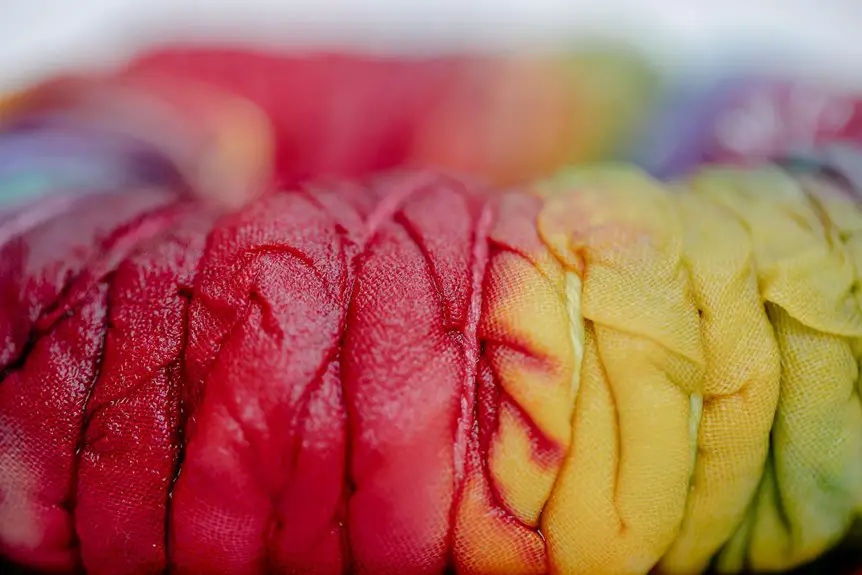
You can revive old clothes by using tie-dye techniques that turn boring fabric into vibrant, personalized pieces. Start by selecting natural fibers like cotton and washing them thoroughly. Keep the fabric damp, then use rubber bands to create patterns such as spirals or stripes. Apply fiber-reactive dye with gloves on and let it set for 6-8 hours before rinsing carefully. Proper care will keep colors bright and fresh. Explore more tips and creative ideas to transform your wardrobe effortlessly.
Key Takeaways
- Choose natural fiber clothes like cotton for better dye absorption and vibrant colors.
- Wash and dampen old clothes to remove dirt and prepare fabric for dyeing.
- Use rubber bands to create unique patterns like spirals, stripes, or bullseye on garments.
- Apply fiber-reactive dyes evenly with squeeze bottles for precise color placement.
- Let dyed clothes set for 6-8 hours, then rinse and wash separately to preserve colors.
Essential Supplies for Tie-Dyeing Old Clothes
To get started with tie-dyeing old clothes, you’ll need a few essential supplies that make the process easier and more effective.
First, grab some fiber-reactive dye or fabric dye in your favorite colors. You’ll also want rubber bands to create unique patterns by binding sections of the fabric tightly.
Start with fiber-reactive or fabric dye and rubber bands to craft your one-of-a-kind tie-dye designs.
Next, prepare squeeze bottles or spray bottles to apply the dye precisely. Don’t forget gloves to protect your hands from staining and plastic table covers or garbage bags to keep your workspace clean.
Have a large plastic bin or bucket handy for soaking the clothes in soda ash solution to help the dye set better.
Finally, keep some old towels or rags nearby to wipe spills and blot excess dye.
With these supplies, you’re ready to plunge into colorful creativity!
Preparing Your Clothes for Tie-Dye Transformation
Before you immerse yourself in the dyeing process, you’ll want to prepare your clothes properly to guarantee vibrant, long-lasting colors.
Start by selecting natural fibers like cotton or linen, as synthetic materials don’t absorb dye well.
Wash your garment to remove any dirt, oils, or fabric softeners that might block the dye from penetrating evenly.
Keep the fabric damp before you start tying—it helps the dye spread smoothly.
Use rubber bands or strings to secure your chosen sections tightly; this controls the pattern and prevents colors from bleeding together.
Finally, set up a clean workspace with protective coverings to avoid stains.
Proper preparation guarantees your tie-dye project turns out bright, bold, and ready to make a statement.
Popular Tie-Dye Patterns to Try on Old Garments
You can instantly refresh your old clothes with classic spiral designs that create eye-catching swirls of color.
If you want something edgier, bold geometric shapes offer striking lines and patterns that stand out.
Both styles are easy to master and perfect for releasing your creativity.
Classic Spiral Designs
A swirling spiral instantly transforms any plain garment into a vibrant masterpiece.
To create this classic tie-dye pattern, start by laying your shirt flat. Pinch the fabric at the center point where you want the spiral to begin and twist it tightly until the entire shirt coils into a compact disc. Secure it with rubber bands, dividing the shirt into sections like pie slices.
Apply different dye colors to each section, letting the hues blend slightly at the edges for a dynamic effect. Once dyed, wrap the garment in plastic and let it set for several hours before rinsing.
This timeless design adds energy and movement to your old clothes, making them look fresh and exciting with just a few simple steps.
Bold Geometric Shapes
Although spirals are a classic choice, bold geometric shapes can give your tie-dye projects a modern and striking twist. You can transform old garments into eye-catching pieces by experimenting with sharp lines and distinct patterns.
To create these designs, fold and bind your fabric carefully, then apply dye strategically to highlight the shapes. Here are some geometric tie-dye patterns to try:
- Chevron: Fold your fabric into tight triangles to create zigzag stripes that pop.
- Diamond: Use accordion folds and precise binding to form interconnected diamond shapes.
- Stripes: Fold your garment into accordion pleats and bind sections for clean, colorful lines.
These patterns add structure and style, making your revitalized clothes stand out with a bold, contemporary vibe.
Step-by-Step Guide to Basic Tie-Dye Techniques
Mastering just a few basic tie-dye techniques can transform plain clothes into vibrant, personalized art. Start by choosing your garment and dampening it slightly.
For a classic spiral, pinch the fabric’s center and twist it into a tight disk, securing with rubber bands to create sections. To make stripes, fold the fabric accordion-style and bind with bands at intervals. For bullseye patterns, pinch a spot, pull it upward, and bind bands evenly along the length.
Once tied, apply dye to each section, ensuring saturation but avoiding oversaturation to prevent muddy colors. Let the dye set for 6-8 hours, then rinse with cold water until it runs clear.
Finally, remove bands and wash the garment separately to lock in your unique design.
Tips for Choosing Colors That Revive and Refresh
Three key color principles can help you choose hues that instantly revive and refresh your tie-dye creations.
First, consider color contrast; pairing complementary colors like blue and orange makes your design pop.
Next, think about saturation—vibrant, saturated colors draw attention and give life to dull fabrics.
Finally, use color harmony by selecting analogous colors (those next to each other on the color wheel) to create a soothing, cohesive look.
- Contrast: Boost visual impact with opposing colors.
- Saturation: Opt for bright pigments to energize faded clothes.
- Harmony: Blend similar hues for a pleasing, balanced effect.
How to Set and Care for Your Tie-Dyed Clothes
Wondering how to make your vibrant tie-dye colors last? Start by setting the dye properly.
Once you’ve finished dyeing, let your garment sit wrapped in plastic for 6 to 8 hours or overnight. This allows the dye to bond with the fabric.
Next, rinse the item in cold water until it runs clear to remove excess dye. Wash it separately in cold water with a mild detergent to prevent bleeding.
Always turn your tie-dyed clothes inside out before washing to protect the colors. Avoid using bleach or harsh chemicals, and skip the dryer; air dry instead to maintain brightness.
With these simple steps, you’ll keep your tie-dye looking fresh and vibrant wash after wash.
Creative Ideas for Upcycling Different Types of Fabrics
Although upcycling different fabrics might seem challenging at first, it offers a fantastic way to refresh your wardrobe and reduce waste. You can transform worn-out pieces into vibrant, unique garments by tailoring your tie-dye approach to each fabric type.
Upcycling fabrics refreshes your wardrobe and reduces waste by customizing tie-dye techniques for each material.
For cotton, traditional spiral patterns work wonders and absorb dye beautifully. Synthetic fabrics like polyester require special dyes and longer setting times but can yield bold, lasting colors. Denim offers a sturdy canvas—try combining bleach and dye for striking contrasts.
Consider these ideas:
- Use ice dyeing on silk scarves to achieve delicate, watercolor effects.
- Apply crumple techniques on cotton t-shirts for a textured, casual look.
- Experiment with dip dye on linen for subtle, gradient fades.
Troubleshooting Common Tie-Dye Challenges
When your tie-dye project doesn’t turn out as expected, it can be frustrating—but understanding common issues helps you fix them quickly.
If your colors look muddy or blended, it’s often because the dyes overlapped while wet. To avoid this, apply colors carefully and let each section dry slightly before adding another.
If the colors appear faded, you mightn’t have used enough dye or let it set long enough—try increasing dye concentration and waiting at least 6-8 hours before rinsing.
Uneven patterns often result from inconsistent folding or tying; make sure your fabric is tightly secured with rubber bands.
Finally, if colors bleed during washing, rinse your item in cold water first and wash separately to preserve vibrancy.
Frequently Asked Questions
Can Tie-Dyeing Old Clothes Affect Their Fabric Durability?
You might think tie-dyeing old clothes is like using a typewriter in the digital age—it can slightly weaken fabric fibers if overdone, but with proper care, you’ll keep your garments vibrant and durable for many wears.
Is Tie-Dyeing Safe for Children to Do at Home?
You can safely let children tie-dye at home if you use non-toxic, kid-friendly dyes and supervise closely. Make sure they wear gloves and work in a well-ventilated area to avoid skin irritation or inhaling fumes.
How Long Does the Tie-Dye Ink Last on Clothes?
Tie-dye ink usually lasts several years if you wash your clothes gently in cold water and avoid harsh detergents. Over time, colors may fade, but proper care helps keep your vibrant designs looking fresh longer.
Can Tie-Dye Techniques Be Applied to Accessories Like Hats?
You can creatively customize caps, scarves, and shoes with tie-dye techniques. Just carefully choose compatible fabrics, apply vibrant dyes, and watch your accessories wonderfully wow with wild, whimsical, and wearable waves of color.
What Environmental Impact Does Tie-Dyeing Have?
You should know tie-dyeing can impact the environment through water usage and chemical runoff from dyes. Using natural or low-impact dyes and minimizing water waste helps you reduce pollution and support eco-friendly practices.