
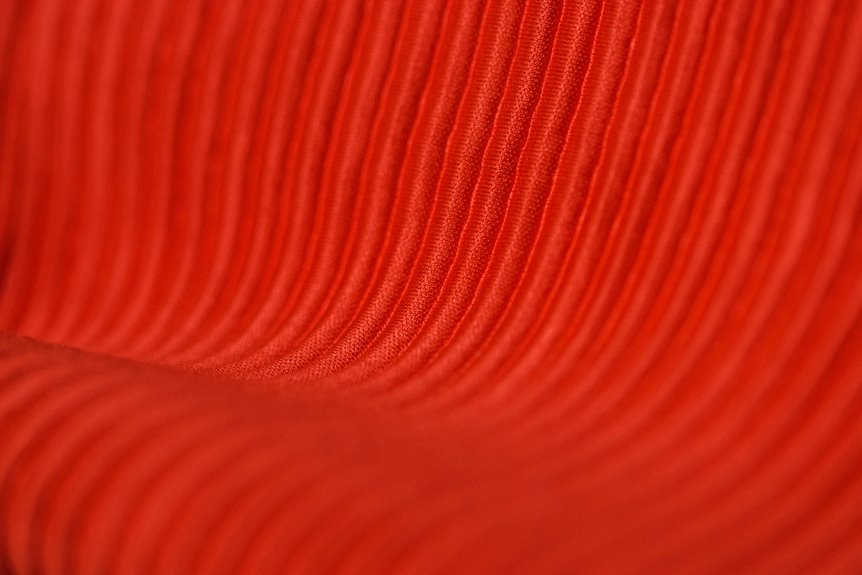
To revive your corduroy’s softness, wash it inside out on a gentle cycle using cold water to prevent stiffness. Add a bit of liquid fabric softener or natural options like vinegar during rinsing to make fibers plush again. Avoid high heat—air dry flat or tumble dry low with tennis balls to fluff the fabric. Gently reshape it while damp to keep those cozy ridges intact. Keep following these simple steps, and you’ll uncover even more easy ways to keep your corduroy soft and comfortable.
Key Takeaways
- Wash corduroy inside out on a gentle cycle with cold water to prevent stiffness and preserve softness.
- Add half a cup of white vinegar during the rinse cycle to naturally soften the fabric fibers.
- Use liquid fabric softener or dryer sheets sparingly to enhance softness and reduce static cling.
- Air dry flat or tumble dry low with tennis balls to maintain texture without damaging the fabric.
- Avoid harsh detergents and over-washing to keep the corduroy’s plush feel intact over time.
Understanding Corduroy Fabric and Its Texture
Although you might think corduroy is just another fabric, its unique texture sets it apart. You’ll notice its distinct parallel ridges, called wales, which give corduroy a plush, ribbed feel unlike smooth materials.
These wales vary in width, from fine to wide, affecting how soft or stiff the fabric feels. Corduroy’s texture comes from extra yarns woven into the base fabric, then cut to create those raised ridges. This construction makes it durable yet cozy.
When you touch corduroy, you’re feeling both the smooth base and the soft ribs, which can trap warmth and add character to your clothing. Understanding this texture helps you appreciate why corduroy requires special care to maintain its softness and appearance over time.
Washing Tips to Soften Corduroy
Since corduroy’s unique texture can become stiff after washing, you’ll want to use gentle methods to keep it soft. Proper washing helps maintain the fabric’s plush feel and prevents damage to the ribs.
Here are three key tips:
- Use cold water and a gentle cycle: Hot water can shrink and stiffen corduroy, so stick to cold water and a delicate wash cycle to protect the fibers.
- Turn the garment inside out: This reduces friction on the outer ribs, preserving the pile and preventing wear.
- Avoid overloading the washer: Give your corduroy space to move freely; overcrowding increases friction and stiffness.
Following these steps guarantees your corduroy stays soft and comfortable after every wash.
Using Fabric Softeners and Conditioners
Fabric softeners and conditioners play an essential role in keeping your corduroy feeling smooth and flexible. When used correctly, they reduce stiffness and prevent fibers from breaking down. You should add liquid fabric softener during the rinse cycle or use dryer sheets for an extra boost of softness. Be careful not to overuse them, as excessive amounts can leave residue or dull the fabric’s texture.
Here’s a quick guide on how fabric softeners and conditioners impact corduroy:
| Benefit | Effect on Corduroy |
|---|---|
| Softness enhancement | Makes fibers pliable |
| Static reduction | Prevents cling and discomfort |
| Fiber protection | Prolongs fabric life |
Use these products wisely to maintain your corduroy’s comfort and appearance.
Home Remedies to Restore Corduroy Softness
You can bring back your corduroy’s softness by using gentle washing techniques that protect its texture.
Try natural fabric softeners like vinegar or baking soda to keep it feeling plush without harsh chemicals.
Also, drying your corduroy properly helps maintain its softness and prevents stiffness.
Gentle Washing Techniques
Although corduroy feels sturdy, it requires gentle care to keep its softness intact. When washing corduroy, avoid harsh methods that can damage its texture.
Follow these gentle washing techniques to protect and revive your fabric:
- Use cold water and a mild detergent to prevent shrinkage and preserve fibers.
- Turn your corduroy garment inside out to reduce friction and protect the pile.
- Opt for a delicate or gentle cycle on your washing machine, or hand wash when possible.
After washing, avoid wringing the fabric; instead, gently squeeze out excess water.
These steps help maintain the fabric’s softness and extend its life, ensuring your corduroy stays comfortable and vibrant for longer.
Natural Fabric Softeners
Since corduroy can lose its softness over time, using natural fabric softeners offers a gentle way to restore its plush feel without harsh chemicals.
One effective method is adding half a cup of white vinegar to the rinse cycle; it helps break down residue and softens fibers naturally. You can also mix one cup of baking soda with your regular detergent to boost softness during washing.
For extra care, try soaking corduroy in a solution of cold water and a tablespoon of hair conditioner for 15 minutes, then rinse thoroughly. These simple home remedies help maintain corduroy’s texture, keeping it cozy and comfortable without damaging the fabric.
Avoid fabric softeners with synthetic fragrances or additives that might harm the delicate pile.
Proper Drying Methods
When drying your corduroy, choosing the right method can make all the difference in preserving its softness. Avoid high heat, which can stiffen the fabric and damage the pile.
Instead, follow these tips to keep your corduroy feeling plush:
- Air Dry Flat: Lay your garment on a clean, flat surface to dry naturally. This prevents stretching and maintains the fabric’s texture.
- Tumble Dry Low: If you use a dryer, select the low heat setting and toss in a few clean tennis balls to help fluff the fabric.
- Avoid Direct Sunlight: Drying in direct sun can fade colors and dry out fibers, so choose a shaded, well-ventilated area.
Proper Drying Techniques for Corduroy
To keep your corduroy fabric looking its best, you’ll want to dry it carefully to prevent damage and maintain its texture.
After washing, gently squeeze out excess water without wringing, which can distort the fabric. Lay your corduroy flat on a clean towel, then roll it up to absorb moisture. Avoid direct sunlight, which can fade colors and weaken fibers.
If you must use a dryer, choose the lowest heat setting and remove the garment while it’s still slightly damp to prevent stiffness. Shake it out and reshape it before air drying completely on a flat surface or hanging it inside out.
These drying techniques help maintain softness, prevent shrinkage, and keep those distinctive ridges looking fresh.
Maintaining Softness Through Regular Care
To keep your corduroy soft, wash it gently using cold water and mild detergent.
Avoid harsh scrubbing or twisting, which can damage the fabric’s texture.
When storing, hang your corduroy or fold it carefully to prevent crushing the fibers.
Gentle Washing Techniques
Although corduroy is a durable fabric, you need to handle it with care during washing to keep it soft and vibrant. Harsh washing can crush the pile and diminish its texture.
Follow these gentle washing techniques to maintain softness:
- Use cold water: Cold water prevents shrinking and helps preserve color and texture.
- Choose a gentle cycle: Select a delicate or gentle cycle to reduce agitation, which protects the fabric’s pile.
- Mild detergent only: Use a detergent free of bleach and harsh chemicals to avoid fiber damage.
Avoid overloading the machine, and turn your corduroy garments inside out to further protect the ridges.
Proper Storage Tips
When you store your corduroy properly, you help preserve its softness and prevent damage to the fabric’s distinctive pile.
Always hang corduroy garments on wide, padded hangers to maintain their shape and avoid creases that can crush the pile. If you fold corduroy, do so gently along natural seams to minimize deep wrinkles.
Store your corduroy in a cool, dry place away from direct sunlight, which can fade colors and weaken fibers. Avoid overcrowding your closet to allow air circulation and prevent crushing the fabric.
For long-term storage, consider breathable garment bags instead of plastic, which traps moisture and can lead to mildew. Regularly airing out stored corduroy also keeps it fresh and soft, ensuring your fabric stays in great condition.
Frequently Asked Questions
Can Corduroy Be Safely Dyed to Refresh Its Appearance?
You can safely dye corduroy to refresh its look, but you’ll want to use fabric dye suitable for cotton or blends. Test a small area first to avoid damage and follow the dye instructions carefully.
Is It Possible to Remove Stains From Corduroy Without Damaging Texture?
You can remove stains from corduroy without harming its texture by gently spot-cleaning with mild detergent and cold water. Avoid harsh scrubbing or bleach, and always test a small area first to protect the fabric’s softness.
How Does Corduroy Fabric Respond to Ironing or Steaming?
Ironing corduroy is like gently brushing a cat—you’ve got to be careful. You can use steam or a low heat iron to smooth wrinkles, but avoid pressing too hard to keep its soft texture intact.
Are There Specific Storage Tips to Prevent Corduroy From Stiffening?
You should store corduroy in a cool, dry place, hanging it to avoid creases. Avoid plastic bags, which trap moisture and cause stiffness. Instead, use breathable garment bags to keep your corduroy soft and fresh.
Can Pets Damage Corduroy Fabric, and How to Repair It?
Think of your corduroy as a fortress—pets can be playful invaders, causing snags or tears. You can gently mend small damage with fabric glue or patches, restoring its strength and charm for many cozy battles ahead.