
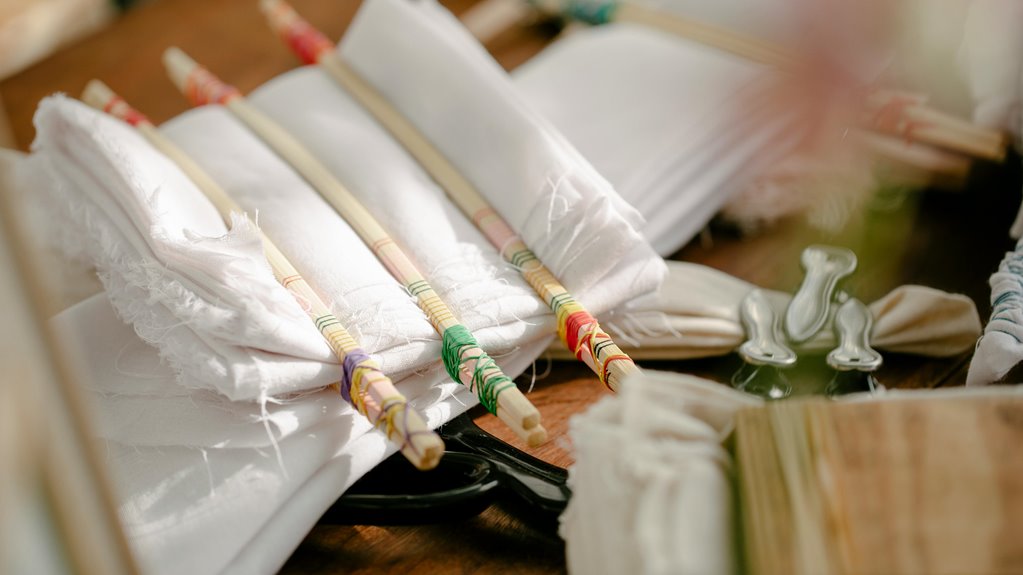
If you want to move beyond tie-dye, try batik and shibori, two classic resist dyeing methods with rich cultural roots. Batik uses hot wax applied to fabric to create detailed patterns, while shibori involves folding, twisting, or binding for unique textures. Each technique uses specific tools and processes to control dye placement creatively. These methods offer endless ways to craft stunning designs, and exploring them opens up exciting possibilities for your fabric art projects.
Key Takeaways
- Batik uses wax as a resist applied with a tjanting tool to create intricate, culturally significant patterns on fabric.
- Shibori employs folding, binding, stitching, or clamping techniques to create textured, resist-dye patterns with unique visual effects.
- Batik involves multiple dyeing and waxing steps, with wax removal by boiling or ironing to reveal detailed designs.
- Shibori variations like Arashi, Kumo, Nui, and Itajime offer diverse geometric and organic resist patterns through fabric manipulation.
- Both techniques inspire contemporary innovations incorporating eco-friendly dyes, digital printing, and mixed materials in fashion and décor.
Historical Origins of Batik and Shibori
Although tie-dye often steals the spotlight, batik and shibori have rich histories that deserve your attention.
When you explore batik, you’ll find it originates from Indonesia, where artisans have used wax-resist dyeing for centuries to create intricate patterns on cloth. The technique reflects cultural stories and traditions passed down through generations.
Shibori, on the other hand, comes from Japan and dates back to the 8th century. You’ll notice it involves folding, twisting, or binding fabric before dyeing to achieve unique textures and designs.
Both crafts reveal how people long ago mastered controlling dye to produce detailed, symbolic textiles. Understanding these origins helps you appreciate the techniques’ cultural depth beyond just their visual appeal.
Materials and Tools Used in Batik and Shibori
Crafting batik and shibori requires specific materials and tools that shape their distinct patterns. For batik, you’ll mainly need wax, a tjanting tool or brush, and fabric like cotton or silk. Shibori calls for binding materials such as thread, clamps, and poles to manipulate the cloth before dyeing. Each tool impacts the final design, letting you create intricate or bold effects.
| Technique | Essential Materials |
|---|---|
| Batik | Wax, tjanting tool, fabric |
| Shibori | Thread, clamps, poles, fabric |
With these supplies, you’re ready to explore the rich textures and styles unique to each method, setting the stage for your creative journey.
Step-by-Step Process of Creating Batik Designs
Once you gather your materials, you’ll start by sketching your design onto the fabric. Use a pencil or washable marker to outline the pattern clearly.
Next, heat your wax until it’s liquid and use a tjanting tool or brush to apply it precisely along your sketch lines. The wax acts as a resist, preventing dye from coloring those areas.
After the wax dries, submerge your fabric in the dye bath, letting it soak until you achieve the desired color. Once dyed, carefully remove the fabric and let it dry.
Then, boil or iron the fabric between absorbent papers to melt and remove the wax. If you want multiple colors, repeat waxing and dyeing steps accordingly.
Finally, wash and dry your fabric to reveal your intricate batik design.
Techniques and Variations in Shibori Dyeing
When you explore Shibori dyeing, you’ll find a variety of folding, twisting, and binding methods that create unique patterns on fabric.
For instance, Arashi Shibori involves wrapping fabric around a pole and compressing it with thread, producing linear, rain-like designs.
Kumo Shibori uses intricate pleating and binding to form spider-like patterns.
Nui Shibori relies on stitching and pulling threads tight before dyeing, allowing precise control over the design.
You can also try Itajime Shibori, where folding fabric and clamping it between shapes resists dye in geometric forms.
Each technique manipulates fabric differently, offering endless variations depending on your folding, binding tension, and dye immersion time.
Contemporary Applications and Artistic Innovations
Building on traditional Shibori methods, contemporary artists and designers are pushing resist dyeing into new creative territories.
You’ll find them experimenting with unconventional materials and combining techniques like batik and Shibori to create unique textures and patterns. By integrating digital printing with hand-dyeing, they produce intricate designs that maintain the charm of handcrafted work while embracing modern aesthetics.
Artists blend batik, Shibori, and digital printing to craft intricate, textured designs bridging tradition and modern style.
You can see these innovations not only in fashion but also in home décor, where textiles become statement pieces. Additionally, artists are using eco-friendly dyes and sustainable fabrics, aligning artistry with environmental responsibility.
When you try these contemporary applications, you’ll discover how resist dyeing evolves, offering endless possibilities for personal expression and creative exploration beyond the traditional forms you might know.
Frequently Asked Questions
How Do Batik and Shibori Compare to Tie-Dye in Environmental Impact?
You’ll find batik uses wax, which can be eco-friendly if managed well, while shibori often involves less water than tie-dye. Overall, both can have lower environmental impacts, especially with natural dyes and sustainable practices.
Can Batik and Shibori Techniques Be Combined in One Fabric?
You might think combining batik and shibori is tricky, but it’s totally doable. You’ll apply wax first, then fold or bind the fabric for shibori patterns, creating unique, layered designs that truly stand out.
What Are Common Mistakes Beginners Make With Batik and Shibori?
You often rush drying or apply wax unevenly in batik, causing smudges. With shibori, you might tie too loosely or dye too long, resulting in blurry patterns. Patience and practice will improve your results.
How Do Washing and Care Differ for Batik Versus Shibori Fabrics?
You’ll want to hand wash batik fabrics gently in cold water to protect the wax design, while shibori pieces can usually handle a bit more agitation but still require delicate care to maintain their patterns and colors.
Are There Any Cultural Taboos Associated With Batik and Shibori Patterns?
You don’t want to accidentally wear sacred batik patterns to a casual brunch, right? Both batik and shibori carry cultural significance—respect their origins or risk offending locals who take these designs seriously, not just fashion statements.