
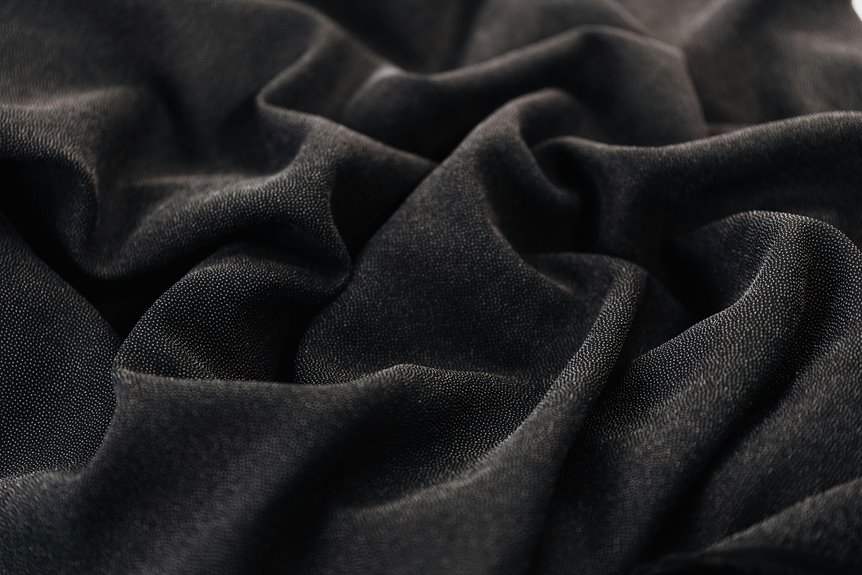
To safely remove wrinkles from velvet, start by using a steamer held about 6 inches away to gently relax the fibers without soaking or pressing. If you prefer ironing, turn the fabric inside out, use low heat, and place a pressing cloth between the iron and velvet to protect the pile. Hanging velvet on a padded hanger in a ventilated area also helps gravity smooth creases away. Follow these methods carefully, and you’ll keep your velvet looking flawless—there’s even more effective care tips to enhance your velvet’s texture.
Key Takeaways
- Use a steamer held 6 inches away to gently relax velvet fibers without soaking or crushing the pile.
- Iron velvet on the fabric’s reverse side with low heat and a pressing cloth to avoid direct contact and damage.
- Hang velvet on padded hangers in a well-ventilated area to naturally reduce wrinkles with gravity over several hours.
- Lightly mist stubborn creases with water before steaming or hanging, avoiding soaking the fabric.
- Always test wrinkle removal methods on a hidden area and follow the care label’s instructions to prevent damage.
Understanding Velvet Fabric and Its Sensitivity
Velvet’s delicate texture makes it both luxurious and challenging to care for. When you handle velvet, you’ll notice its unique pile—tiny fibers standing upright, creating a soft, plush surface. This pile is sensitive to pressure and moisture, so you need to be gentle.
Applying too much heat or water can crush the fibers or cause spotting. Velvet is often made from silk, cotton, or synthetic blends, each reacting differently to treatment. You should avoid rough handling to prevent matting or distortion of the fabric’s sheen.
Understanding these sensitivities helps you choose safe methods for wrinkle removal without damaging the fabric’s appearance or texture. Knowing velvet’s nature guarantees you keep its rich look intact while caring for it properly.
Preparing Velvet for Wrinkle Removal
Before you start removing wrinkles from your velvet, check the fabric care label to know the best cleaning method.
Pick a technique that suits your velvet type to avoid damage.
Always test your chosen method on a hidden spot to make sure it won’t harm the fabric.
Inspect Fabric Care Label
When you’re ready to remove wrinkles from velvet, start by carefully inspecting the fabric care label. This label provides essential information about the fabric’s fiber content and recommended cleaning methods.
Velvet can be made from natural fibers like cotton or silk, or synthetics like polyester, and each requires different care. Check for symbols indicating whether the fabric can be ironed, steamed, or must be dry cleaned only.
If the label advises against water or heat, avoid using steam or ironing directly, as this can damage the pile or cause shrinkage. Understanding these instructions helps you choose the safest way to treat your velvet without ruining it.
Always follow the manufacturer’s guidelines—they’re designed to keep your velvet looking its best.
Choose Appropriate Cleaning Method
After checking the fabric care label, you’ll have a clearer idea of which cleaning methods suit your velvet.
If the label says “dry clean only,” avoid water or steam treatments that could damage the fabric.
For washable velvet, you can use gentle hand washing with cold water and mild detergent. Avoid scrubbing, which can crush the pile.
If machine washing is allowed, use a delicate cycle and place the item in a mesh laundry bag.
When dealing with stubborn wrinkles, steaming is often safe, but only if your velvet isn’t labeled as dry clean only.
Choosing the right cleaning method helps prevent damage and prepares the fabric for wrinkle removal.
Stick to the recommended approach to keep your velvet looking its best.
Test on Hidden Area
A crucial step in preparing velvet for wrinkle removal is testing your chosen method on a hidden area. This helps you avoid damaging the fabric or altering its texture.
Before treating the visible parts, find a discreet spot like the inside seam or hem. Then, follow these steps:
- Apply your wrinkle removal method gently.
- Observe the velvet’s reaction for 5-10 minutes.
- Check for color fading or fabric distortion.
- Feel the texture to verify softness remains.
- If any damage appears, try a different method or reduce intensity.
Testing first gives you confidence and protects your velvet’s luxurious look.
Don’t skip this step—it’s fundamental for safe and effective wrinkle removal.
Using a Steamer to Smooth Velvet
Using a steamer offers a gentle and effective way to remove wrinkles from velvet without damaging its delicate texture.
Hold the steamer about 6 inches away from the fabric to avoid soaking or overheating. Move it slowly and evenly across the wrinkled areas, allowing the steam to relax the fibers and smooth out creases.
Keep the steamer 6 inches away and glide smoothly to gently release wrinkles from velvet.
Make sure to keep the velvet hanging or laid flat while steaming to prevent new wrinkles from forming. Avoid pressing the steamer directly onto the fabric, as this can crush the pile.
After steaming, let the velvet air dry completely before wearing or storing it. This method refreshes velvet’s appearance without risking burns or shiny marks, making it ideal for delicate velvet garments and upholstery.
Gentle Ironing Techniques for Velvet
When ironing velvet, you’ll want to set your iron to a low heat to avoid damaging the fabric.
Always iron on the back side and place a pressing cloth between the iron and velvet to protect the pile.
These gentle techniques help keep your velvet smooth without crushing its texture.
Use Low Heat Settings
Setting your iron to the lowest heat level is essential for protecting velvet’s delicate fibers. High heat can crush velvet’s pile or cause shiny marks, so always err on the side of caution.
To safely remove wrinkles with low heat, follow these tips:
- Use the “silk” or “synthetic” setting if your iron has one
- Allow the iron to fully heat before use, avoiding sudden temperature changes
- Test on a hidden area first to check for damage
- Keep the iron moving gently to prevent scorching
- Avoid pressing down hard; let the iron glide smoothly over a protective cloth
Iron On Fabric Back
A key technique to protect velvet while ironing is to always iron on the fabric’s back side. This prevents direct heat from crushing the pile, which can ruin velvet’s soft texture.
Turn your garment inside out or carefully flip the fabric so the smooth backing faces up. Set your iron to a low heat, and avoid using steam directly on the velvet’s front.
Gently press the iron onto the backing without dragging it, lifting and lowering instead to smooth out wrinkles. This method safeguards the fabric’s appearance while effectively removing creases.
Employ Pressing Cloth
Although ironing velvet requires care, you can protect the fabric further by using a pressing cloth. This thin layer prevents direct heat contact and helps avoid crushing the pile.
When you use a pressing cloth, follow these tips:
- Choose a clean, smooth cotton or muslin cloth
- Place the velvet face down on a soft towel before covering
- Set your iron to a low heat or silk setting without steam
- Gently press the iron onto the cloth, avoiding dragging motions
- Lift and move the iron frequently to prevent scorching
Employing the Hanging Method to Reduce Creases
When you hang velvet fabric properly, gravity helps smooth out wrinkles without risking damage from heat or pressure.
To do this, find a sturdy hanger that won’t leave marks or indentations on the velvet. Gently drape the fabric over the hanger, avoiding sharp folds or creases.
Choose a sturdy hanger and gently drape velvet without sharp folds to prevent marks or creases.
Hang it in a well-ventilated area away from direct sunlight to prevent fading. Leave the velvet hanging for several hours or overnight to allow gravity to relax the fibers naturally.
If you notice stubborn creases, you can lightly mist the fabric with water using a spray bottle, but don’t soak it. This method is gentle and effective, making it ideal for delicate velvet pieces that can’t tolerate heat or heavy handling.
Spot Treatment for Persistent Wrinkles
If some wrinkles refuse to fade after hanging, you can target them with spot treatment techniques. These methods focus on the problem area without risking damage to the entire velvet piece. Here’s what you can do:
- Lightly mist the wrinkled area with water using a spray bottle.
- Place a clean cotton cloth over the spot.
- Use a handheld steamer or iron on the lowest setting, never touching the fabric directly.
- Gently press and lift, avoiding rubbing or dragging motions.
- Allow the velvet to air dry naturally.
This approach allows you to carefully relax stubborn creases while preserving the fabric’s texture.
Always test on a hidden patch first to guarantee no discoloration or damage occurs. With patience, spot treatment restores velvet’s smooth, luxurious look.
Tips for Storing Velvet to Prevent Wrinkles
Properly storing your velvet garments or items can greatly reduce the chances of wrinkles forming.
Always hang velvet on padded hangers to maintain the fabric’s shape and avoid creases. If hanging isn’t possible, fold velvet gently with tissue paper between folds to prevent pressure marks.
Store velvet in a cool, dry place away from direct sunlight, which can damage fibers and cause discoloration. Avoid overcrowding in closets or drawers, as tight spaces encourage wrinkles.
For longer storage, consider garment bags made from breathable materials to protect velvet from dust and moisture.
These simple steps guarantee your velvet stays smooth and ready to wear, minimizing the need for frequent wrinkle treatments. Taking care during storage is key to preserving velvet’s luxurious texture and appearance.
When to Seek Professional Cleaning Services
Although you can handle minor wrinkle removal at home, certain situations call for professional cleaning services to preserve velvet’s delicate texture.
You should consider seeking experts when:
- The fabric has extensive, deep creases that won’t release with gentle steaming
- Stains or discoloration accompany the wrinkles
- The velvet contains intricate embroidery or embellishments
- You’re unsure about the fabric’s fiber content or care requirements
- Home methods risk damaging the pile or altering color
Professionals have specialized equipment and knowledge to restore velvet without harming its softness or sheen.
Experts use specialized tools to refresh velvet while preserving its soft texture and natural shine.
If you notice any signs of damage or feel uncertain, it’s safer to trust a cleaner experienced with delicate fabrics. This approach guarantees your velvet remains beautiful and wrinkle-free over time.
Frequently Asked Questions
Can Velvet Be Washed at Home Without Damaging Its Texture?
Back in Shakespeare’s time, velvet was treasured, just like today. You can wash velvet at home gently, but you’ll want to use cold water, mild detergent, and avoid wringing to keep its texture intact and plush.
What Types of Velvet Fabric Are Most Wrinkle-Resistant?
You’ll find that velvet blends like polyester or nylon velvet are more wrinkle-resistant than pure silk or cotton velvet. These synthetic fibers hold shape better, so your velvet items stay smoother with less effort.
How Long Does It Take for Wrinkles to Naturally Disappear From Velvet?
Oh sure, just wait forever—velvet wrinkles love to hang around like uninvited guests. In reality, they can take days to fade naturally, so don’t hold your breath; you’ll want to speed things up instead.
Are There Any Safe DIY Wrinkle Removal Products for Velvet?
You can safely use a handheld steamer or a vinegar-water spray to remove velvet wrinkles. Just don’t apply too much heat or soak the fabric, and always test on a small area first to avoid damage.
Can Velvet Be Safely Dried in a Tumble Dryer?
You shouldn’t dry velvet in a tumble dryer because heat and agitation can damage its texture. Instead, air dry it flat or hang it carefully to maintain its softness and prevent creases or shrinkage.