
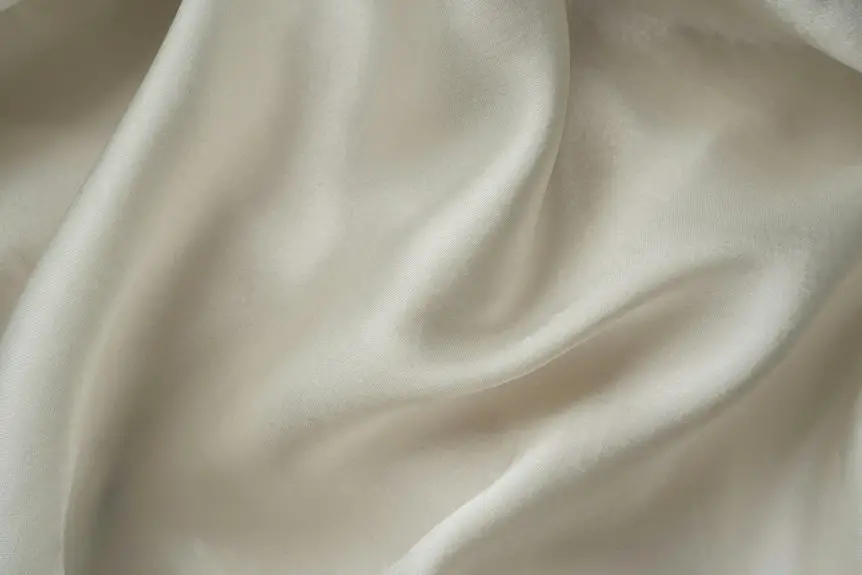
If you’re choosing between ramie and other cellulosic fibers like cotton and linen, ramie offers superior strength, durability, and moisture absorption, making it ideal for hot, humid conditions. It’s smoother and more resilient than cotton and breathes better than linen, though it comes at a higher cost and limited availability. Ramie’s eco-friendly cultivation also sets it apart. Keep exploring to discover how ramie’s unique qualities impact your fabric choices and care needs.
Key Takeaways
- Ramie fibers are long, silky, and stronger than cotton, offering exceptional durability and abrasion resistance compared to other cellulosic fibers.
- Unlike cotton and flax, ramie is a perennial plant allowing multiple harvests annually, thriving in warm, humid climates with less irrigation needs.
- Ramie absorbs moisture quickly and breathes well, providing superior comfort in hot, sticky environments compared to cotton and linen.
- Environmentally, ramie requires fewer pesticides and chemicals, making it more eco-friendly and biodegradable than cotton, with lower soil and water impact.
- Ramie fabric is more expensive and less widely available due to specialized processing, but its unique strength and sustainability justify the premium cost.
Origin and Cultivation of Ramie and Other Fibers
Although ramie is less known than cotton or flax, it’s one of the oldest fiber crops cultivated by humans. You’ll find ramie primarily grown in East Asia, especially China, where it thrives in warm, humid climates.
Ramie, an ancient fiber crop, thrives mainly in warm, humid East Asian climates like China.
Unlike cotton, which you can cultivate in diverse regions worldwide, ramie requires more specific conditions with plenty of rainfall. Flax, on the other hand, prefers cooler climates and is mostly grown in Europe and Canada.
When you grow ramie, you’ll harvest its stalks multiple times a year, since it’s a perennial plant. Cotton and flax, however, are annuals, harvested once per season.
Understanding these differences helps you appreciate how each fiber’s origin and cultivation affect availability, cost, and environmental impact. This knowledge sets the stage for comparing their fabric qualities later on.
Fiber Structure and Physical Characteristics
When you examine ramie, cotton, and flax fibers closely, you’ll notice distinct differences in their structure that influence their texture and strength.
Ramie fibers are long, silky, and have a smooth surface with a natural sheen, giving the fabric a lustrous appearance. Cotton fibers are shorter and twisted, which contributes to their softness and flexibility. Flax fibers, used to make linen, are longer and straighter than cotton but coarser than ramie, lending a crisp texture.
Ramie’s fibers have a higher cellulose content and less wax, making them more absorbent. Each fiber’s cross-sectional shape also varies: ramie is polygonal, cotton is kidney-shaped, and flax is more elliptical.
Understanding these physical traits helps you appreciate why each fabric feels and behaves differently in textiles.
Strength and Durability Comparison
Because of its unique fiber structure, ramie offers exceptional strength and durability compared to other cellulosic fibers like cotton and flax. When you choose ramie, you get a fabric that resists wear and tear better, making it ideal for long-lasting textiles. Cotton feels soft but wears out faster under stress, while flax is strong but less flexible, which can lead to brittleness.
| Fiber | Tensile Strength (MPa) | Durability Rating | Abrasion Resistance | Flexibility |
|---|---|---|---|---|
| Ramie | 500 – 600 | High | Excellent | Good |
| Cotton | 287 – 597 | Moderate | Moderate | High |
| Flax | 500 – 900 | High | Good | Moderate |
| Hemp | 550 – 900 | Very High | Very Good | Moderate |
| Jute | 300 – 400 | Moderate | Fair | Low |
You’ll find ramie’s balance of strength and flexibility suits many durable fabric needs.
Moisture Absorption and Breathability
If you want fabrics that keep you comfortable in warm or humid conditions, moisture absorption and breathability are key factors to evaluate.
Ramie fabric excels in moisture absorption, pulling sweat away from your skin quickly to help you stay dry. Its natural fibers allow air to flow freely, enhancing breathability and reducing overheating.
Ramie fabric quickly wicks moisture and breathes naturally to keep you dry and cool.
Compared to cotton, ramie absorbs moisture faster but dries at a similar rate, so you won’t feel clammy.
Linen also breathes well and absorbs moisture but can feel rougher against your skin.
Rayon, while absorbent, tends to trap heat more, making it less breathable.
When choosing between these cellulosic fibers, ramie offers a unique balance that keeps you cool and comfortable, especially in hot, sticky environments.
Environmental Impact and Sustainability
Beyond comfort and performance, you’ll want to contemplate how these fabrics impact the environment. Ramie stands out for its minimal pesticide use and natural resistance to pests, making it more eco-friendly than cotton, which often requires heavy chemical treatments.
When comparing ramie to other cellulosic fibers, consider these factors:
- Water Usage: Ramie demands less irrigation than cotton, reducing water stress.
- Chemical Inputs: It needs fewer fertilizers and pesticides, lowering soil and water contamination.
- Biodegradability: Like other natural fibers, ramie decomposes quickly, minimizing landfill impact.
Textile Applications and Uses
Ramie fabric finds its place in a variety of textile applications, offering durability and a silky sheen that appeals to designers and consumers alike.
When you choose ramie, you’re selecting a fiber that works well in clothing, especially summer wear, due to its breathability and moisture-wicking properties. You’ll also find ramie blended with cotton or wool to enhance strength and texture in apparel.
Beyond fashion, ramie is popular in home textiles like upholstery, curtains, and table linens, thanks to its resistance to wrinkling and ability to hold shape. Additionally, its natural luster makes it attractive for decorative fabrics.
Compared to other cellulosic fibers like cotton or flax, ramie stands out for combining strength with a smooth, lustrous finish, giving you versatile options across multiple textile uses.
Care and Maintenance of Ramie Versus Other Fibers
You’ll want to follow specific washing guidelines to keep ramie looking its best compared to other cellulosic fibers.
Knowing the right drying techniques can prevent damage and maintain fabric strength.
Plus, mastering stain removal tips will help you extend the life of your ramie garments.
Washing Guidelines
Although care instructions vary among cellulosic fibers, you should handle ramie with particular attention to washing methods.
Ramie is delicate compared to cotton or linen, so following proper guidelines helps maintain its strength and appearance. When washing ramie, keep these tips in mind:
- Use cold or lukewarm water to prevent shrinkage and preserve the fiber’s integrity.
- Choose a mild detergent free of bleach or optical brighteners to avoid damaging the fabric.
- Hand wash or select a gentle machine cycle to reduce agitation, which can cause fiber breakage or fuzziness.
Drying Techniques
When drying delicate fibers like ramie, you should avoid high heat that can weaken the fabric and cause shrinkage. Instead, opt for air drying by laying your ramie garments flat on a clean towel or hanging them in a shaded, well-ventilated area.
Unlike cotton or linen, which tolerate machine drying better, ramie is more sensitive, so skip the dryer or use a low-heat setting if necessary. For other cellulosic fibers, like viscose, air drying is also best to maintain shape and texture.
Stain Removal Tips
Proper drying preserves ramie’s strength and appearance, but accidents happen, and stains can still occur. When dealing with stains on ramie, you should act quickly to prevent permanent damage. Here’s how to handle it:
- Blot, don’t rub: Use a clean cloth to blot the stain gently, avoiding fiber damage.
- Use mild detergents: Opt for gentle, pH-neutral cleaners to protect the delicate fibers.
- Test before treating: Always test stain removers on a hidden area to avoid discoloration.
Compared to cotton or linen, ramie is less absorbent, so stains might sit on the surface longer.
Prompt, careful treatment keeps your ramie looking fresh and extends its life, maintaining its natural luster better than other cellulosic fabrics.
Cost and Availability of Ramie and Alternative Fibers
Because ramie requires specialized processing, it often costs more than other cellulosic fibers like cotton or linen. You might find ramie less available in mainstream markets due to limited cultivation and processing facilities. On the other hand, cotton and linen are widely grown and processed, making them more affordable and easier to source. When comparing costs and availability, consider this quick overview:
| Fiber | Cost & Availability |
|---|---|
| Ramie | Higher cost, limited supply |
| Cotton | Moderate cost, widely available |
| Linen | Moderate to high cost, seasonal availability |
If you want eco-friendly and durable fabric but on a budget, cotton or linen may suit you better. However, if you value ramie’s unique qualities, be prepared for a higher price and less accessibility.
Frequently Asked Questions
How Does Ramie Fabric Feel Against the Skin Compared to Cotton?
You’ll find ramie feels slightly rougher and stiffer against your skin than cotton, which is softer and more breathable. However, ramie softens with washing, offering a crisp, cool touch that’s great for warm weather.
Can Ramie Fiber Be Blended With Synthetic Materials?
You might be surprised, but yes, you can blend ramie fiber with synthetics. This combo boosts durability and wrinkle resistance while keeping ramie’s natural breathability. You’ll get a fabric that’s both strong and comfortable.
Does Ramie Fabric Resist Wrinkles Better Than Linen?
You’ll find ramie fabric resists wrinkles better than linen because it’s stronger and holds shape well. While both wrinkle, ramie’s natural stiffness helps keep garments looking smoother throughout the day without constant ironing.
Are There Any Allergies Associated With Ramie Fabric?
You might experience mild skin irritation or allergies with ramie fabric, especially if you’re sensitive to natural fibers. However, such reactions are rare. Always test a small patch if you’re prone to allergies before wearing it extensively.
How Does Ramie Fabric Perform in Extreme Weather Conditions?
You might think ramie fabric struggles in extreme weather, but it actually performs well. It’s breathable, moisture-wicking, and durable, so you’ll stay comfortable in heat and tolerate cold better than many expect.