
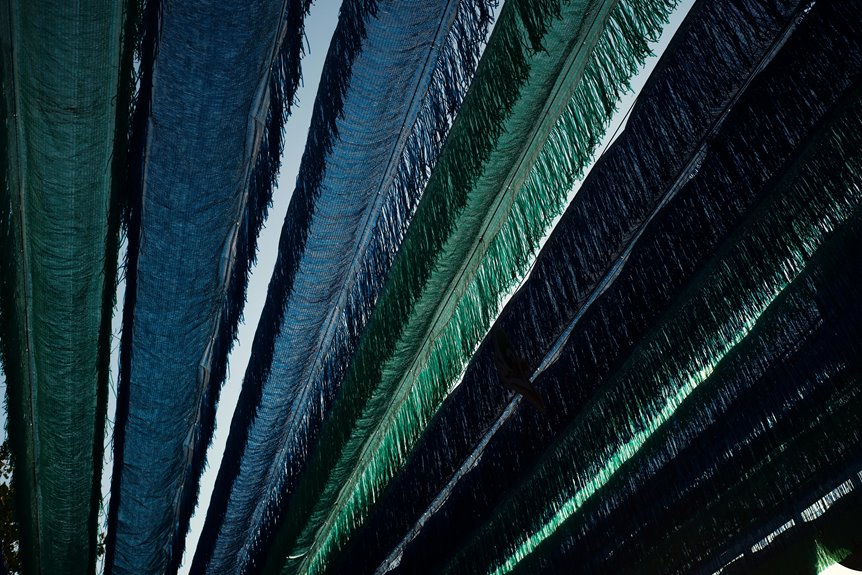
When printing on scrim fabric for banners or stage backdrops, choose the right type—mesh for lightness and airflow or tighter weave for vivid images. Prepare your artwork with bold colors and high resolution to counter scrim’s semi-transparency. Use durable techniques like dye sublimation or UV printing to guarantee vibrant, long-lasting results. Handle and install scrim carefully to avoid damage and extend its life. Keep exploring to discover tips on color management, installation, and maintenance.
Key Takeaways
- Choose scrim type based on transparency and durability needs, using mesh for light banners and tighter weaves for solid stage backdrops.
- Prepare artwork with high contrast, bold colors, larger fonts, and at least 150 DPI resolution for clear printing on semi-transparent fabric.
- Use dye sublimation or UV printing for vibrant, long-lasting, and detailed images compatible with scrim’s texture and outdoor exposure.
- Install scrim banners with grommets or pole pockets, ensuring gentle handling to prevent tears and secure mounting against wind.
- Maintain scrim fabric by cleaning gently with mild soap and air drying fully to avoid mildew and prolong banner lifespan.
Understanding Scrim Fabric and Its Benefits
Scrim fabric combines durability and flexibility, making it an excellent choice for various printing projects.
When you work with scrim, you get a lightweight, open-weave material that holds up well under tension and exposure to the elements. This means your printed banners or stage backdrops won’t easily tear or fade, even when used outdoors.
You’ll also appreciate scrim’s semi-transparency, which allows light to pass through, adding depth and visual interest to your designs. Plus, its breathable nature prevents wind from acting like a sail, reducing strain on mounting points.
Choosing the Right Type of Scrim for Your Project
How do you pick the best scrim fabric for your specific project? Start by considering where and how you’ll use it.
If your banner needs to be lightweight and allow light to pass through, choose a mesh scrim with larger holes. For stage backdrops where you want a solid image and less transparency, opt for a tighter weave scrim.
Also, think about durability—outdoor projects benefit from UV-resistant, weatherproof scrims. Don’t forget the printing method; some scrims handle digital printing better than others.
Consider UV resistance and printing compatibility for durable, high-quality outdoor scrim applications.
Finally, balance cost and quality based on your project’s priority. By matching scrim type to your needs—whether it’s breathability, opacity, or toughness—you’ll guarantee your final display looks professional and performs well in its environment.
Preparing Artwork for Scrim Fabric Printing
Before sending your design to print, you’ll need to adjust your artwork to suit scrim fabric’s unique texture and transparency.
Start by increasing the contrast so your images remain vivid despite the fabric’s semi-transparency. Use bolder colors and avoid fine details that might get lost or blur through the mesh.
Keep your resolution high—at least 150 DPI—to guarantee crisp edges and clear text. Design with larger fonts and thicker lines to improve legibility from a distance.
Also, consider the fabric’s openness; areas with less ink will let light pass through, so balance ink coverage accordingly.
Finally, convert your files to CMYK color mode and embed all fonts to avoid printing issues.
These steps will help your artwork look sharp and vibrant on scrim fabric.
Popular Printing Techniques for Scrim Fabric
When printing on scrim fabric, you’ll want to choose techniques that highlight its unique texture and durability.
Dye sublimation printing offers vibrant, long-lasting colors that penetrate the fabric, while UV printing provides excellent detail and fast drying times.
Understanding these methods will help you get the best results for your project.
Dye Sublimation Printing
Dye sublimation printing offers vibrant, long-lasting colors that make scrim fabric stand out in any application.
When you use this technique, you transfer dye onto the fabric through heat and pressure, allowing the ink to become part of the fibers. This process guarantees that your design won’t crack, peel, or fade easily, even after extended outdoor exposure.
Since dye sublimation works best on polyester scrim, you’ll get sharp, detailed images with smooth color gradients. Plus, the fabric remains lightweight and breathable, perfect for banners and stage backdrops where durability and appearance matter.
Keep in mind, though, dye sublimation is limited to light-colored or white fabrics, so plan your project accordingly to maximize its vibrant results.
UV Printing Benefits
While dye sublimation excels on polyester scrim with vibrant, lasting colors, UV printing offers a different set of advantages that might better suit your project needs.
With UV printing, you get immediate curing of inks, which means faster turnaround times for your banners or stage backdrops. This method also allows you to print on a wider variety of materials, including both coated and uncoated scrim fabrics, giving you more flexibility.
UV inks are highly durable and resistant to fading, scratches, and weather, making them ideal for outdoor use. Plus, the printing produces sharp, detailed images with excellent color accuracy.
If your project demands quick production and long-lasting visuals on diverse scrim types, UV printing could be the perfect choice for you.
Color Management and Durability Considerations
Because scrim fabric has a unique texture and weave, managing color accurately requires careful calibration of your printing equipment and inks.
You’ll want to adjust your color profiles specifically for scrim to guarantee vibrant, consistent hues that don’t wash out or bleed. Using ICC profiles tailored to your printer and scrim type helps maintain color fidelity.
Since scrim is often used outdoors or under stage lighting, you should select inks with strong UV resistance and weatherproof qualities to prevent fading and degradation.
Additionally, consider the fabric’s porosity; some inks may absorb differently, so test small samples first.
Installation Tips for Scrim Banners and Backdrops
Once you’ve assured your scrim fabric looks vibrant and durable through proper color management, the next step is a secure and effective installation. You’ll want to first assess the mounting location to confirm it supports the banner’s size and weight. Use grommets or pole pockets for easy hanging and tension adjustment. Always pull the fabric taut to avoid wrinkles and sagging, which can distort your print. Here’s a quick reference to guide your setup:
| Step | Tool Needed | Tip |
|---|---|---|
| 1. Assess site | Tape measure | Check for sturdy anchor points |
| 2. Prepare fabric | Grommet kit | Reinforce edges before hanging |
| 3. Hang | Hooks or ropes | Evenly distribute tension |
| 4. Adjust | Tension straps | Smooth out wrinkles |
| 5. Secure | Zip ties or clamps | Double-check all fastenings |
Maintenance and Care for Printed Scrim Fabric
To keep your printed scrim fabric looking sharp and lasting longer, you’ll need to follow a consistent maintenance routine.
Always handle the fabric gently to prevent tears or snags. When cleaning, use a soft brush or cloth to remove surface dust. If deeper cleaning is necessary, use mild soap and cold water—avoid harsh chemicals or bleach that can damage the print and fabric.
Let the scrim air dry completely before storing it to prevent mildew. Store your fabric rolled or flat in a cool, dry place away from direct sunlight to avoid fading.
Regularly inspect it for any signs of wear, and address minor issues promptly to maintain its quality and appearance for your banners or stage backdrops.
Common Challenges and How to Overcome Them
Although scrim fabric offers great versatility for printing, you’ll face some common challenges like ink bleeding, fabric distortion, and color fading.
To tackle these effectively, you need to understand the causes and adopt practical solutions.
- Use inks specifically formulated for scrim to prevent bleeding.
- Apply proper tension during printing to avoid fabric distortion.
- Select UV-resistant inks and coatings to reduce color fading.
- Perform test prints to adjust settings before full production.
- Store printed scrim away from direct sunlight and moisture.
Frequently Asked Questions
Can Scrim Fabric Be Recycled After Use?
You might find recycling scrim fabric challenging since it’s often made from mixed materials. However, if it’s pure polyester, you can recycle it. Check local facilities, and consider repurposing it to reduce waste.
Is Scrim Fabric Safe for Outdoor Use in Extreme Weather?
When storms roar and winds howl, you’ll find scrim fabric stands strong. It’s designed to brave extreme weather, resisting tears and fading, so you can trust it to keep your banners vibrant, no matter the elements.
How Long Does the Printing Process on Scrim Fabric Typically Take?
You can expect the printing process on scrim fabric to take anywhere from a few hours to a full day, depending on the design complexity and drying time. Most standard prints finish within one business day.
Are There Eco-Friendly Inks Available for Scrim Fabric Printing?
Yes, you can use eco-friendly inks for scrim fabric printing. These inks are often water-based or solvent-free, reducing environmental impact. You’ll find many printers offer sustainable options without sacrificing vibrant, durable colors on your banners.
Can Scrim Fabric Be Used for Indoor Privacy Screens?
You can definitely use scrim fabric for indoor privacy screens. It lets light through while providing some visual separation, so you’ll get privacy without making the space feel too closed off or dark.