
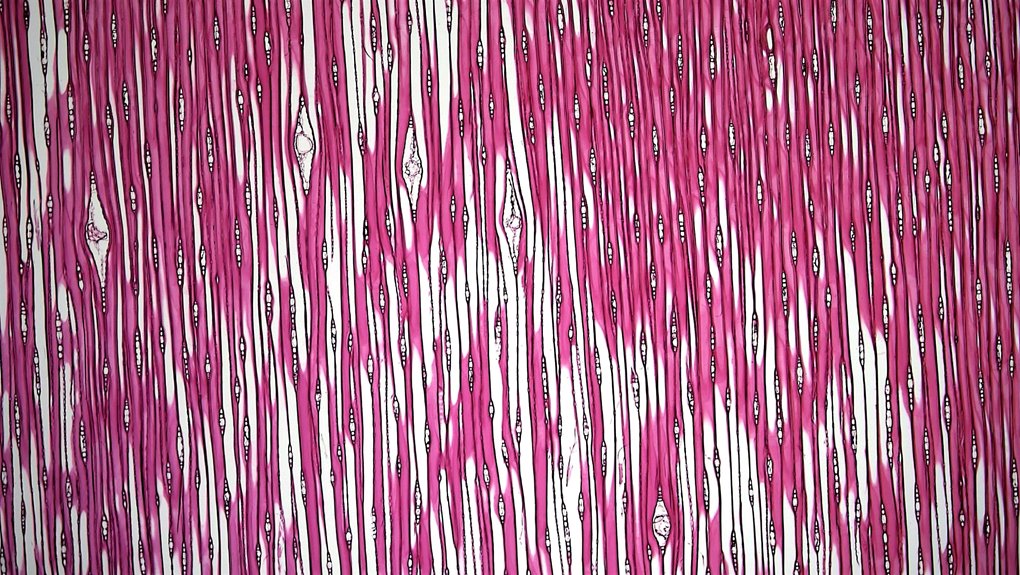
You’ll find abaca fiber comes from the Musa textilis plant, thriving in tropical climates with fast regeneration. It offers impressive tensile strength due to its long, flexible strands and cellulose-rich molecular structure. Abaca absorbs moderate moisture without weakening and resists saltwater and UV damage, making it durable in tough environments. Compared to cotton or jute, it’s stronger and more resilient. Keep exploring, and you’ll uncover even more about its unique properties and advantages.
Key Takeaways
- Abaca fiber is composed mainly of 60-70% cellulose, with hemicellulose and lignin providing rigidity and structural strength.
- It features long, flexible strands measuring 1 to 3 meters, offering high tensile strength and durability.
- The fiber exhibits moderate moisture absorption (12-15%), balancing flexibility and tensile strength without feeling damp.
- Abaca’s crystalline molecular structure enhances strength, while amorphous regions allow necessary flexibility.
- It resists saltwater damage and UV exposure better than many natural fibers, making it suitable for diverse environments.
Origin and Botanical Characteristics of Abaca Fiber
Abaca fiber comes from the Musa textilis plant, native to the Philippines. When you explore this plant, you’ll notice it belongs to the banana family, but it’s distinct for its long, strong fibers.
Abaca fiber, sourced from the Philippine-native Musa textilis, stands out for its long, durable strands within the banana family.
You’ll find it growing best in tropical climates with well-drained soil. The plant itself can reach heights of up to 12 feet, producing large leaves that yield the valuable fiber.
As you handle the abaca, you’ll see that its fibers come from the leaf stalks, which are carefully harvested to extract the strands.
Cultivating this plant involves sustainable practices since it regenerates quickly after harvesting. Understanding these botanical traits helps you appreciate why abaca fiber remains essential in various industries, especially where natural, renewable materials are preferred.
Physical Attributes and Mechanical Strength
The strength of this natural fiber stands out when you compare it to others in the same category. Abaca fiber boasts impressive tensile strength, making it highly durable and resistant to wear and tear.
You’ll notice its physical structure is coarse, with long, flexible strands that provide excellent reinforcement in composite materials. Its fiber length typically ranges from 1 to 3 meters, giving it superior mechanical properties.
Additionally, abaca has a relatively low density, which means you get strength without added weight. When you handle abaca, you’ll feel its stiffness combined with slight elasticity, enabling it to absorb shocks effectively.
These physical attributes make abaca ideal for ropes, textiles, and paper products that demand durability and strength.
Chemical Composition and Molecular Structure
Although you might focus on its physical traits, understanding the chemical composition reveals why abaca fiber performs so well. The fiber mainly consists of cellulose, which accounts for about 60-70% of its structure. This high cellulose content contributes to its strength and durability.
Hemicellulose and lignin make up the rest, with lignin providing rigidity and resistance to microbial attack. On a molecular level, the cellulose chains form tightly packed, crystalline regions interspersed with amorphous areas. These crystalline regions enhance tensile strength, while the amorphous zones allow some flexibility.
The presence of hydroxyl groups within cellulose also plays a role in intermolecular hydrogen bonding, further stabilizing the fiber structure. By grasping this chemical makeup and molecular arrangement, you can appreciate why abaca fiber excels in strength and resilience.
Moisture Absorption and Environmental Resistance
Because it interacts constantly with its environment, understanding how abaca fiber absorbs moisture and resists environmental factors is essential for its practical applications.
You’ll find that abaca fiber absorbs moisture due to its hydrophilic nature, which can affect its strength and flexibility. However, it also shows notable resistance to environmental degradation, making it durable in various conditions.
Here’s what you should know:
- Abaca fiber can absorb up to 12-15% moisture without feeling damp.
- Its moisture absorption helps maintain flexibility but may reduce tensile strength if overly saturated.
- The fiber resists damage from saltwater, making it ideal for marine uses.
- It withstands UV exposure better than many natural fibers, enhancing outdoor durability.
This balance makes abaca fiber versatile across different environments.
Comparative Analysis With Other Natural Fibers
When you compare abaca fiber with other natural fibers, you quickly notice its unique combination of strength, moisture absorption, and environmental resistance. Abaca outperforms cotton and jute in tensile strength and resists saltwater damage better than coir. Its moisture absorption is moderate, making it less prone to mold than hemp. This balance makes abaca ideal for specialty textiles and marine applications.
| Fiber Type | Key Advantage |
|---|---|
| Abaca | High strength, saltwater resistance |
| Cotton | Softness and comfort |
| Jute | Cost-effective, biodegradable |
| Hemp | High durability, UV resistance |
This comparison helps you understand why abaca is preferred in industries needing durable, eco-friendly fibers.
Frequently Asked Questions
How Is Abaca Fiber Traditionally Harvested and Processed?
You harvest abaca fiber by cutting mature stalks, then strip the outer layers to extract fibers. Afterward, you dry and clean them to prepare for weaving or processing into ropes and textiles.
What Are the Primary Industrial Applications of Abaca Fiber?
When it comes to abaca fiber, you’ll find it’s the bread and butter for making ropes, specialty papers, and textiles. You’ll also see it used in eco-friendly composites and handicrafts, proving its versatile industrial value.
Are There Any Sustainability Concerns Related to Abaca Cultivation?
You should know abaca cultivation can raise sustainability concerns like deforestation and soil degradation if not managed well. But with proper practices, you can minimize environmental impact and support eco-friendly production effectively.
How Does Abaca Fiber Impact Local Economies in Producing Regions?
Take the Philippines, where abaca farming boosts local income and employment. You’ll find that by cultivating and processing abaca fiber, communities gain financial stability and preserve traditional skills, strengthening their economic resilience and cultural identity.
What Innovations Exist for Enhancing Abaca Fiber Usability?
You’ll find innovations like chemical treatments, blending with synthetic fibers, and advanced weaving techniques enhancing abaca’s durability and versatility. These improvements let you use abaca in textiles, composites, and eco-friendly products more effectively.