
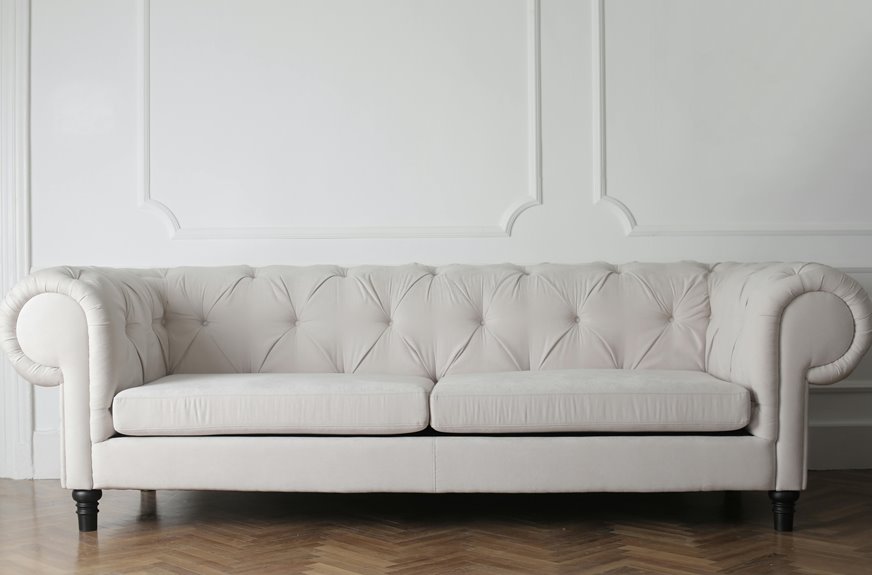
To patch your leather sofa, first assess the damage and gather a leather repair kit, patch, and adhesive. Clean and dry the area, trim loose edges, then apply adhesive to both patch and sofa. Press the patch firmly, smoothing bubbles, and let it dry. Use leather dye to blend the patch with your sofa’s color, sealing it afterward for durability. Keep your leather conditioned and avoid heat to maintain it. Keep going to discover detailed tips for a flawless repair.
Key Takeaways
- Clean and dry the damaged area, then trim loose threads and sand edges for a smooth repair surface.
- Cut a leather patch slightly larger than the damage and apply leather adhesive evenly to both patch and sofa.
- Press and smooth the patch firmly, removing air bubbles, and let the adhesive dry as per instructions.
- Match patch color by gradually applying leather dye, feathering edges, and letting each coat dry completely.
- Seal the patch with clear leather finish, allow drying, then maintain by cleaning and conditioning regularly.
Assessing the Damage and Gathering Materials
Before you begin patching your leather sofa, take a close look at the damage to determine its size, depth, and type. Is it a small scratch, a tear, or a gouge? Understanding this helps you choose the right repair method and materials.
Next, gather the supplies you’ll need: a leather repair kit, which typically includes adhesive, filler, and color compounds; fine sandpaper; a clean cloth; and scissors.
If the damage is extensive, you might also want a leather patch that matches your sofa’s color and texture. Having everything ready before you start guarantees a smoother repair process.
Preparing the Damaged Area
Once you’ve gathered your materials, clean the damaged area thoroughly to remove dirt and oils that could prevent proper adhesion. Use a mild soap solution and a soft cloth to gently wipe the surface, then let it dry completely.
Next, trim any loose threads or jagged edges around the tear with sharp scissors to create a smooth border. If the leather is cracked or peeling, carefully sand the edges with fine-grit sandpaper to even the surface.
Trim loose threads and sand jagged edges for a clean, smooth repair surface.
For deeper holes, you might want to fill them with a leather filler, but only apply it after cleaning and sanding. Finally, wipe the area with rubbing alcohol to remove any residues and guarantee the patch will stick properly.
This prep work sets the foundation for a seamless repair.
Applying the Leather Patch
With the damaged area clean and prepped, you can now focus on applying the leather patch to restore your sofa’s appearance.
First, cut the leather patch slightly larger than the damaged spot to guarantee full coverage.
Apply a thin, even layer of leather adhesive to the back of the patch and the area around the damage.
Press the patch firmly onto the sofa, smoothing out any air bubbles or wrinkles.
Use a roller or your fingers to confirm strong adhesion, especially along the edges.
Let the adhesive dry according to the manufacturer’s instructions, usually about 20-30 minutes.
This secure bond is essential for a lasting repair before you move on to blending the patch with leather dye.
Blending the Patch With Leather Dye
Although the patch securely covers the damaged area, it still stands out unless you blend it seamlessly with the rest of the sofa.
To make the repair look natural, you’ll need to match the patch color with your sofa’s leather dye carefully. Here’s how to do it:
- Test the dye on a small, hidden area or scrap leather to verify the color matches perfectly.
- Apply the dye gradually using a sponge or small brush, feathering the edges to blend the patch with the surrounding leather.
- Let the dye dry completely between coats, repeating the process until the patch color matches the sofa evenly.
This careful blending will help your repair look professional and almost invisible.
Finishing Touches and Maintenance Tips
After blending the dye to match your sofa, you’ll want to apply some finishing touches to protect your repair and keep your leather looking great.
Start by sealing the patched area with a clear leather finish or sealant; this helps lock in the color and adds durability. Let it dry completely before using the sofa.
To maintain your leather, clean it regularly with a damp cloth and a gentle leather cleaner to avoid buildup. Condition the leather every few months using a quality leather conditioner to prevent cracking and keep it supple.
Avoid placing your sofa in direct sunlight or near heat sources, as this can cause fading and drying.
With these steps, your patched sofa will stay attractive and last longer.
Frequently Asked Questions
Can I Use Fabric Patches Instead of Leather Patches?
You can use fabric patches, but they won’t blend as well or be as durable as leather patches. For a seamless look and long-lasting repair, it’s better to choose patches made specifically for leather.
How Long Does a Leather Patch Typically Last?
When it comes to leather patches, you can expect them to last several years if you care for them properly. With regular maintenance, they’ll stand the test of time and keep your sofa looking sharp.
Is It Safe to Patch Leather Sofa Seams?
Yes, it’s safe to patch leather sofa seams if you use proper materials and techniques. You’ll want to guarantee the patch is secure and matches the leather to maintain both durability and appearance over time.
Can I Patch Leather on Colored Sofas Without Discoloration?
Imagine you patch a red leather sofa using a matching dye-based adhesive; you’ll likely avoid discoloration if you test first and use quality products designed for colored leather, ensuring the repair blends seamlessly without fading or stains.
What Tools Are Best for Removing Old Leather Patches?
You’ll want to use a utility knife or seam ripper to carefully lift the edges of old patches. Pair that with a plastic scraper to gently remove adhesive without damaging the leather underneath.