
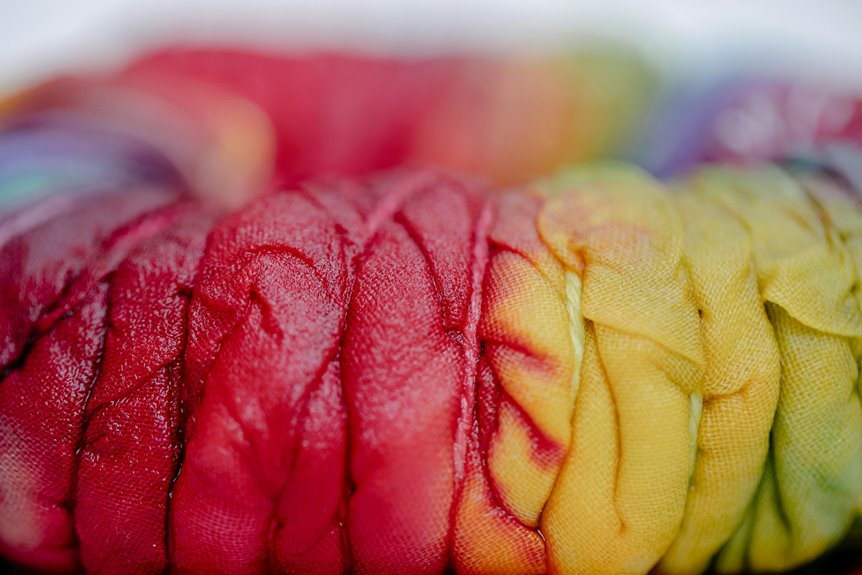
When painting velvet fabric, choose flexible fabric paints or acrylic mixed with fabric medium to keep its softness and rich texture. Prepare velvet by cleaning and securing it taut, then apply paint lightly with dabbing or airbrushing to avoid crushing the pile. Use thin layers for vibrant, even color that won’t stiffen the fabric. Handle painted velvet gently to maintain its look. If you want to create elegant, unique pieces, you’ll find valuable tips on techniques, care, and creative uses ahead.
Key Takeaways
- Use fabric paints or acrylic mixed with fabric medium for flexible, vibrant finishes that preserve velvet’s texture and sheen.
- Prepare velvet by cleaning, gently brushing, and securing it taut to ensure smooth, stable paint application.
- Apply paint lightly with dabbing, stippling, or airbrushing in thin layers to avoid crushing the pile and maintain softness.
- Respect the velvet nap direction when painting to achieve consistent color and enhance light reflection effects.
- Care for painted velvet by storing away from sunlight, spot cleaning gently, and avoiding folding painted sections to prevent damage.
Understanding Velvet Fabric and Its Properties
Velvet’s unique texture and rich appearance come from its dense pile of evenly cut fibers, which creates a soft, plush surface.
When you work with velvet, you’ll notice its nap—the direction the fibers lie—significantly affects how light reflects off it, changing its shade. This means you need to handle it carefully to maintain its look.
Velvet is delicate; it can crush or mark easily, so you’ll want to avoid excessive pressure when painting.
The fabric’s pile also absorbs liquids differently than flat fabrics, so your paint application must be controlled to prevent blotching or stiffening.
Understanding these properties helps you prepare velvet correctly and apply paint in a way that preserves its softness and depth.
Choosing the Right Paints for Velvet
When selecting paints for velvet, you need options that won’t stiffen or damage the fabric’s delicate pile.
Fabric paints designed specifically for textiles work best, as they remain flexible after drying and adhere well without cracking. Acrylic paints mixed with a fabric medium also offer a great alternative, giving you control over consistency and finish while protecting the velvet’s softness.
Textile fabric paints and acrylics with fabric medium keep velvet soft and flexible without cracking.
Avoid heavy paints or those with a thick, rubbery finish because they can flatten the pile and ruin velvet’s characteristic texture. Transparent or diluted paints help maintain the fabric’s depth and sheen, enhancing its natural look.
Ultimately, pick paints that dry quickly, stay vibrant, and keep the velvet’s plush feel intact so your artwork looks stunning and lasts.
Preparing Velvet for Painting
Before you start painting, prepare your velvet carefully to guarantee the best results. Velvet’s delicate texture needs special attention to make sure the paint adheres well without damaging the fabric.
Begin by cleaning the velvet to remove dust and oils that could interfere with the paint. Next, secure the fabric on a flat surface to prevent movement during painting. Finally, consider using a fabric medium mixed with your paint to maintain velvet’s softness.
- Gently vacuum or brush the velvet to remove loose particles.
- Iron the fabric on the reverse side with low heat to smooth wrinkles.
- Stretch the velvet taut on a frame or board to keep it steady.
Taking these steps helps you achieve a smooth, vibrant finish on your velvet fabric.
Techniques for Painting Velvet Fabric
Once your velvet is prepped and secured, you can apply paint using techniques that complement its unique texture. Use a light touch to preserve the fabric’s softness—dab or stipple paint instead of brushing harshly. Layering thin coats helps avoid stiffness. Airbrushing also works beautifully, allowing gradual color build-up without damaging fibers. Remember, velvet’s pile reflects light differently depending on direction, so paint with awareness of nap flow for best results.
| Technique | Effect | Feeling Evoked |
|---|---|---|
| Dabbing | Soft, textured | Comfort |
| Stippling | Speckled detail | Intrigue |
| Layering | Gradual depth | Calm |
| Airbrushing | Smooth finish | Elegance |
| Directional | Highlight & shade | Mystery |
Tips for Achieving Vibrant and Long-Lasting Colors
To get vibrant, long-lasting colors on velvet, you’ll need to pick the right paint designed for fabric.
Preparing the velvet properly before painting helps the color adhere better and last longer.
Finally, sealing your work and following maintenance tips will keep your colors looking fresh over time.
Choosing the Right Paint
Although velvet’s unique texture can challenge paint adhesion, selecting the right type of paint makes all the difference in achieving vibrant, long-lasting colors.
You’ll want to pick paints designed specifically for fabrics to guarantee flexibility and durability without cracking. Acrylic fabric paints are a popular choice because they soak in well and retain color intensity. Fabric dyes can also work beautifully, offering deep, saturated hues that blend naturally with the velvet fibers.
Consider these factors when choosing your paint:
- Flexibility: Paint should move with the fabric to prevent peeling.
- Opacity: High-opacity paints maintain vibrancy on velvet’s dense pile.
- Drying Time: Quick-drying options reduce smudging and allow layering.
Choosing wisely sets the foundation for stunning, enduring results on your velvet projects.
Fabric Preparation Techniques
Three key fabric preparation steps can make a big difference in how your paint adheres to velvet and how vibrant the colors stay over time. First, always start with a clean surface—gently vacuum or brush off dust. Next, pre-wash your velvet if possible, without fabric softeners, to remove finishes that repel paint. Finally, stretch the fabric taut on a frame or flat surface to avoid wrinkles during painting.
| Step | Purpose | Tips |
|---|---|---|
| Cleaning | Remove dust & oils | Use soft brush or vacuum |
| Pre-washing | Remove chemical finishes | Use cold water, no softeners |
| Stretching Fabric | Prevent wrinkles & uneven paint | Use a frame or tape edges |
Sealing and Maintenance Tips
Once you finish painting your velvet fabric, sealing it properly guarantees your colors stay vibrant and resist wear over time.
Start by applying a clear fabric sealant that won’t stiffen the velvet’s soft texture. Let it dry completely before handling.
To keep your painted velvet looking fresh, follow these maintenance tips:
- Store your velvet piece away from direct sunlight to prevent fading.
- Clean gently with a soft brush or cloth; avoid harsh detergents or soaking.
- If needed, spot clean with mild soap and cold water, then air dry flat.
Creative Projects Using Painted Velvet
When you paint on velvet, you reveal a world of unique textures and vibrant colors that can transform ordinary items into stunning pieces of art. You can create bold fashion statements, personalize home décor, or craft one-of-a-kind accessories. Here’s a snapshot of creative projects you can try:
| Project Type | Suggested Paints | Creative Ideas |
|---|---|---|
| Clothing | Fabric acrylics | Custom jackets, skirts with patterns |
| Home Décor | Velvet-specific dyes | Pillow covers, lampshades |
| Accessories | Textile paints | Handbags, shoes |
| Art Pieces | Mixed media paints | Wall hangings, framed velvet art |
| Gifts | Fabric markers & paints | Personalized scarves, bookmarks |
You can easily combine these ideas to fit your style and skill level, making painted velvet a versatile canvas for your creativity.
Caring for Painted Velvet Items
Although painted velvet adds a unique touch to your items, it requires careful maintenance to keep its colors vibrant and texture intact. You’ll want to handle your painted velvet with gentle care, avoiding harsh treatments that might damage the paint or fabric.
When cleaning, always opt for spot cleaning or dry cleaning rather than machine washing to preserve the delicate surface.
Here are some tips to care for your painted velvet:
- Store painted velvet items in a cool, dry place away from direct sunlight to prevent fading.
- Avoid folding painted areas to reduce cracking or peeling of the paint.
- Use a soft brush to gently remove dust without disturbing the paint or velvet pile.
Following these steps will help your painted velvet look stunning for years.
Frequently Asked Questions
Can Painted Velvet Fabric Be Machine Washed Without Damaging the Paint?
You shouldn’t machine wash painted velvet fabric, as the paint can crack or peel. Instead, gently hand wash it with cold water and mild detergent, then air dry to keep the paint and fabric intact.
How Does Humidity Affect the Drying Time of Paint on Velvet?
Like a slow dance with time, humidity stretches your paint’s drying on velvet. High moisture means longer drying, risking smudges, while dry air speeds it up. You’ll want to control humidity for best results.
Are There Eco-Friendly or Non-Toxic Paint Options for Velvet?
You can choose eco-friendly, non-toxic paints like natural fabric dyes, water-based acrylics, or plant-based pigments. They’re safer for you and the environment, and they work well on velvet when applied carefully and sealed properly.
Can Painted Velvet Be Used for Upholstery or Heavy-Use Furniture?
Imagine a painted velvet throne, regal but resilient. You can use painted velvet for upholstery, but be aware it might wear faster on heavy-use furniture. Seal it well and treat it gently to keep its beauty intact.
How Do Different Velvet Weaves Impact Paint Adhesion and Finish?
Different velvet weaves affect how paint sticks and looks. You’ll find tight weaves hold paint better with smoother finishes, while looser, plush weaves might absorb more, causing uneven texture and requiring extra coats for durability.