
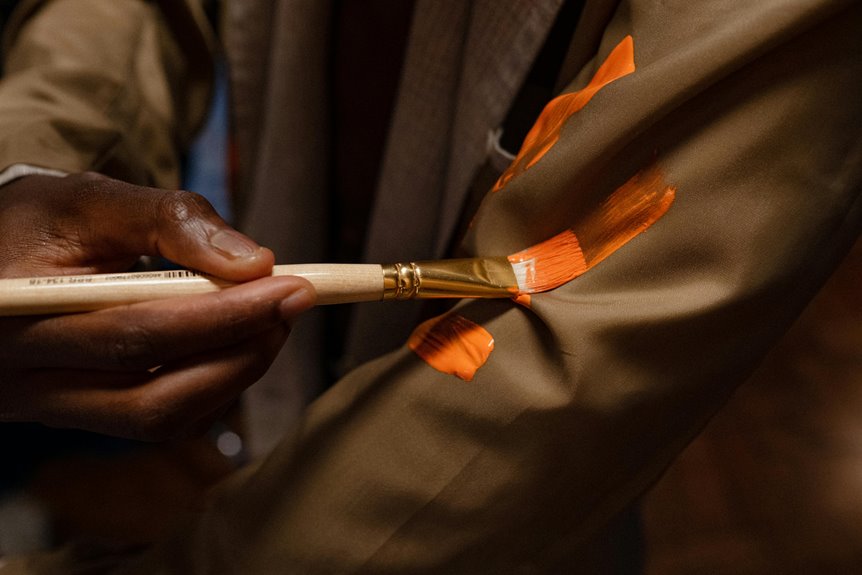
To paint on suede, first clean it gently with a suede cleaner and let it dry fully to guarantee good paint adhesion. Choose flexible fabric paints or acrylics mixed with fabric medium to prevent cracking. Use soft brushes or sponges for smooth application and painter’s tape for crisp edges. Avoid water exposure afterward and store the item away from sunlight. With these basics, you’ll create vibrant, durable designs. Keep exploring to master more advanced techniques and care tips.
Key Takeaways
- Clean suede with a soft brush and mild solvent, avoiding water, then let it dry completely before painting.
- Choose flexible fabric paints or acrylics mixed with fabric medium to prevent cracking on suede surfaces.
- Use soft-bristle brushes or sponges for even paint application and painter’s tape for clean edges.
- Test paint flexibility on a small suede scrap to ensure durability and avoid peeling.
- After painting, gently clean with a suede brush and avoid water or direct sunlight to preserve the design.
Preparing Suede Fabric for Painting
Before you begin painting, make certain you clean the suede fabric thoroughly to remove any dirt or oils that could prevent the paint from adhering properly.
Use a soft brush or cloth to gently lift away surface dust and debris. Avoid using water directly, as suede is sensitive to moisture and can be damaged. Instead, opt for a suede cleaner or a mild solvent recommended for suede care.
After cleaning, let the fabric dry completely in a well-ventilated area. Next, use a suede brush to restore the nap and texture, making the surface ready for paint application.
Finally, test a small hidden area to verify the fabric responds well to your preparation before moving on to the painting process.
Selecting the Right Paints for Suede
When choosing paint for suede, you’ll want to compare acrylic and fabric paints carefully.
It’s essential to pick a paint that stays flexible to keep the suede soft and prevent cracking.
Let’s look at how each type performs and what works best for your project.
Acrylic vs. Fabric Paint
Choosing between acrylic and fabric paint can make a big difference in how your design looks and lasts on suede.
Acrylic paint offers vibrant colors and strong coverage, but it can be less flexible and might crack over time on suede’s soft surface.
Fabric paint, on the other hand, is formulated to bond with fibers, ensuring better adhesion and durability without compromising the texture.
If you want bold, detailed designs, acrylic works well but requires sealing to prevent damage.
For a more natural finish that moves with the fabric, fabric paint is your best bet.
Ultimately, consider how you’ll use the item and how much wear it will get when deciding between these two options.
Both can produce great results if applied correctly.
Paint Flexibility Importance
Understanding paint flexibility helps you pick the best option for suede, which naturally bends and stretches. If your paint isn’t adaptable, it’ll crack or peel as the fabric moves, ruining your design.
You want a paint that moves with the suede, maintaining its look and durability over time. Look for fabric paints labeled flexible or stretchable, as these are formulated to withstand bending.
Acrylic paints aren’t always flexible unless mixed with a fabric medium. Testing your paint on a small suede scrap lets you see how it behaves when flexed.
Prioritizing flexibility guarantees your artwork stays vibrant and intact, making your customized suede piece both beautiful and long-lasting. Remember, flexibility isn’t just a bonus—it’s essential for successful painting on suede.
Essential Tools for Painting on Suede
To achieve vibrant and lasting results, you’ll need specific tools designed for suede’s delicate texture.
Essential tools tailored for suede ensure your painting projects turn out vibrant and durable every time.
Start with high-quality acrylic paints formulated for fabric, as they offer flexibility and strong adhesion. Use soft-bristle brushes or sponge applicators to apply paint gently without damaging the nap. A palette for mixing colors lets you customize shades easily.
You’ll also want painter’s tape to create clean edges and protect areas you don’t want painted. Keep a small spray bottle of water handy to lightly mist paint if it dries too fast, helping with blending.
Finally, have some cotton swabs or a clean cloth nearby for quick corrections. Using these tools guarantees your suede painting project looks professional and lasts longer.
Techniques for Applying Paint on Suede
Before you start painting, make certain to prepare the suede surface by gently cleaning and drying it.
You’ll also want to choose the right type of paint—acrylic or fabric paint works best for suede’s texture.
These steps guarantee your design sticks well and looks great.
Preparing Suede Surface
Although painting on suede can be challenging due to its delicate texture, you can achieve great results by properly preparing the surface.
Start by gently brushing the suede with a soft suede brush to remove any dirt and restore the nap. Avoid using water, as it can damage the fabric.
Next, lightly wipe the area with a dry microfiber cloth to eliminate loose particles. If there are stubborn stains, use a suede eraser carefully before painting.
Make certain the suede is completely dry and free of debris. To guarantee even paint absorption, you can test on a small hidden area first.
Taking these steps helps the paint adhere better and prevents cracking or peeling, giving your project a smooth, professional finish.
Choosing Suitable Paint Types
Getting the suede surface ready sets the stage for selecting the right paint that will bond well without damaging the fabric.
You’ll want to choose paints specifically formulated for suede or leather, such as acrylic leather paints, which are flexible and adhere nicely without cracking.
Avoid heavy oil-based paints—they can stiffen and ruin suede’s soft texture. Fabric paints designed for delicate materials also work well, but test a small area first to verify compatibility.
Water-based acrylics are your safest bet; they dry quickly and maintain suede’s natural feel.
Remember, using the right paint not only enhances your design but also preserves the fabric’s softness and durability.
Always check the manufacturer’s instructions to get the best results and prevent any unwanted damage.
Tips for Achieving Durable and Vibrant Designs
When you want your painted suede designs to last and stand out, choosing the right materials and preparation methods is essential.
Start by cleaning the suede gently to remove dust and oils; this helps paint adhere better. Use high-quality acrylic paints designed for fabric, applying thin, even layers to avoid stiffening the suede. Allow each layer to dry completely before adding the next to maintain vibrancy.
Seal your artwork with a matte, flexible fabric sealer to protect the design without compromising suede’s softness. Avoid over-saturating the fabric, which can cause paint to crack or peel.
Finally, work in a well-ventilated area and use brushes or sponges suited for suede’s nap to achieve smooth, precise lines and rich colors that endure.
Caring for Painted Suede Items
Once you’ve created vibrant, durable designs on your suede, caring for your painted items properly will keep them looking their best. Always avoid soaking your suede; instead, gently brush dirt away with a soft suede brush. Keep your painted suede away from direct sunlight to prevent fading. If stains occur, use a suede cleaner sparingly and test on a hidden area first. Store items in a cool, dry place to maintain texture and color.
| Care Tip | Reason |
|---|---|
| Avoid soaking | Water can damage paint and suede |
| Use soft suede brush | Prevents paint from cracking |
| Protect from sunlight | Prevents color fading |
| Store properly | Maintains texture and vibrant hue |
Frequently Asked Questions
Can I Paint on Synthetic Suede as Well as Natural Suede?
Imagine painting on a canvas that breathes differently; synthetic suede reacts like that. You can paint both types, but synthetic needs more prep and care. You’ll get vibrant results if you adjust your technique accordingly.
How Long Does Painted Suede Take to Fully Dry and Cure?
You’ll find painted suede usually dries to the touch within 1-2 hours, but it can take up to 24-48 hours to fully cure. Make sure you let it air dry completely for the best results.
Are There Any Health Risks Associated With Painting on Suede?
When you paint on suede, fumes can sneak up like shadows, so you shouldn’t paint in closed spaces. Use non-toxic, water-based paints and ventilate well to keep your lungs happy and avoid skin irritation.
Can Painted Suede Be Safely Washed in a Washing Machine?
You shouldn’t wash painted suede in a washing machine, as water and agitation can damage both the fabric and paint. Instead, gently spot clean with a damp cloth to keep your painted suede looking great and intact.
What Are Common Mistakes to Avoid When Painting on Suede?
Steer clear of smudges and streaks by selecting suitable, soft brushes. Don’t douse suede with excessive paint; avoid rushing your work. Remember, patience preserves pristine pieces and prevents peeling or cracking on your stylish suede.