
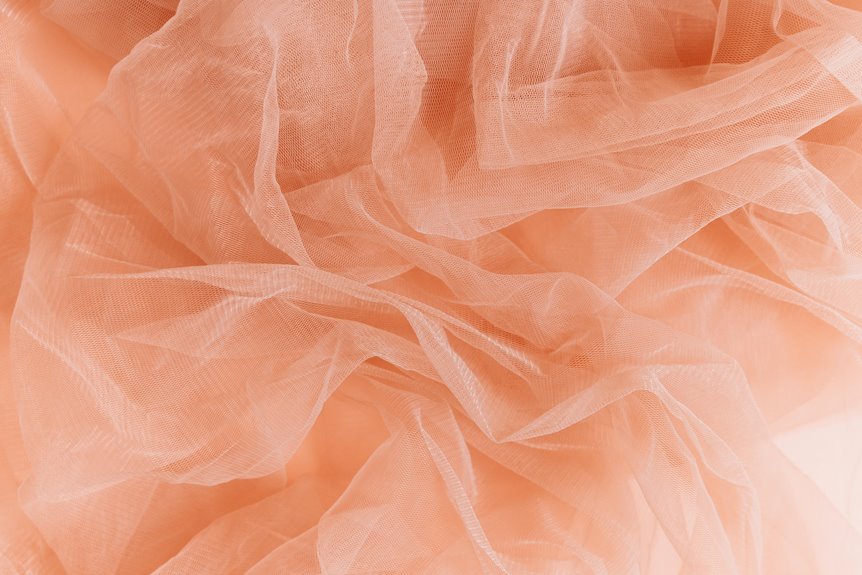
You’ll notice nylon tulle is stronger, crisper, and more resistant to tearing, making it great for costumes or structures needing durability. Polyamide tulle feels softer, more flexible, and offers better breathability, ideal for delicate garments like lingerie or bridal wear. Both resist snags but differ in environmental impact, with nylon typically being less eco-friendly. Choosing the right one depends on your project’s needs, texture preference, and care considerations—there’s more to explore about these subtle but important distinctions.
Key Takeaways
- Nylon tulle is stronger, stiffer, and has a subtle sheen, while polyamide tulle is softer, more pliable, and has a matte finish.
- Nylon tulle resists tearing and abrasion better, making it ideal for costumes and activewear; polyamide offers better elasticity and breathability.
- Both fabrics are chemically similar but differ in fiber arrangement, affecting texture, flexibility, and moisture absorption.
- Nylon tulle is petrochemical-based with higher environmental impact; polyamide can include renewable or recycled variants for sustainability.
- Care for both includes gentle hand washing and low-heat ironing, but nylon tulle tends to be more durable under wear and stretching.
What Is Nylon Tulle?
Although you mightn’t realize it, nylon tulle is a lightweight, fine netting commonly used in fashion and décor. When you handle it, you’ll notice its sheer, airy quality that adds elegance without weight.
It’s made from nylon fibers, giving it strength and elasticity, so it resists tearing better than some other net fabrics. You’ll often find nylon tulle in bridal veils, tutus, and decorative overlays because it holds shape well and drapes beautifully.
Plus, it’s easy to dye, which lets you choose from a wide range of vibrant colors. When you want a fabric that’s both delicate in appearance and durable in use, nylon tulle is often the go-to choice for designers and crafters alike.
What Is Polyamide Tulle?
Polyamide tulle offers a versatile and durable option for lightweight netting fabric. When you choose polyamide tulle, you get a material that’s both strong and flexible, making it ideal for garments that require shape retention without sacrificing breathability.
You’ll find it commonly used in fashion, dancewear, and even bridal veils because it holds its form well while remaining soft to the touch. Unlike some fabrics, polyamide tulle resists wrinkles and dries quickly, so it’s practical for active use or layered designs.
If you need a fabric that balances durability with delicate appearance, polyamide tulle fits the bill perfectly. It’s a dependable choice when you want netting that’s lightweight yet built to last through regular wear.
Chemical Composition of Nylon and Polyamide
You’ll find that both nylon and polyamide share a similar basic molecular structure, made up of long polymer chains.
These chains give the fabrics strength and flexibility, which is why they’re popular in various industries.
Understanding their chemical makeup helps you see why they perform differently in tulle applications.
Basic Molecular Structure
When you examine the basic molecular structure of nylon and polyamide, you’ll notice they share a common foundation: both consist of repeating units linked by amide bonds.
These amide bonds form between carbonyl groups and amine groups, creating strong connections that define their polymer chains. Nylon, a specific type of polyamide, features a regular pattern of these repeating units, giving it distinct properties.
Polyamides, in general, can vary in the arrangement and length of these units, but the presence of amide linkages remains consistent. This molecular backbone is what gives both nylon and polyamide their strength and durability.
Understanding this shared chemical composition helps you appreciate why nylon tulle and polyamide tulle are often similar in performance and feel.
Polymer Chain Characteristics
Two key factors shape the performance of nylon and polyamide: the length and arrangement of their polymer chains. When you look at nylon, its chains are typically longer and more linear, giving it strength and flexibility. Polyamide chains can vary more in length and may have branching, which affects elasticity and moisture absorption. Understanding these differences helps you see why fabrics behave uniquely.
| Feature | Nylon Chains | Polyamide Chains |
|---|---|---|
| Chain Length | Longer, more uniform | Variable, sometimes branched |
| Arrangement | Mostly linear | Linear or branched |
| Impact on Fabric | Strong, flexible | Elastic, moisture-absorbent |
These molecular traits directly influence how each tulle feels and performs.
Common Industrial Applications
The unique polymer structures of nylon and polyamide directly influence where and how they’re used in industry.
When you choose nylon tulle, you benefit from its excellent strength and abrasion resistance, making it ideal for durable textiles, industrial filters, and automotive parts.
Polyamide tulle, often chemically similar but sometimes tailored differently, excels in applications requiring flexibility and chemical resistance, such as in medical fabrics and protective clothing.
You’ll find both materials in sportswear and lingerie due to their lightweight nature and breathability.
Understanding their chemical makeup helps you select the right fabric: nylon’s crystalline regions provide toughness, while variations in polyamide composition can enhance softness or elasticity.
Common Uses for Nylon Tulle
Nylon tulle offers versatility that makes it popular in a variety of creative projects. When you use nylon tulle, you’ll find it ideal for making delicate veils, tutus, and costume overlays. Its lightweight and sheer quality add a soft, airy look to garments without weighing them down.
You can also use it for decorative purposes like gift wrapping, party decorations, or floral arrangements to add texture and volume. If you’re into crafting, nylon tulle works great for DIY projects such as wreaths or bows.
Because it holds its shape well, you can easily create structured designs. Overall, nylon tulle is your go-to fabric when you want something flexible, durable, and elegant for fashion or decoration.
Common Uses for Polyamide Tulle
Although similar to nylon in many ways, polyamide tulle excels in applications requiring extra strength and elasticity.
When you need a fabric that stretches without losing shape, polyamide tulle is your go-to. It’s ideal for activewear, dance costumes, and performance outfits where flexibility and durability matter.
You’ll also find it used in lingerie and hosiery because it comfortably hugs the body while maintaining resilience.
If you’re crafting decorative accents or veils that must stay intact through movement, polyamide tulle holds up better than nylon.
Its ability to withstand repeated stretching makes it perfect for items that demand both form and function.
Differences in Texture and Appearance
Texture plays an essential role when choosing between nylon and polyamide tulle, as each offers a distinct feel and look.
When you touch nylon tulle, you’ll notice it feels slightly stiffer and crisper, providing a structured shape that’s perfect for voluminous designs. Its surface tends to have a subtle sheen, giving your project a delicate shimmer.
On the other hand, polyamide tulle feels softer and more pliable, allowing it to drape elegantly. Its matte finish offers a more understated appearance, ideal if you want a natural, refined look.
Both materials feature fine mesh construction, but nylon’s stiffness contrasts with polyamide’s flexibility. Understanding these texture and appearance differences helps you select the right tulle that matches your creative vision.
Durability and Care Instructions
You’ll want to know how nylon and polyamide tulle hold up over time and which one handles wear better.
Understanding their strength differences helps you choose the right fabric for your project.
Plus, knowing the best washing and care tips will keep your tulle looking fresh and intact.
Strength Comparison
When comparing nylon tulle and polyamide tulle, you’ll find that both materials offer impressive durability, but their care requirements differ slightly.
Nylon tulle tends to be stronger and more resistant to abrasion, making it ideal for projects that demand resilience. Polyamide tulle, while also durable, has slightly less tensile strength but offers excellent elasticity, allowing it to withstand stretching without tearing easily.
Both fabrics resist snags better than many natural fibers, but nylon’s higher strength means it can handle more wear and tear over time. When working with either, you’ll want to avoid excessive friction that could weaken fibers.
Washing and Maintenance
Both nylon and polyamide tulle require careful washing to maintain their strength and appearance over time.
You should always hand wash these fabrics in cold water with a mild detergent to prevent damage. Avoid wringing or twisting the material, as it can stretch or tear the delicate fibers. Instead, gently press out excess water and lay the tulle flat to dry, away from direct sunlight.
Machine washing and drying can cause shrinkage or deformation, so it’s best to steer clear of those methods. When ironing is necessary, use the lowest heat setting and place a cloth between the iron and fabric to avoid melting.
Following these care instructions will help you keep both nylon and polyamide tulle looking pristine and extend their durability.
Environmental Impact of Nylon vs. Polyamide
Although nylon and polyamide are often used interchangeably in textiles, their environmental impacts differ in important ways.
Nylon and polyamide may seem alike, but their environmental effects vary significantly.
When you choose nylon tulle, you should know it’s derived from petrochemicals and requires significant energy to produce, contributing to greenhouse gas emissions.
Polyamide, while chemically similar, often has renewable variants like bio-based polyamides, which can reduce reliance on fossil fuels.
Both materials are non-biodegradable, so they persist in landfills and contribute to microplastic pollution if washed frequently.
However, some polyamide manufacturers prioritize sustainability by using recycled materials, helping reduce environmental footprints.
How to Choose the Right Tulle for Your Project
Understanding the environmental impact of nylon and polyamide tulle helps you evaluate more than just sustainability when choosing fabric.
You’ll want to take into account the project’s purpose, durability needs, and budget. Nylon tulle tends to be stronger and stretchier, making it ideal for costumes or activewear that require flexibility.
Polyamide tulle offers a softer feel and slightly better breathability, perfect for delicate decorations or bridal wear.
Also, think about how the fabric handles washing and wear—nylon often resists wrinkles and holds shape longer.
If you value eco-friendliness, check if the polyamide is recycled or produced with greener methods.
Ultimately, choose the tulle that balances your project’s functional demands with your personal preferences on texture and environmental impact.
Frequently Asked Questions
Can Nylon or Polyamide Tulle Be Recycled at Home?
You can’t really recycle nylon or polyamide tulle at home since they require specialized processes. Instead, try reusing or donating leftover fabric to reduce waste and give it a second life creatively.
Are There Hypoallergenic Properties in Nylon or Polyamide Tulle?
You won’t find magic hypoallergenic powers in nylon or polyamide tulle—they’re not miracle fabrics. But they’re generally gentle on skin, so unless you’ve got extreme sensitivities, you should be safe wearing them without worry.
How Do Nylon and Polyamide Tulle React to High Heat?
You should avoid exposing nylon and polyamide tulle to high heat because both melt easily. When heated, they can warp or shrink, so it’s best to use low temperatures during ironing or cleaning to keep the fabric intact.
Is One Type of Tulle Better for Dyeing Than the Other?
You’ll find polyamide tulle easier to dye because it absorbs color more evenly and vividly. Nylon tulle can be trickier, often requiring specific dyes. So, you’ll get better results with polyamide for vibrant, consistent colors.
What Is the Cost Difference Between Nylon and Polyamide Tulle?
You’ll usually find nylon tulle costs a bit less than polyamide because nylon is more common and easier to produce. But prices can vary depending on quality, supplier, and quantity you’re buying at once.