
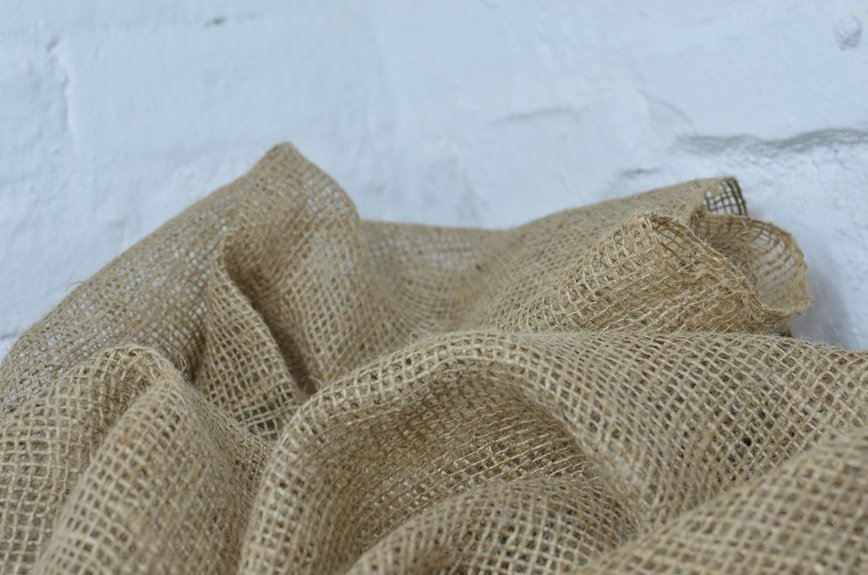
You’ll love natural jute burlap fabric for its eco-friendly, durable, and breathable qualities that bring a warm, rustic feel to any space. It’s biodegradable and requires less water and pesticides to produce, making it a smart choice for the planet. Use it creatively as pillow covers, table runners, or wall art to add texture to your décor. Care is simple with spot cleaning and air drying, and quality burlap is easy to find from trusted sources. Discover how versatile and sustainable this fabric truly is.
Key Takeaways
- Natural jute burlap fabric is an eco-friendly, biodegradable textile made from the jute plant offering rustic charm and durability.
- Its coarse woven texture makes it ideal for rustic home décor like pillow covers, table runners, and wall art.
- Burlap requires less water and pesticides to produce, supporting sustainable agriculture and reducing environmental impact.
- Proper care involves spot cleaning, air drying, avoiding direct sunlight, and gentle steaming to maintain its strength and appearance.
- Sourcing quality jute burlap involves choosing reputable suppliers, verifying 100% natural fiber content, and checking customer reviews.
What Makes Natural Jute Burlap Fabric Unique
Natural jute burlap fabric stands out because of its eco-friendly nature and distinctive texture. When you choose jute burlap, you’re picking a fabric made from the jute plant, which grows quickly and requires minimal pesticides. This makes it a sustainable choice that reduces environmental impact.
You’ll also notice its coarse, woven texture, giving it a rustic charm you won’t find in synthetic materials. Its breathability and durability make it ideal for various practical uses, from packaging to crafts.
Plus, it’s biodegradable, so you don’t have to worry about it contributing to landfill waste. When you work with jute burlap, you’re embracing a fabric that’s both functional and kind to the planet, offering a unique blend of strength and natural beauty.
Creative Uses for Jute Burlap in Home Décor
Jute burlap brings a warm, rustic touch to any room, making it perfect for creative home décor projects.
You can easily craft charming throw pillow covers that add texture and earthiness to your sofa. Consider using burlap as a table runner or placemats to give your dining area a cozy, farmhouse feel.
If you want to brighten a bare wall, create a burlap wall hanging or frame small pieces as rustic art. Burlap also works great for DIY lampshades, giving off a soft, diffused glow.
Don’t forget about storage—wrap baskets with burlap to combine function and style seamlessly. With its natural look and sturdy feel, burlap lets you personalize your space while keeping things stylish and simple.
Benefits of Choosing Eco-Friendly Burlap
When you choose eco-friendly burlap for your home projects, you’re not just adding charm—you’re also making a positive impact on the environment. This natural fabric is biodegradable, so it breaks down easily without leaving harmful residues.
You’ll reduce plastic waste since burlap replaces synthetic materials that linger in landfills. Plus, jute plants require fewer pesticides and less water compared to other crops, making burlap production more sustainable.
Using eco-friendly burlap supports farmers who practice responsible agriculture, promoting healthier ecosystems. Its durability means your projects last longer, cutting down on frequent replacements.
Tips for Caring and Maintaining Burlap Fabric
Although burlap is a sturdy fabric, it needs proper care to maintain its texture and appearance over time. You should avoid machine washing burlap, as water and agitation can weaken the fibers. Instead, spot clean stains with a mild detergent and cold water, gently blotting rather than scrubbing.
When drying, air dry burlap flat to prevent stretching or warping. Keep burlap away from direct sunlight for prolonged periods to avoid fading and brittleness.
To reduce wrinkles, lightly steam the fabric on a low setting, never iron it directly. Store burlap in a cool, dry place to prevent mold and mildew.
Where to Find Quality Natural Jute Burlap
Taking good care of your burlap fabric starts with choosing high-quality material. You’ll want to source natural jute burlap from reputable suppliers, whether online or locally.
Look for sellers specializing in textiles or eco-friendly fabrics to guarantee authenticity and durability. Check product descriptions carefully—100% natural jute burlap should be free from synthetic blends.
Choose sellers who focus on textiles or eco-friendly fabrics and confirm the burlap is 100% natural jute without synthetics.
Visiting craft stores or fabric warehouses can also help you feel the texture and assess quality firsthand. Don’t hesitate to ask for samples if available.
When buying online, read customer reviews and ratings to avoid low-grade burlap that sheds excessively or feels rough.
Frequently Asked Questions
Can Jute Burlap Fabric Be Dyed Different Colors?
Dyeing jute burlap is like painting on a rough canvas—you’ll need fabric dye and patience. You can definitely dye it different colors, but expect a rustic, earthy finish since jute naturally absorbs dyes unevenly.
Is Jute Burlap Fabric Waterproof or Water-Resistant?
You shouldn’t expect jute burlap fabric to be waterproof or water-resistant naturally. It absorbs moisture quickly, so if you want it to repel water, you’ll need to apply a special waterproof coating or treatment yourself.
How Long Does Natural Jute Burlap Fabric Typically Last?
You can expect natural jute burlap fabric to last about 1 to 3 years, depending on exposure to moisture and sunlight. If you keep it dry and protected, it’ll hold up longer and stay sturdy.
Can Jute Burlap Fabric Be Used for Clothing?
You wouldn’t expect rough jute burlap to feel cozy, but you can use it for clothing! Just know it’s coarse and stiff, so it’s best for accents or sturdy outerwear rather than soft, everyday wear.
What Is the Environmental Impact of Jute Farming?
You’ll find jute farming’s environmental impact is generally positive—it’s biodegradable, requires minimal pesticides, and enriches soil. However, intensive farming can lead to water use concerns and habitat disruption, so sustainable practices matter a lot.