
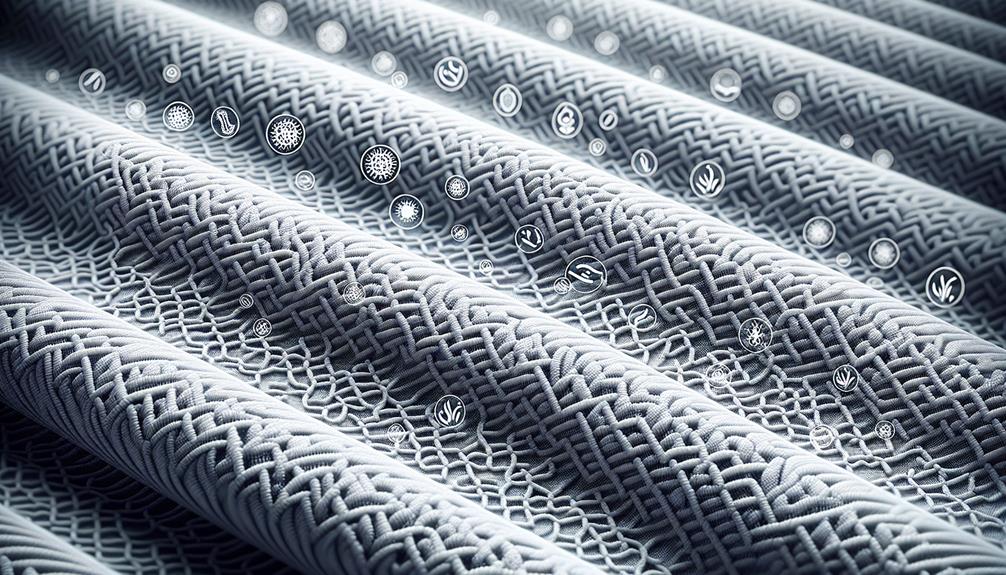
When you think about the fabrics used in healthcare, you're probably focused on comfort and durability. But did you know that some medical textiles go a step further by actively fighting harmful microorganisms? Infused with antimicrobial agents like silver ions or copper, these fabrics inhibit the growth of bacteria and fungi, creating a safer environment for patients and healthcare workers alike. You're about to explore how these high-tech textiles work, the types of antimicrobial agents used, and their real-world applications. What's the catch, you ask? There are challenges and limitations that you might find surprising.
Key Takeaways
- Medical textiles with antimicrobial properties prevent infections by inhibiting microbial growth.
- These textiles are used in surgical gowns, bed linens, and wound dressings.
- Antimicrobial agents embedded in fabrics disrupt microorganism cell walls.
- Silver ions, copper, and chitosan are common antimicrobial agents in medical textiles.
- Antimicrobial textiles enhance patient comfort, staff safety, and reduce hospital-acquired infections.
Understanding Antimicrobial Textiles
What exactly are antimicrobial textiles, and how do they function to protect you from harmful microorganisms?
Antimicrobial textiles are advanced fabrics designed to inhibit the growth of bacteria, fungi, and other pathogens. Leveraging state-of-the-art fabric technology, these textiles provide a critical defense layer, especially in environments where microbial resistance is essential, such as hospitals and clinics.
Incorporating antimicrobial properties into textile design isn't just about comfort; it's a deliberate strategy aimed at enhancing safety and hygiene. The textiles used in medical applications, such as surgical gowns, bed linens, and wound dressings, are specifically engineered to reduce the risk of infections. This is achieved by embedding antimicrobial agents into the fabric, which actively combat microbial growth.
Your mastery of understanding how these textiles work begins with recognizing the significance of fabric technology. By integrating antimicrobial agents at the molecular level, these textiles disrupt the cell walls of microorganisms, rendering them ineffective.
This innovation in textile design guarantees that the materials used in medical applications not only meet but surpass hygiene standards, offering an additional layer of protection for both healthcare providers and patients.
How Antimicrobial Fabrics Work
Antimicrobial fabrics work by incorporating agents that actively disrupt the cell walls of harmful microorganisms, rendering them ineffective. These agents can be integrated into the textile fibers themselves or applied as a surface treatment. By interfering with the cell walls, they prevent bacteria, viruses, and fungi from growing and spreading.
To grasp how this mechanism works, you need to understand that the antimicrobial agents often create an inhospitable environment for microorganisms. They may disrupt cellular processes, hinder nutrient absorption, or release ions that are toxic to these harmful entities. This mechanism explanation reveals that the agents can either kill the microorganisms outright or inhibit their growth, ensuring the fabric remains clean and safe.
Effectiveness studies have shown that antimicrobial fabrics can notably reduce the presence of harmful microbes. For instance, laboratory tests often measure the reduction in bacterial colonies after exposure to treated fabrics. These studies consistently demonstrate that antimicrobial textiles can achieve a high reduction rate, sometimes exceeding 99%.
Types of Antimicrobial Agents
When exploring the types of antimicrobial agents used in medical textiles, you'll find a variety of substances like silver ions, copper, and certain organic compounds.
Silver ions are particularly popular due to their broad-spectrum antimicrobial activity and long-term efficacy. They disrupt microbial cell membranes and inhibit cellular functions, making them highly effective for extended periods.
Copper, another essential agent, works by generating reactive oxygen species that damage microbial DNA and proteins. Its inherent antimicrobial properties are long-lasting, making it suitable for repeated use in medical textiles.
You might also encounter organic compounds, which include both natural and synthetic options. Natural agents, like chitosan derived from crustacean shells, offer biocompatibility and biodegradability. However, their long-term efficacy can be variable, often depending on environmental conditions.
Synthetic agents, on the other hand, provide consistent performance and are engineered for specific applications. They can be chemically modified to enhance durability and effectiveness, ensuring sustained antimicrobial action.
Understanding the differences between natural vs synthetic antimicrobial agents is vital for selecting the right material for your needs. Each type offers unique advantages and limitations, influencing the overall performance and longevity of the medical textiles.
Production Methods
Choosing the right antimicrobial agent is just the start; you also need to understand the production methods that incorporate these agents into medical textiles.
One primary method is fabric coating, where antimicrobial agents are applied to the surface of the textile. This technique secures a barrier that inhibits microbial growth, but requires precise control to maintain fabric breathability and flexibility.
Chemical treatment is another effective method. Here, textiles undergo processes like pad-dry-cure, where they're immersed in a solution containing antimicrobial agents and then dried. This method bonds the agents to the fabric at a molecular level, providing durable protection.
Nanotechnology has revolutionized the field with innovative solutions. You can create textiles embedded with nanoparticles that possess antimicrobial properties. This not only enhances efficacy but also guarantees long-lasting protection. Nanoparticles can be integrated directly into fibers during the spinning process, resulting in uniform distribution and persistent activity.
Lastly, electrospinning techniques offer a cutting-edge approach to producing nanofiber mats with embedded antimicrobial agents. By manipulating electric fields, you can fabricate extremely fine fibers that provide an expansive surface area for antimicrobial action. This method is particularly suited for developing advanced wound dressings and filtration systems.
Applications in Healthcare
Frequently found in hospitals and clinics, medical textiles with antimicrobial properties play an essential role in preventing infections and ensuring patient safety. You'll see these advanced fabrics used in a variety of applications, ranging from surgical gowns and drapes to bed linens and wound dressings. By integrating antimicrobial agents, these textiles inhibit the growth of harmful microorganisms, thereby reducing the risk of hospital-acquired infections (HAIs).
In addition to their primary function, these textiles also offer cost efficiency. They often require less frequent laundering and replacement, saving healthcare facilities substantial amounts of money over time. Patient comfort is another critical factor; these fabrics are designed to be soft and breathable, ensuring that patients experience minimal discomfort during their hospital stay.
Moreover, sustainability and regulatory compliance are essential considerations in the healthcare sector. Many of these antimicrobial textiles are manufactured using eco-friendly processes and materials, aligning with global sustainability goals. They also meet stringent regulatory standards, ensuring that they're safe and effective for use in medical environments.
Adopting these advanced textiles not only enhances healthcare outcomes but also supports the broader objectives of cost efficiency and environmental stewardship.
Benefits for Patients
You'll find that medical textiles with antimicrobial properties offer significant benefits for patients. They help prevent infections and create an environment that supports faster healing.
This means a safer and more effective recovery process for you.
Infection Prevention Measures
By integrating antimicrobial properties into medical textiles, hospitals can reduce the risk of patient infections. Infection control is crucial in healthcare settings, and utilizing textile technology with built-in antimicrobial properties is a proactive prevention strategy. These fabrics inhibit the growth of harmful microorganisms, thereby decreasing the likelihood of infections spreading among patients.
One of the significant benefits is the ability to combat antimicrobial resistance. Traditional methods often depend on chemical disinfectants and antibiotics, which can contribute to the emergence of resistant strains. By incorporating antimicrobial agents directly into textiles, you can achieve a more sustainable and long-lasting solution. This approach guarantees that the fabric itself acts as a barrier against a wide range of pathogens, minimizing the need for frequent chemical treatments.
Furthermore, using such advanced textiles enhances overall infection control protocols. Medical textiles with antimicrobial properties can be utilized in various applications, from hospital gowns and bed linens to surgical drapes and staff uniforms. Each item serves as a critical line of defense, seamlessly integrating into existing prevention strategies.
This comprehensive approach not only protects patients but also promotes a safer, more hygienic healthcare environment for everyone involved.
Enhanced Healing Environment
Leveraging antimicrobial medical textiles not only helps prevent infections but also fosters a more conducive healing environment for patients. When you utilize these advanced fabrics, you notably enhance patient comfort and staff safety. Antimicrobial properties in medical textiles reduce the risk of infection, ensuring a cleaner and more hygienic space, which is vital for both patients and healthcare providers.
In wound care, these textiles play a pivotal role. They promote faster healing by maintaining a sterile environment around the wound, minimizing the risk of secondary infections. This leads to fewer complications and a smoother recovery process. Additionally, antimicrobial fabrics contribute to effective hygiene management. They inhibit the growth of harmful microorganisms, ensuring that the hospital environment remains sanitary.
For patients, the comfort of knowing they're in a clean and safe setting can't be emphasized enough. It reduces anxiety and supports mental well-being, which is crucial for recovery. For healthcare staff, the reduced risk of infection translates to a safer working environment, allowing them to focus more on patient care rather than infection control.
Benefits for Healthcare Workers
Healthcare workers benefit greatly from medical textiles with antimicrobial properties, as they reduce the risk of infections. You're constantly exposed to pathogens, and these advanced fabrics create a safer environment. The integration of ergonomic design and comfort features ensures you can perform your duties effectively without compromising on safety.
Consider these three key benefits:
- Reduced Infection Rates: Antimicrobial textiles actively combat bacteria and viruses, lowering the chances of cross-contamination. This means fewer sick days and a healthier workforce.
- Enhanced Comfort and Mobility: The ergonomic design of these textiles means better fitting scrubs and uniforms that don't restrict movement. You can carry out your tasks more comfortably, which is essential during long shifts.
- Prolonged Garment Life: These fabrics are more durable and resistant to wear and tear. This means you won't need to replace your uniforms as frequently, saving both time and money.
With these textiles, you're not just getting protective clothing; you're investing in your well-being and efficiency. The blend of antimicrobial properties with thoughtful design elements makes a meaningful difference in your daily responsibilities and overall health.
Challenges and Limitations
While the benefits of antimicrobial medical textiles are clear, they also come with certain challenges and limitations that can't be overlooked. First, regulatory compliance is a significant hurdle. You need to verify that these textiles meet stringent health and safety standards. Navigating these regulatory landscapes can be intricate and time-consuming, often requiring specialized knowledge and resources.
Fabric durability is another critical concern. Antimicrobial treatments can sometimes weaken the fabric, reducing its lifespan and effectiveness. You must balance the antimicrobial properties with the need for durable, long-lasting materials. This balance is essential to maintaining both efficacy and cost-efficiency.
Speaking of costs, cost considerations can't be disregarded. Developing and manufacturing antimicrobial textiles can be expensive. The initial investment and ongoing production costs may deter some from adopting these advanced fabrics, despite their benefits.
Lastly, the environmental impact is a growing issue. Many antimicrobial agents used in textiles aren't eco-friendly. You must consider the environmental footprint of these materials against their medical advantages. Sustainable alternatives are emerging, but they often come with their own set of challenges and higher costs. Balancing these factors requires careful planning and foresight.
Future Trends and Innovations
Looking ahead, innovative technologies and materials promise to revolutionize the field of antimicrobial medical textiles. You'll soon see an array of sustainable solutions that not only combat harmful microorganisms but also address environmental concerns. These advancements will cater to evolving consumer preferences, ensuring that medical textiles are both effective and eco-friendly.
Here's what you should watch for:
- Nanotechnology: Expect breakthroughs in nanomaterials that enhance antimicrobial properties without compromising fabric integrity. These materials will be more efficient and longer-lasting.
- Biodegradable Fibers: Companies are developing biodegradable fibers that offer antimicrobial protection while reducing environmental impact. These fibers aim to meet the rising demand for sustainable solutions in the global market.
- Smart Textiles: Imagine fabrics equipped with sensors that monitor and respond to microbial activity in real-time. Smart textiles will become a game-changer, offering dynamic protection and adapting to various medical environments.
Frequently Asked Questions
How Are Antimicrobial Properties Tested and Measured in Medical Textiles?
Think of Sherlock Holmes on a microscopic level. You'll test antimicrobial properties using methods like agar diffusion and broth dilution, then measure effectiveness by observing bacterial inhibition zones. It's all about precision and mastery in your lab.
Are Antimicrobial Textiles Safe for People With Sensitive Skin or Allergies?
You might wonder if antimicrobial textiles are safe for people with sensitive skin or allergies. While generally effective, there can be safety concerns. Always test for skin reactions and consult a dermatologist to guarantee safety.
What Environmental Impacts Are Associated With Producing Antimicrobial Textiles?
Ever dream of a world drowning in chemical use and pollution? Producing antimicrobial textiles cranks up energy consumption and waste generation, turning factories into environmental villains. You wouldn't want to contribute to that mess, would you?
Can Antimicrobial Textiles Be Recycled or Are They Biodegradable?
You've got to think about recycling options and biodegradability concerns. Some antimicrobial textiles can be recycled, but many aren't biodegradable. Check specific material guidelines to make environmentally responsible choices when disposing of them.
How Do Washing and Maintenance Affect the Longevity of Antimicrobial Properties in Textiles?
Proper care and washing frequency directly impact the durability and effectiveness of antimicrobial properties in textiles. You should follow manufacturer guidelines to maintain their longevity, ensuring these fabrics remain effective for as long as possible.