
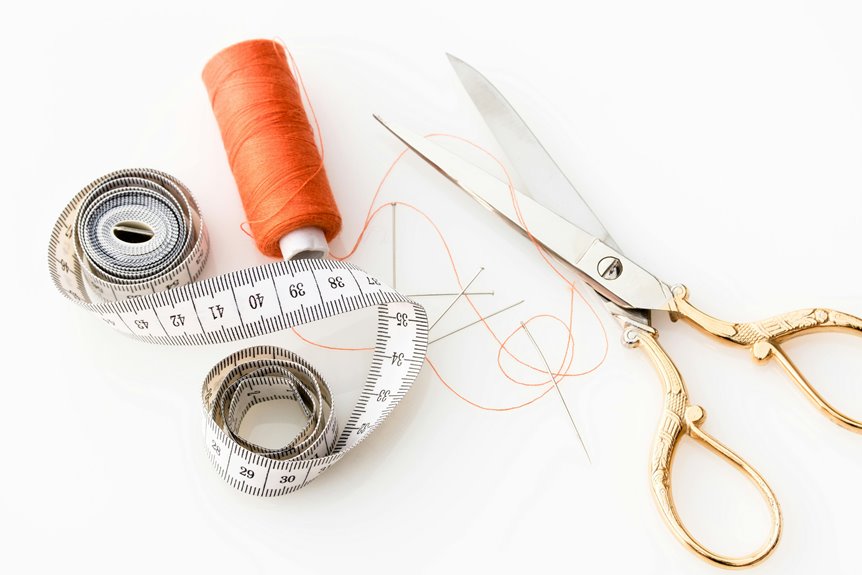
To cut and prepare gauze fabric accurately, first wash and gently iron it to prevent shrinking and wrinkles. Use sharp scissors or a rotary cutter on a flat surface, marking measurements with tailor’s chalk on the wrong side. Handle gauze gently to avoid stretching and fraying. Finish edges with pinking shears or a fabric sealant to maintain clean lines. With these basics, you’re set for precise cutting and smooth sewing—explore more tips to perfect your technique.
Key Takeaways
- Pre-wash and gently iron gauze fabric to pre-shrink and smooth wrinkles before cutting.
- Lay gauze flat on a clean, stable surface to prevent distortion during measuring and cutting.
- Use sharp scissors or rotary cutters and mark measurements on the fabric’s wrong side for accuracy.
- Handle gauze gently and avoid stretching to prevent damage and fraying while cutting.
- Treat edges with lightweight fabric sealant or zigzag stitching to minimize unraveling before sewing.
Understanding the Unique Properties of Gauze Fabric
Gauze fabric stands out for its lightweight, breathable texture that makes it perfect for airy garments and delicate projects.
Gauze fabric is prized for its light, breathable texture, ideal for airy, delicate creations.
When you work with gauze, you’ll notice its loose weave gives it a soft, slightly crinkled feel. This texture allows air to flow freely, keeping your creations light and comfortable.
However, that same loose weave means gauze can shift easily as you cut and sew, so you need to handle it gently. It’s also quite sheer, so layering or lining might be necessary depending on your project.
Because gauze stretches slightly along the bias, you should be mindful of grain direction to maintain shape.
Understanding these properties helps you anticipate how gauze behaves, ensuring your sewing process goes smoothly and your final piece looks just right.
Essential Tools for Cutting Gauze Accurately
To cut gauze fabric accurately, you’ll need a few key tools that help manage its delicate and loose weave. First, use sharp fabric scissors or a rotary cutter to achieve clean edges without snagging fibers. A rotary cutter paired with a cutting mat offers precision and smooth cuts.
Next, a set of fine, sharp pins or fabric clips will hold layers firmly without distorting the fabric. For marking, choose tailor’s chalk or washable fabric markers that won’t bleed or damage the gauze. A clear ruler or measuring tape guarantees straight, precise lines.
Finally, a flat, sturdy surface is essential to lay your gauze evenly, preventing shifting while you cut. With these tools, you’ll maintain control and accuracy, making the cutting process much smoother.
Preparing Gauze Fabric Before Cutting
Before you start cutting, you’ll want to prepare the fabric carefully to prevent shifting and fraying. Gauze is delicate and loosely woven, so taking a few simple steps will make your cutting more accurate and keep the fabric intact.
Preparing gauze fabric carefully helps prevent shifting and fraying for more precise cutting.
- Wash and dry the gauze to pre-shrink it and remove any stiffness.
- Iron the fabric gently on a low setting to smooth wrinkles without crushing the weave.
- Lay the fabric flat on a clean, stable surface to avoid distortion.
- Use pattern weights instead of pins to hold the fabric in place without creating holes or pulls.
Techniques for Marking Gauze Without Damage
When marking gauze, you’ll want to pick gentle tools that won’t snag or stain the fabric.
Always test your marks on a scrap piece first to see how they behave. Knowing when to use temporary versus permanent marks will help you avoid unwanted damage during sewing.
Choosing Gentle Marking Tools
Although gauze fabric is lightweight and delicate, you can still mark it accurately without causing damage by choosing the right tools. Opting for gentle marking instruments prevents snags, tears, or permanent stains that might ruin your project.
You’ll want tools that leave clear, removable lines without stressing the fabric fibers.
Consider these gentle marking tools:
- Water-soluble fabric pens that wash away easily
- Tailor’s chalk, which brushes off without residue
- Air-erasable pens that vanish after a few hours
- Light pencil marks using a soft, fine-point pencil
Testing Marks on Scraps
Try testing your marking tools on at least two small gauze scraps before working on your main fabric. This helps you see how each tool interacts with the delicate texture without risking damage.
Use gentle options like fabric pencils, water-soluble pens, or chalk. Apply marks lightly and observe if they smudge, bleed, or distort the fabric. Avoid tools that leave harsh impressions or cause the gauze to pucker.
Also, check how easily the marks erase or wash out, so you won’t have permanent stains. Testing guarantees you pick the safest, most effective method for your project.
Taking this step saves time and preserves your gauze’s quality, letting you sew with confidence and precision.
Temporary Vs Permanent Marks
After testing your marking tools on gauze scraps, you’ll understand which options suit your fabric best.
Choosing between temporary and permanent marks is key to preserving gauze’s delicate texture. Temporary marks let you guide your sewing without leaving damage, while permanent marks are best for long-term references.
Here’s how to approach marking gauze:
- Use water-soluble pens or chalk for temporary, easily removable marks.
- Avoid sharp tools that can snag or tear the fabric.
- For permanent marks, opt for fine fabric markers that won’t bleed or stiffen gauze.
- Always test permanence and removability on scraps before committing to your project.
Step-by-Step Guide to Cutting Gauze Fabric
Now that you’ve marked your gauze fabric carefully, it’s time to cut with precision.
You’ll want to use sharp scissors or a rotary cutter to guarantee clean edges without fraying.
Measuring accurately before cutting will help you avoid mistakes and keep your project on track.
Measuring and Marking Techniques
Cutting gauze fabric accurately requires careful measuring and marking to confirm your pieces align perfectly during sewing.
Start by laying your gauze flat on a smooth surface to avoid distortions. Use a clear ruler or measuring tape to note precise lengths and widths. Opt for a fine fabric pen or tailor’s chalk to mark your measurements gently without damaging the delicate fabric.
Keep these tips in mind:
- Measure twice to avoid errors and fabric waste
- Mark on the fabric’s wrong side to keep lines invisible on your finished piece
- Use light, short strokes to prevent permanent marks
- Align your measuring tool with the fabric’s grain for accurate shaping
Following these steps guarantees your gauze pieces are cut cleanly and ready for seamless sewing.
Cutting Tools and Methods
Although gauze fabric is delicate, you can achieve clean cuts with the right tools and methods. Start by using sharp fabric scissors or rotary cutters designed for lightweight materials to avoid snagging. Make certain your blades are freshly sharpened for smooth slicing.
Lay your gauze flat on a cutting mat, securing it with pattern weights instead of pins to prevent distortion. If you choose a rotary cutter, use a ruler to guide straight cuts precisely. For curved edges, carefully follow your marked lines without rushing.
Always cut slowly and steadily to maintain control. After cutting, avoid moving the fabric too much to keep edges aligned. With these tools and techniques, you’ll get crisp, accurate cuts that make sewing your gauze projects much easier.
Tips for Handling and Stabilizing Gauze During Cutting
When working with gauze fabric, you’ll find that its lightweight and loosely woven nature can make it tricky to handle during cutting.
To keep your fabric steady and avoid shifting, try these tips:
- Lay the gauze flat on a large, smooth surface and gently smooth out wrinkles without stretching.
- Use pattern weights instead of pins to prevent distortion and snagging.
- Cut slowly with sharp scissors or a rotary cutter to maintain control and clean lines.
- If the gauze is too slippery, sandwich it between two layers of tissue paper to add stability.
Preventing Fraying and Maintaining Clean Edges on Gauze
Three effective methods can help you prevent fraying and maintain clean edges on your gauze fabric projects.
First, use pinking shears to cut the fabric; their zigzag pattern reduces loose threads.
Cut gauze with pinking shears; their zigzag edges help minimize fraying and loose threads.
Second, apply a lightweight fabric sealant or fray check along the edges to bind fibers and stop unraveling.
Third, consider finishing edges with a narrow zigzag stitch or a serger if you have one, which secures the threads firmly.
Avoid pulling or stretching the fabric as you work—it weakens edges and encourages fraying.
Always handle gauze gently and keep your cutting tools sharp to guarantee clean cuts.
Frequently Asked Questions
Can Gauze Fabric Be Machine Washed After Cutting?
You’ll want to treat gauze fabric gently, so yes, you can machine wash it, but use a delicate cycle and cold water. This way, you’ll keep its soft charm intact without any harsh surprises.
What Are the Best Sewing Stitches for Gauze Fabric?
You’ll want to use small, tight stitches like a straight stitch or narrow zigzag for gauze fabric. These prevent fraying and maintain fabric integrity. Don’t forget to reinforce seams with a double stitch for extra durability.
How Do I Store Gauze Fabric to Prevent Damage?
You should store gauze fabric in a cool, dry place away from direct sunlight to prevent fading and weakening. Fold it gently, avoid heavy stacking, and keep it in breathable cotton bags to protect it from dust and moisture.
Can Dyes Affect the Texture of Gauze Fabric?
Yes, dyes can affect gauze fabric’s texture. When you use harsh chemicals or poor-quality dyes, the fabric might stiffen or weaken. Always test a small piece first to guarantee the texture stays soft and breathable.
Is Gauze Fabric Suitable for Heavy-Duty Sewing Projects?
Gauze fabric isn’t suitable for heavy-duty sewing projects because it’s lightweight and delicate. You’ll want to choose sturdier fabrics like denim or canvas for durability when tackling those tougher, high-stress sewing tasks.