
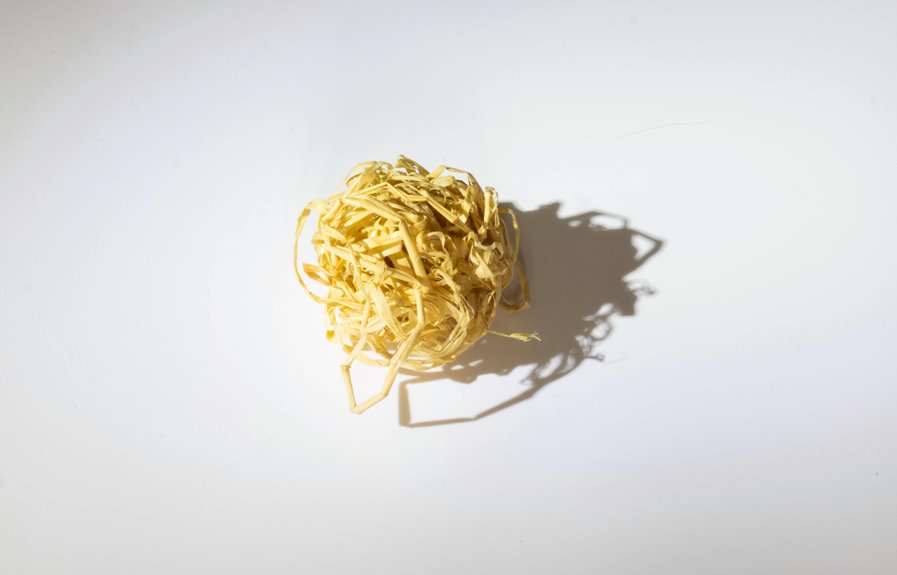
You can make your own abaca fiber paper by harvesting mature stalks, stripping and soaking the fibers for 12–24 hours to soften them, then pulping into a fibrous slurry. Set up a clean, ventilated workspace with easy water access. Form sheets evenly on a mold, using couching and tapping to remove bubbles. For textures and casting, use natural objects, flexible molds, and layering techniques. Keep going to discover how to enhance durability and create stunning sculptural effects with abaca paper.
Key Takeaways
- Soak and pulp abaca fibers for 12-24 hours to create a pliable fibrous slurry for paper-making and casting.
- Spread wet pulp evenly on molds and use couching to transfer sheets smoothly for consistent fiber distribution.
- Press wet paper gently into flexible molds for detailed casting, allowing full drying in molds to prevent warping.
- Add natural additives like aloe vera or starch during pulp prep to enhance strength, flexibility, and ink absorption.
- Use layering, texturing tools, and natural objects to create raised reliefs and organic patterns on abaca fiber paper.
Understanding the Properties of Abaca Fiber
Abaca fiber stands out for its exceptional strength and durability, making it ideal for paper-making.
When you work with abaca, you’ll notice its long, coarse fibers, which provide excellent tear resistance and flexibility. This means the paper you create will be sturdy yet pliable, perfect for both art and practical uses.
Abaca’s natural resistance to water and rot guarantees your paper lasts longer without deteriorating. Its fibers also hold ink well, giving your finished product sharp, vivid details.
You’ll appreciate that abaca pulp blends easily with other fibers, allowing you to customize texture and thickness. Understanding these properties helps you make informed choices during your papermaking process, guaranteeing you get strong, high-quality sheets suited to your creative projects.
Harvesting and Preparing Abaca Fibers
To start making your own abaca paper, you’ll need to select mature plants with strong fibers.
Then, you’ll strip and clean the fibers carefully to remove any impurities.
Finally, drying and softening the fibers properly will prepare them for the papermaking process.
Selecting Mature Abaca Plants
Choosing the right plant is essential when harvesting fibers for paper. To get the best quality abaca fibers, you need to pick mature plants carefully. Mature abaca plants typically show specific traits that indicate fiber strength and length, vital for your paper-making process.
Look for these key signs when selecting your plants:
- Sturdy stalks with a diameter of at least 2 cm
- Leaves that have begun to yellow or dry near the base
- Plants aged between 8 to 12 months, ensuring fiber maturity
Avoid young or overly old plants as their fibers won’t offer the ideal balance of flexibility and durability.
Stripping and Cleaning Fibers
Once you’ve identified and harvested mature plants, the next step is to strip and clean the fibers. You’ll carefully peel away the outer layers of the stalk to reveal the long, strong abaca fibers inside. Use a dull knife or your hands to strip away the pulpy material, then rinse the fibers in clean water to remove dirt and sap. This cleaning process is essential for quality paper.
| Step | Description |
|---|---|
| 1. Peel | Remove outer bark and pulp |
| 2. Strip | Extract long fibers carefully |
| 3. Rinse | Wash fibers in clean water |
| 4. Inspect | Check for impurities or debris |
| 5. Repeat | Repeat stripping if needed |
Keeping fibers clean guarantees stronger, smoother paper later.
Drying and Softening Process
Sunlight and air play essential roles in drying abaca fibers after cleaning. You want to spread the fibers evenly in a well-ventilated area, avoiding direct contact with the ground to prevent contamination.
As the fibers dry, they become easier to handle and less prone to mold. Once dry, softening the fibers is vital for flexibility and texture. You can achieve this by:
- Gently beating the fibers with a wooden mallet to loosen them
- Soaking the dried fibers in water for a few hours to rehydrate
- Rubbing the fibers between your palms to break down stiffness
These steps prepare the abaca fibers for pulping, ensuring your handmade paper has the ideal strength and pliability for relief and casting projects.
Soaking and Pulping the Fibers
Now that you’ve prepared the abaca fibers, it’s time to soak them properly to soften and separate the strands.
You’ll want to soak the fibers for the right amount of time—usually between 12 to 24 hours—to guarantee they’re ready for pulping.
Proper soaking makes the pulping process smoother and helps you achieve a better paper texture.
Fiber Preparation Techniques
Start by soaking the abaca fibers to loosen their tough outer layers and make pulping easier.
Once soaked, you’ll want to break down the fibers into a workable pulp. This process guarantees a smooth, consistent paper texture.
To prepare your fibers effectively, keep these tips in mind:
- Use clean, room-temperature water to avoid damaging the fibers.
- Agitate the fibers gently during soaking to promote even softening.
- After soaking, manually or mechanically beat the fibers until they reach a fibrous slurry consistency.
Optimal Soaking Duration
Determining the ideal soaking time for abaca fibers can make all the difference in achieving a smooth pulp. Typically, soaking the fibers for 24 to 48 hours softens them enough to separate the strands without causing decay.
You don’t want to under-soak; the fibers will remain stiff and difficult to process. Over-soaking, however, can weaken the fibers, leading to a less durable paper.
Check the fibers periodically during soaking—once they’re pliable and easily torn by hand, they’re ready. If you’re in a hurry, warm water can speed up the process but watch closely to avoid fermentation.
Setting Up Your Paper-Making Workspace
Before you plunge into making your abaca fiber paper, you’ll want to organize a clean, well-ventilated workspace that can handle water and pulp without causing damage. Your setup should prioritize efficiency and safety to keep the process smooth.
Focus on these essentials:
- A sturdy, waterproof table or surface to prevent water damage.
- Easy access to running water for rinsing and cleaning tools.
- Good ventilation to help dry your paper faster and reduce humidity.
Arrange your materials within reach to minimize movement during paper-making. Keep towels or sponges handy for spills, and guarantee proper lighting to inspect your work closely.
Preparing your workspace thoughtfully sets the foundation for successful abaca fiber paper crafting.
Techniques for Forming Abaca Fiber Sheets
With your workspace ready, you can focus on shaping the abaca fibers into sheets. Begin by evenly spreading the wet pulp onto your mold. Use gentle, circular motions to distribute the fibers, ensuring no thick spots form. You can experiment with layering for texture or added strength. Here’s a quick guide to forming techniques:
| Technique | Description |
|---|---|
| Couching | Transfer sheet onto felt smoothly |
| Layering | Add multiple thin fiber layers |
| Beating | Lightly tap to remove air bubbles |
Master these, and you’ll create uniform, durable sheets ready for drying. Remember, consistent fiber distribution makes all the difference in the quality of your handmade abaca paper.
Drying and Pressing Your Handmade Paper
Once you’ve formed your abaca fiber sheets, drying and pressing them properly is crucial to achieve the right texture and strength.
Start by gently removing excess water with a sponge or cloth, being careful not to disturb the fibers.
Then, stack your sheets between absorbent materials like blotting paper or clean towels to prepare for pressing.
Apply pressure evenly using:
- A book press or heavy boards weighted down
- A clean, flat surface to avoid warping
- Consistent pressure for several hours or overnight
This process flattens the fibers, removes moisture, and enhances durability.
After pressing, air-dry your sheets in a well-ventilated area away from direct sunlight to prevent brittleness.
Proper drying and pressing guarantee your handmade paper is ready for casting and relief work with maximum strength and texture.
Creating Textured Reliefs With Abaca Paper
After your abaca paper has dried and been pressed to the right firmness, you can start shaping its surface to add depth and dimension.
Use tools like embossing styluses, textured stamps, or natural objects—leaves, fabric, or mesh—to press into the paper gently. Work while the paper is slightly damp if you want sharper impressions; dry sheets yield softer textures.
Layering thin strips of abaca fiber on top before pressing can create raised reliefs. Experiment with folding, crumpling, or tearing edges to introduce organic patterns.
Remember, the goal is to build tactile interest, so vary pressure and tool choice to achieve diverse effects. Let each textured piece dry fully to maintain its form.
This hands-on approach lets you transform flat sheets into dynamic, sculptural art.
Casting Methods Using Abaca Fiber Paper
Although abaca fiber paper is known for its delicate texture, you can leverage its flexibility to create unique cast forms. Start by soaking the paper to soften it, making it easier to mold into shapes.
Abaca fiber paper’s delicate yet flexible nature allows for creative casting when softened and molded carefully.
When casting, you’ll want to:
- Use a flexible mold to accommodate the paper’s pliability and capture fine details.
- Press the wet paper gently but firmly into the mold to avoid tearing while ensuring full coverage.
- Allow the cast paper to dry completely in the mold to maintain its shape and prevent warping.
This method helps you achieve intricate, lightweight sculptures or decorative elements.
Tips for Enhancing Durability and Aesthetic Appeal
Enhance your abaca fiber paper by applying simple techniques that boost both its strength and visual charm. You can add natural additives like aloe vera or starch during pulp preparation to improve flexibility and durability. Press your paper thoroughly to reduce moisture and create a smooth surface, which helps in better ink absorption and crisp details. Consider layering thin sheets to increase thickness without sacrificing texture. Finally, experiment with natural dyes or embedded plant fibers for unique aesthetics.
| Tip | Benefit |
|---|---|
| Add natural additives | Increases flexibility & strength |
| Thorough pressing | Creates smooth, durable surface |
| Layering sheets | Enhances thickness and texture |
| Use natural dyes/fibers | Adds unique visual appeal |
Frequently Asked Questions
Can Abaca Fiber Paper Be Recycled After Use?
You can recycle abaca fiber paper, but it depends on its condition. If it’s clean and free of heavy coatings or contaminants, you can usually recycle it like other natural fiber papers. Check local guidelines to be sure.
What Tools Are Best for Cutting Dried Abaca Paper?
Wondering which tools slice through dried abaca paper cleanly? You’ll want sharp craft knives or rotary cutters for precision. Scissors work too, but for crisp edges, those blades will give you the smoothest cuts every time.
How Long Does Abaca Fiber Paper Typically Last Without Degradation?
You’ll find abaca fiber paper can last decades if stored properly—away from moisture, direct sunlight, and extreme temperatures. Its natural strength helps resist degradation, but keeping it in controlled conditions really extends its lifespan considerably.
Are There Eco-Friendly Dyes Suitable for Abaca Paper?
You can use eco-friendly dyes like plant-based, natural, or low-impact synthetic dyes for abaca paper. They’re safe, sustainable, and won’t harm the environment while providing vibrant, lasting colors for your projects.
Can Abaca Fiber Paper Be Laminated for Added Strength?
Imagine your delicate abaca paper shielded from wear and tear. You can laminate it for added strength, but be cautious—heat and adhesives might alter its texture. Test a small piece first to verify it holds up beautifully.