
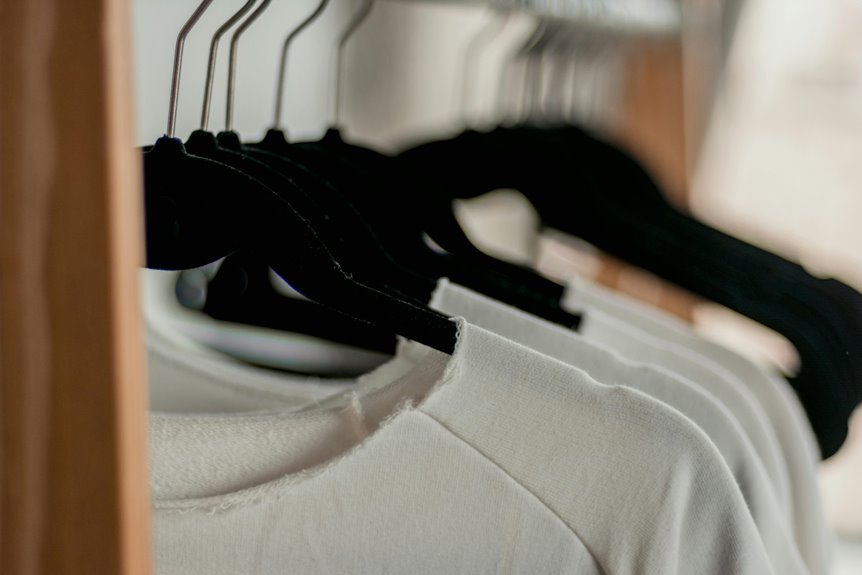
When choosing between Loopwheel and Ringspun cotton for premium tees, know that Loopwheel offers a soft, dense fabric with exceptional durability thanks to its vintage knitting technique, but it’s pricier and less common. Ringspun cotton feels finer and silkier with smooth, twisted yarn, making it more affordable and widely available. Both provide comfort and style, but your lifestyle and budget will guide the best fit. Keep exploring to uncover more details about these fabrics.
Key Takeaways
- Loopwheel fabric offers exceptional softness and durability with unique vintage knitting, creating small tight loops on the fabric’s back.
- Ringspun cotton features finely twisted fibers, resulting in a softer, smoother, and more consistent yarn than regular cotton.
- Loopwheel production is slower and labor-intensive, leading to higher prices and limited availability, often in niche markets.
- Ringspun cotton tees are more affordable, widely available, and provide a sleek, lightweight feel suited for everyday wear.
- Loopwheel fabric suits timeless, contemporary styles with enhanced comfort, while ringspun cotton fits modern, versatile fashion preferences.
What Is Loopwheel Fabric?
Loopwheel fabric is a unique type of knit made on vintage loopwheel machines that create small, tight loops on the back of the fabric.
When you wear a loopwheel shirt, you’ll notice its exceptional softness and durability, thanks to this slow and precise knitting method.
These machines produce fabric without stretching the yarn, which keeps the fibers strong and results in a denser, heavier fabric.
Because the process is slower, loopwheel textiles are often limited in production, making them more exclusive.
You’ll also appreciate the fabric’s natural elasticity and breathability, which come from the loops themselves.
Understanding Ringspun Cotton
When you feel ringspun cotton, you’ll notice its softness comes from twisting and thinning the fibers during production.
This process not only makes the fabric smoother but also boosts its durability.
Understanding how ringspun cotton is made helps you appreciate why it’s a popular choice for quality t-shirts.
Ringspun Cotton Process
Although you mightn’t see the difference at first glance, understanding the ringspun cotton process reveals why this fabric feels softer and lasts longer.
When cotton fibers are spun in this method, the fibers are continuously twisted and thinned, which aligns them more tightly than regular cotton. This twisting strengthens the yarn by making it denser and smoother.
As you look closer, you’ll notice that ringspun cotton yarn has fewer irregularities, resulting in a more consistent thread. This process requires more time and skill, but it produces a finer, more durable fabric.
Unlike traditional cotton that uses shorter, staple fibers, ringspun cotton often uses longer fibers and spins them into a tighter yarn, giving your t-shirts a quality that stands out in both feel and resilience.
Softness and Durability
You’ll immediately notice ringspun cotton’s softness the moment you touch it. This fabric feels smoother because its fibers are twisted and thinned, creating a finer, stronger yarn.
Unlike regular cotton, ringspun cotton offers a plush texture that’s gentle on your skin, making it ideal for daily wear. Beyond softness, its durability stands out—you’ll find that shirts made from ringspun cotton resist pilling and maintain shape longer, even after multiple washes.
This combination means you get a comfortable, long-lasting garment that doesn’t sacrifice quality. When you pick a ringspun cotton t-shirt, you’re choosing fabric engineered to balance softness with resilience, ensuring your shirt looks and feels great over time.
The Manufacturing Processes Behind Loopwheel and Ringspun
You’ll notice that loopwheel fabric is made using a unique knitting technique that creates tight, circular loops for extra softness and durability.
On the other hand, ringspun fabric starts with yarn that’s twisted to make it stronger and smoother.
Understanding these different manufacturing steps helps you see why each fabric feels and performs the way it does.
Loopwheel Knitting Technique
Loopwheel knitting creates fabric with exceptional durability and softness by using vintage circular knitting machines that produce one continuous loop of yarn at a time.
When you wear loopwheel fabric, you’re experiencing a slow, meticulous process where each stitch forms a tiny loop, resulting in a smooth, dense knit. These machines knit at a slower pace than modern alternatives, which means the fabric has fewer tensions and stress points, enhancing its longevity and comfort.
You’ll notice a distinct texture and a natural stretch without the fabric losing shape. Because the loops are continuous and unbroken, the fabric breathes well and resists pilling.
This traditional method demands more time and skill, but it rewards you with a premium, long-lasting t-shirt that ages beautifully.
Ringspun Yarn Formation
While loopwheel knitting focuses on the unique way fabric is constructed, the quality of the yarn itself plays a big role in the final feel and durability of a t-shirt.
Ringspun yarn is made by continuously twisting and thinning cotton fibers, which creates a stronger, smoother, and more refined thread. You’ll notice that ringspun yarn has a tighter, more compact structure compared to regular yarn, which gives the fabric a softer hand and better resistance to pilling.
During production, cotton fibers are spun on a ring-spinning frame, where the fibers twist together under consistent tension. This process aligns the fibers more closely, resulting in a yarn that’s both durable and comfortable.
When you wear a ringspun t-shirt, you’re feeling this meticulous yarn formation at work.
Texture and Feel: Comparing Comfort Levels
Two distinct fabric types deliver noticeably different sensations against your skin.
When you wear loopwheel fabric, you’ll feel its soft, dense texture that drapes smoothly without irritation. Ringspun cotton offers a finer, lighter touch, making it great for all-day comfort.
Here’s what you can expect from each:
- Loopwheel fabric feels thicker and plush, providing a cozy warmth.
- Ringspun cotton is smoother and cooler, ideal for hot weather.
- Loopwheel’s unique knitting reduces seams, enhancing comfort.
- Ringspun’s tighter yarn twist gives a silky, refined finish.
Durability and Longevity of Each Fabric
Feeling comfortable in your t-shirt is just one part of the experience; you’ll also want it to last through many wears and washes.
Loopwheel fabrics are known for their exceptional durability thanks to the traditional circular knitting method, which creates a stronger, denser knit. This means your Loopwheel t-shirt resists stretching and maintains its shape longer than many other fabrics.
Loopwheel fabric’s dense, circular knit ensures exceptional durability and long-lasting shape retention.
Ringspun cotton, while softer initially, tends to wear down faster because its fibers are spun thinner and more loosely. However, high-quality ringspun shirts still offer respectable longevity with proper care.
If durability and longevity are priorities for you, Loopwheel is often the better choice, especially if you want a shirt that stays looking fresh and resilient after repeated use.
Environmental Impact and Sustainability Considerations
Since you’re likely considering not just comfort and durability but also the environmental footprint of your t-shirt, it’s important to examine how Loopwheel and Ringspun fabrics compare in sustainability.
Loopwheel’s slow, traditional manufacturing uses less energy but produces smaller batches, which can mean less waste. Ringspun cotton, while widely produced, often involves more intensive processing.
Here’s how they stack up:
- Loopwheel uses old-school circular knitting, reducing material waste.
- Ringspun cotton, though soft, may require more water and chemicals.
- Loopwheel’s limited production supports local manufacturing, lowering transport emissions.
- Ringspun’s mass production can lead to higher environmental costs but benefits from scale efficiencies.
Choosing Loopwheel can mean supporting eco-friendly craftsmanship, while Ringspun offers broader availability with a larger footprint.
Common Uses and Applications in Fashion
Although both Loopwheel and Ringspun fabrics offer unique qualities, they find their places in distinct fashion niches.
When you want that vintage, durable feel, Loopwheel tees shine, often favored in heritage and retro-inspired collections. Their dense, soft texture makes them perfect for casual wear that withstands repeated washes and maintains shape.
On the other hand, Ringspun fabric appeals if you’re after a smoother, lighter option. Its fine, tightly twisted yarns give you a sleek finish, ideal for contemporary styles and layering. Ringspun tees also work well for brands emphasizing softness and a modern fit.
Knowing these differences helps you pick the right fabric for your fashion goals, whether you’re designing timeless classics or trendy, everyday pieces.
Price Differences and Market Availability
Choosing between Loopwheel and Ringspun fabrics doesn’t just affect style and comfort—it also impacts your budget and sourcing options.
Loopwheel shirts often come with a higher price tag due to their labor-intensive production and limited manufacturing locations. Ringspun fabrics, meanwhile, are generally more affordable and widely available, making them easier to find in various markets.
Here’s what you should know about price differences and availability:
- Loopwheel production is slower, increasing costs.
- Ringspun fabric benefits from mass production, reducing prices.
- Loopwheel tees are less common, often sold by niche brands.
- Ringspun options appear in most mainstream retail stores.
Knowing these factors helps you plan your purchase wisely.
How to Choose Between Loopwheel and Ringspun for Your Needs
What factors matter most when picking between Loopwheel and Ringspun fabrics for your wardrobe?
First, consider comfort and durability. Loopwheel offers a dense, soft feel and exceptional longevity, ideal if you want a premium, long-lasting tee. Ringspun is softer than standard cotton and more affordable, making it perfect for everyday wear without breaking the bank.
Next, think about style and fit—Loopwheel’s unique knitting creates a vintage look, while Ringspun offers versatility in design.
Also, factor in your budget; Loopwheel tends to be pricier due to its complex manufacturing.
Finally, assess availability—Ringspun tees are widely accessible, whereas Loopwheel is more niche.
Weigh these elements, and you’ll find the fabric that fits your lifestyle and personal taste best.
Frequently Asked Questions
Can Loopwheel and Ringspun Fabrics Be Blended With Synthetic Fibers?
Yes, you can blend loopwheel and ringspun fabrics with synthetic fibers to enhance durability and stretch. You’ll enjoy improved performance while maintaining softness, but always check the blend ratio for the best feel and quality.
How Do Washing Instructions Differ Between Loopwheel and Ringspun Shirts?
Imagine you accidentally washed your delicate loopwheel shirt in hot water—it shrank! You’ll want to use cold water and gentle cycles for loopwheel, while ringspun fabrics handle regular washing with fewer risks of damage.
Are Loopwheel and Ringspun Fabrics Hypoallergenic?
You’ll find that both loopwheel and ringspun fabrics are generally hypoallergenic, as they use natural cotton fibers. However, if you have sensitive skin, always check for any treatments or dyes that might cause irritation before wearing.
What Are the Best Brands Known for Loopwheel T-Shirts?
Wondering which brands nail the perfect loopwheel tee? You’ll want to check out Loopwheeler, Sunspel, and Tate + Yoko. They craft incredibly soft, durable shirts that’ll keep you comfortable and stylish all day long.
Can Loopwheel and Ringspun Fabrics Be Used for Printing Designs?
You can definitely print designs on both loopwheel and ringspun fabrics. Just remember, loopwheel’s texture may need special care during printing to keep its softness, while ringspun handles most printing methods easily and crisply.