
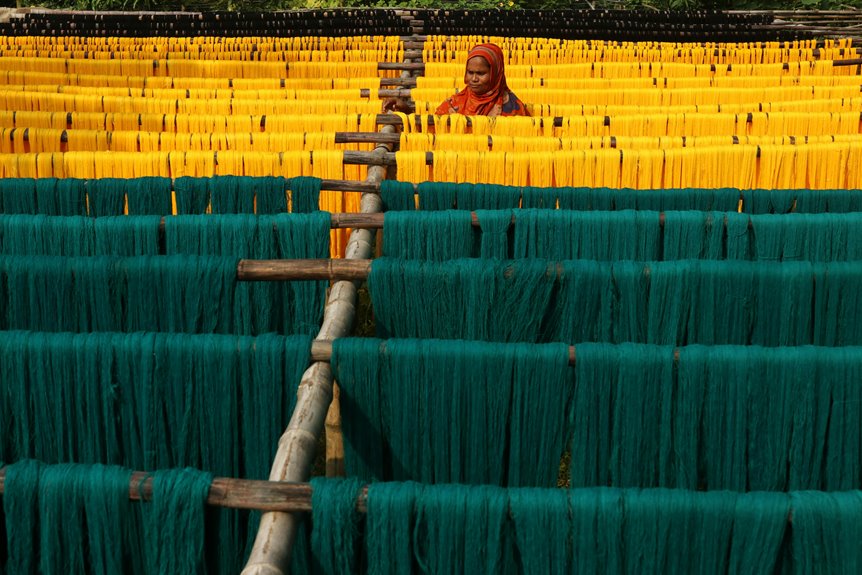
To locate reliable 100% polyester fabric suppliers in Bangladesh, you should check for recognized certifications like OEKO-TEX and ISO 9001 to guarantee quality and ethical standards. Request fabric samples to verify texture and durability, and clarify pricing structures along with minimum order quantities. Confirm suppliers’ production capacity and lead times to meet your schedule. Also, prioritize those committed to sustainable practices and fair labor conditions to support responsible sourcing. Exploring these factors will give you a solid foundation for making the right choice.
Key Takeaways
- Verify suppliers hold certifications like OEKO-TEX and ISO 9001 for quality assurance and sustainability compliance.
- Request fabric samples to evaluate 100% polyester purity, texture, colorfastness, and shrinkage resistance.
- Confirm suppliers’ production capacity, lead times, and flexibility for order scaling or rush requests.
- Review supplier adherence to labor laws (SA8000, BSCI) and ethical manufacturing practices with audit reports.
- Check client testimonials, industry reputation, and willingness to provide transparent documentation and factory visits.
Evaluating Supplier Credentials and Certifications
How can you guarantee that a polyester fabric supplier in Bangladesh meets your quality and ethical standards?
Start by examining their credentials closely. Check if they hold internationally recognized certifications like OEKO-TEX Standard 100, GRS (Global Recycled Standard), or ISO 9001, which indicate compliance with safety, sustainability, and quality management.
Examine credentials carefully, ensuring certifications like OEKO-TEX, GRS, or ISO 9001 for quality and sustainability compliance.
Also, verify their adherence to labor laws by confirming certifications such as SA8000 or BSCI, ensuring ethical working conditions. Don’t hesitate to request proof of these certifications and cross-check with issuing bodies.
Additionally, assess their track record by reviewing client testimonials and industry reputation.
Analyzing Fabric Quality and Specifications
When choosing polyester fabric suppliers in Bangladesh, you need to analyze fabric quality and specifications carefully to confirm the material meets your product requirements.
Start by examining the fabric’s weight, weave, and finish, as these affect durability and feel. Check if the polyester is 100% pure or blended, since blends alter performance.
Request fabric samples to assess texture and colorfastness firsthand. Also, verify the supplier’s compliance with industry standards like ISO or OEKO-TEX, which guarantee fabric safety and quality.
Don’t overlook the fabric’s shrinkage rate and resistance to pilling or wrinkling, as these impact the final product’s appearance and longevity.
Understanding Pricing and Minimum Order Quantities
Although quality matters most, understanding pricing and minimum order quantities is crucial for managing your budget and supply chain effectively. When you negotiate with polyester fabric suppliers in Bangladesh, knowing these factors helps you avoid unexpected costs and guarantees your order size fits your needs. Pricing usually depends on fabric type, quantity, and current market demand, while minimum order quantities (MOQs) vary by supplier and production capabilities.
| Pricing Factors | Minimum Order Quantities (MOQ) |
|---|---|
| Fabric type | 500 to 5,000 meters |
| Order volume discounts | Higher volume lowers MOQ |
| Market demand | Some suppliers offer samples |
| Payment terms | MOQs can be flexible on request |
Assessing Production Capacity and Lead Times
Understanding pricing and minimum order quantities sets a solid foundation, but you also need to analyze a supplier’s production capacity and lead times to keep your project on schedule.
You want to verify your supplier can handle your order volume without delays. Ask about their daily or monthly production output and whether they can scale if demand increases. Also, clarify typical lead times from order placement to shipment.
Consider these key points when evaluating suppliers:
- Maximum production volume per month
- Average lead time for standard orders
- Flexibility for rush orders or scaling up
- Inventory management and raw material availability
- Past performance on meeting deadlines
Verifying Ethical and Sustainable Manufacturing Practices
Since consumers and brands increasingly demand transparency, you should verify that your polyester fabric suppliers in Bangladesh follow ethical and sustainable manufacturing practices.
Start by requesting certifications like OEKO-TEX, GRS, or ISO 14001, which prove compliance with environmental and social standards. Visit factories if possible, or ask for virtual tours to assess working conditions and waste management.
Inquire about their energy use, water consumption, and chemical handling to guarantee they minimize ecological impact. Don’t hesitate to request third-party audit reports verifying labor rights, fair wages, and safe work environments.
Choosing suppliers committed to sustainability not only protects your brand reputation but also supports responsible industry growth. By prioritizing these practices, you contribute to a more ethical and environmentally friendly supply chain.
Frequently Asked Questions
What Are the Common Shipping Methods for Polyester Fabric From Bangladesh?
You’ll commonly use sea freight for cost efficiency, air freight for speed, and sometimes courier services for smaller shipments. Each method balances cost, time, and shipment size, so choose based on your delivery needs and budget.
How Do Customs Regulations Affect Polyester Fabric Imports From Bangladesh?
You’d think customs just wave your polyester fabric through, but they actually scrutinize every detail. You’ll face tariffs, paperwork, and inspections, which can delay shipments and add unexpected costs, making your import journey less smooth.
Can Suppliers Provide Customized Fabric Designs or Colors?
Yes, you can usually get customized fabric designs or colors. Most suppliers work closely with you to meet your specific needs, ensuring the polyester fabric matches your desired style and color palette accurately.
What Payment Terms Are Typically Accepted by Polyester Fabric Suppliers?
You’ll usually find suppliers accepting payment terms like advance payment, letter of credit, or telegraphic transfer. They might also offer partial payments or net terms, depending on your relationship and order size, so always clarify upfront.
How Do Suppliers Handle Fabric Defects or Returns?
Suppliers usually inspect fabric before shipping and offer returns or replacements for defects. You should report issues promptly, provide evidence, and negotiate solutions, ensuring both sides agree on defect handling and return policies to avoid misunderstandings.