
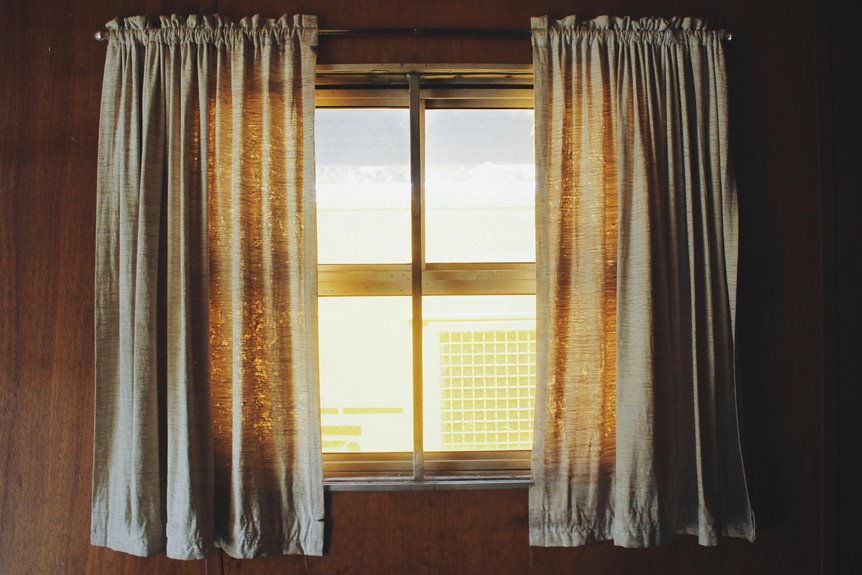
If you want natural elegance and breathability, linen curtains offer a soft, timeless look that gently filters light but needs gentle care and wrinkles easily. Casement fabric, on the other hand, is durable, low-maintenance, and provides more control over light and privacy with a polished texture. Your choice depends on whether you prioritize style and softness or durability and function. Exploring further will help you find the perfect fabric for your space and lifestyle.
Key Takeaways
- Linen curtains offer timeless elegance with natural texture and breathable softness, ideal for relaxed, rustic, or coastal interiors.
- Casement fabric is highly durable, easy to maintain, and suited for high-moisture areas like kitchens and bathrooms.
- Linen diffuses light gently, creating a warm glow, while casement fabric provides customizable light control and privacy.
- Linen is eco-friendly and biodegradable, whereas casement fabric’s sustainability depends on fiber type and certifications.
- Linen curtains tend to be pricier but add long-term value, while casement fabric offers budget-friendly durability and modern style versatility.
Overview of Linen Curtains
Linen curtains offer a timeless elegance that enhances any room’s ambiance. When you choose linen, you’re picking a fabric known for its natural texture and breathable quality, which keeps your space feeling fresh.
You’ll appreciate how linen drapes softly, allowing light to filter through gently without overwhelming the room. Plus, linen’s durability means your curtains won’t wear out quickly, even with daily use.
If you want a look that’s both classic and relaxed, linen fits perfectly. It also adapts well to different interior styles, from modern to rustic, making it a versatile choice.
When you invest in linen curtains, you’re getting a blend of practicality and style that elevates your home effortlessly.
Characteristics of Casement Fabric
When you choose casement fabric, you’ll notice its unique texture and tight weave that add both style and strength.
It’s built to last, making it a smart choice if you want something durable and easy to maintain.
Let’s explore what makes casement fabric stand out in these areas.
Texture and Weave
Casement fabric offers a distinct texture that feels both smooth and structured to the touch, making it ideal for window treatments.
When you run your hand over casement fabric, you’ll notice a tightly woven surface that provides a crisp, clean appearance. Unlike the loose weave of linen, casement fabric’s weave is denser, which helps maintain its shape and enhances its ability to filter light effectively.
The weave pattern is usually plain or twill, giving it subtle visual interest without overwhelming your room’s décor. This texture balances softness with firmness, allowing your curtains to drape neatly without sagging.
If you prefer a fabric that combines elegance with a polished finish, casement fabric’s texture and weave will meet your expectations perfectly.
Durability and Maintenance
Durability plays a key role in choosing the right fabric for your curtains, and casement fabric stands out for its strength and resilience. You’ll find it resists wear and tear better than many alternatives, making it ideal for high-traffic areas or homes with kids and pets. Maintenance is straightforward since casement fabric often resists stains and wrinkles, and it typically requires gentle machine washing or spot cleaning.
| Feature | Casement Fabric | What It Means for You |
|---|---|---|
| Tear Resistance | High | Lasts longer under stress |
| Stain Resistance | Moderate to High | Easier to clean spills |
| Wrinkle Tolerance | Good | Looks neat with less ironing |
| Cleaning Method | Machine wash/Spot clean | Convenient upkeep |
| Fade Resistance | Moderate | Retains color over time |
Texture and Appearance Comparison
Texture plays an essential role in how your curtains influence a room’s atmosphere. When you choose linen curtains, you get a natural, slightly coarse texture that adds warmth and a relaxed elegance.
Linen’s subtle irregularities create visual interest, making your space feel inviting and organic. On the other hand, casement fabric tends to be smoother and more uniform, offering a sleek, polished look. Its finer weave reflects light differently, giving your room a more refined and contemporary vibe.
If you want a casual, earthy feel, linen’s texture suits you well. But if you prefer clean lines and a minimalist aesthetic, casement fabric will enhance that effortlessly.
Both options bring unique character, so consider the mood you want before making your decision.
Durability and Maintenance
While the look and feel of your curtains set the tone for a room, how they hold up over time matters just as much. Linen curtains offer natural durability but can wrinkle easily and may need gentle washing. Casement fabric tends to be more resilient and stain-resistant, often requiring less maintenance. To help you decide, here’s a quick durability and maintenance comparison:
| Feature | Linen Curtains |
|---|---|
| Durability | Moderate; prone to wrinkles |
| Maintenance | Hand or gentle machine wash |
| Stain Resistance | Low; absorbs stains easily |
| Fading Resistance | Moderate; sunlight can fade |
| Lifespan | 3-5 years with care |
| Feature | Casement Fabric |
| Durability | High; resists wear and tear |
| Maintenance | Easy; often machine washable |
| Stain Resistance | High; repels stains |
| Fading Resistance | High; color holds longer |
| Lifespan | 5-8 years or more |
Light Control and Privacy Options
When choosing between linen curtains and casement fabric, you’ll want to contemplate how much light each lets in and how well they protect your privacy.
Linen tends to filter light softly, creating a warm glow, while casement fabric often offers stronger light blockage.
Understanding these differences helps you pick the best option for your room’s lighting and privacy needs.
Light Filtering Capabilities
Because light control and privacy are key factors in choosing window treatments, understanding how linen curtains and casement fabric handle these aspects is essential.
Linen curtains naturally diffuse sunlight, creating a soft, warm glow in your space without completely blocking light. They’re perfect if you want a bright room with gentle light filtering.
On the other hand, casement fabric varies more widely in opacity, giving you options from sheer to denser weaves. This flexibility lets you better control how much light enters, depending on the fabric weight you select.
If you prefer precise light filtering, casement fabric offers more tailored choices. Linen leans toward subtle light diffusion, while casement fabric can either softly filter or considerably reduce light based on your needs.
Privacy Enhancement Levels
Although both linen curtains and casement fabric offer privacy, they do so in different ways that affect your space’s overall feel and function.
Linen curtains provide a soft, diffused shield, allowing natural light while obscuring direct views. This makes them ideal if you want privacy without sacrificing brightness.
On the other hand, casement fabric typically offers a tighter weave or layering options, giving you more control over privacy levels. If you need complete darkness or maximum privacy, casement fabric can accommodate blackout liners or heavier materials.
When choosing, consider how much light you want versus how much privacy you need.
Linen’s airy texture suits relaxed spaces, while casement fabric’s versatility works well if you want customizable privacy and light control throughout the day.
Style and Design Versatility
If you want curtains that adapt easily to different interior styles, both linen and casement fabrics offer unique advantages.
Linen’s natural texture and slight irregularities give your space a relaxed, timeless look, perfect for rustic, coastal, or minimalist themes. It drapes beautifully, adding softness without overwhelming your décor.
Casement fabric, often smoother and more tightly woven, presents a sleek, polished appearance that suits modern, contemporary, or traditional interiors. It holds shape well, allowing for crisp, tailored designs like pleats or panels.
You can find casement fabric in a broader range of patterns and colors, giving you more options to match your personal style.
Ultimately, your choice depends on whether you prefer a casual, organic feel or a refined, structured look.
Environmental Impact and Sustainability
When choosing between linen and casement fabric, you should consider their environmental impact and sustainability.
Linen comes from flax plants, which require less water and pesticides compared to cotton or synthetic fibers, making it a more eco-friendly choice. It’s biodegradable and often produced using minimal chemicals, so it’s easier on the planet.
Casement fabric varies widely—some are synthetic like polyester, derived from petroleum, which isn’t biodegradable and consumes more energy during production. However, if you opt for natural or recycled casement fabrics, you can reduce your environmental footprint.
To make a sustainable choice, look for certifications like OEKO-TEX or GOTS. Ultimately, linen tends to have a lower environmental impact, but your choice depends on the specific casement fabric’s source and production practices.
Cost Considerations and Value
Choosing between linen curtains and casement fabric involves weighing several cost factors that affect their overall value.
Linen curtains typically come at a higher price due to the natural fiber’s durability and premium feel. However, they offer long-term value since they age well and can last for years with proper care.
Casement fabric, often made from synthetic or blended materials, tends to be more budget-friendly upfront. While it may not have linen’s luxurious texture, casement fabric can still provide good durability and easy maintenance, making it a cost-effective choice for many buyers.
Your decision should factor in not just the initial purchase price but also how each fabric’s lifespan and upkeep costs fit your budget and style needs.
Best Uses for Different Room Types
Because each room in your home serves a unique purpose, selecting the right curtain fabric can enhance both function and style.
Linen curtains offer a breezy, natural look ideal for living rooms or bedrooms where you want soft light and a relaxed vibe.
Casement fabric, known for durability and tighter weaves, suits kitchens or bathrooms needing moisture resistance and easier cleaning.
Consider these tips for your choices:
- Living rooms: Linen curtains create warmth and soften sunlight.
- Bedrooms: Linen adds coziness and breathability for restful sleep.
- Kitchens: Casement fabric resists stains and handles humidity well.
- Bathrooms: Casement fabric offers better moisture control and durability.
Frequently Asked Questions
Can Linen Curtains Be Machine Washed Without Damage?
Imagine Sarah, who gently machine washed her linen curtains on a delicate cycle. You can do the same, but always use cold water and mild detergent to avoid damage, and air dry to keep them looking fresh and crisp.
Are Casement Fabrics Suitable for Outdoor Use?
You can use casement fabrics outdoors if they’re treated for weather resistance, but untreated ones might fade or mildew. Always check the fabric’s specifications to guarantee it’s durable enough for outdoor conditions before using it outside.
Do Linen Curtains Require Lining for UV Protection?
You might imagine linen curtains as delicate shields; they don’t block UV rays well on their own. You’ll want to line them to protect your interiors from sun damage effectively and keep your curtains lasting longer.
How Do Casement Fabrics React to High Humidity Environments?
You’ll find casement fabrics handle high humidity well since they’re typically designed to resist moisture and mildew. They dry quickly, maintaining their shape and color, so you won’t have to worry about damage or unpleasant odors.
Can Both Fabrics Be Custom Dyed to Match Decor?
Imagine vibrant sunsets or muted earth tones—both fabrics can be custom dyed to match your decor. You’ll find linen absorbs dyes richly, while casement fabric offers a smoother, more even color finish, letting you personalize effortlessly.