
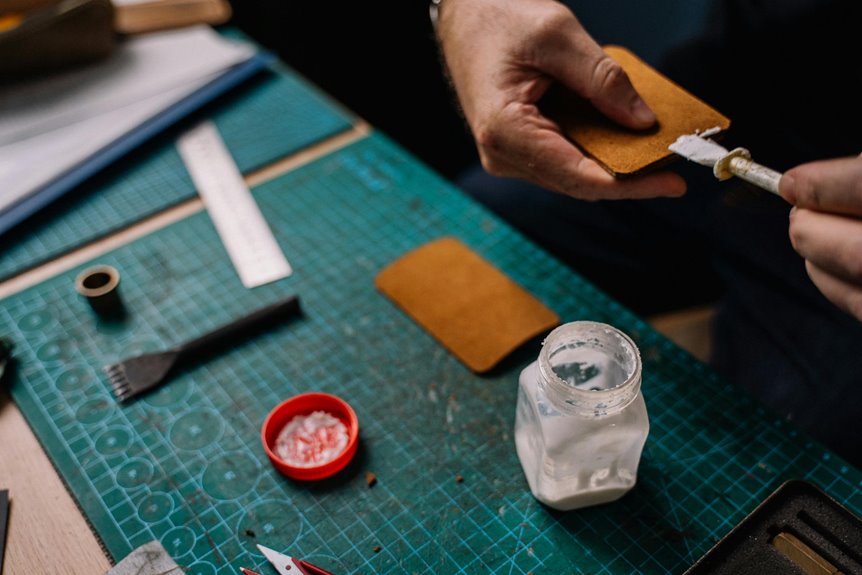
When bonding leather to velvet, choose a flexible adhesive like contact cement or fabric glue designed for both materials to avoid damage. Prepare surfaces carefully—clean, dry, and lightly scuff leather, then apply glue sparingly in thin layers to prevent stiffness on velvet. Press firmly and allow proper curing time to guarantee a lasting bond. If you want to master this technique and troubleshoot common issues, there’s plenty more you can discover about perfecting this delicate adhesion.
Key Takeaways
- Use contact adhesives or fabric glues labeled for leather and velvet to ensure flexible, strong bonds without damaging materials.
- Prepare surfaces by cleaning, drying, and lightly scuffing leather; gently remove dust from velvet to optimize adhesion.
- Apply glue sparingly with a fine applicator, working in small sections to avoid seepage and preserve velvet’s texture.
- Press glued materials firmly and keep them flat and undisturbed during recommended curing times for maximum bond strength.
- Test adhesive compatibility on hidden areas to prevent discoloration or stiffness before full application.
Understanding the Properties of Leather and Velvet
Although leather and velvet are both popular choices for fabric projects, they’ve very different properties that affect how glue adheres to them.
When you work with leather, you’re dealing with a smooth, dense surface that can be somewhat resistant to glue penetration. It’s important to choose a glue that can form a strong bond without damaging the material’s finish.
Velvet, on the other hand, has a soft, plush pile that can trap glue and cause stiffness or discoloration if you’re not careful. You’ll need to apply adhesive sparingly and evenly to avoid altering the fabric’s texture.
Understanding these fundamental differences helps you prepare each fabric properly, ensuring a secure bond without compromising appearance or flexibility.
Types of Adhesives Suitable for Leather and Velvet Bonding
When working with leather and velvet, you’ll want adhesives that offer strong, flexible bonds without damaging the materials.
Contact adhesives provide excellent hold and durability, while hot melt glue offers quick setting times for fast repairs.
Choosing the right type depends on your project’s needs and the fabric’s sensitivity.
Contact Adhesive Benefits
Since leather and velvet require strong yet flexible bonds, contact adhesives stand out as an ideal choice for fabric adhesion.
You’ll find these adhesives create a durable hold without compromising the materials’ softness or flexibility. Plus, they’re perfect when you need an immediate, strong bond.
Here are some key benefits of using contact adhesives for leather and velvet:
- Instant Bonding: Both surfaces get coated and allowed to dry before pressing together, creating an immediate, powerful grip.
- Flexibility: They maintain elasticity, so the adhesion won’t crack or peel with movement.
- Versatility: Suitable for various textures and thicknesses, making them great for different leather and velvet types.
Using contact adhesives guarantees your project remains sturdy and visually seamless.
Hot Melt Glue Usage
Hot melt glue offers three main advantages for bonding leather and velvet: quick setting time, strong adhesion, and ease of use.
When you use hot melt glue, you’ll enjoy a fast drying process that lets you move forward with your project without long waits. It creates a durable bond that holds these different materials together firmly.
You’ll want to choose a glue stick formulated specifically for fabric or leather to avoid damaging the delicate velvet or stiffening the leather.
Apply the glue evenly with a glue gun, pressing the materials firmly to guarantee a secure bond. Just be cautious with the temperature settings to prevent any scorching.
Hot melt glue is ideal for quick repairs and crafting, giving you a reliable, efficient option for leather-to-velvet adhesion.
Pros and Cons of Contact Cement for Leather to Velvet
Although contact cement offers a strong, flexible bond that works well between leather and velvet, you should consider both its advantages and drawbacks before choosing it for your project.
Contact cement creates an instant bond once surfaces touch, which saves time but leaves little room for repositioning. It also holds up well under stress, making it ideal for items subject to frequent use.
Contact cement bonds instantly, saving time but limiting repositioning, and remains durable under frequent use.
However, the fumes can be quite strong, so you’ll need a well-ventilated workspace.
Here’s a quick look at the pros and cons:
- Pros: Strong, flexible bond; quick drying; durable under stress
- Cons: Limited repositioning time; strong fumes; requires careful application to avoid mess
Weigh these factors carefully to decide if contact cement suits your leather-to-velvet adhesion needs.
Using Fabric Glue: What to Look For
When choosing fabric glue, focus on three key factors: bond strength, drying time, and flexibility. You want a glue that securely holds leather and velvet together without weakening over time.
Quick drying saves you time but guarantees it allows enough working time for precise placement. Flexibility is essential since both leather and velvet move; a rigid glue can cause cracking or peeling.
Look for glues labeled specifically for fabric or leather, as they often withstand washing and wear better. Avoid glues that leave a stiff or sticky residue, which can detract from your project’s feel and appearance.
Also, test a small area first to check compatibility and colorfastness. By paying attention to these details, you’ll guarantee a durable, neat bond between leather and velvet.
The Role of Hot Glue in Leather and Velvet Projects
When working with leather and velvet, you’ll find hot glue offers a strong bond that sets quickly.
Just be careful with the heat, as both materials can be sensitive and may warp or discolor.
Knowing the right application techniques will help you get a clean, durable finish every time.
Hot Glue Bond Strength
Three key factors determine hot glue bond strength on fabrics like leather and velvet: surface texture, temperature, and glue type.
When you’re working with leather’s smooth surface, hot glue tends to hold well if the glue can slightly penetrate the material. Velvet’s soft, plush texture, however, can make adhesion trickier since the glue often sits on top rather than bonding deeply.
Consider these points to maximize bond strength:
- Surface Texture: Smooth leather offers better contact; velvet requires more precise glue placement.
- Temperature: Use the right glue gun setting—too hot can damage fabric, too cool weakens the bond.
- Glue Type: Choose high-quality sticks designed for flexible materials to maintain durability and prevent cracking.
Application Tips and Tricks
Although hot glue works well for many fabric projects, applying it to leather and velvet requires specific techniques to secure a strong, lasting bond.
First, clean both surfaces thoroughly to remove oils or dust that can weaken adhesion. Apply the hot glue in thin, even layers to avoid excess buildup, which can stiffen velvet or seep through leather.
Press the materials together immediately, using firm, even pressure to confirm full contact while the glue sets. Work in small sections to maintain control and prevent premature drying.
You might also consider using a protective barrier, like parchment paper, to avoid glue sticking where you don’t want it.
With these steps, hot glue can effectively bond leather and velvet, giving your project a professional finish.
Heat Sensitivity Considerations
Since leather and velvet are sensitive to heat, you need to be cautious when using hot glue on these fabrics to avoid damage.
Hot glue guns operate at high temperatures, which can cause leather to warp or velvet fibers to melt or become misshapen. To protect your materials, follow these key tips:
- Use a low-temperature glue gun designed for delicate fabrics.
- Test the glue on a small, hidden area first to check for any adverse effects.
- Apply glue sparingly and avoid prolonged contact with the fabric.
Surface Preparation Techniques for Optimal Adhesion
Before applying any glue, you’ll want to verify the fabric surface is clean and dry, as dirt and moisture can weaken adhesion.
Begin by gently brushing off dust and debris from both the leather and velvet. Use a lint roller or tack cloth to remove finer particles.
For stubborn grime, lightly wipe the surfaces with a cloth dampened with isopropyl alcohol, then let them dry completely. Avoid soaking the materials, especially velvet, to prevent damage.
If the leather has a glossy finish, lightly scuff it with fine-grit sandpaper to create a better bonding surface. Take care not to overdo it, as too much abrasion can harm the leather.
Proper surface prep verifies the glue grips firmly, resulting in a durable, long-lasting bond.
Step-by-Step Guide to Applying Glue on Leather and Velvet
When you’re ready to bond leather and velvet, start by selecting a glue designed for both materials to assure flexibility and strength.
Next, prepare your workspace and materials to guarantee a clean, efficient process.
Organize your tools and clear your area to ensure a smooth, tidy crafting experience.
Follow these steps:
- Apply a thin, even layer of glue onto both leather and velvet surfaces using a small brush or sponge. Avoid over-applying to prevent seepage.
- Allow the glue to become tacky by waiting 2–5 minutes, depending on the adhesive instructions.
- Carefully press the glued surfaces together, aligning edges precisely.
Use a clamp or heavy object to maintain firm pressure for the recommended drying time.
Tips for Preventing Damage During the Gluing Process
Before you start gluing, make certain your fabric surfaces are clean and dry to guarantee a strong bond.
Apply the glue evenly and sparingly to avoid soaking or stiffening the material.
Finally, let the adhesive cure fully without disturbance to prevent wrinkles or damage.
Surface Preparation Essentials
Although it might seem straightforward, preparing your fabric surface properly can make all the difference in how well the glue bonds. Before you start, verify your velvet and leather are clean and dry to avoid weak adhesion. Handle the materials gently to prevent crushing or stretching the fabric’s pile.
To prepare effectively, keep these tips in mind:
- Clean surfaces: Use a soft brush or lint roller to remove dust and debris without damaging the fibers.
- Test a small area: Apply glue on a hidden spot to check for discoloration or texture changes.
- Avoid excess moisture: Don’t saturate the fabric; too much moisture can warp or weaken the materials.
Glue Application Techniques
Because fabric glue can be tricky to handle, you’ll want to apply it carefully to prevent damage to your velvet or leather.
Use a small brush or a fine-tip applicator to spread a thin, even layer of glue—too much can seep through velvet or stiffen leather. Avoid brushing aggressively, which might crush velvet’s pile or scratch leather’s surface.
Test the glue on a scrap piece first to gauge its behavior. When joining pieces, press them gently but firmly without sliding to keep glue from smearing.
Work in small sections to maintain control and avoid glue drying before alignment. Keep wipes or a damp cloth nearby to clean any excess glue immediately.
These steps help you achieve a neat, durable bond without harming your materials.
Drying and Curing Tips
When you let glue dry and cure properly, you’ll secure a strong bond without damaging your fabric. Rushing the process can cause wrinkles, weak adhesion, or discoloration.
To protect your leather and velvet during drying, follow these tips:
- Keep the glued pieces flat and avoid shifting them until fully cured to prevent misalignment and wrinkles.
- Maintain a clean, dust-free environment to avoid particles sticking to the glue, which can weaken the bond.
- Allow adequate ventilation and avoid direct sunlight or heat sources that might dry the glue unevenly or cause fabric damage.
Patience during drying and curing guarantees your project holds up beautifully and lasts longer.
Always check the glue manufacturer’s recommended curing times before handling your bonded materials.
Curing and Drying Times for Different Adhesives
Understanding the curing and drying times of fabric adhesives helps you plan your project efficiently and guarantees a strong bond.
Knowing adhesive curing times ensures a strong, lasting bond and smooth project completion.
For contact cement, expect a quick tack time of 15–20 minutes, but full curing takes 24 hours.
Fabric glues like E6000 dry to the touch in about 10 minutes but require up to 72 hours to fully cure for maximum strength.
Hot glue sets almost instantly but isn’t ideal for long-term durability between leather and velvet.
Water-based adhesives typically dry within 30 minutes but need 24 hours to cure completely.
Always check the manufacturer’s instructions, as temperature and humidity affect drying times.
Patience during curing guarantees your leather-to-velvet bond holds up well over time.
Troubleshooting Common Issues in Leather to Velvet Bonding
Patience during curing is key, but even with careful timing, you might face challenges bonding leather to velvet. If the glue doesn’t hold, inspect your surfaces first. Leather’s natural oils or velvet’s pile can interfere with adhesion.
Also, too much glue can cause seepage or stiffness. To troubleshoot, try these steps:
- Clean both surfaces thoroughly with isopropyl alcohol to remove oils and dirt.
- Apply glue sparingly and evenly, avoiding oversaturation that can damage velvet’s texture.
- Press firmly using a flat weight or clamp for the recommended curing time to guarantee a strong bond.
Frequently Asked Questions
Can Leather and Velvet Be Machine Washed After Gluing?
You shouldn’t machine wash leather and velvet after gluing because the glue may weaken or break down. Instead, spot clean gently to protect the bond and maintain both materials’ quality and appearance.
How Does Humidity Affect the Glued Bond Between Leather and Velvet?
Ever wonder why your glued leather and velvet might peel in damp weather? High humidity can weaken the adhesive bond by softening glue, so you’ll want to guarantee it’s fully cured and sealed to keep everything intact.
Are There Eco-Friendly Glues Suitable for Leather to Velvet Adhesion?
You can find eco-friendly glues like natural rubber adhesives or plant-based PVA glues that work well. They’re less toxic, biodegradable, and still provide strong bonds between leather and velvet without harming the environment.
Can Glued Leather and Velvet Be Sewn Afterward?
You can glue leather and velvet, and you can sew them afterward. Just make sure the glue is dry, the layers are firmly bonded, and you use a strong needle and thread to avoid damaging either material.
What Safety Precautions Are Needed When Using Adhesive Glues?
You should work in a well-ventilated area, wear gloves to protect your skin, avoid inhaling fumes, and keep glue away from your eyes and mouth. Always read the label and store adhesives safely after use.