
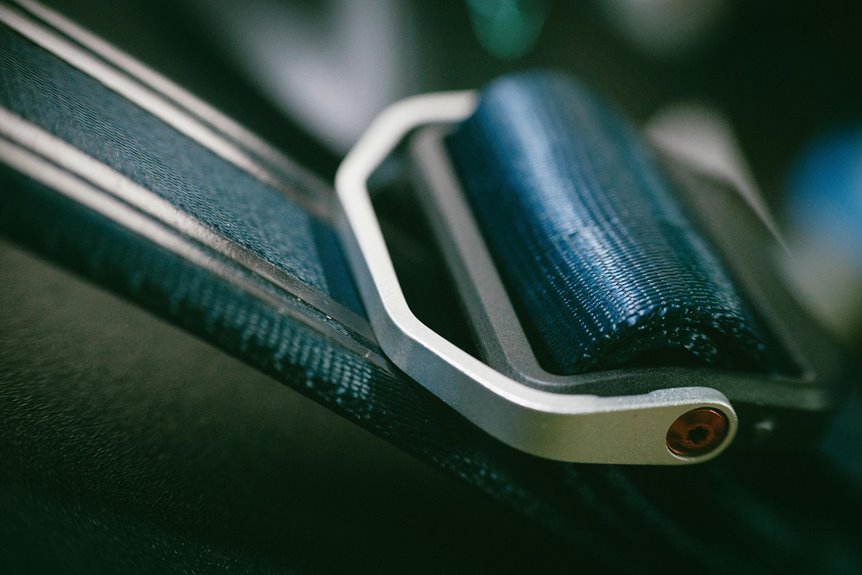
When you choose Kevlar twill fabric, you get a unique diagonal weave that boosts strength and flexibility. This pattern helps absorb and spread impact, making your gear more durable and resistant to cuts and abrasion. You’ll also notice better comfort and breathability compared to plain weaves. With its combination of toughness and pliability, Kevlar twill is ideal for protective clothing and gear. There’s much more to explore about its uses, care, and future innovations.
Key Takeaways
- Kevlar twill fabric features a diagonal weave pattern that enhances strength and flexibility compared to plain Kevlar weaves.
- The twill weave redistributes stress, improving impact and abrasion resistance for superior durability.
- This fabric maintains breathability and flexibility, allowing comfort without sacrificing protective qualities.
- Kevlar fibers provide exceptional heat, cut, and chemical resistance, combined with a lightweight, durable structure.
- Innovations in Kevlar twill include hybrid and smart fabrics, advancing strength, flexibility, and real-time monitoring capabilities.
Understanding the Twill Weave Pattern
A twill weave pattern creates a distinctive diagonal ribbing that you can easily spot on Kevlar twill fabric. When you examine the fabric closely, you’ll notice that the threads weave over and under multiple fibers in a staggered sequence.
This pattern differs from plain weaves, giving the fabric a unique texture and enhanced durability. You’ll find that twill weave allows for more flexibility and drape without compromising strength.
Because of this, Kevlar twill fabric maintains its toughness while offering improved comfort and adaptability in various applications. When working with or selecting Kevlar twill, understanding this weave helps you appreciate why it performs so well under stress and wear, making it a smart choice for protective gear and high-performance textiles.
Key Properties of Kevlar Fiber
Kevlar fiber stands out for its exceptional strength-to-weight ratio, making it a top choice in demanding applications.
When you work with Kevlar, you benefit from its unique combination of durability and lightness. This fiber offers impressive resistance to heat, cuts, and abrasion, ensuring your gear lasts longer under tough conditions.
You’ll also appreciate its minimal stretch, which maintains shape and performance over time. Plus, Kevlar resists chemical degradation, so it holds up well even in harsh environments.
Key properties include:
- High tensile strength for superior durability
- Lightweight nature, reducing overall product weight
- Excellent thermal stability, resisting temperatures up to 450°C
- Outstanding cut and abrasion resistance
- Low elongation, maintaining structural integrity under stress
How Twill Weave Enhances Kevlar’s Performance
You’ll notice the twill weave’s diagonal pattern adds both strength and flexibility to Kevlar fabric.
This structure helps the material absorb and distribute impact more effectively.
Understanding how twill weave works gives you a clear picture of why Kevlar performs so well under stress.
Twill Weave Structure
The twill weave structure plays a crucial role in boosting the strength and flexibility of Kevlar fabric. By weaving the fibers in a diagonal pattern, twill creates a distinct texture that enhances durability.
When you examine Kevlar twill, you’ll notice how this pattern redistributes stress, preventing easy tearing. It also helps the fabric drape better, making it more adaptable for various uses.
Here’s why twill weave is a game changer for Kevlar:
- Diagonal ribs add structural integrity
- Overlapping yarns increase abrasion resistance
- Pattern allows better load distribution
- Fabric maintains breathability despite tight weave
- Creates a smoother surface, reducing snagging risks
With this weave, Kevlar performs at its best in demanding conditions.
Strength and Flexibility
Although many fabrics struggle to balance strength and flexibility, twill weave manages to enhance both qualities in Kevlar. You’ll notice that the diagonal pattern distributes stress evenly, allowing the fabric to bend without breaking. This makes Kevlar twill perfect for applications demanding durability and comfort.
| Feature | Benefit |
|---|---|
| Diagonal Rib | Flexibility under strain |
| Overlapping Weave | Enhanced tensile strength |
| Yarn Density | Improved durability |
| Fiber Alignment | Resistance to abrasion |
| Smooth Surface | Greater comfort and reduced wear |
Impact Resistance Benefits
When you face high-impact situations, Kevlar twill fabric stands out by absorbing and dispersing force more effectively than plain weaves. The diagonal pattern of the twill weave allows the fibers to shift slightly under stress, preventing localized damage and spreading impact energy over a wider area.
This means you get enhanced protection without sacrificing comfort or mobility. The twill weave’s structure also reduces the risk of tearing, making it ideal for gear that endures repeated impacts.
Here’s what twill weave does for Kevlar’s impact resistance:
- Distributes force evenly across the fabric
- Minimizes fiber breakage under stress
- Enhances durability against sharp objects
- Maintains flexibility under impact
- Improves energy absorption for better protection
You’ll appreciate this blend of strength and resilience in demanding conditions.
Comparison Between Kevlar Twill and Plain Weaves
If you want a fabric that balances strength with flexibility, comparing Kevlar twill and plain weaves is essential.
Kevlar twill features a diagonal pattern, allowing the fabric to drape better and resist tearing under stress. This weave distributes impact forces more evenly, making it more durable for demanding uses.
On the other hand, Kevlar plain weave has a simpler, crisscross pattern that offers maximum stability and slightly higher tensile strength but less flexibility. While plain weave feels stiffer and less pliable, it’s excellent when rigidity is paramount.
You’ll find twill weaves more comfortable and adaptable to curved shapes, whereas plain weaves provide a firmer, more rigid structure.
Choosing between them depends on whether you prioritize flexibility or maximum strength in your application.
Applications of Kevlar Twill Fabric in Protective Gear
You’ll find Kevlar twill fabric plays an essential role in ballistic armor, offering enhanced protection without sacrificing flexibility.
It also excels in fire-resistant clothing, keeping you safe in extreme heat and flames.
Let’s explore how these benefits make Kevlar twill a top choice for protective gear.
Ballistic Armor Benefits
Although protective gear often faces extreme conditions, Kevlar twill fabric stands out for its exceptional strength and flexibility.
When you wear ballistic armor made with this fabric, you benefit from a lightweight yet incredibly durable shield against high-impact threats. Kevlar’s twill weave enhances tear resistance and distributes force evenly, reducing blunt trauma. You’ll also appreciate its breathability, which adds comfort during extended use.
Whether you’re in law enforcement, military, or security, Kevlar twill armor offers essential protection without sacrificing mobility.
Here’s why Kevlar twill fabric excels in ballistic armor:
- High tensile strength for effective bullet resistance
- Flexibility that adapts to your movements
- Lightweight design to reduce fatigue
- Enhanced durability under repeated stress
- Superior impact dispersion to minimize injury risk
Fire-Resistant Clothing Use
Beyond ballistic armor, Kevlar twill fabric also plays an essential role in fire-resistant clothing, protecting you from intense heat and flames.
When you wear gear made from this fabric, you benefit from its exceptional thermal stability and flame resistance. Kevlar’s unique weave structure helps prevent heat transfer, reducing burn injuries during exposure to fire or extreme temperatures.
Firefighters, industrial workers, and military personnel rely on Kevlar twill garments to stay safe in hazardous environments. The fabric remains durable and flexible even after prolonged heat exposure, ensuring you can move freely without compromising protection.
Durability and Abrasion Resistance Features
When you choose Kevlar twill fabric, you get exceptional durability that stands up to tough conditions. This fabric’s unique weave pattern enhances its strength, making it resistant to wear and tear over time.
You’ll appreciate how it withstands friction, cuts, and impacts better than many alternatives. Its abrasion resistance means your gear or clothing lasts longer, saving you money and hassle. Plus, the fabric maintains structural integrity even after repeated use.
Key durability and abrasion resistance features include:
- High tensile strength fibers woven tightly
- Resistance to cuts and punctures
- Excellent wear resistance under friction
- Longevity despite harsh environments
- Maintains protective qualities over extended use
With Kevlar twill fabric, you’re investing in lasting protection and toughness.
Comfort and Flexibility Benefits of Twill Weave
Since Kevlar twill fabric combines strength with a distinctive weave pattern, it also offers notable comfort and flexibility.
You’ll find that the diagonal weave structure creates a softer, more pliable material compared to plain weaves. This flexibility lets the fabric move with you, reducing stiffness and making it ideal for garments and gear requiring ease of motion.
The twill weave’s texture also allows better breathability, helping to regulate temperature and keep you comfortable during extended wear. While maintaining Kevlar’s protective qualities, this fabric won’t restrict your movements, so you can perform tasks confidently.
Whether you’re in protective clothing or accessories, the comfort and flexibility benefits of twill weave guarantee you don’t have to sacrifice mobility for durability.
Care and Maintenance of Kevlar Twill Fabric
Although Kevlar twill fabric is known for its durability, you still need to handle it with care to maintain its protective qualities. Proper care guarantees the fabric stays strong, flexible, and effective over time.
Avoid harsh chemicals or high heat, which can weaken fibers. When cleaning, use gentle methods and store the fabric away from direct sunlight to prevent degradation.
Here’s how you can care for your Kevlar twill fabric:
- Hand wash with mild detergent and cold water
- Avoid bleach, fabric softeners, and strong solvents
- Air dry flat, away from direct sunlight or heat sources
- Inspect regularly for cuts, frays, or wear and repair promptly
- Store in a cool, dry place to prevent moisture damage
Innovations and Future Trends in Kevlar Textiles
As you explore the latest advancements in Kevlar textiles, you’ll find that innovations are pushing the boundaries of strength, flexibility, and application. Researchers are developing hybrid weaves combining Kevlar with other fibers to enhance durability and comfort. Smart Kevlar fabrics embedded with sensors are becoming popular for military and sports gear, providing real-time data monitoring. Sustainable production methods are also emerging, reducing environmental impact without compromising performance.
| Innovation Type | Benefit | Application Area |
|---|---|---|
| Hybrid Weaves | Increased durability | Protective clothing |
| Smart Fabrics | Real-time monitoring | Military, sports gear |
| Sustainable Methods | Eco-friendly production | Textile manufacturing |
These trends guarantee Kevlar textiles stay at the forefront of technology and usability.
Frequently Asked Questions
Can Kevlar Twill Fabric Be Dyed Different Colors?
You can dye Kevlar twill fabric, but it’s tricky because Kevlar resists most dyes. Specialized processes or surface treatments are needed to achieve color, so you’ll want to consult experts for effective and lasting results.
Is Kevlar Twill Fabric Environmentally Friendly?
You might find Kevlar twill fabric isn’t very environmentally friendly since it’s synthetic and energy-intensive to produce. However, it’s durable, so you’ll use less material over time, reducing waste in the long run.
How Does Kevlar Twill Compare in Price to Other Fabrics?
Imagine paying for Kevlar twill like buying a smartphone back in the ’90s—it’s pricier than typical fabrics. You’ll find it costs more due to its advanced strength and durability, but it’s worth the investment.
Can Kevlar Twill Fabric Be Used in Everyday Clothing?
You can use Kevlar twill fabric in everyday clothing, especially for added durability and protection. However, it’s often stiffer and more expensive than typical fabrics, so comfort and cost might limit its regular wear appeal.
What Machinery Is Required to Weave Kevlar Twill Fabric?
Imagine operating a high-tech rapier loom, precisely interlacing fibers. You’ll need such advanced machinery capable of handling Kevlar’s toughness, ensuring the twill pattern forms flawlessly without damaging the strong, heat-resistant threads during weaving.