
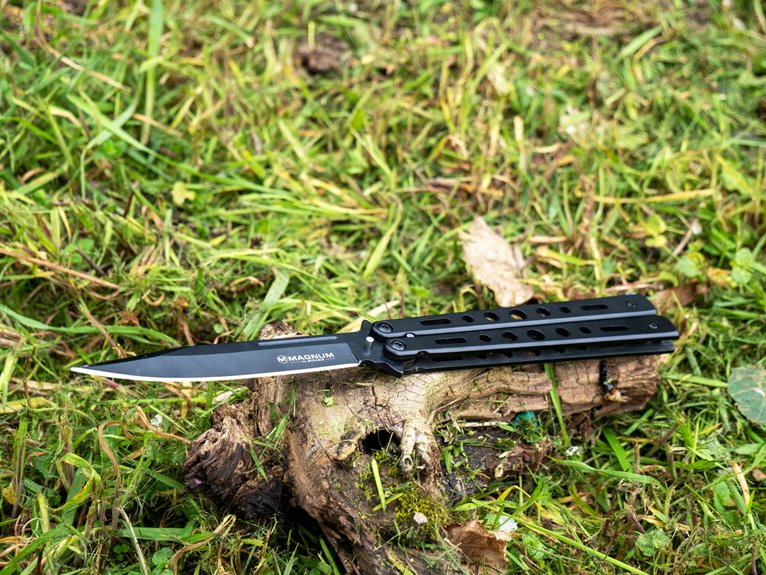
You can rely on Kevlar to withstand sharp objects thanks to its tightly woven fibers that absorb and disperse energy from blades, creating friction that slows penetration. Its high tensile strength and flexibility help it maintain integrity against cuts and slashes, making it ideal for protective gear. However, extremely sharp or serrated blades may pose challenges, and proper care is essential to keep it effective. Learn more about how Kevlar works and what affects its knife resistance.
Key Takeaways
- Kevlar’s tightly woven fibers absorb and disperse energy, effectively resisting penetration from many sharp knives and slashing tools.
- It has a high tensile strength of 3,620 MPa, providing strong resistance against pulling and cutting forces.
- Kevlar performs well against everyday knife threats but can be challenged by extremely sharp or serrated blades without additional layers.
- The material maintains integrity under stress by distributing force evenly, which slows blade penetration and enhances protection.
- Proper maintenance and care are essential to preserve Kevlar’s protective properties against sharp objects over time.
What Is Kevlar and How Is It Made?
Kevlar is a strong synthetic fiber known for its exceptional durability and resistance to cuts and impacts. When you look into how it’s made, you’ll find it starts as a liquid chemical solution called a polymer.
Kevlar begins as a liquid polymer, transformed into a fiber known for unmatched durability and impact resistance.
This polymer undergoes a process called spinning, where it’s forced through tiny holes, turning into thin, strong fibers. These fibers are then woven tightly into fabric.
You’ll often see Kevlar used in protective gear because its fibers align in a way that distributes force evenly, making it tough against sharp objects.
The manufacturing process guarantees each fiber bonds firmly, giving Kevlar its unique toughness.
The Unique Strength Properties of Kevlar
When you handle materials made with tightly woven fibers, you expect them to withstand more than just everyday wear and tear. Kevlar delivers this by combining high tensile strength and exceptional flexibility. Its molecular structure forms long chains that align parallel, giving it remarkable durability without sacrificing lightweight comfort. This unique balance is why Kevlar outperforms many other fibers in strength-to-weight ratio.
| Property | Description |
|---|---|
| Tensile Strength | 3,620 MPa (high resistance to pulling) |
| Density | 1.44 g/cm³ (lightweight) |
| Thermal Stability | Up to 450°C (resists heat degradation) |
| Flexibility | Maintains shape under stress |
| Impact Resistance | Absorbs and disperses energy |
You’ll find these properties essential for protective gear and demanding applications.
How Kevlar Performs Against Cutting and Slashing
Few materials can match the way Kevlar resists cutting and slashing attacks. When you face a sharp blade, Kevlar’s tightly woven fibers work together to absorb and disperse the energy, preventing the blade from slicing through easily.
You’ll notice how its structure creates friction against the cutting edge, slowing down or stopping the blade’s penetration. Unlike regular fabrics, Kevlar doesn’t just tear apart under pressure; it maintains its integrity, keeping you protected.
However, while it excels against many cutting motions, extremely sharp or serrated blades can still pose challenges.
Despite its strength, Kevlar may struggle against very sharp or serrated blades in some situations.
Still, for everyday threats involving knives or slashing tools, Kevlar provides a reliable defense, giving you confidence in its ability to reduce injury from sharp attacks.
Testing Kevlar’s Resistance to Sharp Blades
You’ll want to examine blade penetration tests to see how well Kevlar holds up against sharp edges.
Analyzing the material’s integrity after cutting attempts shows its true protective strength.
Let’s explore how these tests reveal Kevlar’s resistance to sharp blades.
Blade Penetration Tests
Although Kevlar is renowned for its strength, testing its resistance to sharp blades requires precise blade penetration tests. When you perform these tests, you apply controlled force with various blade types to measure how well Kevlar resists punctures and cuts. This helps you understand its real-world protective capabilities.
Here’s a quick look at typical test outcomes:
| Blade Type | Penetration Depth | Result |
|---|---|---|
| Straight | Minimal | Effective |
| Serrated | Moderate | Challenged |
| Dagger | Low | Resilient |
Material Integrity Analysis
When you examine Kevlar’s resistance to sharp blades through material integrity analysis, you focus on how its fibers absorb and disperse the impact energy.
You test how tightly woven the fibers are and how well they hold together under stress. This analysis shows you whether the material maintains its structure or starts to fray and weaken after repeated cuts.
You also assess the layers’ ability to prevent blade penetration by distributing force across a broader area.
By conducting controlled blade strikes and measuring damage depth and fiber disruption, you get clear insights into Kevlar’s durability.
This testing helps you understand how well Kevlar can protect against sharp objects, guiding improvements in protective gear design and ensuring reliable performance in real-world scenarios.
Factors That Influence Kevlar’s Knife Resistance
Because Kevlar’s knife resistance depends on multiple variables, understanding these factors helps you choose the right protection for your needs.
The fabric’s weave density plays a big role—tighter weaves offer better resistance by distributing the blade’s force more effectively. The number of Kevlar layers also matters; more layers typically mean higher protection.
Additionally, the angle and force of a knife strike influence how well Kevlar performs. You should consider the type of knife too, as sharper or serrated blades can penetrate more easily.
Environmental conditions like moisture and temperature can weaken the fibers over time, reducing effectiveness.
Finally, how the material is maintained affects its durability. By weighing these factors, you can better assess Kevlar’s suitability for your specific protection requirements.
Kevlar in Protective Gear: Benefits and Limitations
If you rely on protective gear, Kevlar offers impressive benefits like high strength-to-weight ratio and excellent cut resistance, making it a popular choice in various industries.
You’ll appreciate how lightweight Kevlar gear allows for greater mobility without sacrificing safety. Its ability to disperse energy effectively helps protect you from sharp objects, reducing injury risk.
However, Kevlar isn’t invincible. It can degrade with prolonged exposure to UV light and moisture, which might weaken its protective qualities over time.
Also, while it resists cuts well, it’s less effective against stabbing or puncture threats unless layered properly. You should consider these limitations when choosing your gear to guarantee it suits your specific needs and environment.
Understanding these factors helps you maximize Kevlar’s protective benefits.
Comparing Kevlar to Other Cut-Resistant Materials
Anyone looking for reliable cut-resistant materials will find Kevlar is just one strong option among several. You’ll also come across materials like Dyneema, Spectra, and steel mesh, each with its own strengths.
Kevlar offers excellent resistance to sharp objects while remaining lightweight and flexible, which makes it ideal for wearable gear. Dyneema and Spectra, made from ultra-high-molecular-weight polyethylene fibers, often surpass Kevlar in cut resistance and are lighter, but they may not handle heat as well.
Steel mesh provides outstanding cut protection but tends to be heavier and less flexible, limiting comfort and mobility.
When choosing, consider what balance of protection, weight, and flexibility suits your needs best, since no single material is perfect for every situation.
Practical Tips for Maintaining Kevlar Protection
To keep your Kevlar gear effective, you need to follow proper cleaning and storage guidelines.
Avoid exposing it to harsh chemicals or excessive heat that can weaken the fibers.
Taking these simple steps helps prevent damage and extends the life of your protection.
Cleaning and Storage Guidelines
Although Kevlar is known for its durability, you should handle cleaning and storage with care to preserve its knife-resistant qualities.
When cleaning, avoid harsh chemicals or bleach that can weaken the fibers. Instead, use mild soap and cold water, gently hand-washing the material. Rinse thoroughly and air-dry away from direct sunlight or heat sources to prevent damage.
For storage, keep your Kevlar gear in a cool, dry place, away from moisture and excessive heat. Avoid folding or compressing it tightly, as this can create weak points. Lay it flat or hang it to maintain its shape and protective properties.
Following these guidelines will help you maintain Kevlar’s integrity, ensuring it remains reliable against sharp objects over time.
Avoiding Damage Risks
Since Kevlar’s strength depends on its fiber integrity, you should avoid actions that cause cuts, abrasions, or excessive stretching.
Don’t drag Kevlar gear across rough surfaces or snag it on sharp edges, as this can weaken fibers and reduce protection. Avoid exposing it to harsh chemicals or prolonged UV light, which degrade the material over time.
When wearing Kevlar gloves or vests, make sure they fit properly to prevent unnecessary strain. Also, don’t attempt to repair damage yourself; seek professional help to maintain effectiveness.
Regularly inspect your Kevlar items for signs of wear or damage and replace them if necessary.
Frequently Asked Questions
Can Kevlar Be Damaged by Chemicals or UV Exposure?
Yes, Kevlar can be damaged by certain chemicals and prolonged UV exposure. You should avoid strong acids, alkalis, and direct sunlight to maintain its strength and durability over time. Always store it properly.
How Does Kevlar React to Extreme Temperatures?
Kevlar handles extreme temperatures pretty well, but you shouldn’t expose it to continuous heat above 500°F. It resists burns and melting, yet prolonged high heat can weaken its fibers, so keep it away from intense flames.
Is Kevlar Biodegradable or Environmentally Friendly?
You should know Kevlar takes hundreds of years to break down, so it’s not biodegradable. While it’s incredibly durable and lightweight, it isn’t exactly environmentally friendly, so you’ll want to contemplate its long-term impact carefully.
Can Kevlar Be Repaired if It Gets Cut?
You can repair Kevlar, but it’s tricky. Small cuts might be patched using specialized adhesives or sewing, but deep damage often weakens its strength. It’s best to consult professionals for effective restoration.
What Industries Outside of Protective Gear Use Kevlar?
Like a steadfast knight’s armor, Kevlar shields more than just warriors; you’ll find it in aerospace, automotive tires, and even sporting goods, proving its strength and versatility beyond protective gear, enhancing everyday safety and performance.