
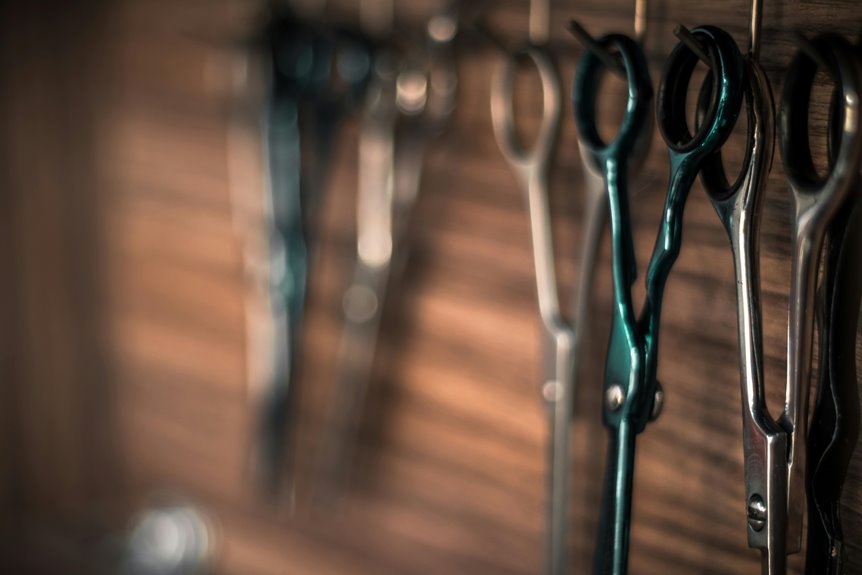
Cutting Kevlar demands sharp, durable blades like high-speed steel or titanium-coated ones, which resist wear and reduce friction. You should choose serrated shears or scissors with ergonomic handles and strong pivots to grip fibers securely and guarantee precise cuts. Avoid blades that dull quickly or generate heat that can damage the material. Always wear protective gear to guard against fiber irritation and inhalation. If you want to master the right tools and techniques, keep exploring these essentials for clean, safe Kevlar cutting.
Key Takeaways
- Use high-speed steel or tungsten carbide blades for durability and clean cuts on tough Kevlar fibers.
- Serrated and titanium-coated blades reduce slipping and friction, extending blade life and cutting precision.
- Choose shears with ergonomic handles and strong pivot joints to reduce fatigue and ensure smooth cutting.
- Electric shears with sharp, durable blades enable fast, efficient cutting of thick Kevlar fabric.
- Always wear cut-resistant gloves, safety goggles, and respirators to protect against Kevlar fiber irritation and inhalation.
Understanding the Challenges of Cutting Kevlar
Although Kevlar is known for its incredible strength and durability, cutting it presents unique challenges you need to comprehend before choosing the right tools.
Kevlar fibers are tightly woven and designed to resist penetration, so conventional blades often struggle to slice through cleanly. When you cut Kevlar, the fibers can fray or unravel, damaging the material’s integrity.
Plus, its abrasive nature dulls blades quickly, meaning you’ll need tools that maintain sharpness over time. You also have to be cautious about heat buildup since Kevlar can melt or degrade if exposed to excessive friction.
Understanding these factors helps you avoid frustration and guarantees you select tools that provide clean, precise cuts without compromising the material’s performance or longevity.
Types of Blades Suitable for Kevlar
Cutting Kevlar demands blades that can handle its toughness without fraying the fibers or losing sharpness quickly.
You’ll want to choose blades made from high-speed steel (HSS) or tungsten carbide, as both offer excellent durability and maintain a sharp edge longer than standard steel.
Serrated blades work well too; their saw-like teeth grip the fabric, preventing slippage and ensuring clean cuts.
Avoid blades that dull easily or cause heat buildup, which can melt or damage Kevlar.
Some specialty blades feature a titanium coating to reduce friction and extend blade life, making your cutting tasks easier.
Best Shears and Scissors for Kevlar Fabric
Selecting the right shears or scissors is essential when working with Kevlar fabric to guarantee clean, precise cuts without damaging the material. You’ll want tools designed with sharp, durable blades and comfortable grips to handle Kevlar’s tough fibers efficiently. Here’s a quick look at some top options:
| Tool Type | Blade Material | Ideal Use |
|---|---|---|
| Serrated Shears | Stainless Steel | Prevents slipping, precise |
| Titanium Scissors | Titanium-coated Steel | Long-lasting sharpness |
| Electric Shears | High-speed Steel | Quick cuts on thick Kevlar |
Choosing any of these shears or scissors will help you achieve smooth cuts, saving time and preserving the fabric’s integrity.
Key Features to Look for in Kevlar Cutting Tools
When working with Kevlar fabric, the right shears or scissors make a big difference, but knowing what features to look for in these tools can help you get even better results.
First, choose blades made from high-quality stainless steel or titanium—they resist wear and stay sharp longer. Look for a sharp, pointed tip to make precise cuts through tough fibers.
Ergonomic handles with comfortable grips reduce hand fatigue during extended use. Verify the tool has a strong pivot joint for smooth, consistent cutting without wobble.
Non-stick blade coatings can prevent fiber buildup, keeping cuts clean. Finally, consider the tool’s weight; a balanced, lightweight design lets you maneuver easily and maintain control when working with dense Kevlar layers.
Maintenance Tips to Prolong Tool Life
To keep your Kevlar cutting tools in top shape, you’ll want to clean them regularly to prevent buildup and damage.
Proper storage is just as important to avoid dulling or warping the blades.
Let’s look at the best practices to help your tools last longer.
Regular Cleaning Practices
Although Kevlar cutting tools are designed for durability, you’ll need to clean them regularly to keep them performing at their best. After each use, wipe away any fiber residues or dust with a soft cloth to prevent buildup.
Use a mild soap solution and warm water if necessary, but avoid soaking the blades, as excessive moisture can cause corrosion. Make sure to dry the tools thoroughly before storing them.
For tougher debris, a soft brush can help clean hard-to-reach areas without damaging the cutting edges. Regular cleaning prevents dullness and keeps your blades sharp, ensuring precise cuts every time.
Proper Storage Methods
Keeping your Kevlar cutting tools clean is just one step in maintaining their performance. Proper storage is equally important to prolong their life.
Always store your blades and shears in a dry, cool place to prevent moisture buildup, which can cause rust or corrosion on metal parts. Use protective sheaths or cases to avoid accidental damage and keep the cutting edges sharp.
Avoid tossing your tools into cluttered drawers where they can get nicked or dulled. If you have multiple tools, consider a dedicated organizer or magnetic strip to keep them separated and secure.
Safety Precautions When Cutting Kevlar
When cutting Kevlar, you need to wear the right protective gear to keep yourself safe.
Using proper handling techniques helps prevent accidents and tool damage.
Also, keeping your workspace organized reduces risks and makes the job smoother.
Protective Gear Essentials
Since Kevlar fibers can irritate your skin and lungs, you should always wear appropriate protective gear while cutting.
Start with gloves made of thick, cut-resistant material to prevent skin abrasions and irritation. Long sleeves and pants will shield your arms and legs from airborne fibers.
Don’t forget safety goggles; they protect your eyes from tiny, sharp particles that might become airborne during cutting. Wearing a NIOSH-approved respirator or dust mask is essential, as it prevents inhaling harmful Kevlar dust.
Make certain your workspace is well-ventilated to minimize airborne fibers. Avoid touching your face or rubbing your eyes while handling Kevlar.
Handling Techniques
A careful approach is essential whenever you handle Kevlar for cutting. Kevlar fibers are tough and can cause irritation or splinters, so always wear gloves to protect your hands.
Keep your blades sharp to reduce fraying and prevent slipping, ensuring cleaner cuts. When cutting, apply steady, even pressure rather than forcing the blade, which could damage the material or cause accidents.
Hold the fabric firmly but avoid stretching it to maintain accurate cuts. Dispose of any scraps promptly to avoid loose fibers in your workspace.
Finally, avoid touching your face or eyes while working, and wash your hands afterward to remove any residual fibers. Following these handling techniques keeps you safe and maintains the integrity of your Kevlar material.
Workspace Safety Measures
Although Kevlar is incredibly strong, cutting it demands strict workspace safety measures to protect you and preserve the material’s quality.
First, always wear cut-resistant gloves and safety goggles to shield your hands and eyes from sharp fibers and flying debris.
Use a clean, well-lit workspace with a stable cutting surface to maintain control and prevent accidents.
Keep your cutting tools sharp and in good condition; dull blades increase the risk of slips.
Avoid distractions and focus solely on the task to minimize errors.
Properly dispose of Kevlar scraps to prevent fiber contamination or injury.
Finally, guarantee good ventilation, as cutting can release tiny fibers that irritate your skin or lungs.
Following these precautions helps you work safely and efficiently with Kevlar.
Frequently Asked Questions
Can Kevlar Cutting Tools Be Used on Other Aramid Fibers?
You might think Kevlar cutting tools are just for Kevlar, but they work well on other aramid fibers too. You’ll find their sharpness and durability handle similar materials efficiently, making your cutting tasks smoother and faster.
How Does Temperature Affect the Performance of Kevlar Cutting Blades?
You’ll find that high temperatures can dull kevlar blades faster and reduce their cutting efficiency. Keep them cool to maintain sharpness and performance, ensuring your cuts stay clean and precise every time you use them.
Are Electric or Manual Tools Better for Cutting Kevlar?
You won’t believe how much easier electric tools make cutting kevlar—they slice through like butter! While manual tools give you control, electric ones save tons of time and effort, making your work way more efficient and precise.
What Is the Typical Lifespan of a Kevlar Cutting Blade?
You can expect a kevlar cutting blade to last anywhere from a few weeks to several months, depending on usage and maintenance. Keep it sharp and clean, and it’ll serve you longer without dulling quickly.
Can Kevlar Dust Be Harmful When Cutting, and How to Manage It?
Dust dangers demand diligence. Yes, Kevlar dust can cause irritation or respiratory issues. You should wear a mask, use proper ventilation, and clean your workspace regularly to manage dust safely and keep your cutting conditions clean.