
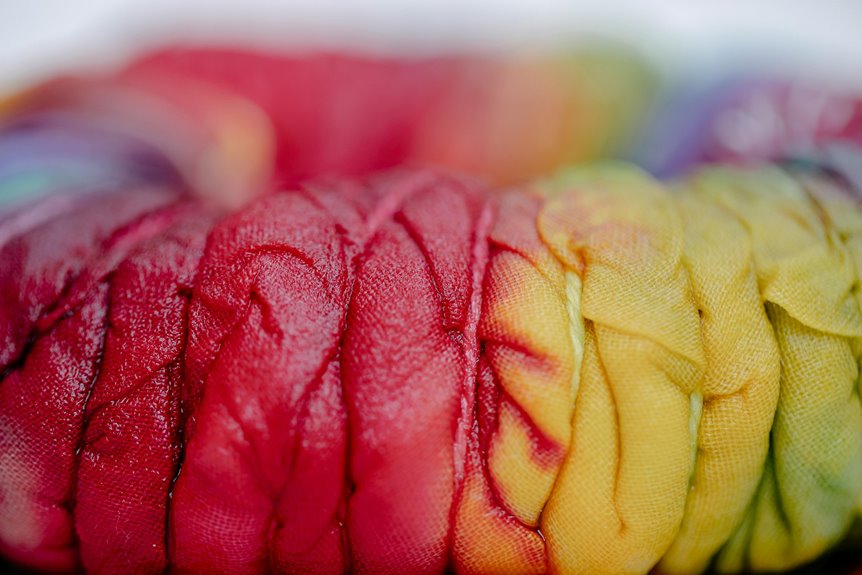
You master Kenney Style Tie-Dye by focusing on precise folding and controlled dye application to create bold, symmetrical designs. You’ll use natural fibers prepped with soda ash to boost dye absorption and apply vibrant colors carefully with squeeze bottles for sharp contrasts. Consistency in fold width and tension keeps your patterns clean and organized. Once you set and wash your piece properly, you’ll have a stunning tie-dye creation. Keep exploring, and you’ll uncover detailed steps and creative ideas to elevate your craft.
Key Takeaways
- Kenney Style Tie-Dye uses precise folding and strategic binding to create symmetrical, high-contrast designs with clean lines and controlled dye flow.
- Mastery of Accordion, Spiral, and Triangle folds is essential for achieving complexity while maintaining sharp, organized patterns.
- Preparing fabric by soaking in soda ash and keeping it damp ensures vibrant, long-lasting dye absorption on natural fibers.
- Applying fiber-reactive dyes with squeeze bottles and controlling pressure prevents oversaturation, resulting in crisp, defined edges.
- This advanced technique expands tie-dye creativity, ideal for unique projects like pillow covers, canvas totes, and framed wall art.
Understanding the Foundations of Kenney Style Tie-Dye
Before you plunge into creating Kenney Style Tie-Dye, it’s important to grasp its core principles. This technique focuses on precise folding and controlled dye application to achieve sharp, vibrant patterns.
Unlike traditional tie-dye, Kenney Style emphasizes symmetry and contrast, so you’ll want to plan your design carefully. The method relies on strategic binding points that control dye flow, creating distinct shapes rather than random blends.
You’ll work with layering folds to build complexity while maintaining clean lines. Understanding fabric tension and how the dye penetrates different folds will help you predict your final result.
Mastering these foundations lets you experiment confidently, turning simple materials into striking, professional-looking designs every time you dye.
Essential Materials and Tools for Kenney Style
Creating Kenney Style Tie-Dye requires the right combination of materials and tools to guarantee your designs come out crisp and vibrant. You’ll need high-quality fiber-reactive dyes, which bond well with natural fibers and assure long-lasting colors.
A set of squeeze bottles helps you apply dye precisely, essential for Kenney’s detailed patterns. Rubber bands or string are vital for securing your fabric in specific folds or twists. Don’t forget protective gloves to keep your hands clean and a plastic table cover to protect your workspace.
Additionally, have a spray bottle filled with water handy to keep your fabric damp during the process. Finally, using a pH-neutral detergent will help you rinse the fabric without damaging the dyes later on.
Preparing Your Fabric for Optimal Dye Absorption
To guarantee your Kenney Style tie-dye turns out vibrant, you need to prepare your fabric properly for ideal dye absorption. Start by choosing natural fibers like cotton, bamboo, or silk, as they soak up dye better than synthetics.
For vibrant Kenney Style tie-dye, begin with natural fibers like cotton, bamboo, or silk for optimal dye absorption.
Before dyeing, wash your fabric to remove any sizing or chemicals that block absorption. Skip fabric softeners—they can interfere with dye uptake.
After washing, keep the fabric damp but not dripping wet; moisture helps dye penetrate evenly. For enhanced color brightness, soak your fabric in a soda ash solution for 15-20 minutes, then wring out excess liquid.
This step raises the fabric’s pH, allowing dyes to bond more effectively. Proper preparation sets the stage for the stunning Kenney Style patterns you’ll create.
Mastering the Unique Folding Techniques
To nail the Kenney style, you’ve got to master a few essential folding patterns that create those signature designs.
Pay close attention to precision and symmetry—small misalignments can change the whole look.
With practice, your folds will become sharper and your patterns more striking.
Essential Folding Patterns
Although tie-dye might seem spontaneous, mastering essential folding patterns is key to achieving Kenney Style’s distinctive look.
You’ll want to focus on these three foundational folds:
- Accordion Fold: This creates sharp, consistent pleats, perfect for symmetrical designs.
- Spiral Fold: Start from the center and twist outward, giving you dynamic, circular patterns unique to Kenney Style.
- Triangle Fold: Folding the fabric into triangular shapes allows for bold, geometric patterns.
Each fold sets the stage for how dye interacts with the fabric, so practice them until you can do each quickly and cleanly.
By controlling your folds precisely, you reveal the signature sharp contrasts and organized chaos that define Kenney Style tie-dye.
Master these, and your designs will stand out with intentional artistry rather than randomness.
Precision and Symmetry Tips
Now that you’ve got the basic folds down, honing your precision and symmetry will elevate your Kenney Style tie-dye to the next level.
Start by aligning your fabric edges carefully before folding—use a flat surface and smooth out wrinkles. Pinch the center point firmly to guarantee your folds mirror each other perfectly. Use a ruler or straight edge if needed to maintain consistent angles and lengths in your folds.
When you fold, think of creating balance; each fold should complement the opposite side. Consistency in fold width and pressure helps prevent uneven dye patterns.
Selecting and Mixing Vibrant Dye Colors
You’ll want to pick bold color palettes that really make your design pop.
Experiment with blending techniques to keep your colors bright and vibrant without muddying the hues.
Let’s explore how to mix and match dyes for the best results.
Choosing Bold Color Palettes
When selecting bold color palettes for your Kenney Style tie-dye, consider how vibrant hues interact to create striking contrasts or harmonious blends.
First, pick colors that either complement or sharply contrast each other to make your design pop.
Second, think about the fabric’s base color; a white or light base helps bright colors stand out, while darker bases can mute some shades.
Third, test your color choices on a small fabric scrap to see how they react when mixed and dried.
By focusing on these steps, you’ll create palettes that are visually dynamic and true to the Kenney Style’s energetic vibe.
Blending Techniques for Brightness
A successful Kenney Style tie-dye depends on how you blend vibrant dye colors to maximize brightness.
Start by selecting dyes with high saturation and complementary hues to create striking contrasts. When mixing, avoid muddy colors by limiting your palette to three or four shades that harmonize well.
Use layering techniques—apply lighter colors first, then add darker tones carefully to maintain vibrancy. Don’t oversaturate fabric areas; instead, let colors overlap slightly to produce smooth shifts without dulling brightness.
Experiment with small test swatches to see how colors interact before working on your main piece. Remember, precise timing and dye concentration also affect how colors blend.
Applying Dye With Precision and Control
Although tie-dyeing might seem spontaneous, applying dye with precision and control guarantees vibrant patterns that truly stand out.
You’ll want to master your technique to avoid color bleeding and muddiness. Here’s how to do it effectively:
- Use squeeze bottles with fine tips to apply dye exactly where you want it, ensuring sharp edges.
- Work in small sections, allowing each area to absorb the dye before moving on. This prevents colors from mixing unintentionally.
- Apply dye gently, controlling pressure to prevent oversaturation and maintain crisp lines.
Tips for Setting and Washing Your Finished Piece
Because setting your dye properly locks in vibrant colors, you’ll want to follow specific steps before washing your finished piece.
First, wrap your item in plastic and let it sit for at least 6 to 8 hours, or overnight, to allow the dye to fully bond with the fabric.
Wrap your dyed item in plastic and let it rest for 6 to 8 hours or overnight to set the color.
Next, rinse it under cold water, starting with the tied sections, until the water runs mostly clear.
Then, switch to warm water and use a gentle detergent to wash your piece by hand or on a delicate cycle. Avoid using bleach or harsh chemicals.
Finally, air dry your garment away from direct sunlight to prevent fading.
Following these tips guarantees your Kenney Style tie-dye stays bold and beautiful for many wears.
Creative Project Ideas to Showcase Kenney Style Designs
When you want to make your Kenney Style tie-dye truly stand out, consider experimenting beyond traditional t-shirts.
Showcasing your designs on unique projects not only highlights your skills but also adds a personal touch to everyday items.
Here are three creative ideas to get you started:
- Decorative Pillows: Use your tie-dye fabric to create eye-catching pillow covers that brighten up any room with vibrant patterns.
- Tote Bags: Customize plain canvas totes with Kenney Style tie-dye for a functional accessory that turns heads.
- Wall Hangings: Stretch your dyed fabric on a frame to craft stunning art pieces that display your technique elegantly.
These projects help you explore new formats, making your Kenney Style designs both practical and visually appealing.
Frequently Asked Questions
Can Kenney Style Tie-Dye Be Done on Synthetic Fabrics?
Imagine trying to paint sunlight on a glass pane—synthetic fabrics resist Kenney style tie-dye’s vibrant dance. You won’t get true colors unless you choose natural fibers, so synthetic materials aren’t your best canvas here.
What Is the History Behind Kenney Style Tie-Dye?
You’ll find Kenney style tie-dye emerged from blending traditional tie-dye with modern techniques. It’s inspired by vibrant 1960s patterns but adds unique folds and color layering, creating a fresh, dynamic look you’ll love experimenting with.
How Do Environmental Factors Affect Dye Drying Times?
You’ll notice that humidity slows dye drying times, while warm, dry air speeds it up. Direct sunlight helps, but too much heat can cause uneven drying, so balance environmental factors for the best results.
Are There Eco-Friendly Dye Options for Kenney Style Tie-Dye?
You want eco-friendly options? You want vibrant colors? You want safe materials? You can use plant-based dyes, natural pigments, or low-impact synthetic dyes. These choices protect your art, your health, and the planet simultaneously.
Can Kenney Style Techniques Be Adapted for Other Crafts?
You can definitely adapt Kenney style techniques for other crafts like painting, ceramics, or fabric design. By experimenting with similar dye patterns and layering, you’ll create unique, vibrant effects beyond traditional tie-dye applications.